Geometric Tattoos & Artists
Precise linework, symmetry, and sacred geometry built for the body. Browse real geometric tattoos and the artists making them, then request to book the one whose work fits the direction you're picturing.
What is a geometric tattoo?
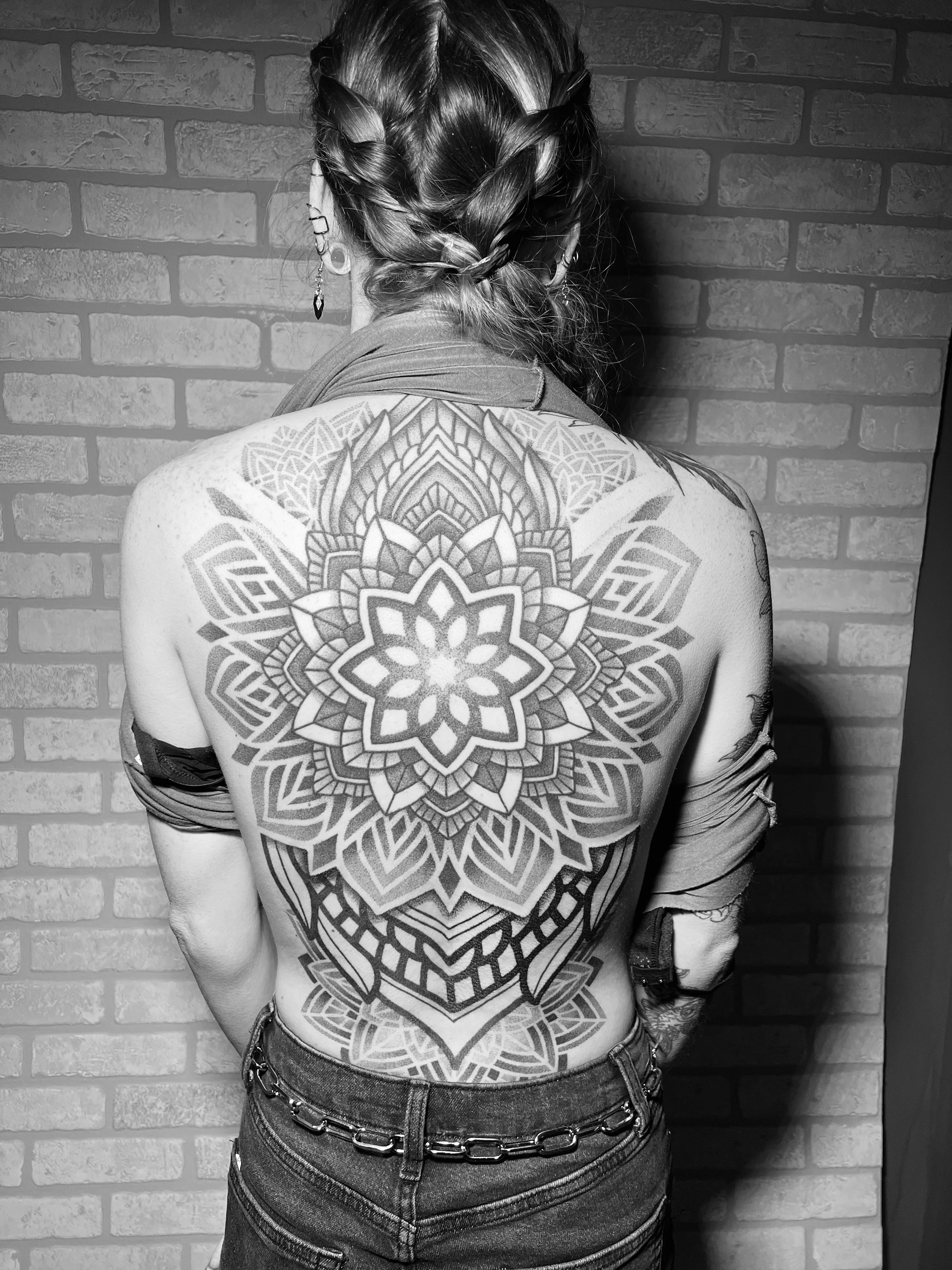
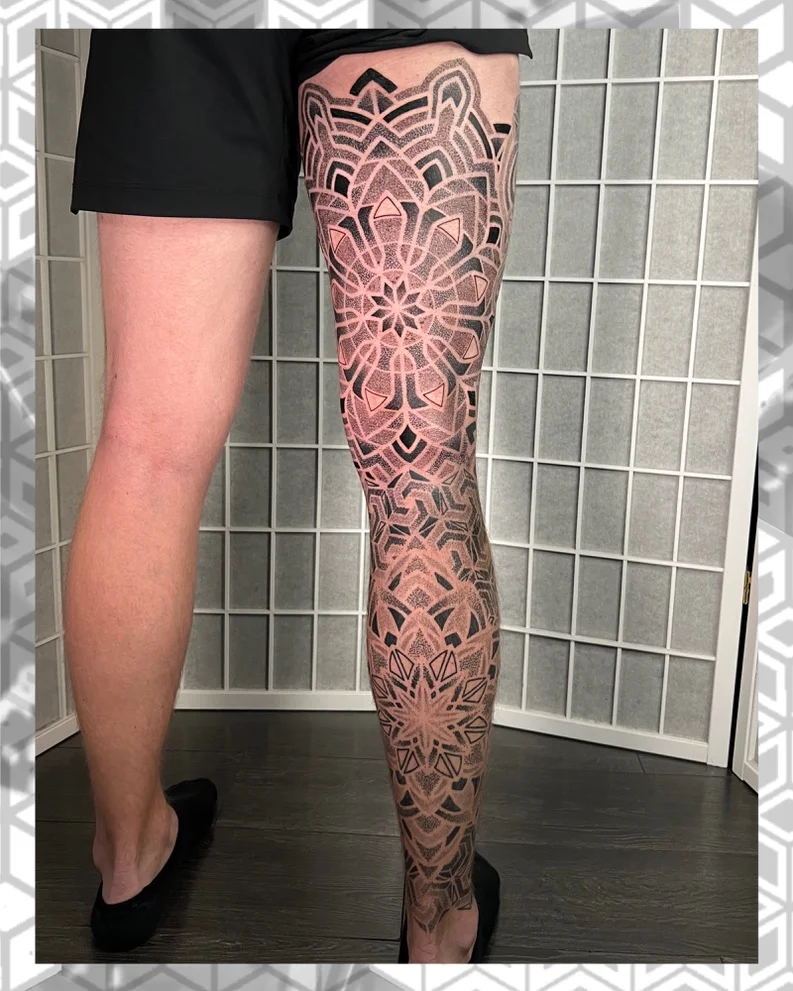
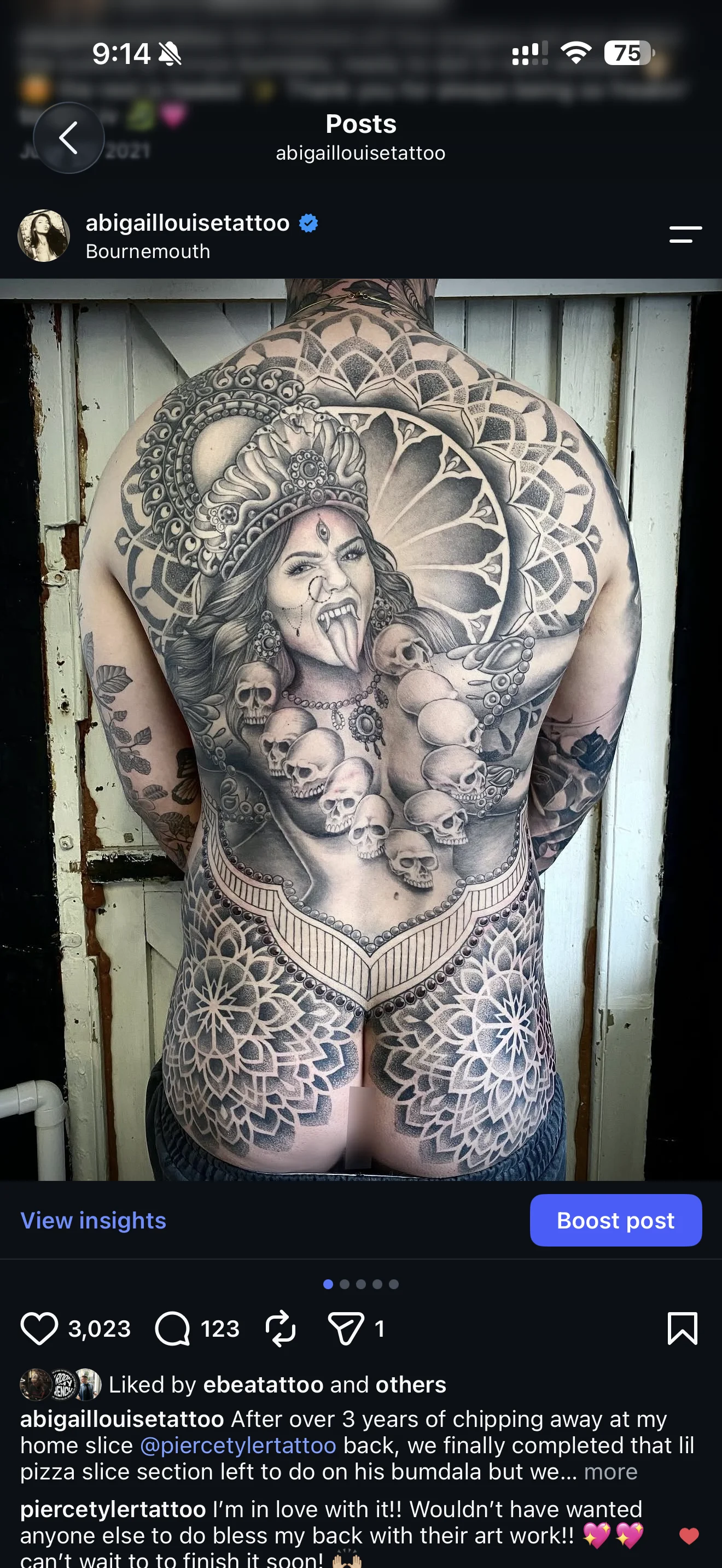
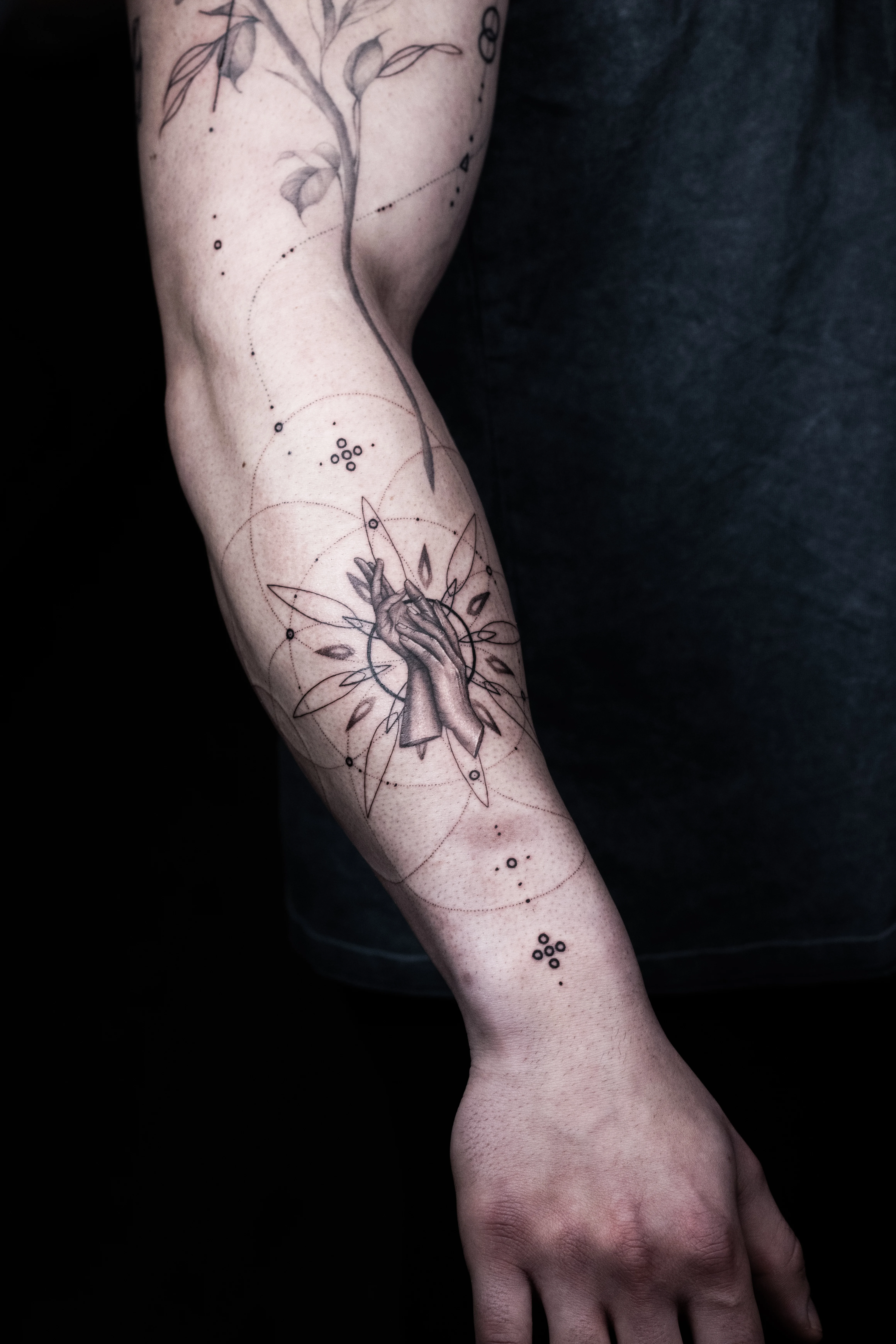
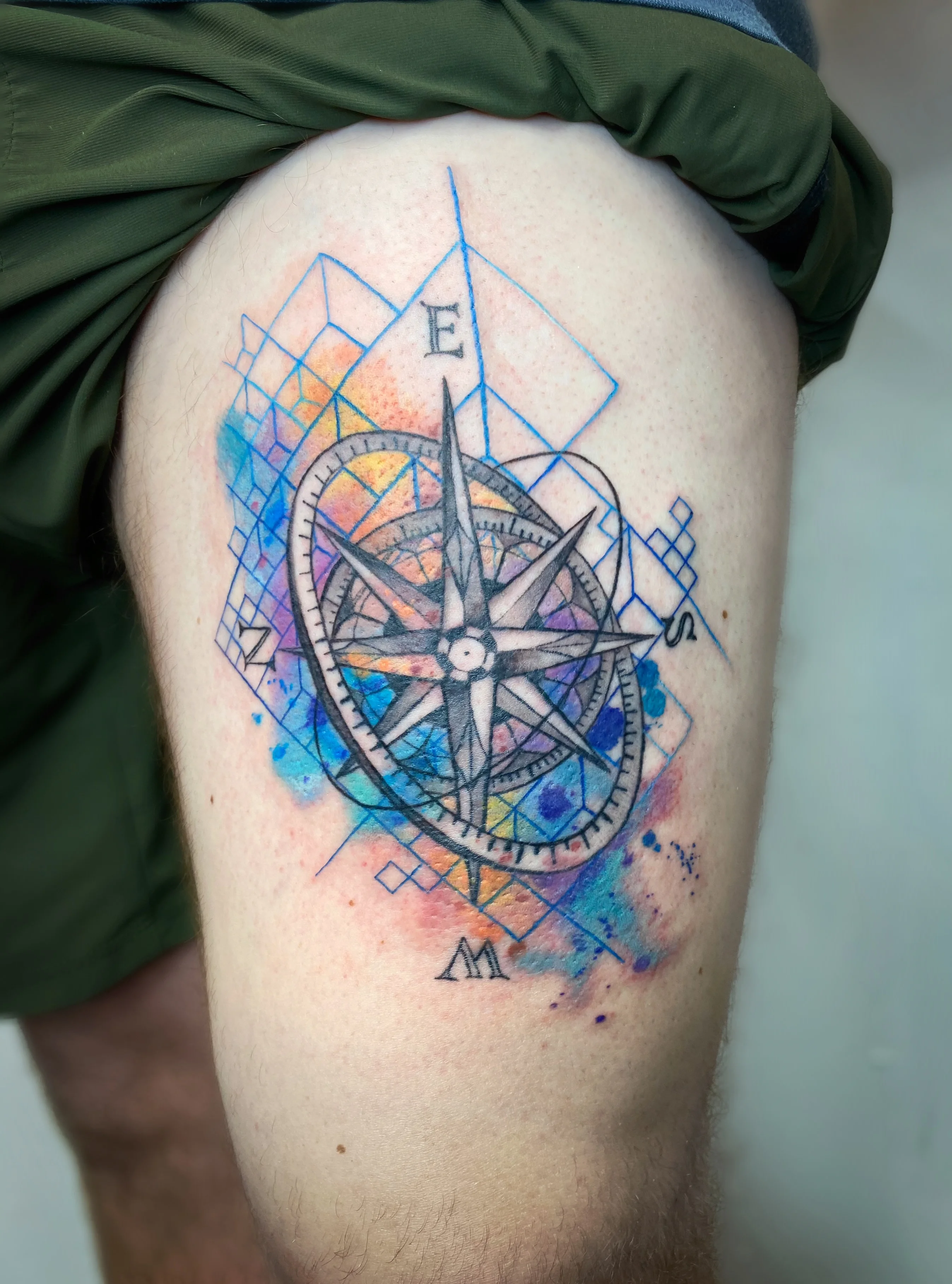
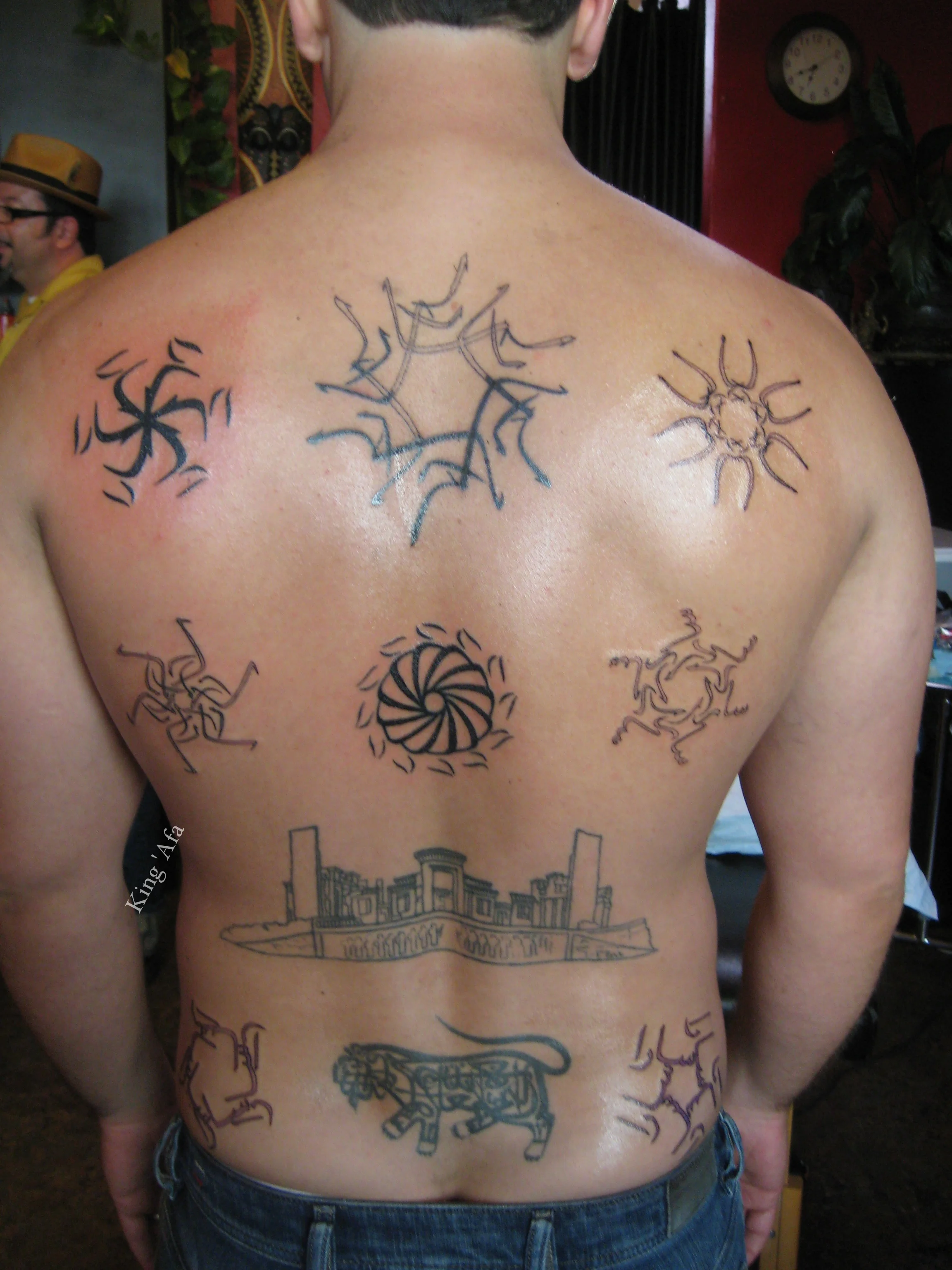
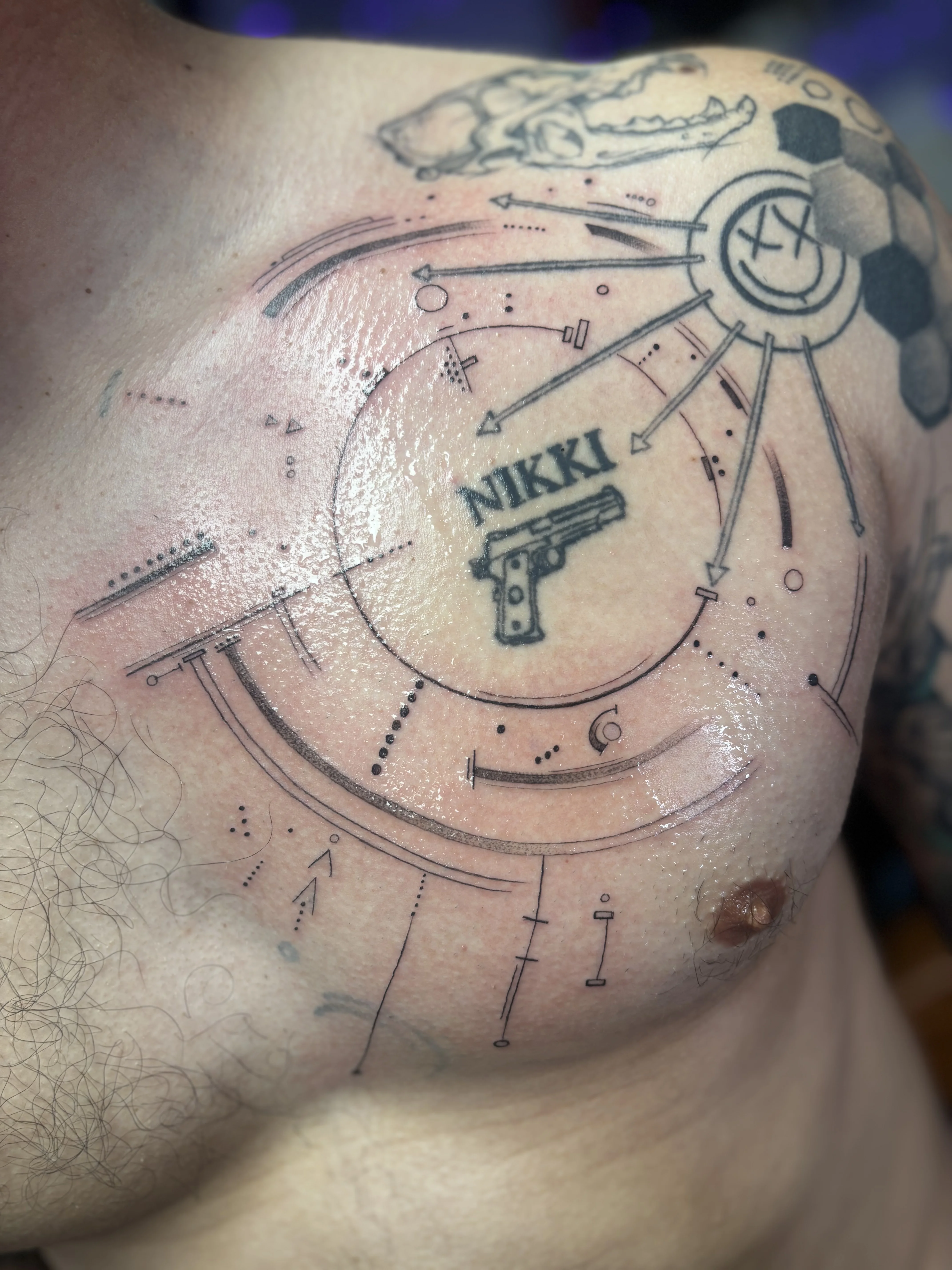
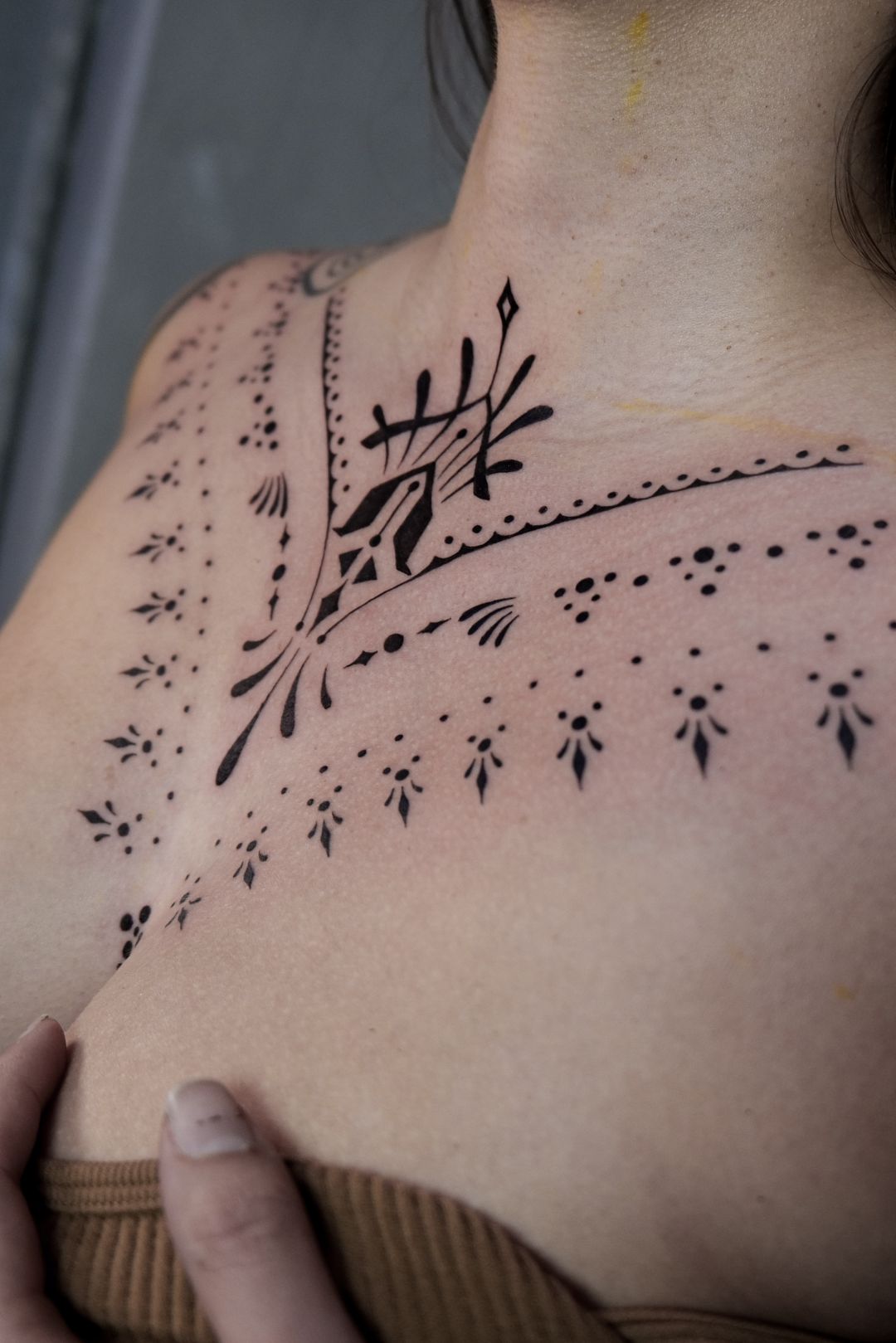
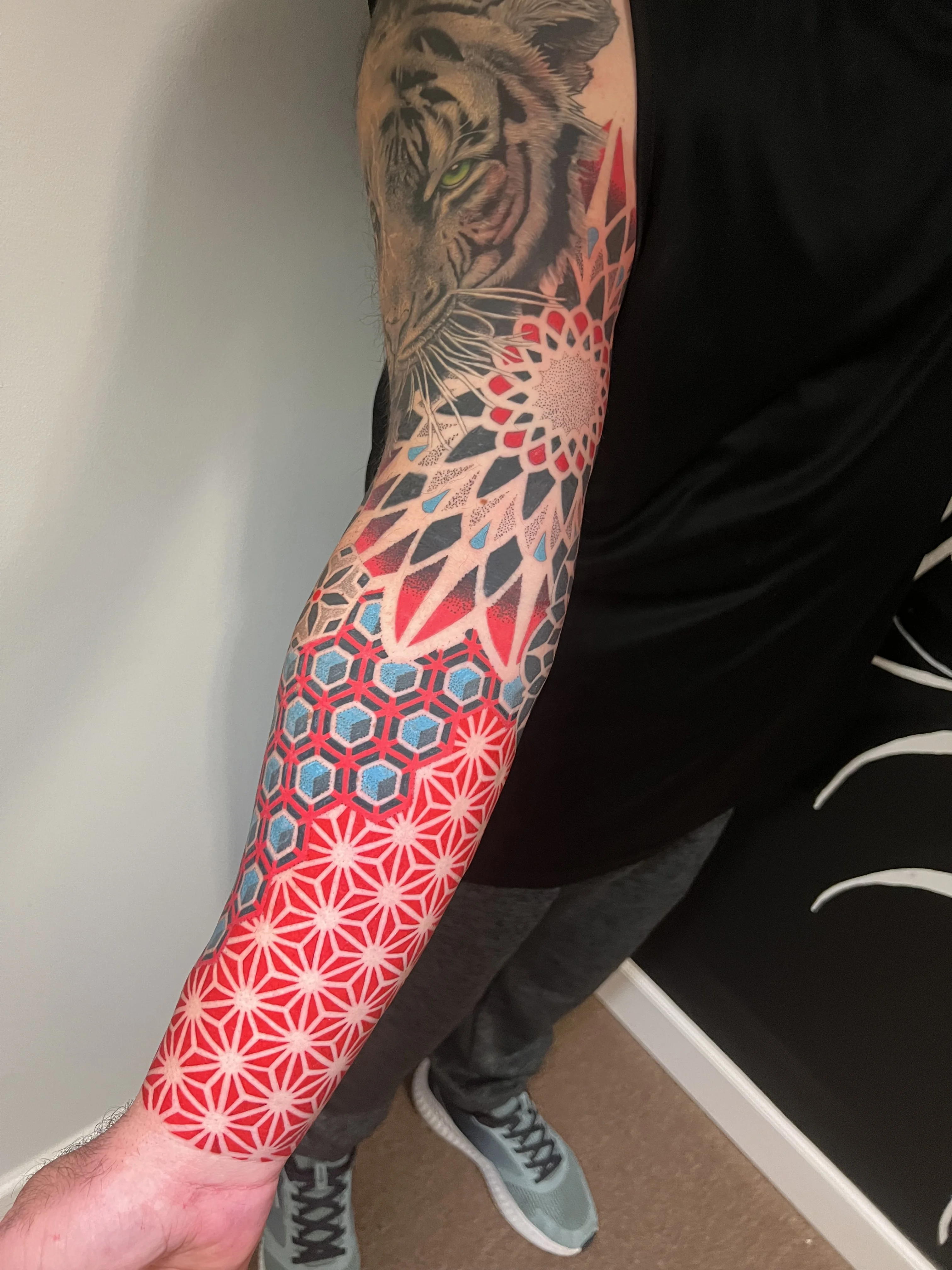
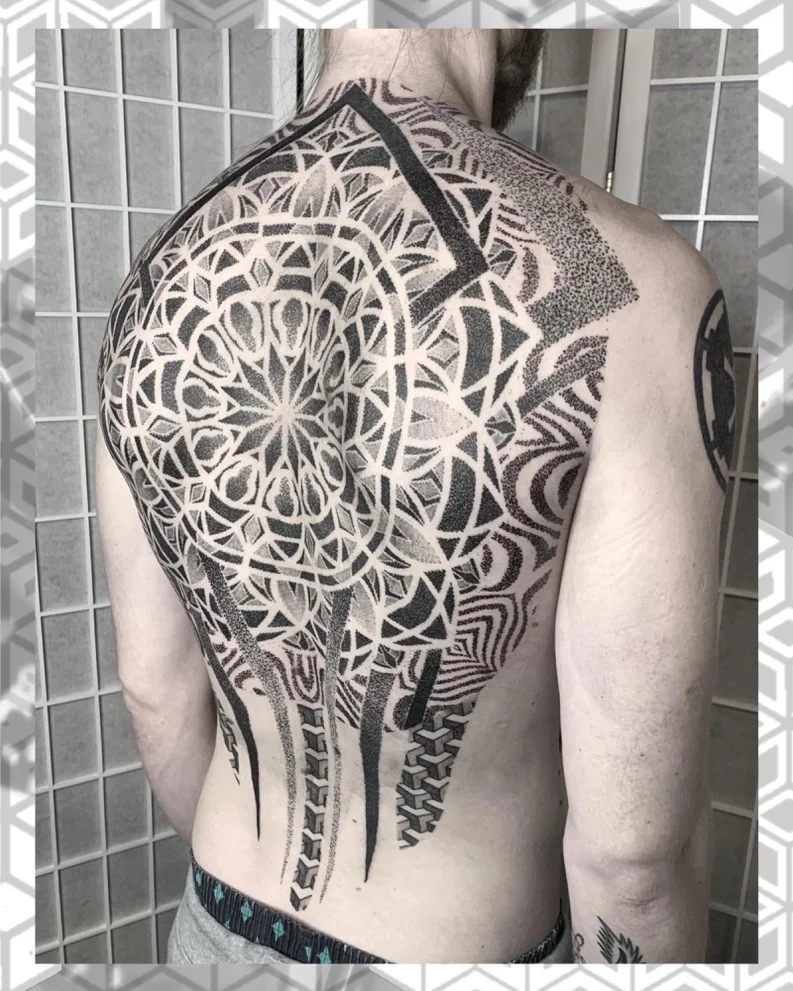
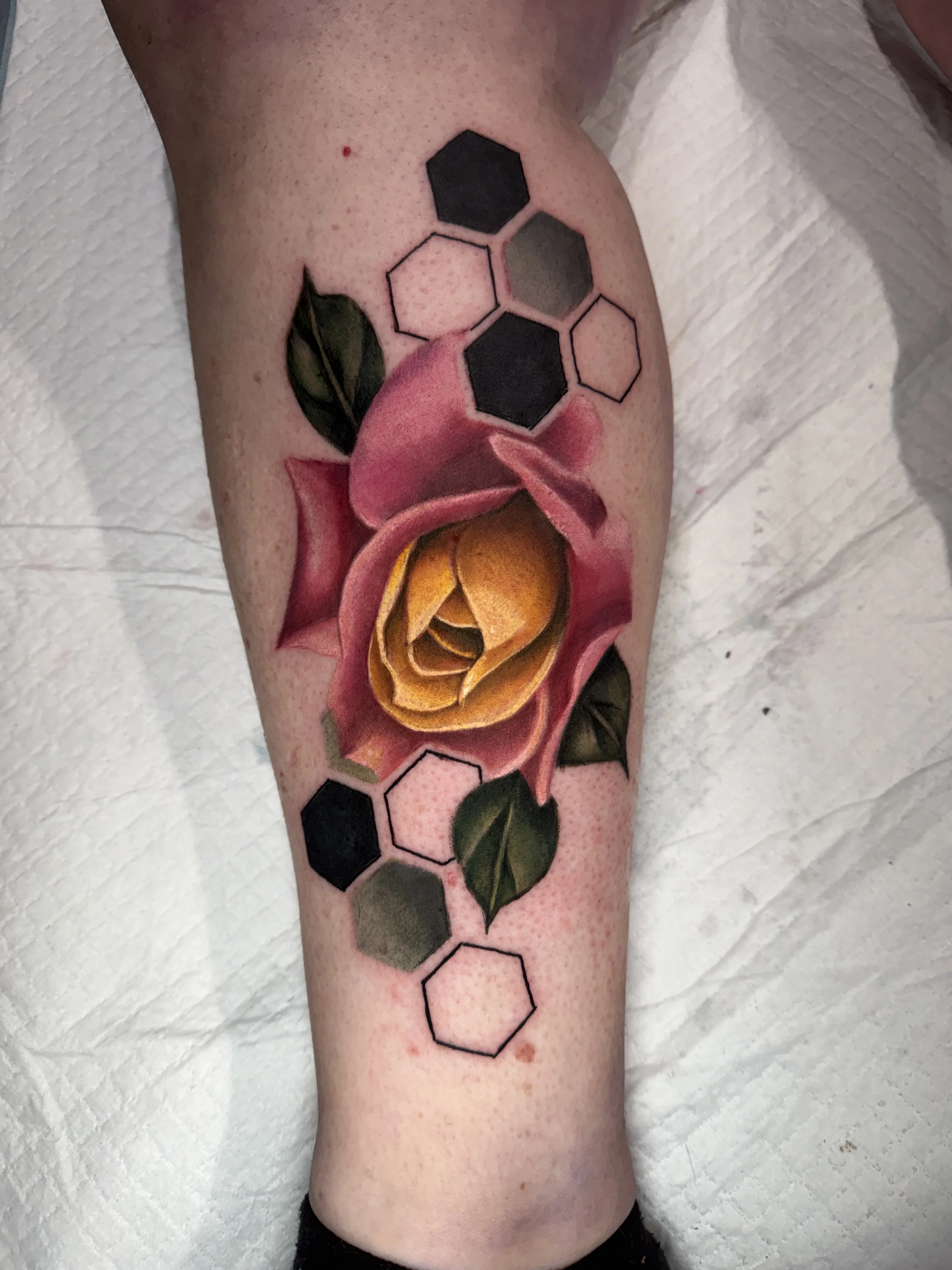
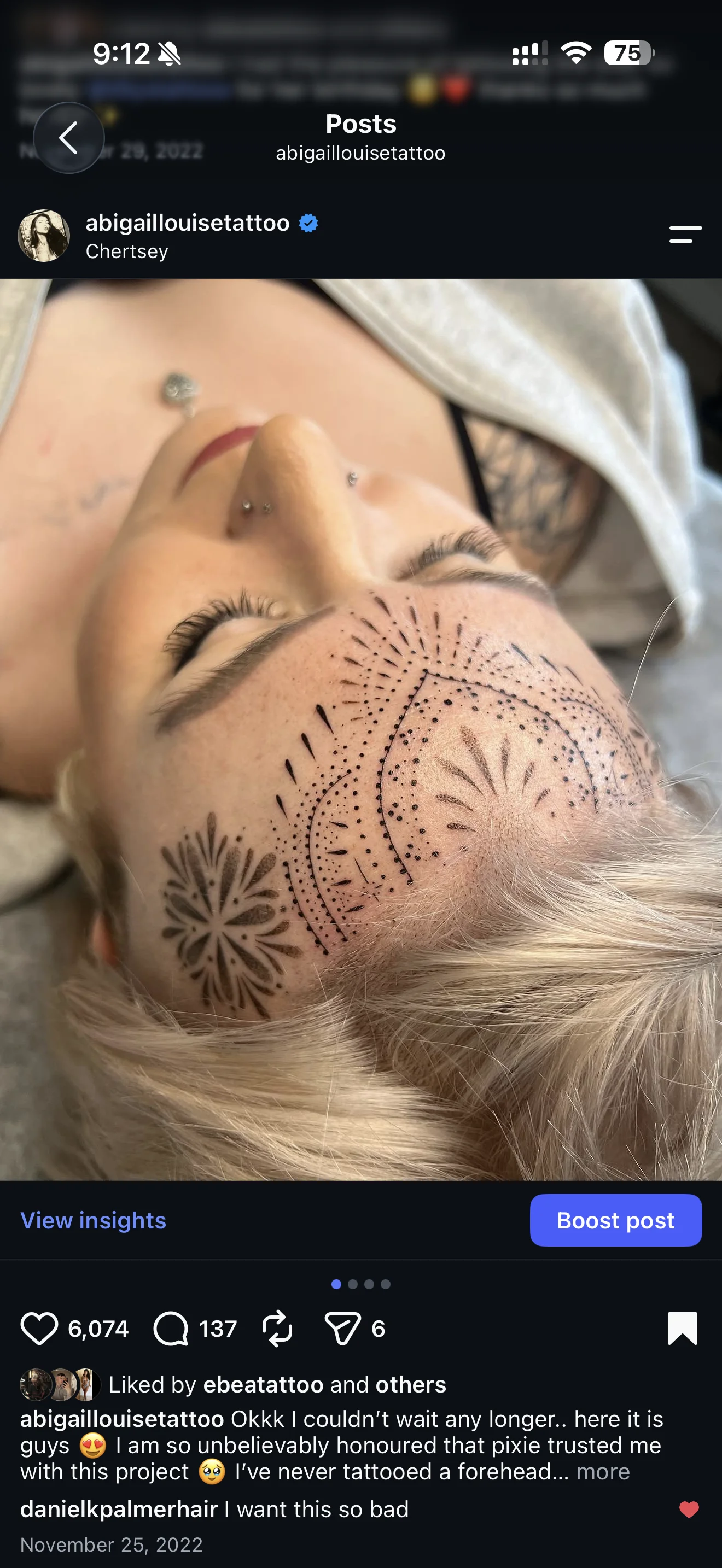
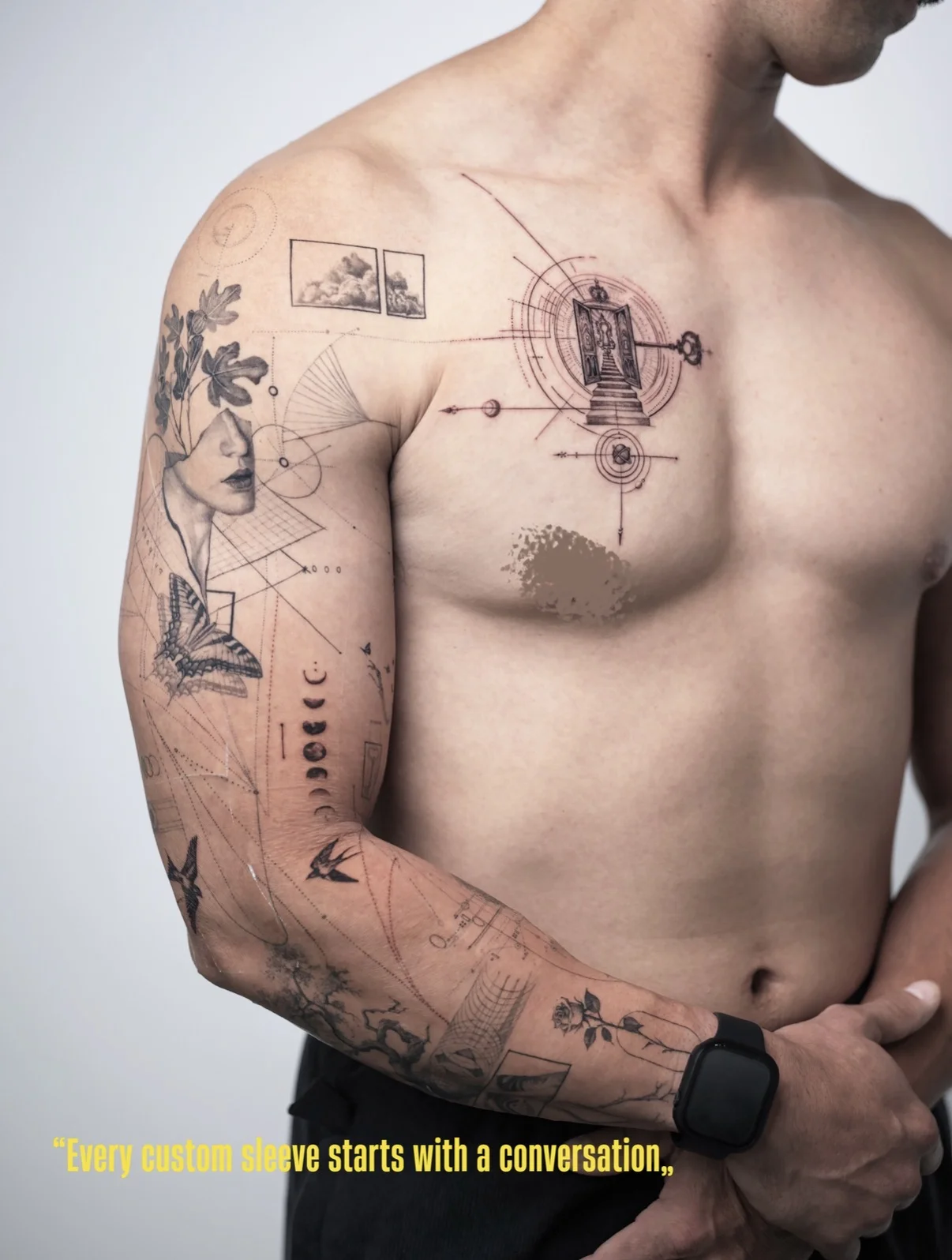
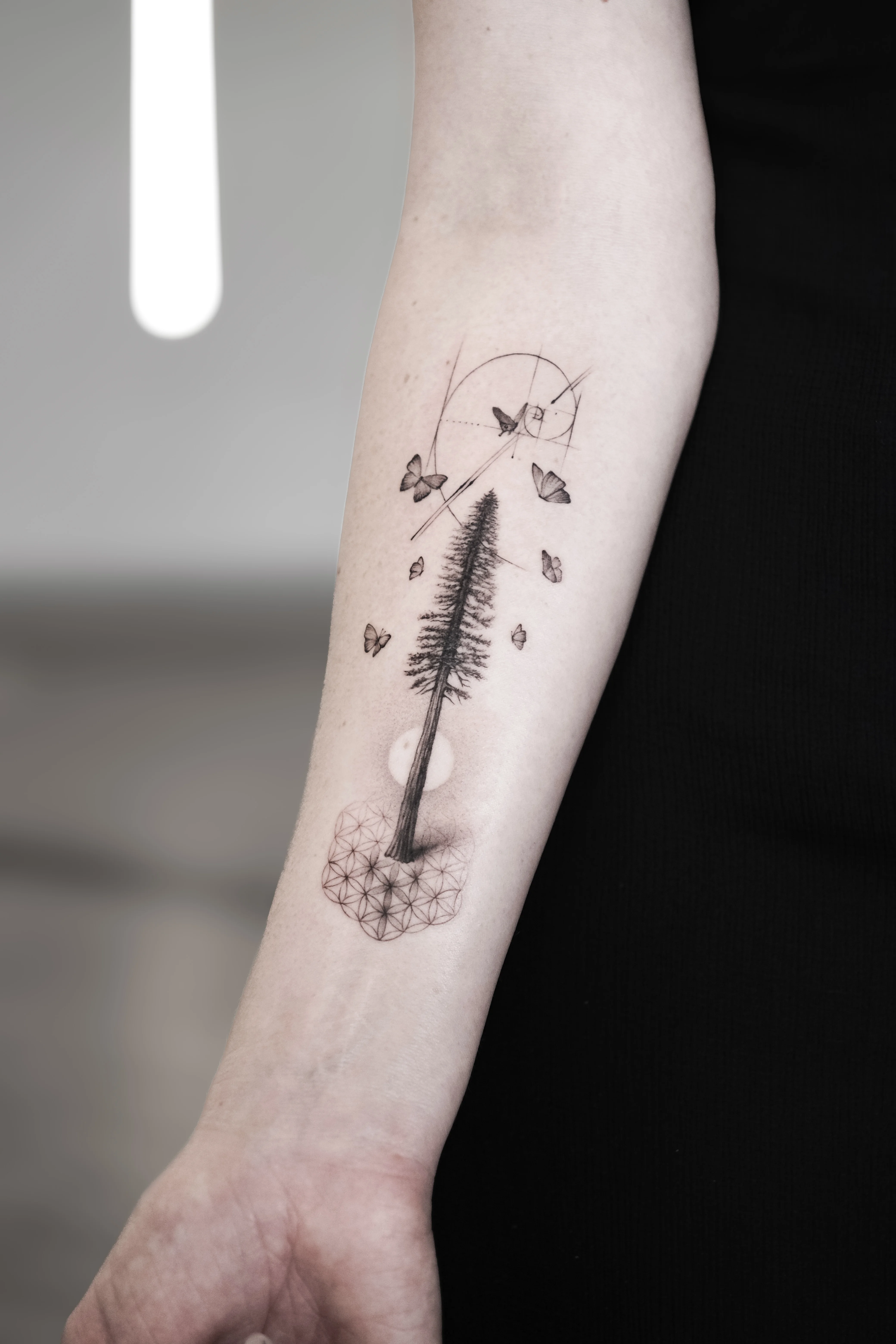
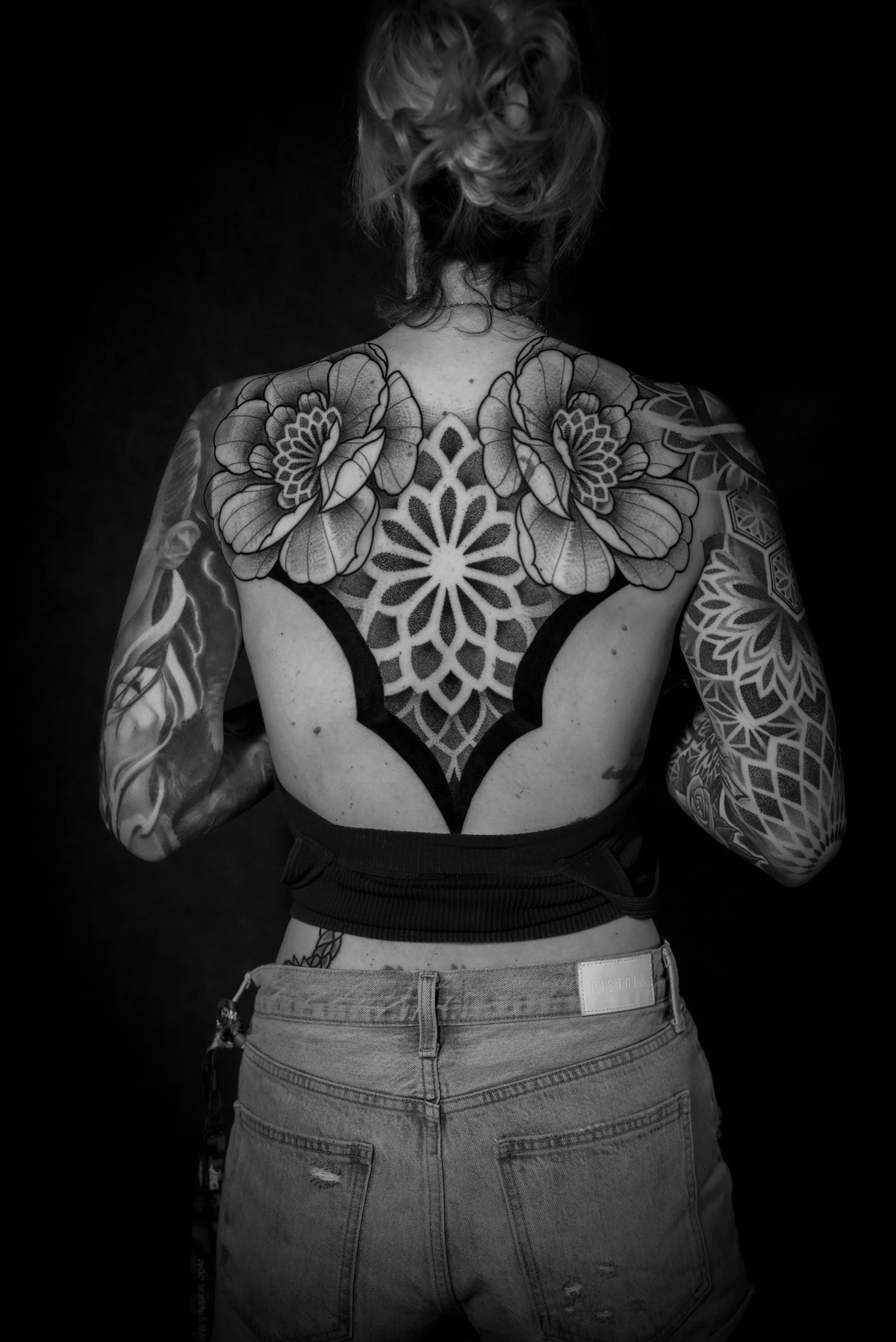
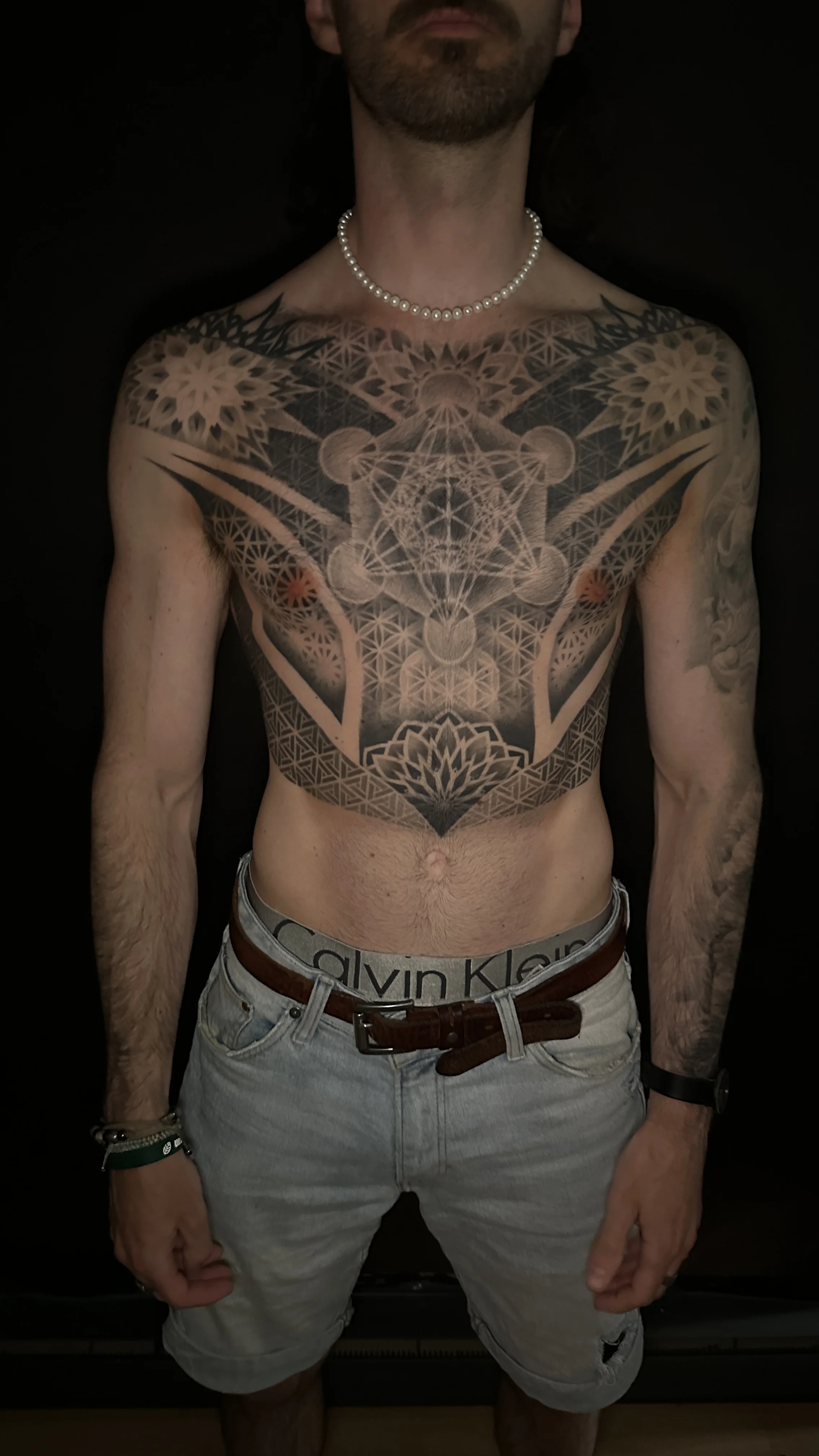
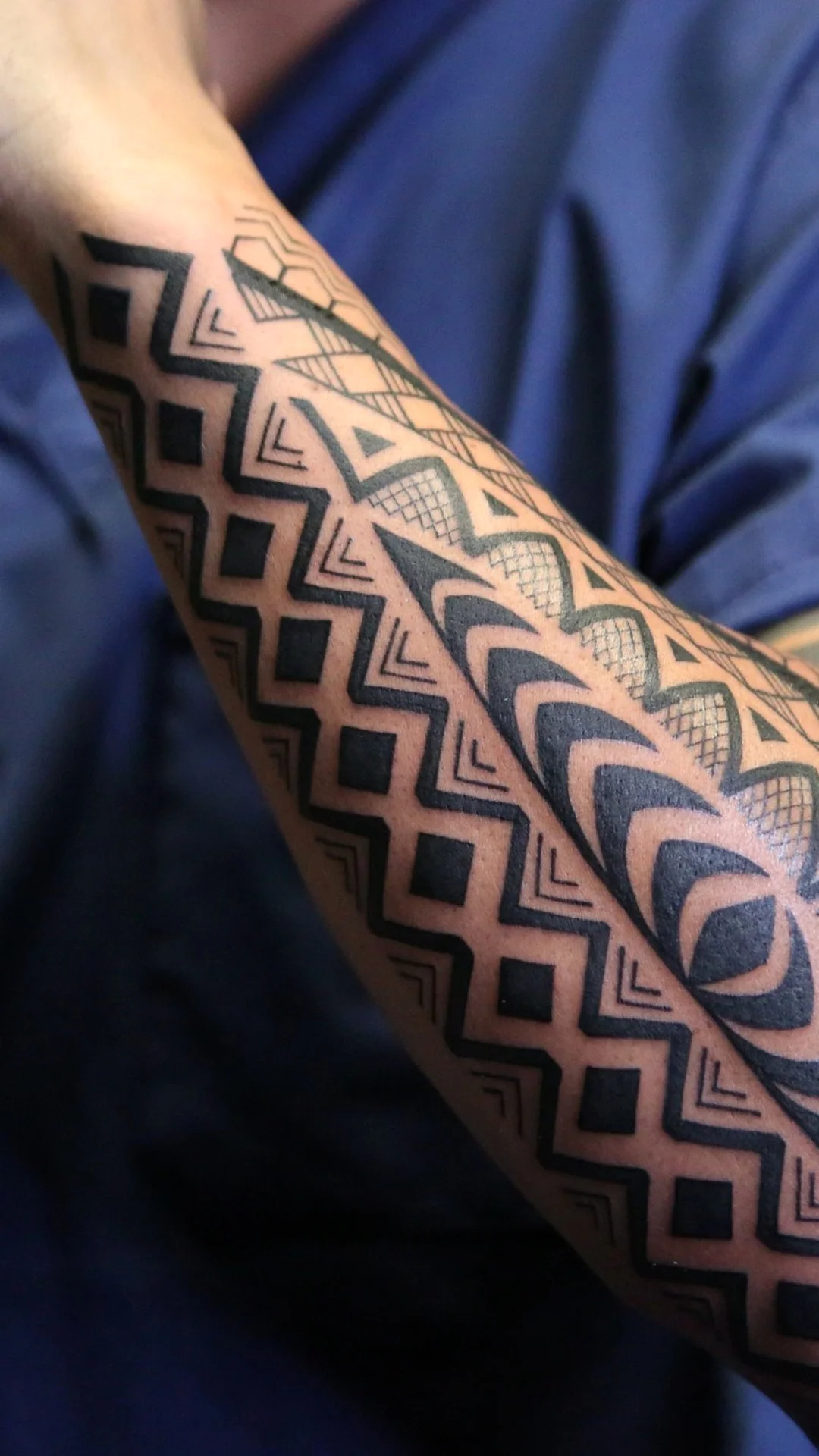
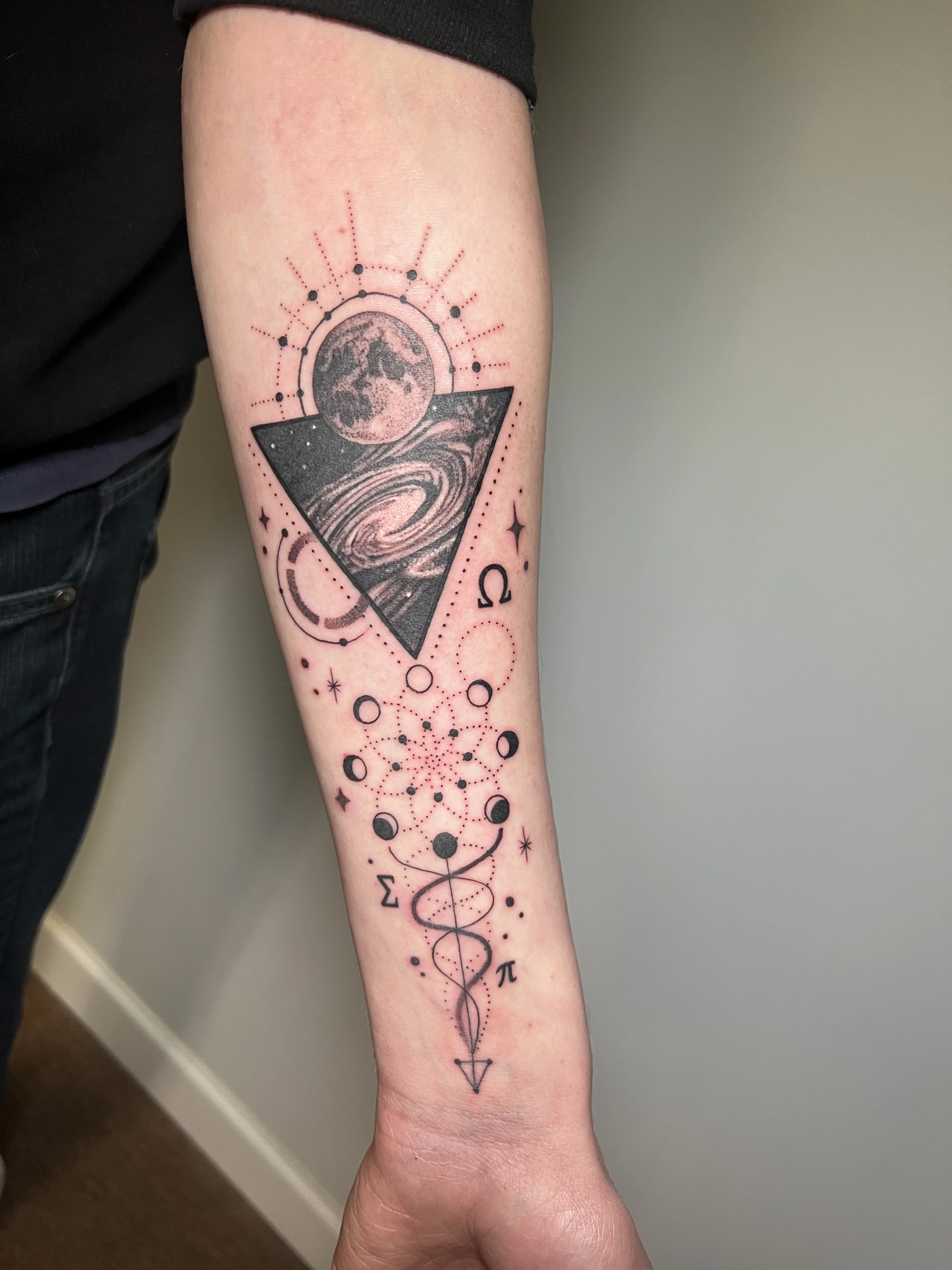
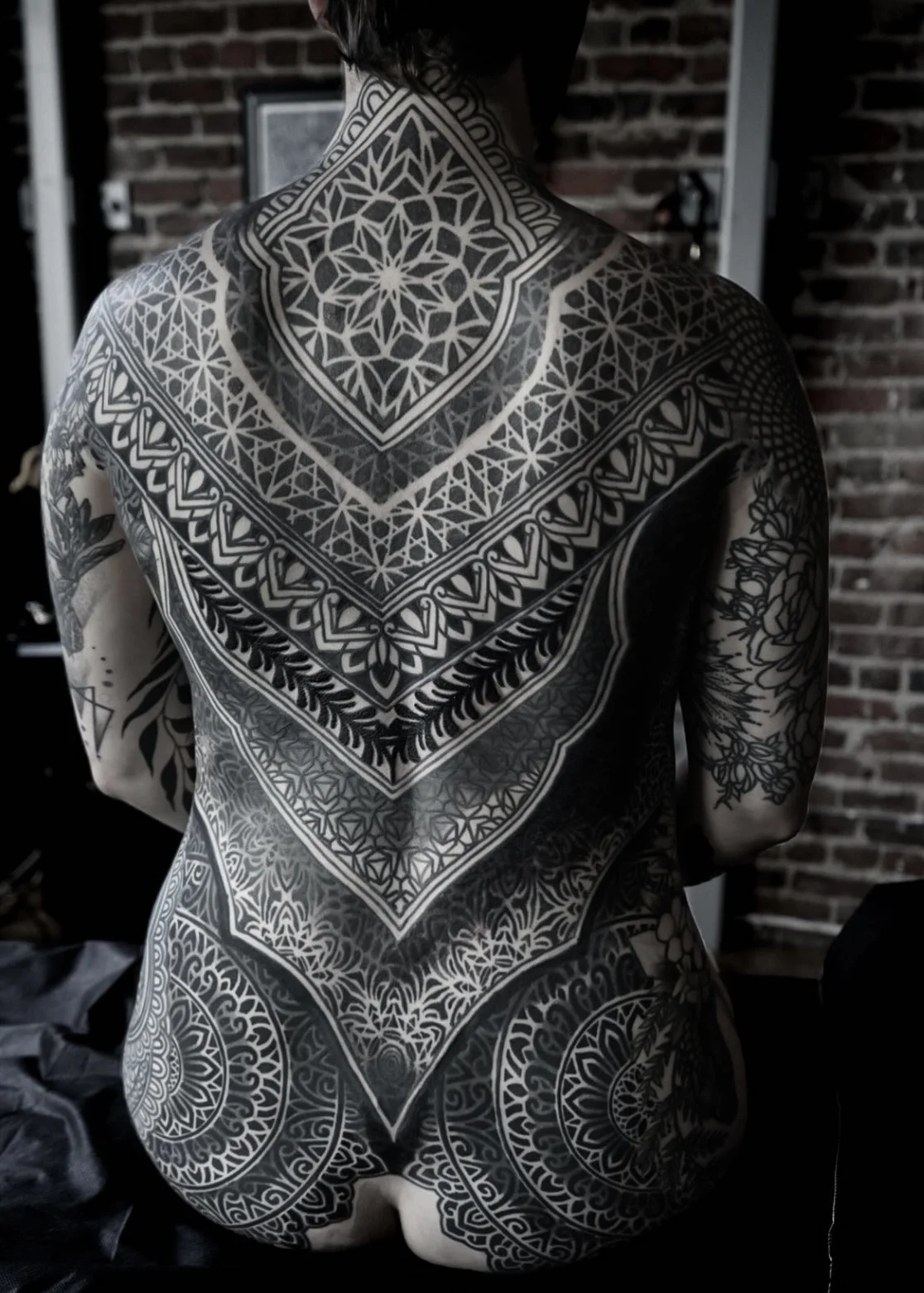
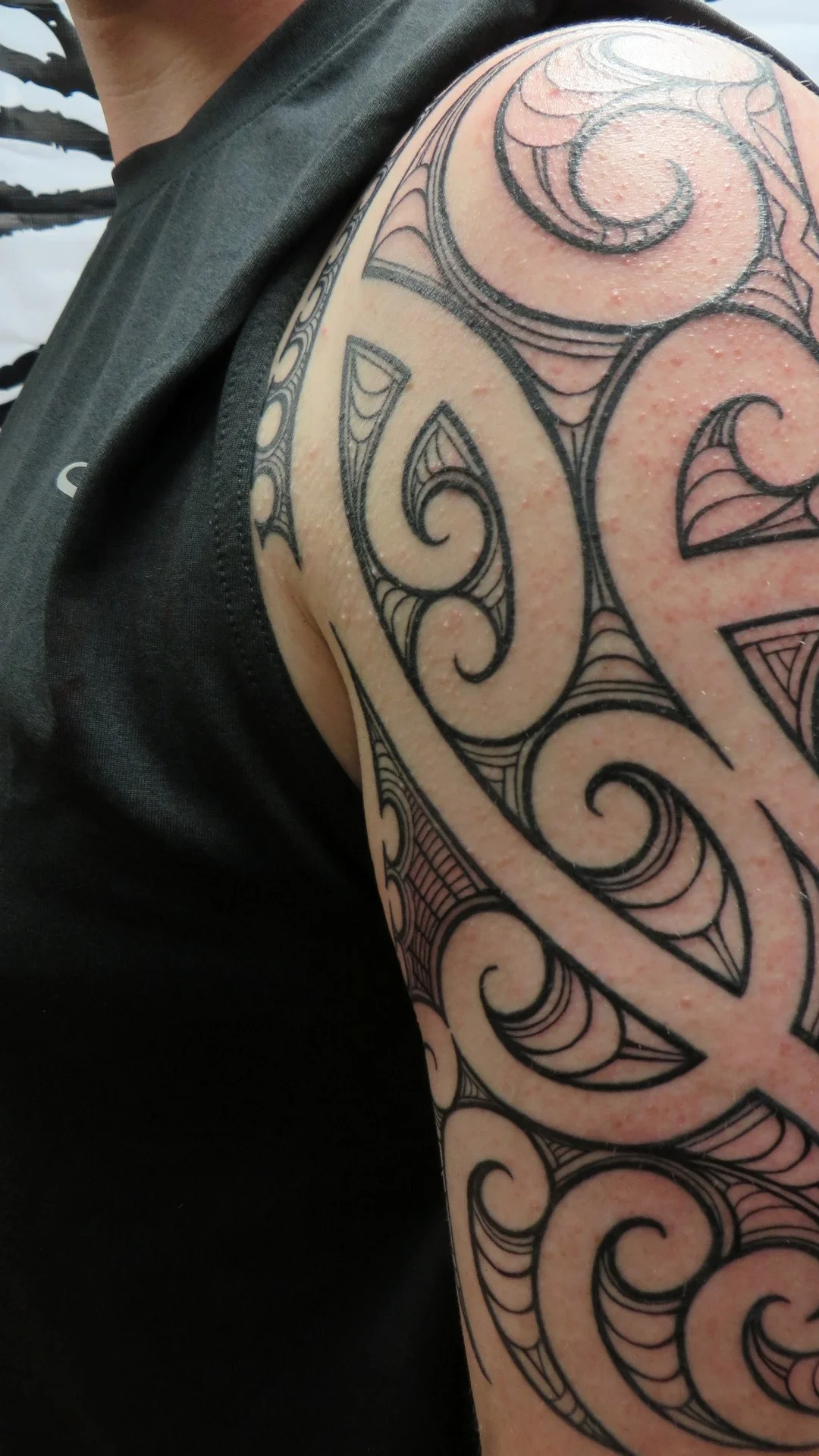
Geometric tattooing is precision linework and dotwork that uses symmetry, sacred geometry, mandalas, and repeating shapes to build the image. Hexagons, triangles, circles, optical illusions, and tessellating patterns come together into designs that feel almost architectural. Done well, it's some of the most satisfying tattoo work being made. Done poorly, it's some of the most obviously flawed, because there's nowhere for a crooked line to hide in a design built on perfect symmetry.
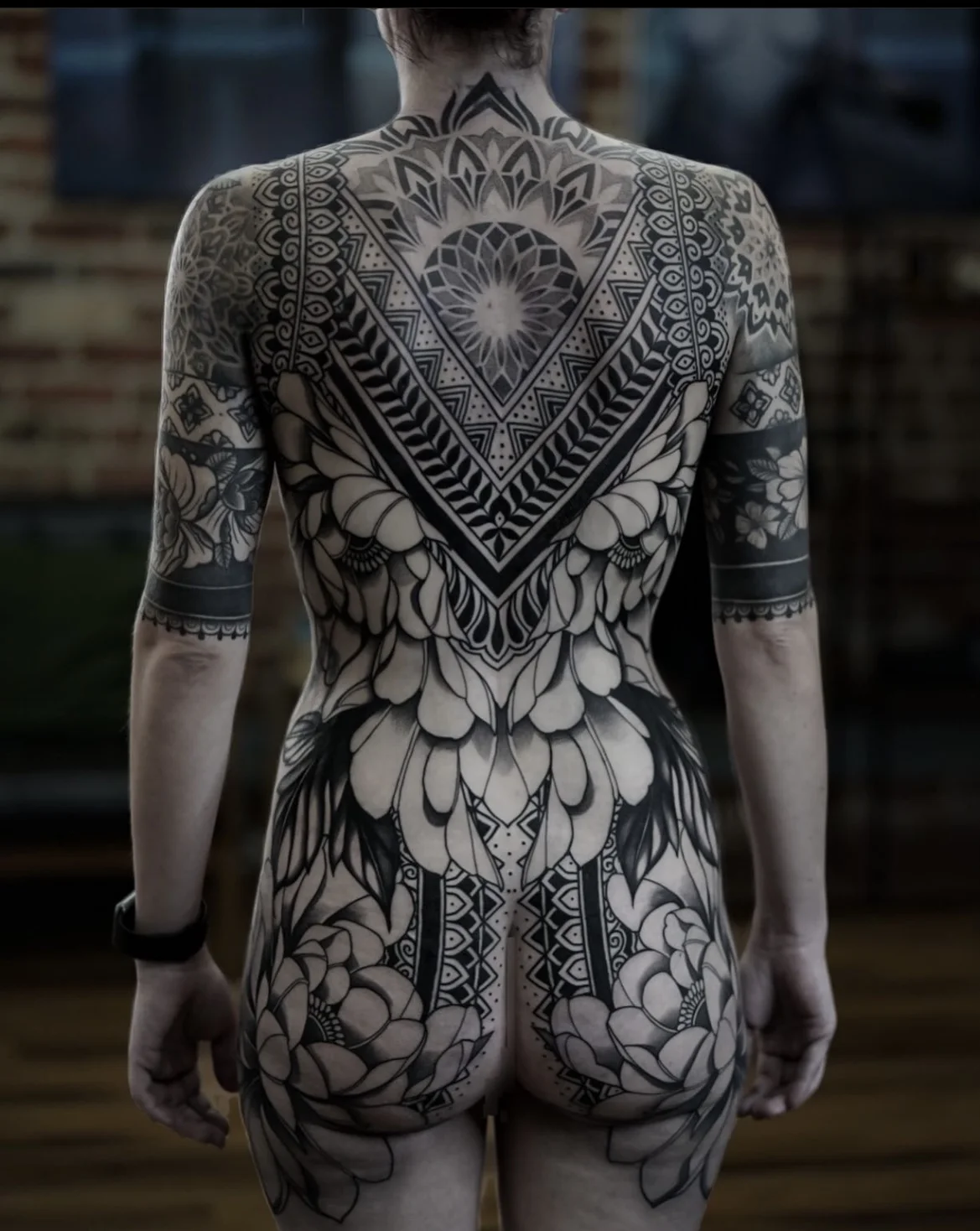
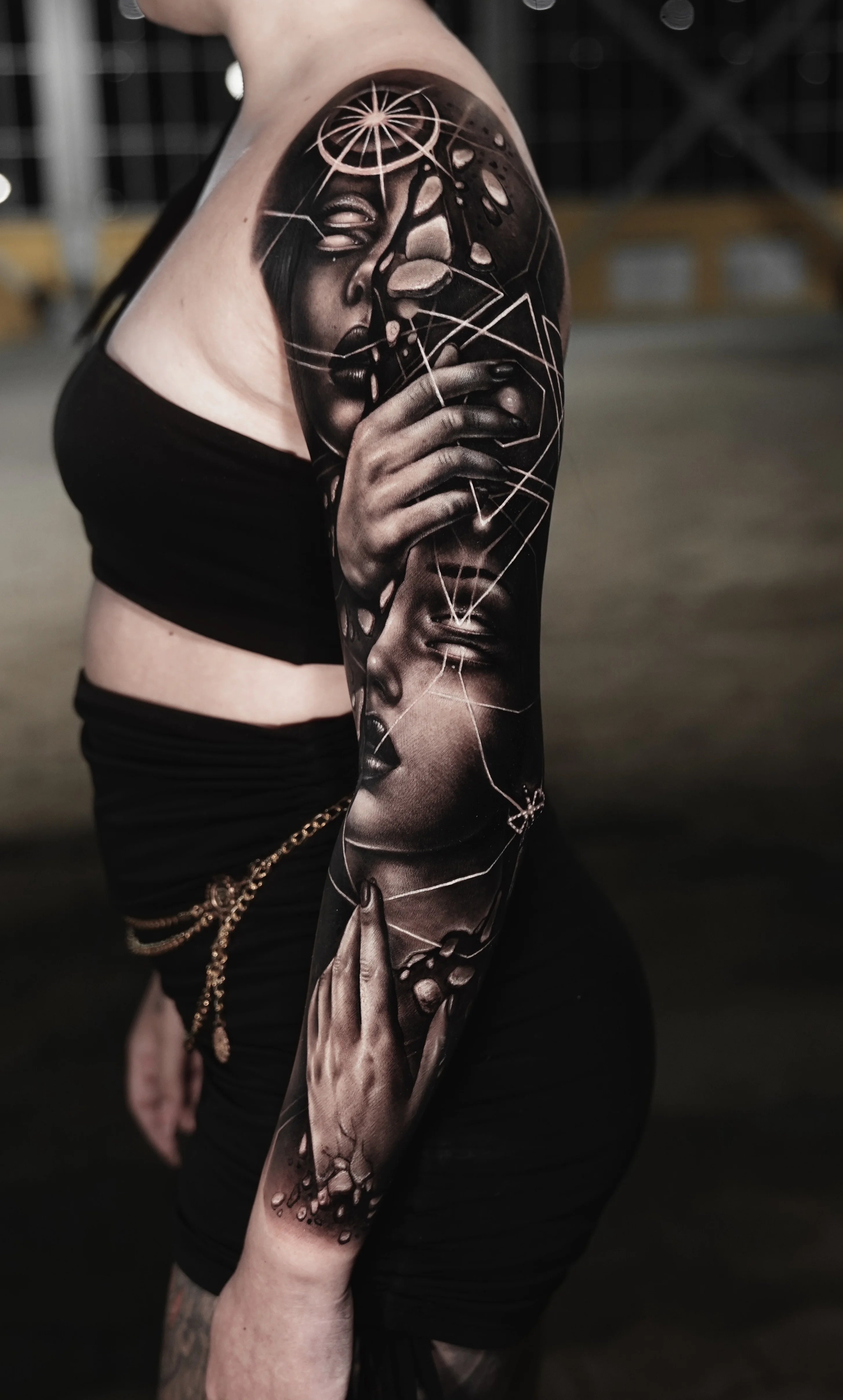
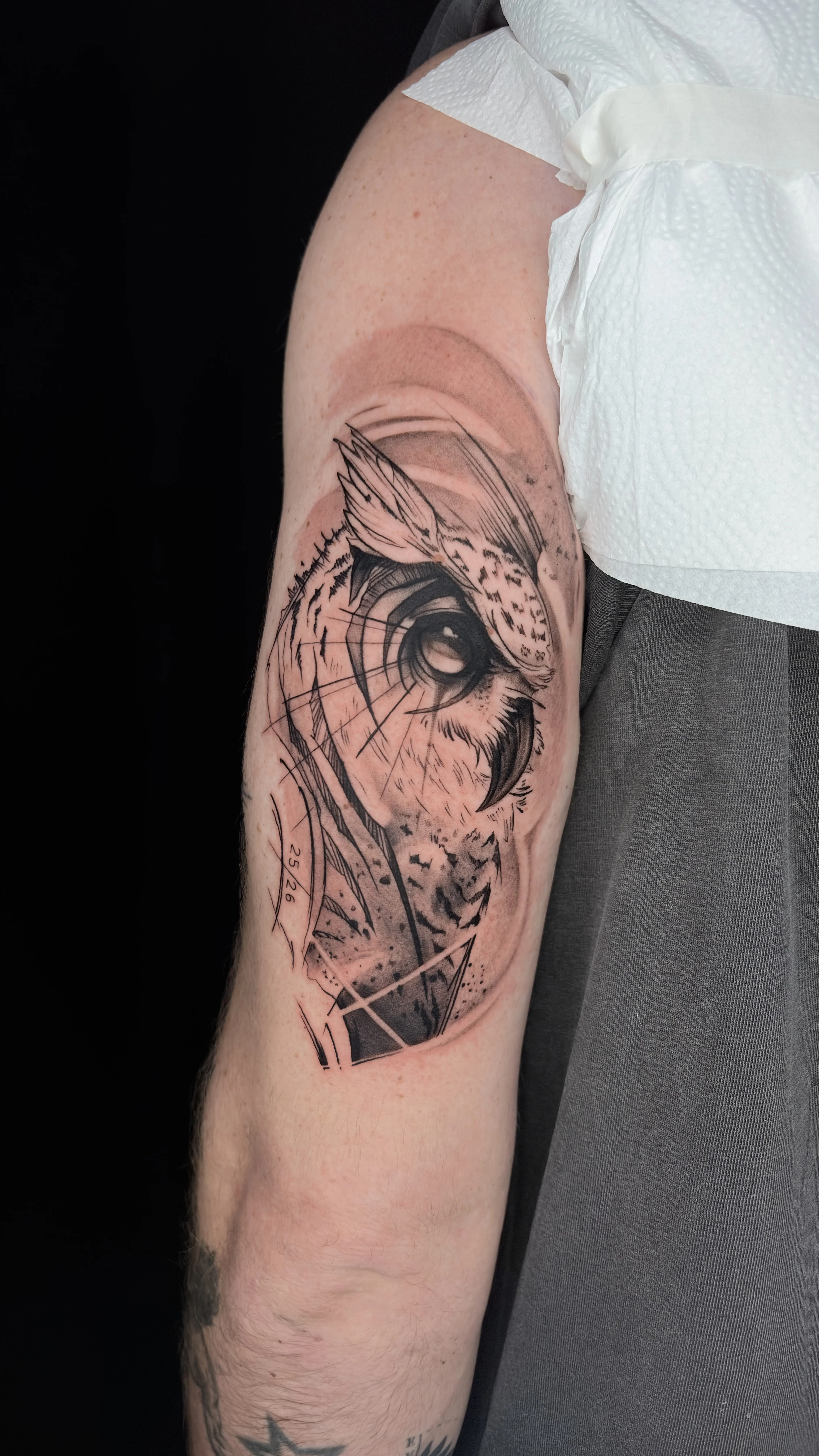
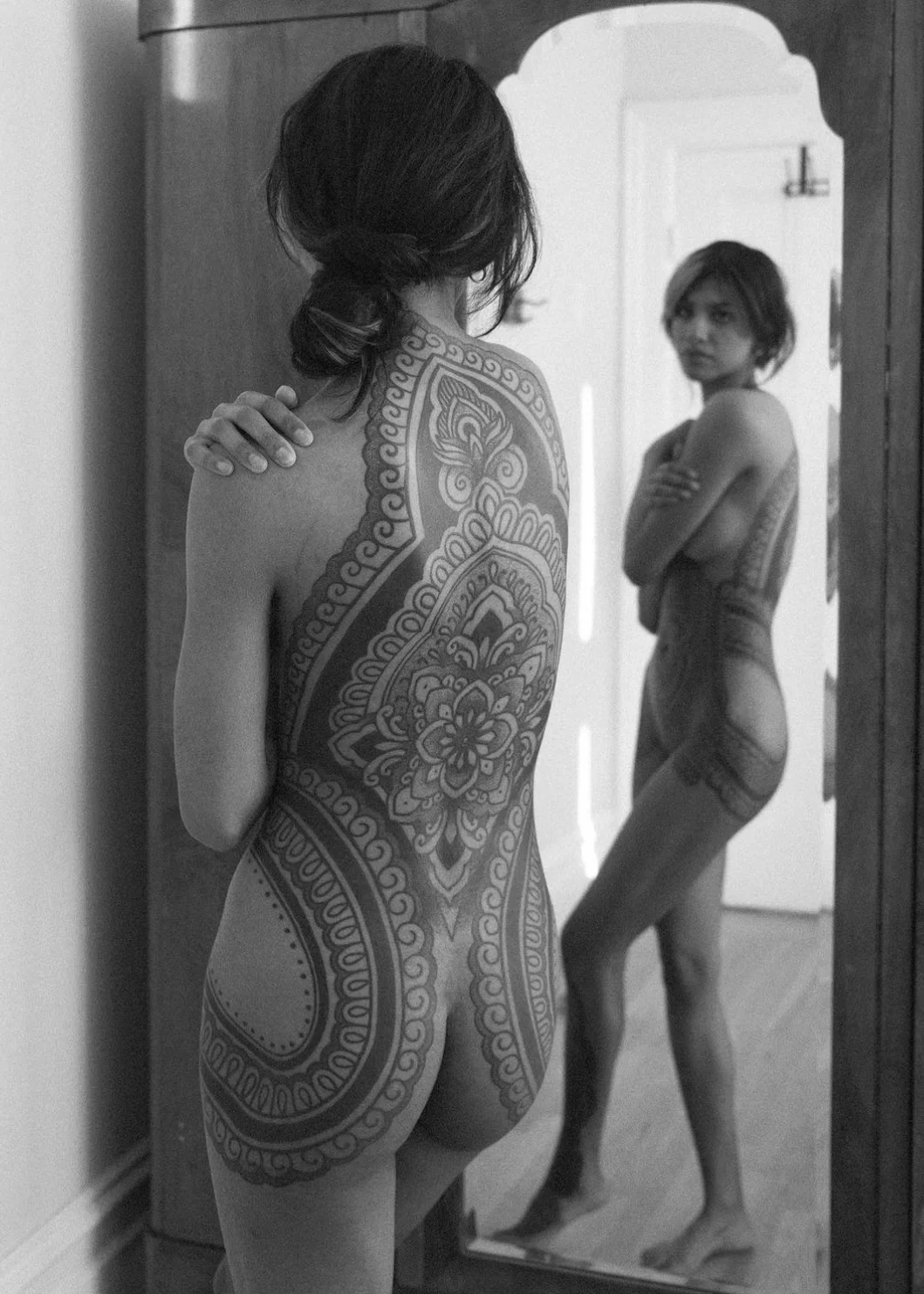
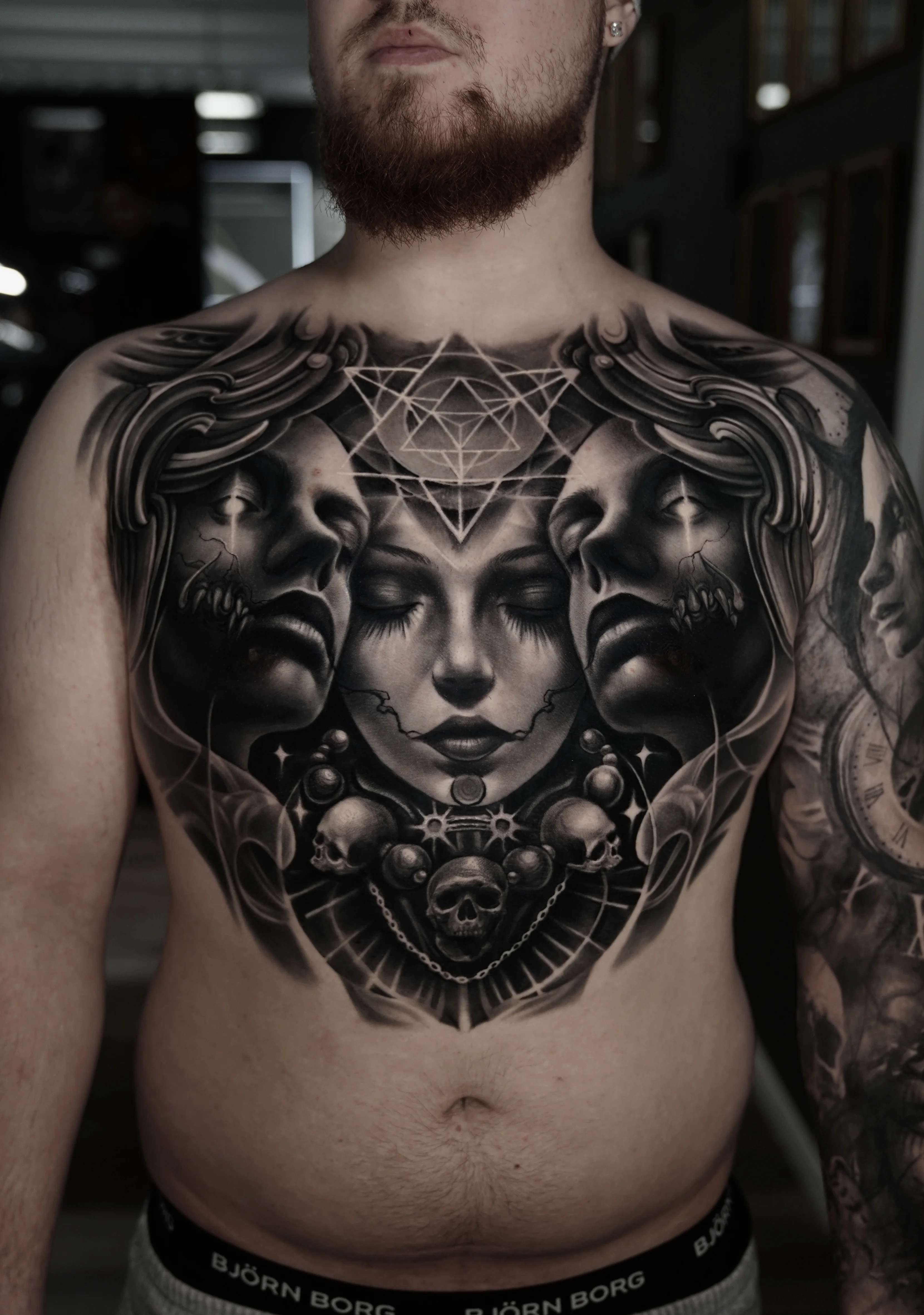
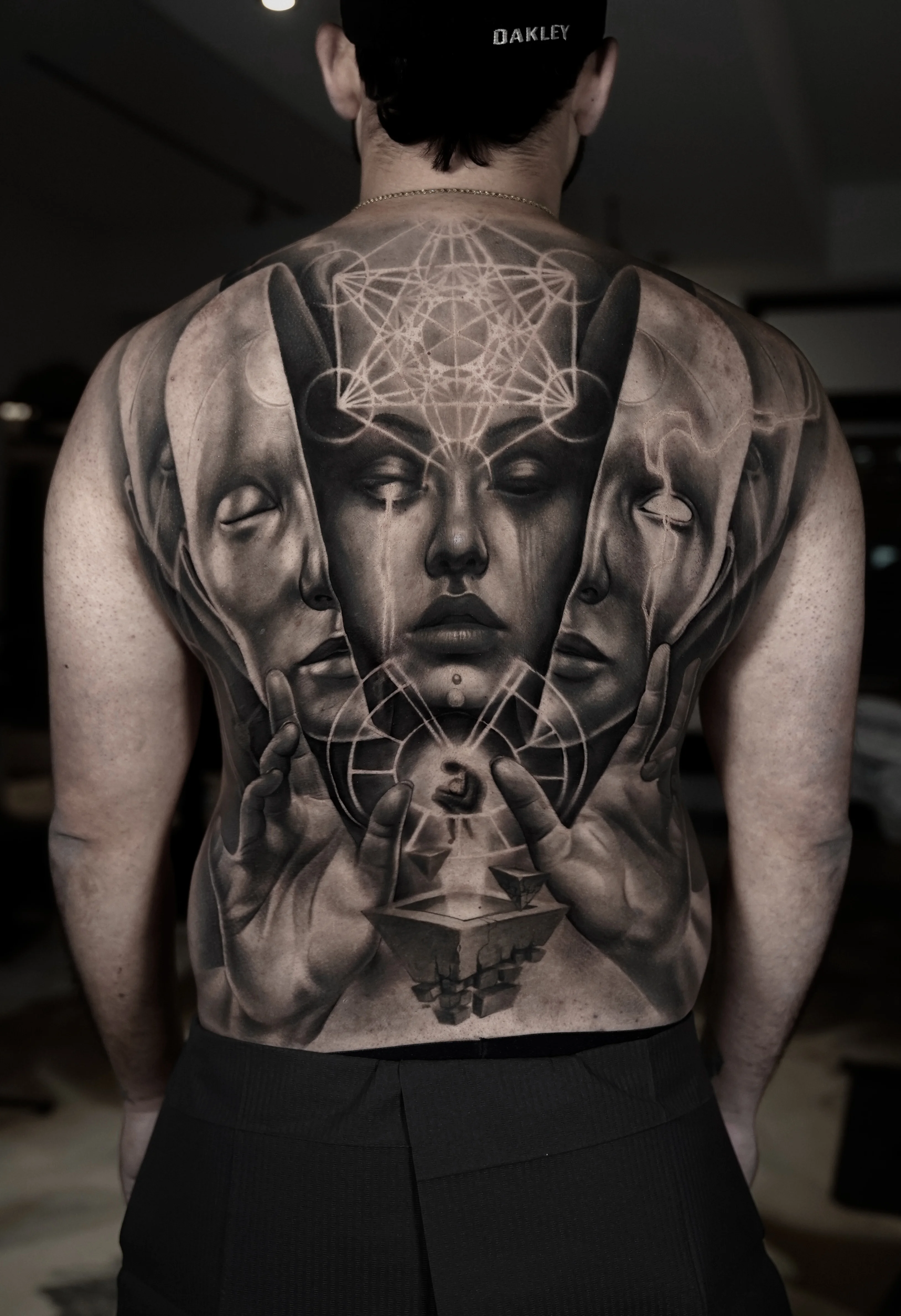
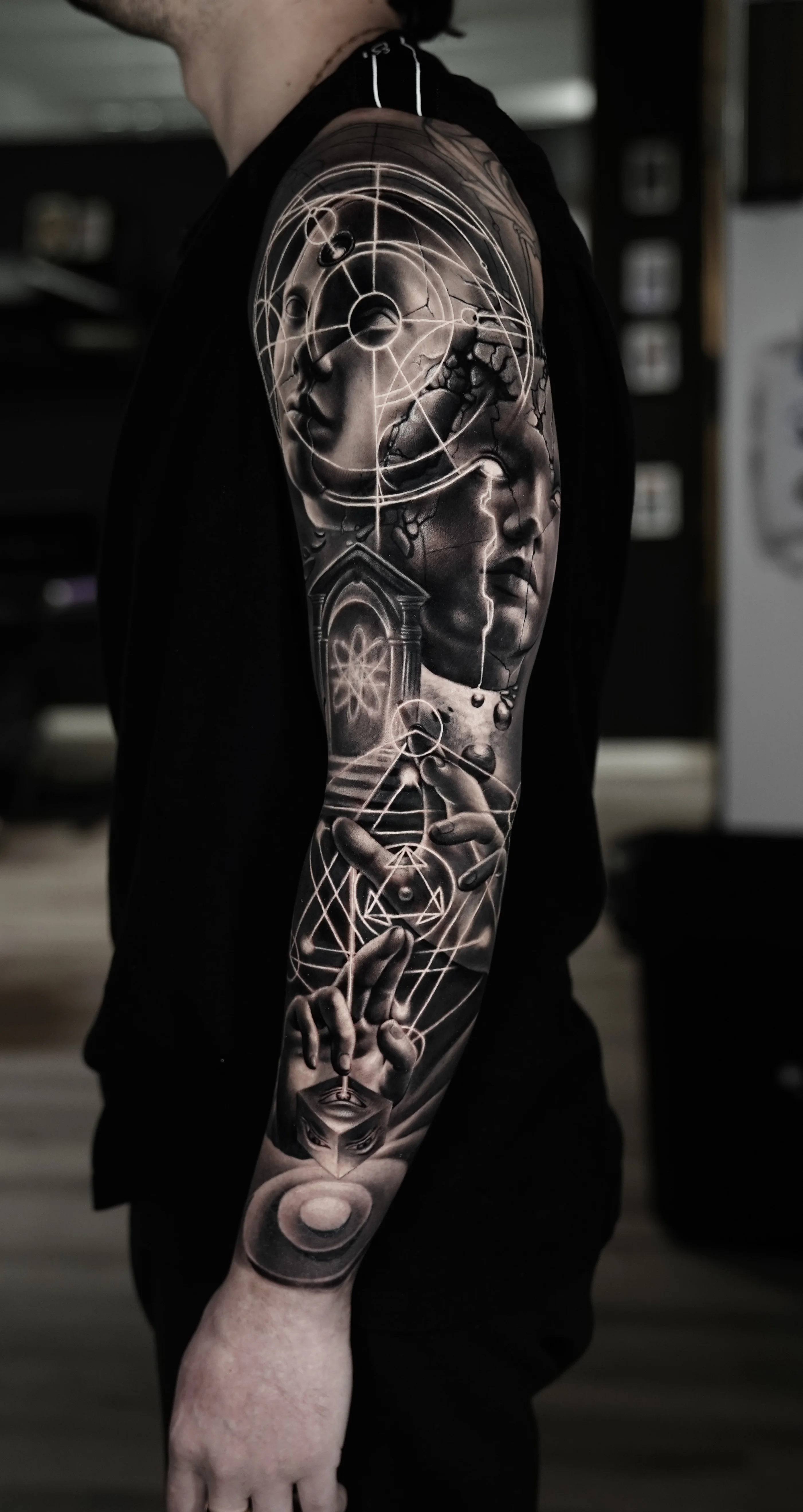
The style overlaps with ornamental work but tends to focus more on pure geometric form than on decorative pattern. Some geometric pieces stand alone, while others frame or interrupt a second image, like an animal that breaks apart into shapes or a portrait set inside a sacred geometry figure.
What makes the style recognizable
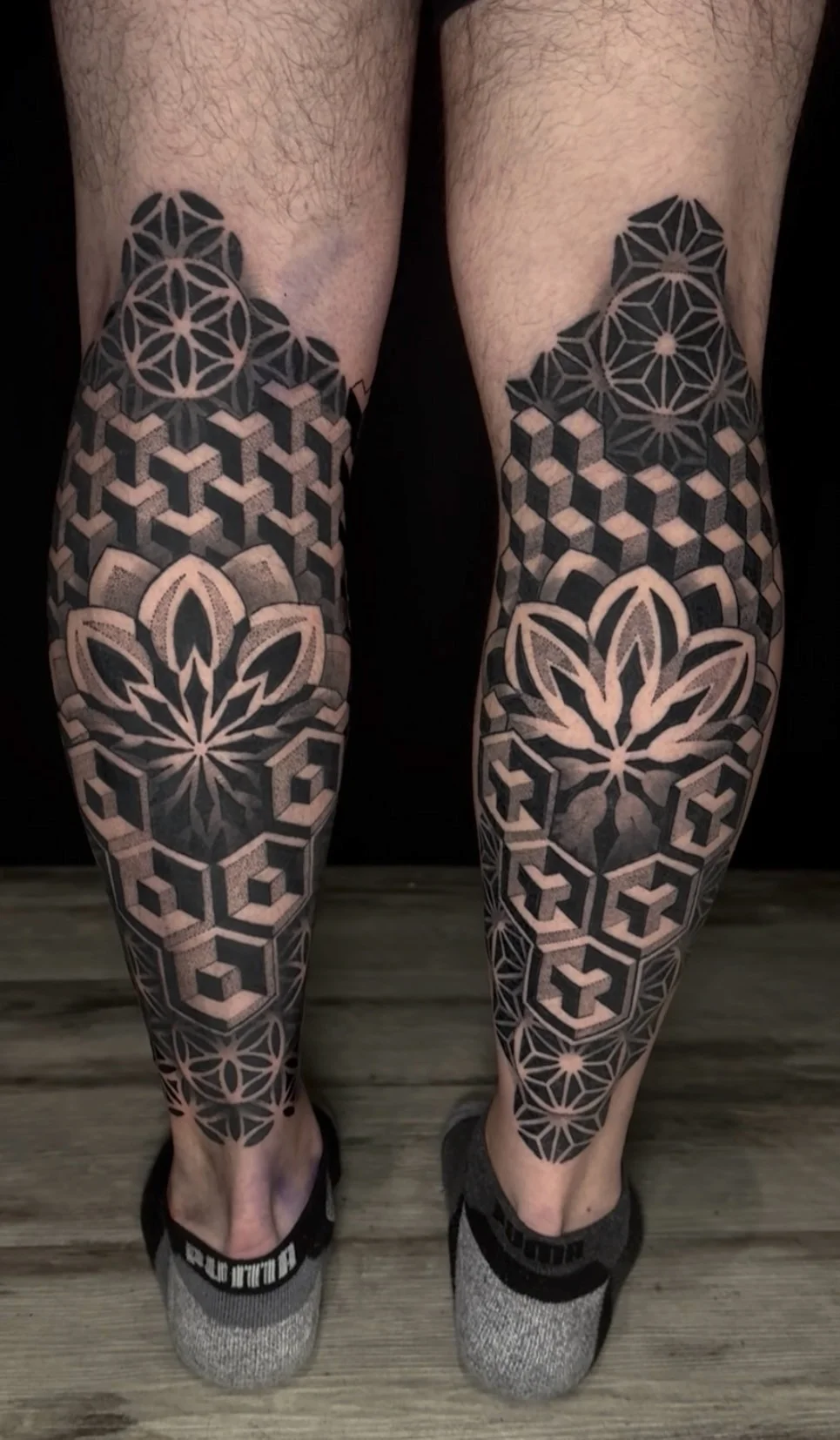
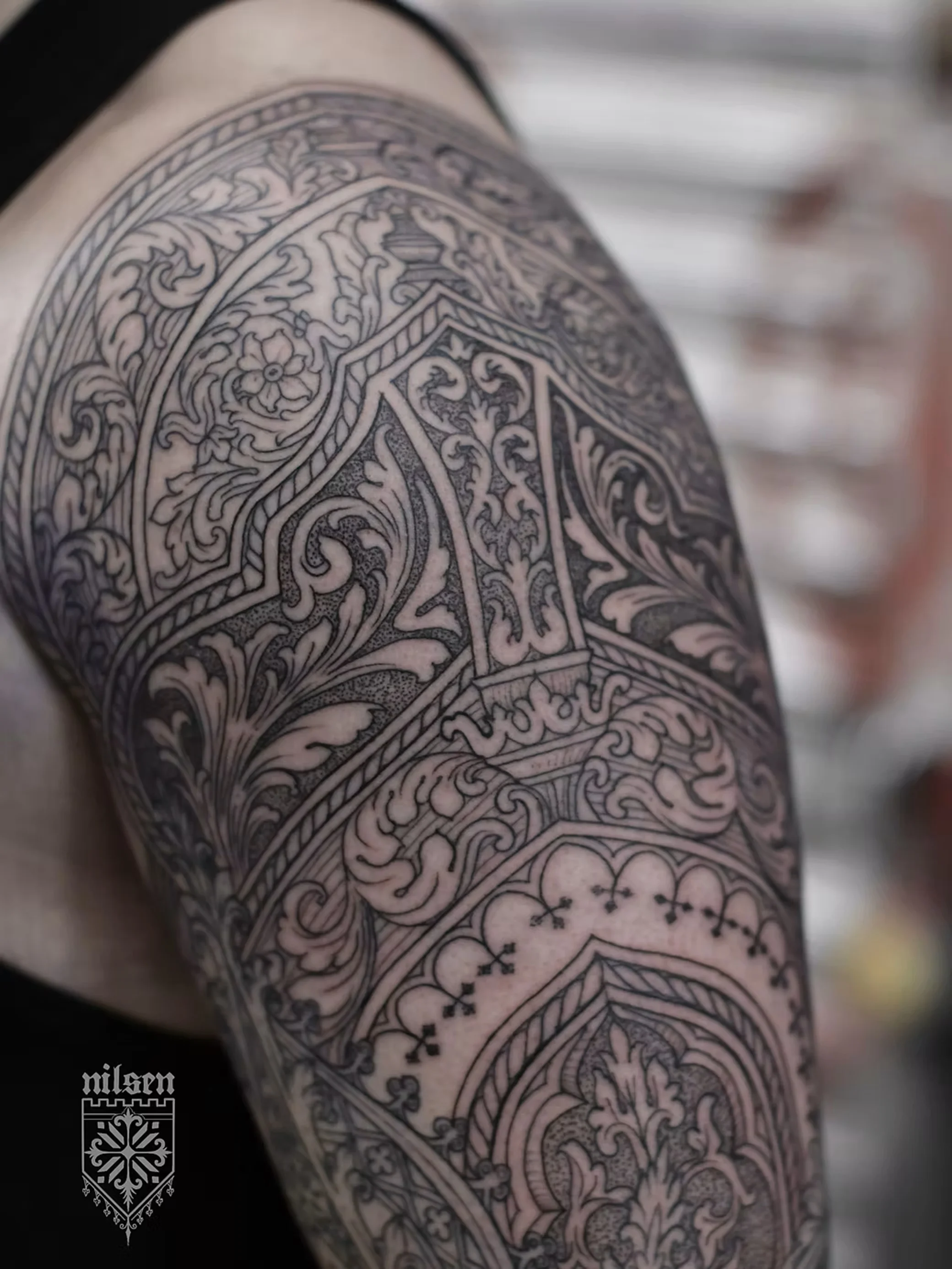
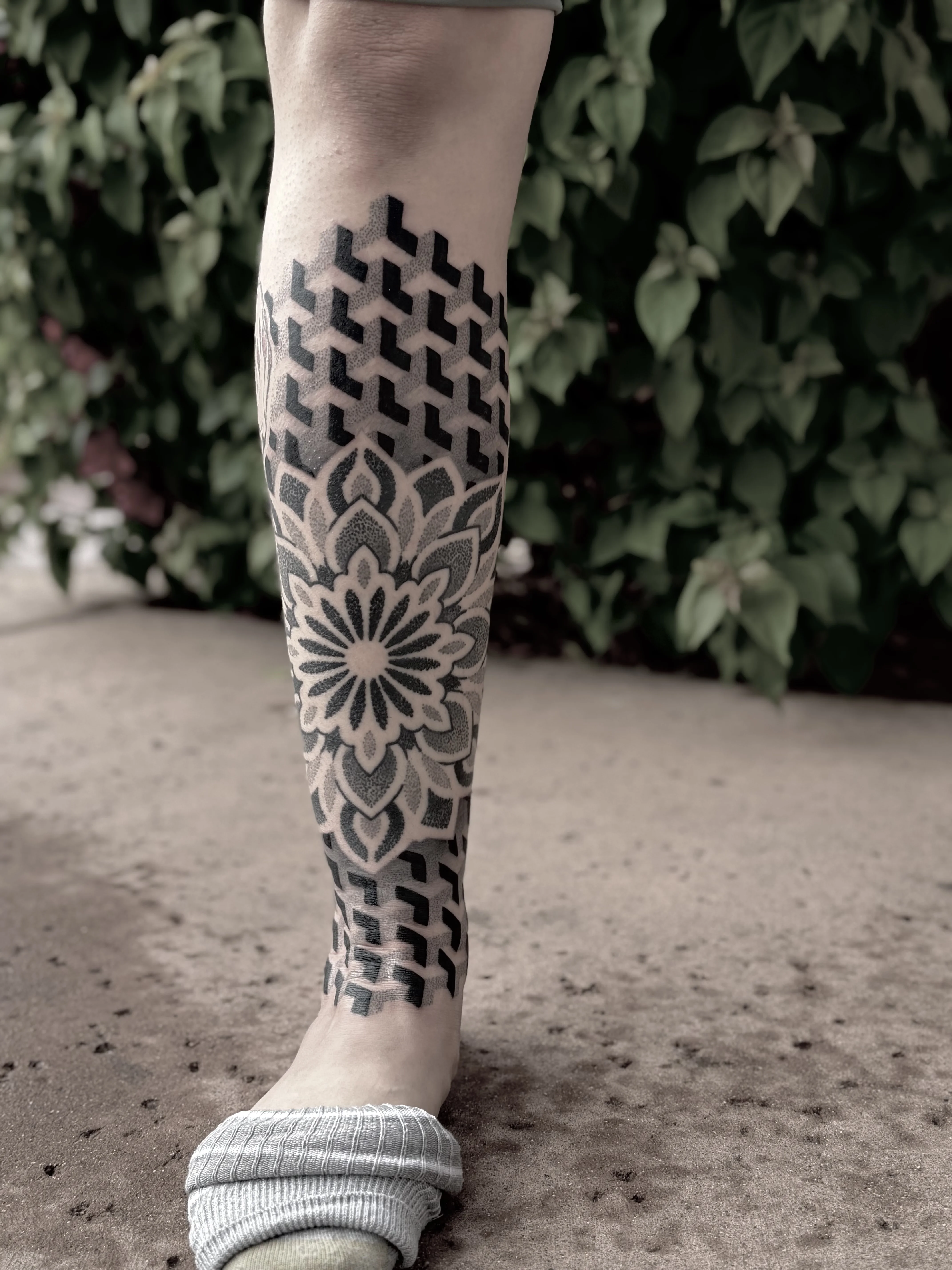
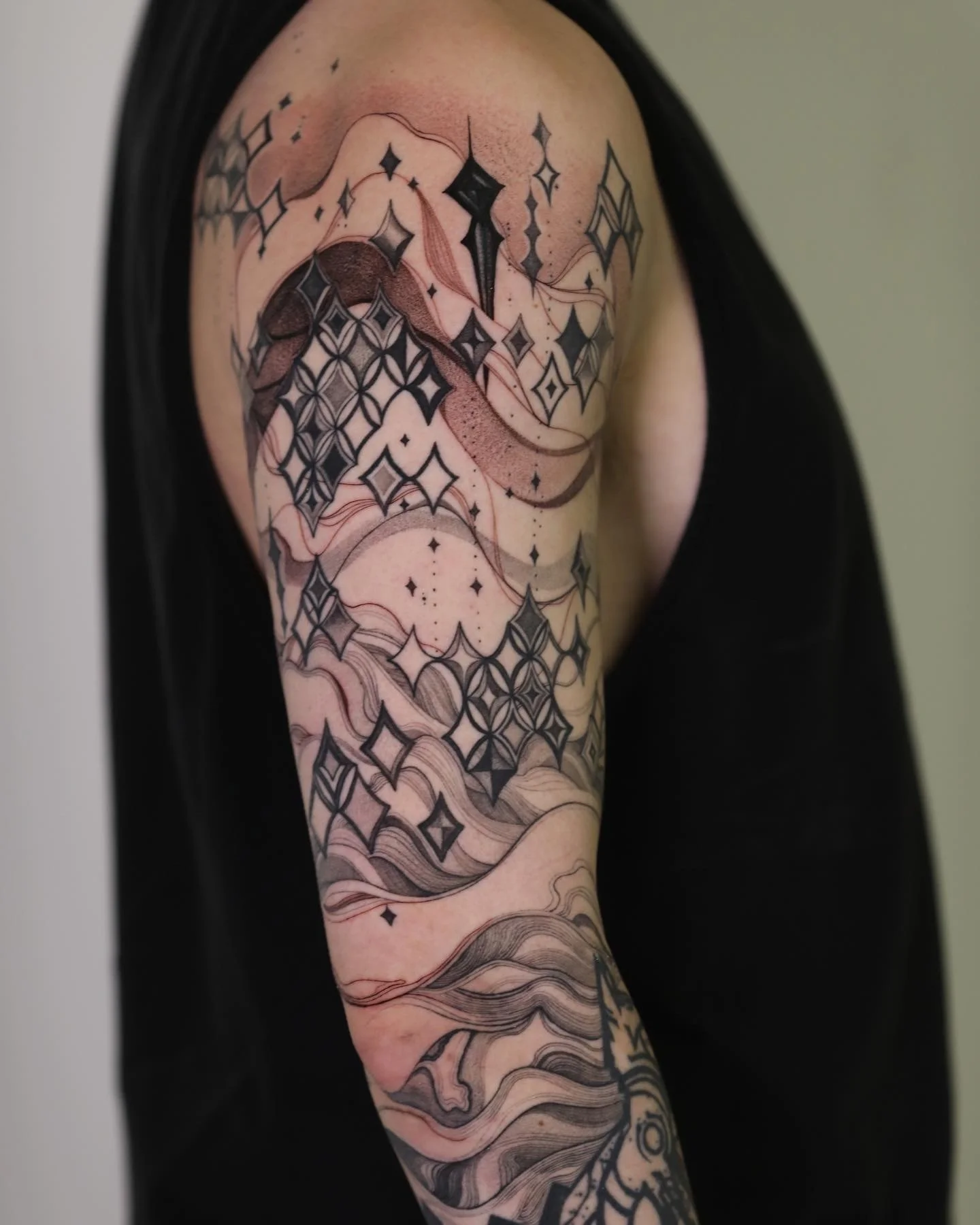
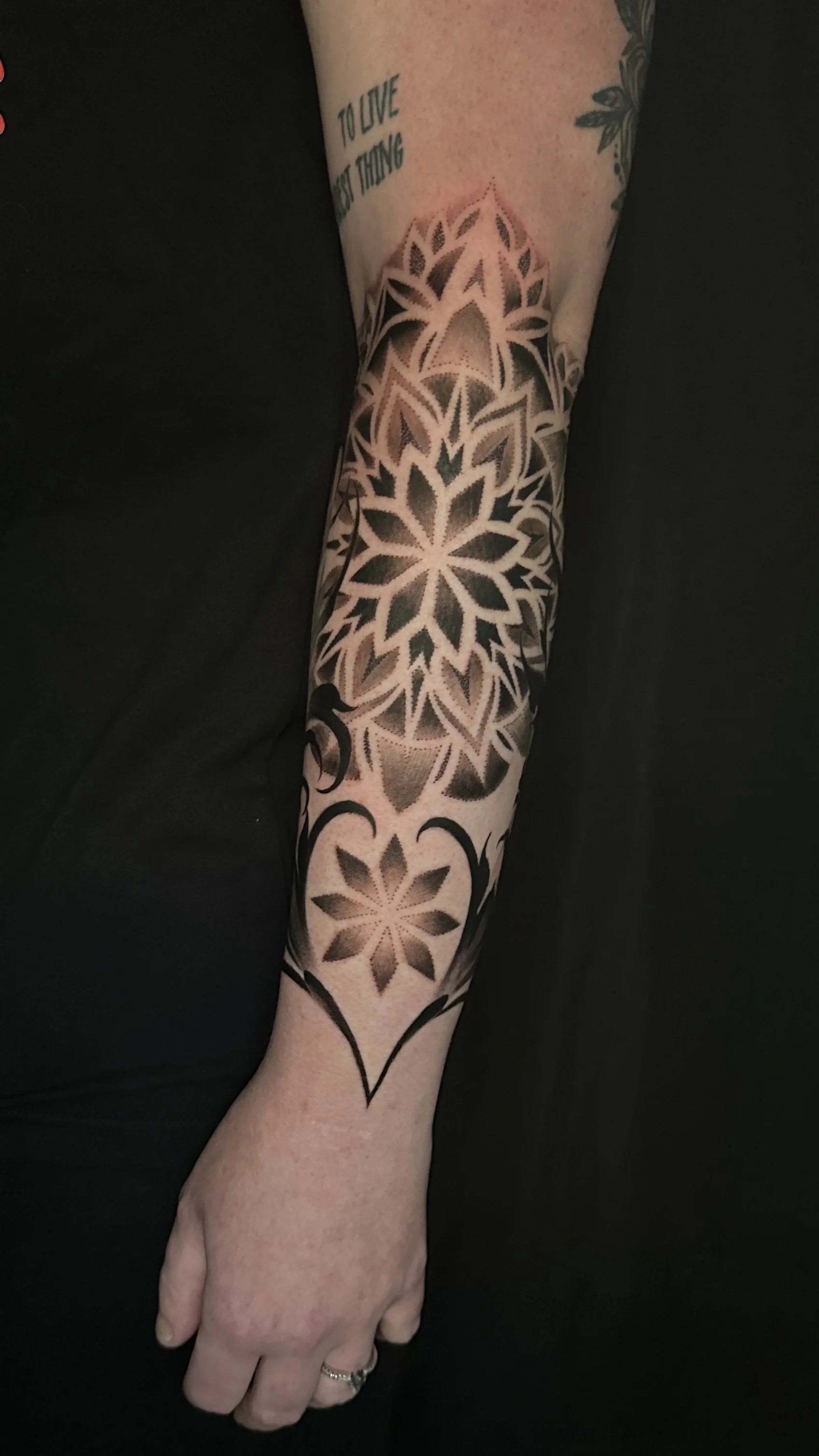
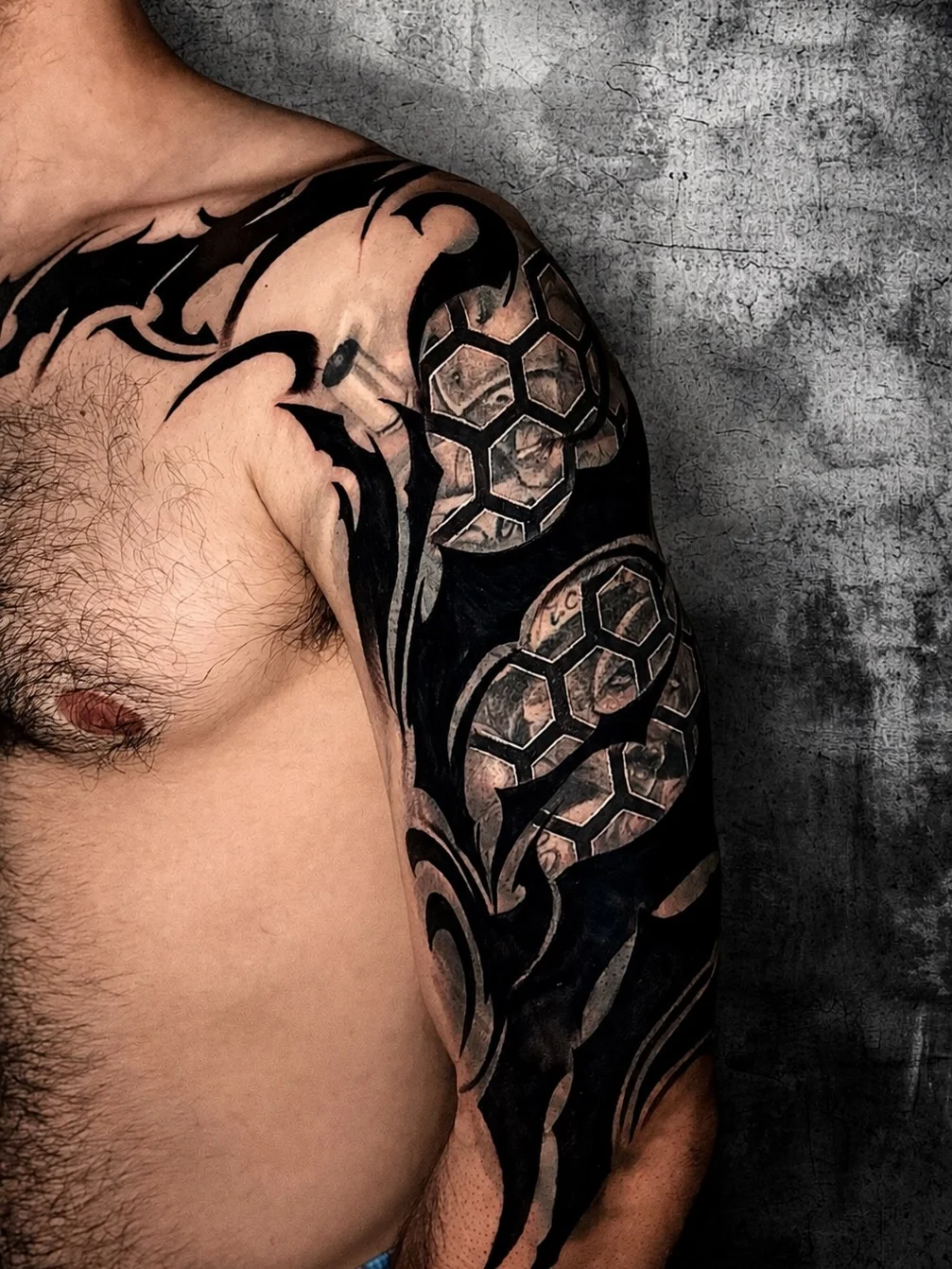
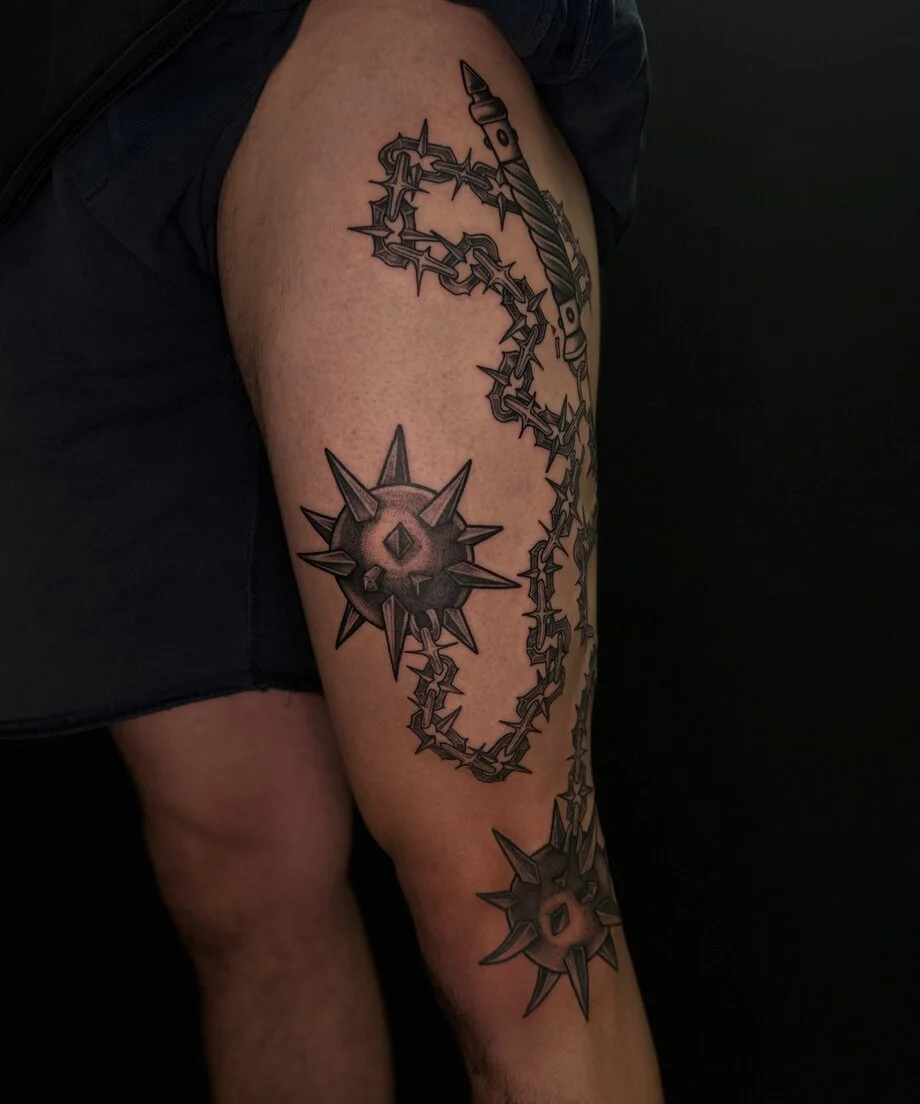
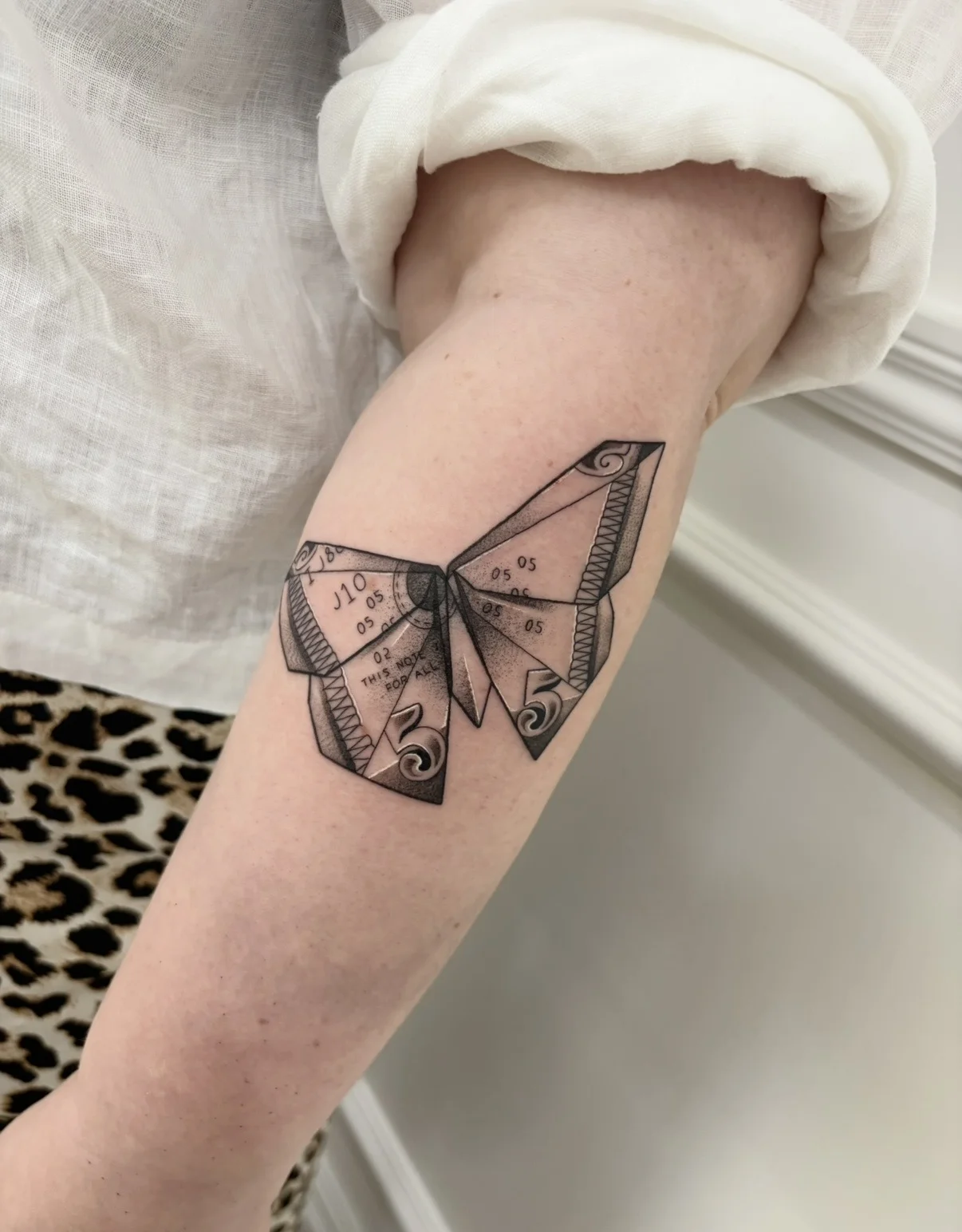
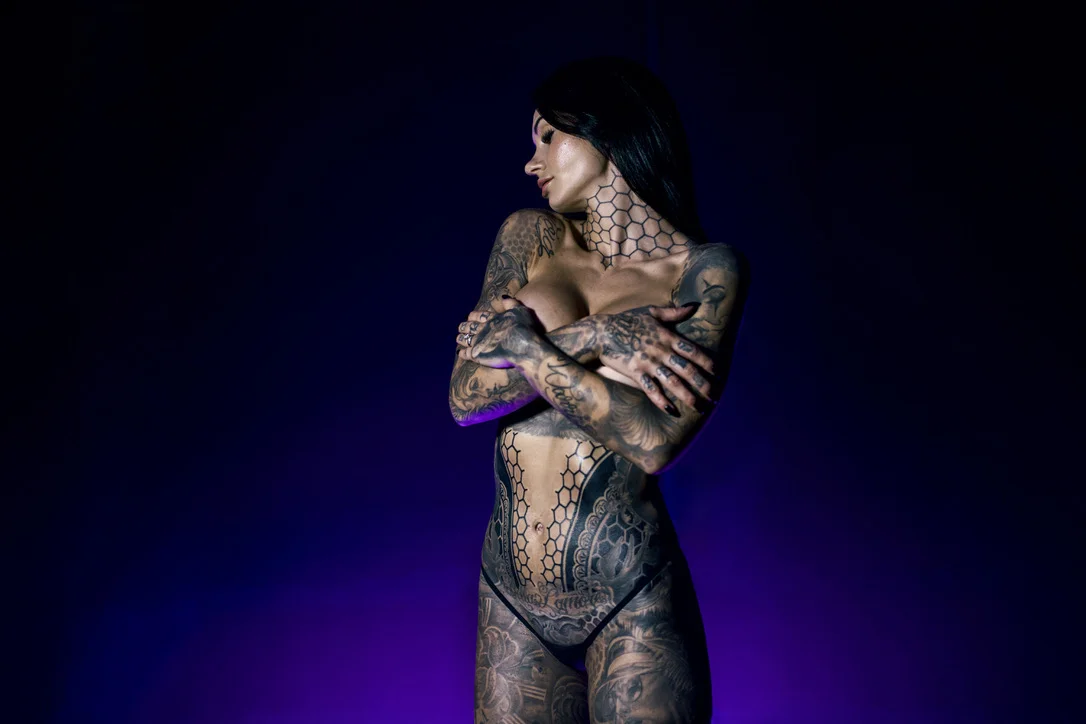
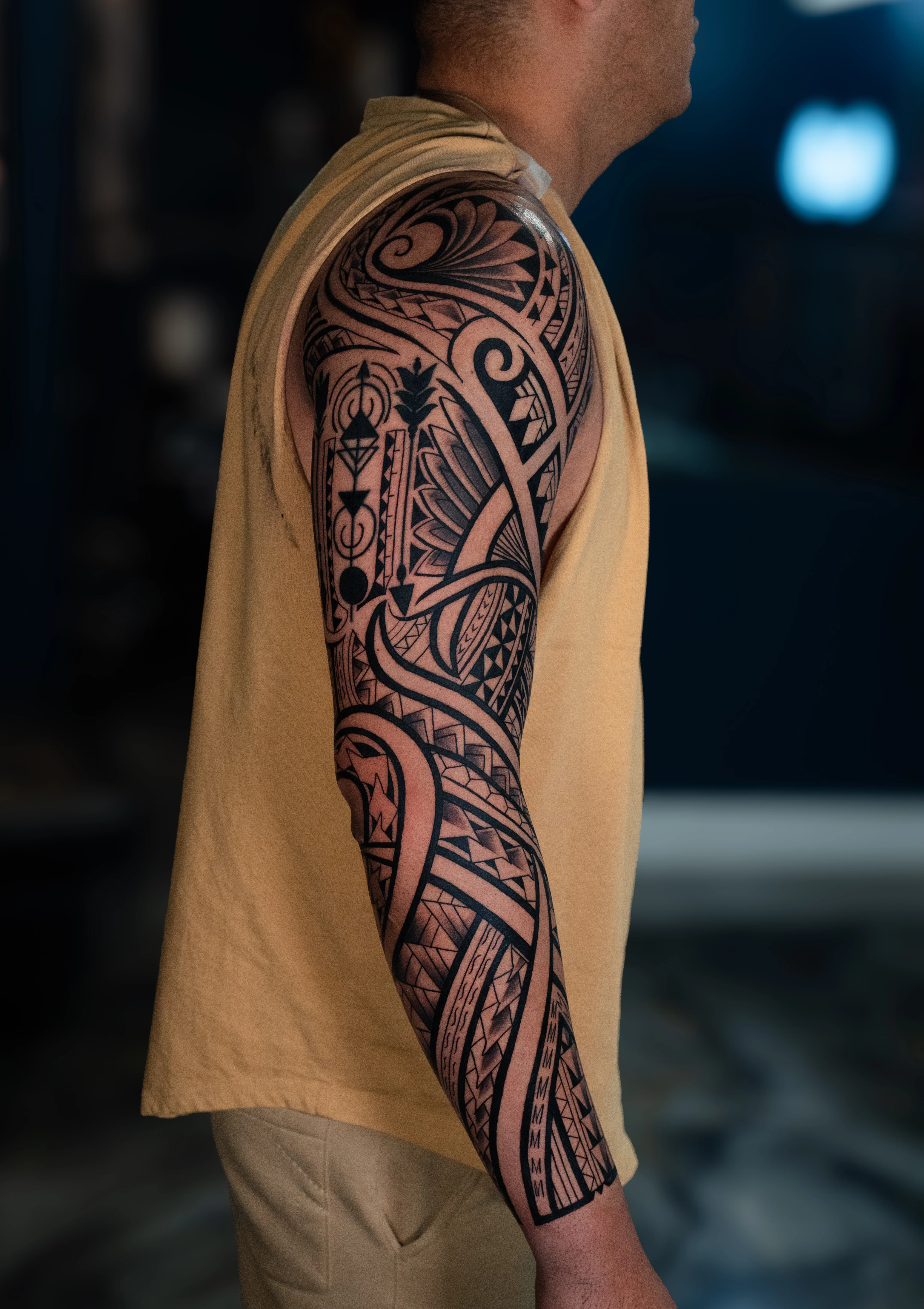
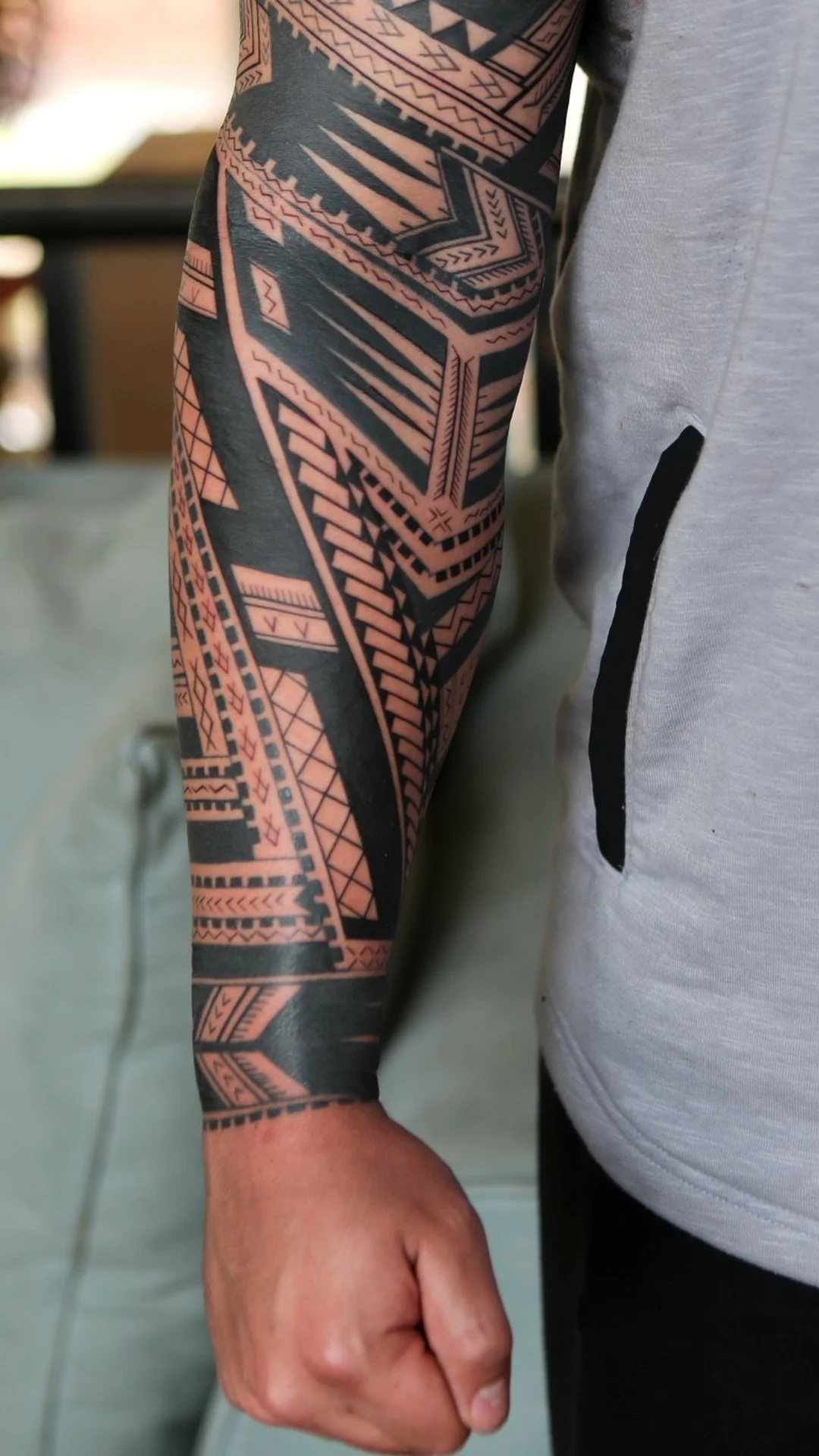
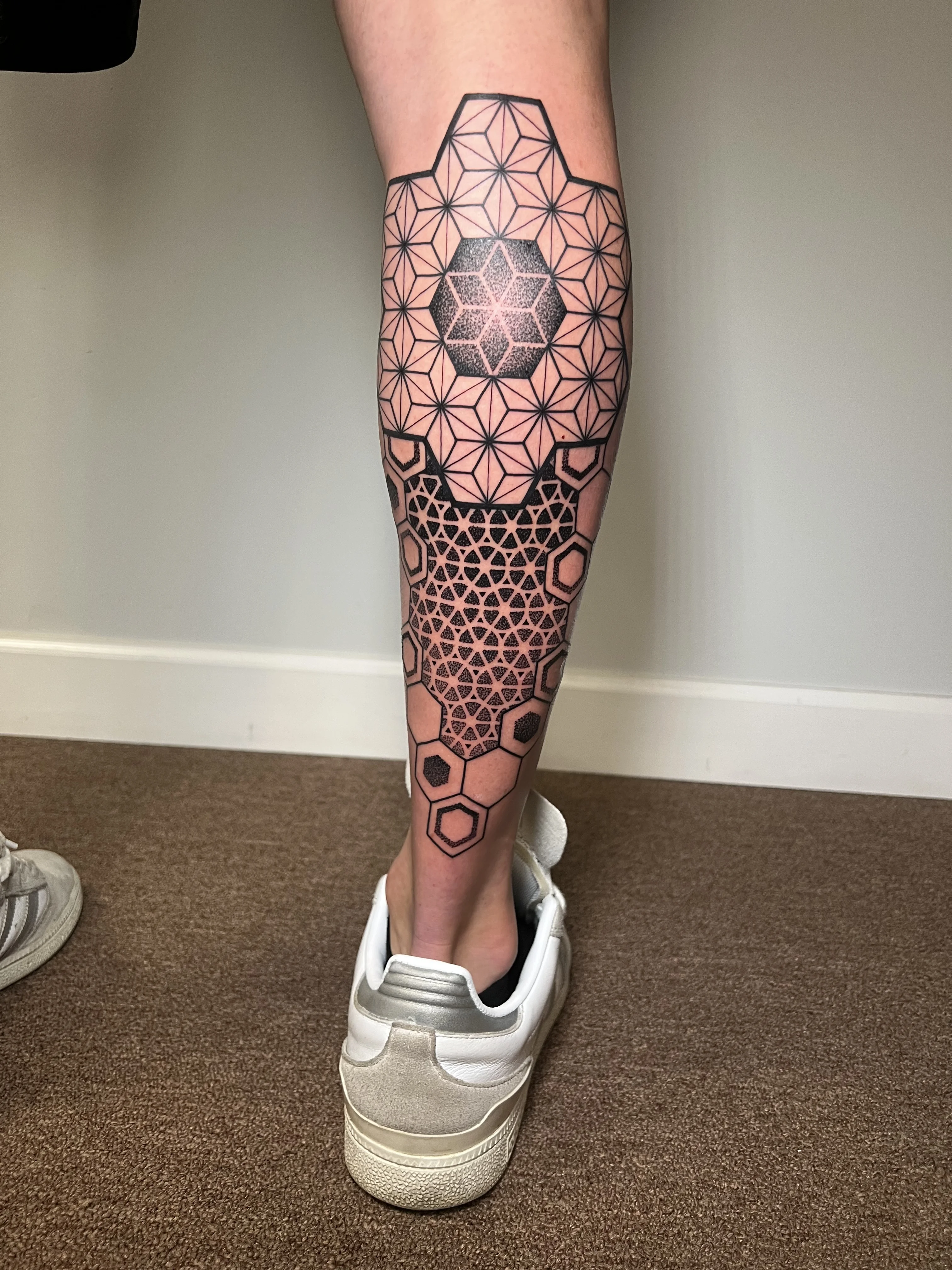
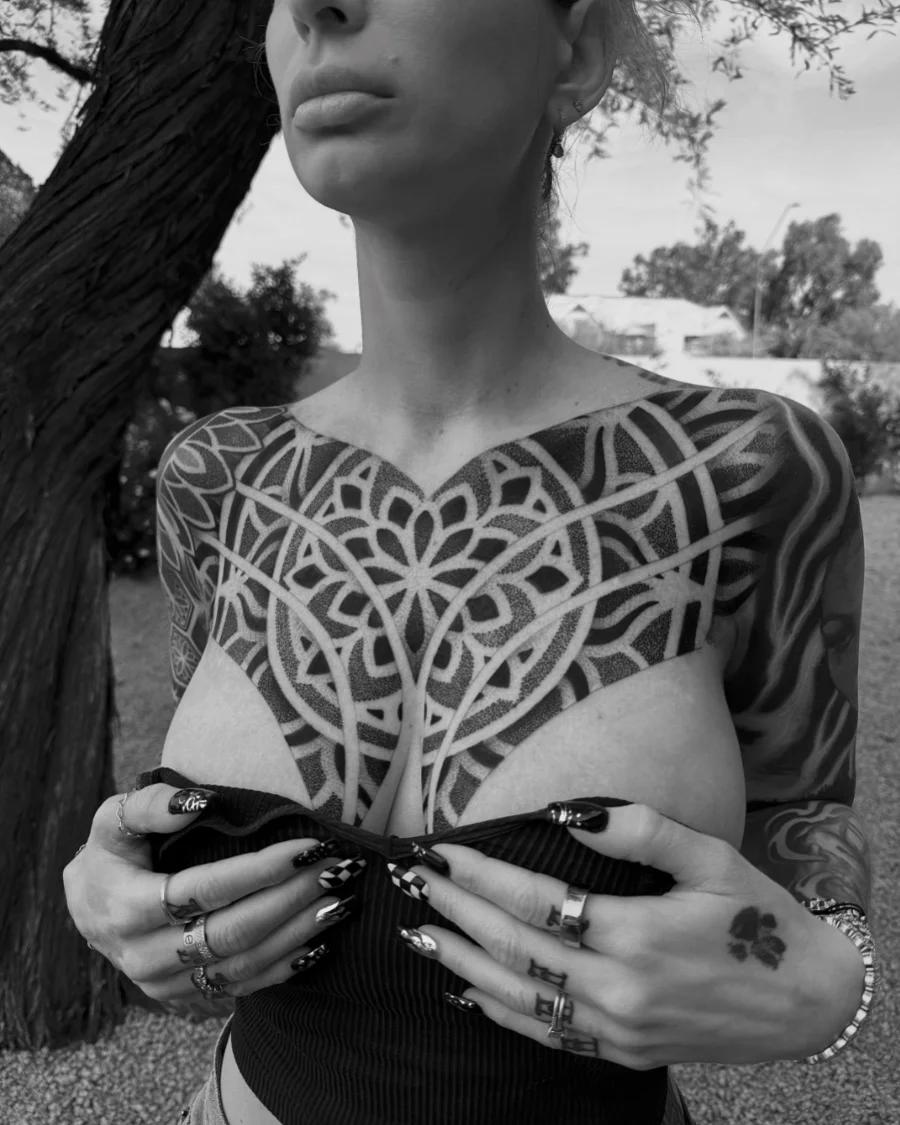
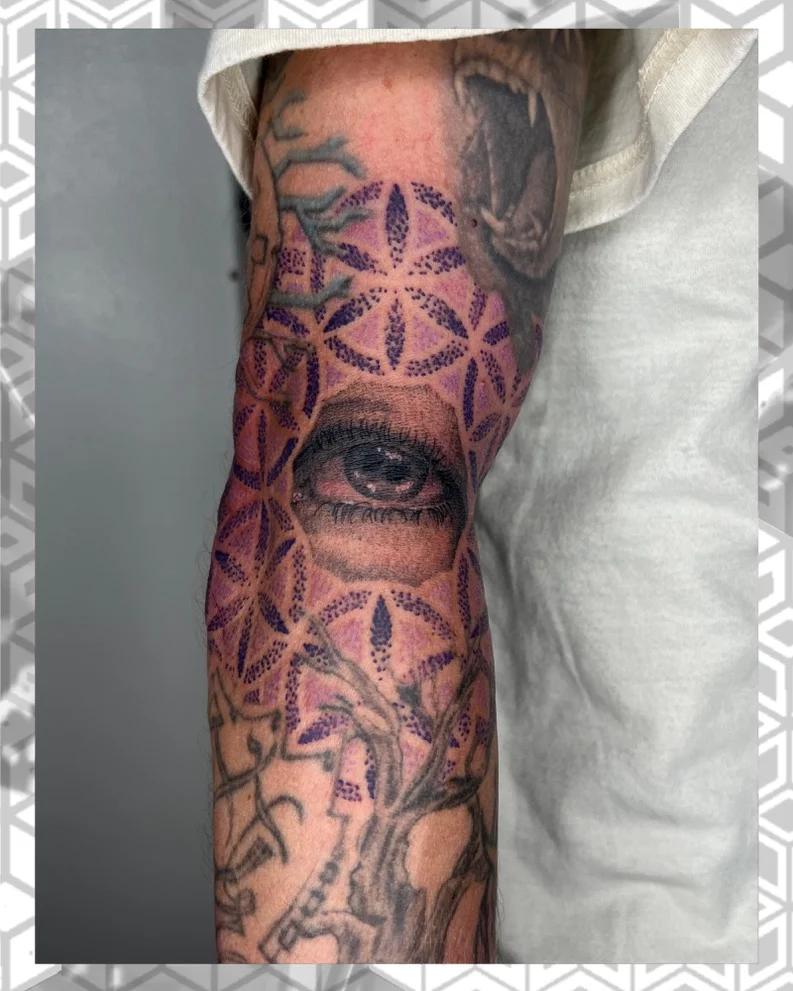
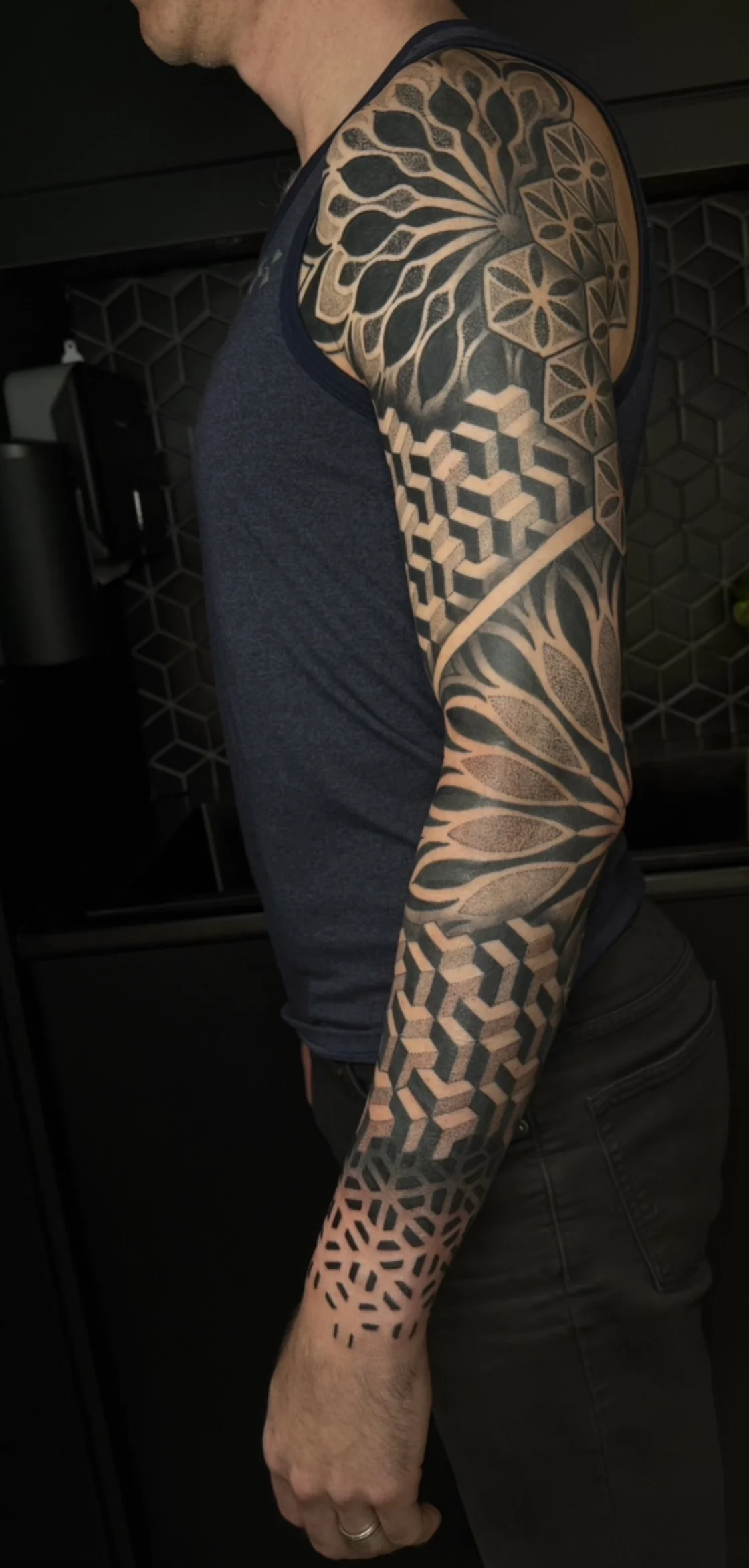
Geometric tattoos are usually done in black and gray, with clean lines, sharp angles, and dotwork shading that gives shapes depth and texture. Symmetry is central, and many pieces are built on an underlying grid so every element lines up. You'll often see mandalas, hexagon patterns, linework that wraps around a limb, and contrast between filled black areas and open skin.
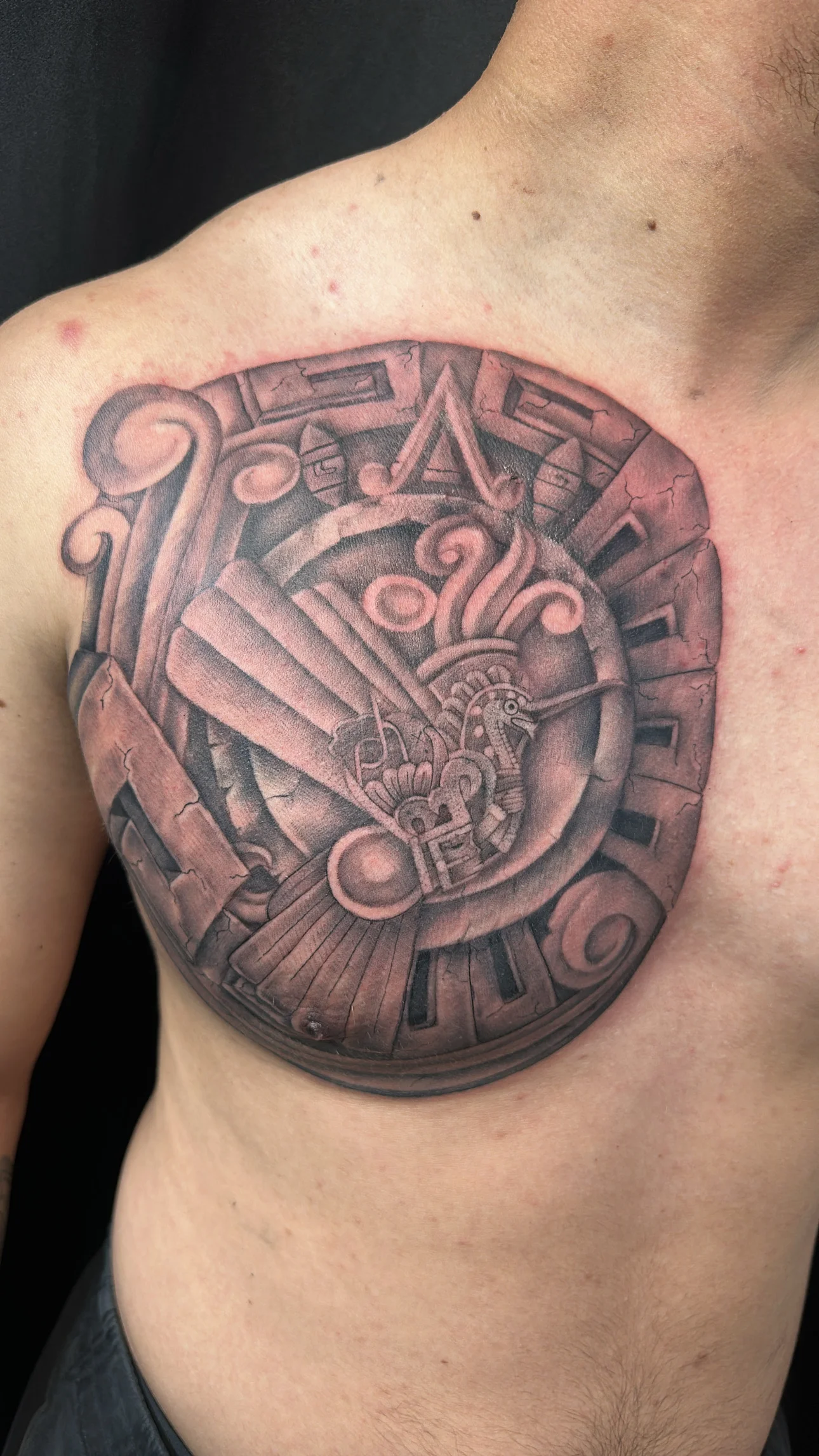
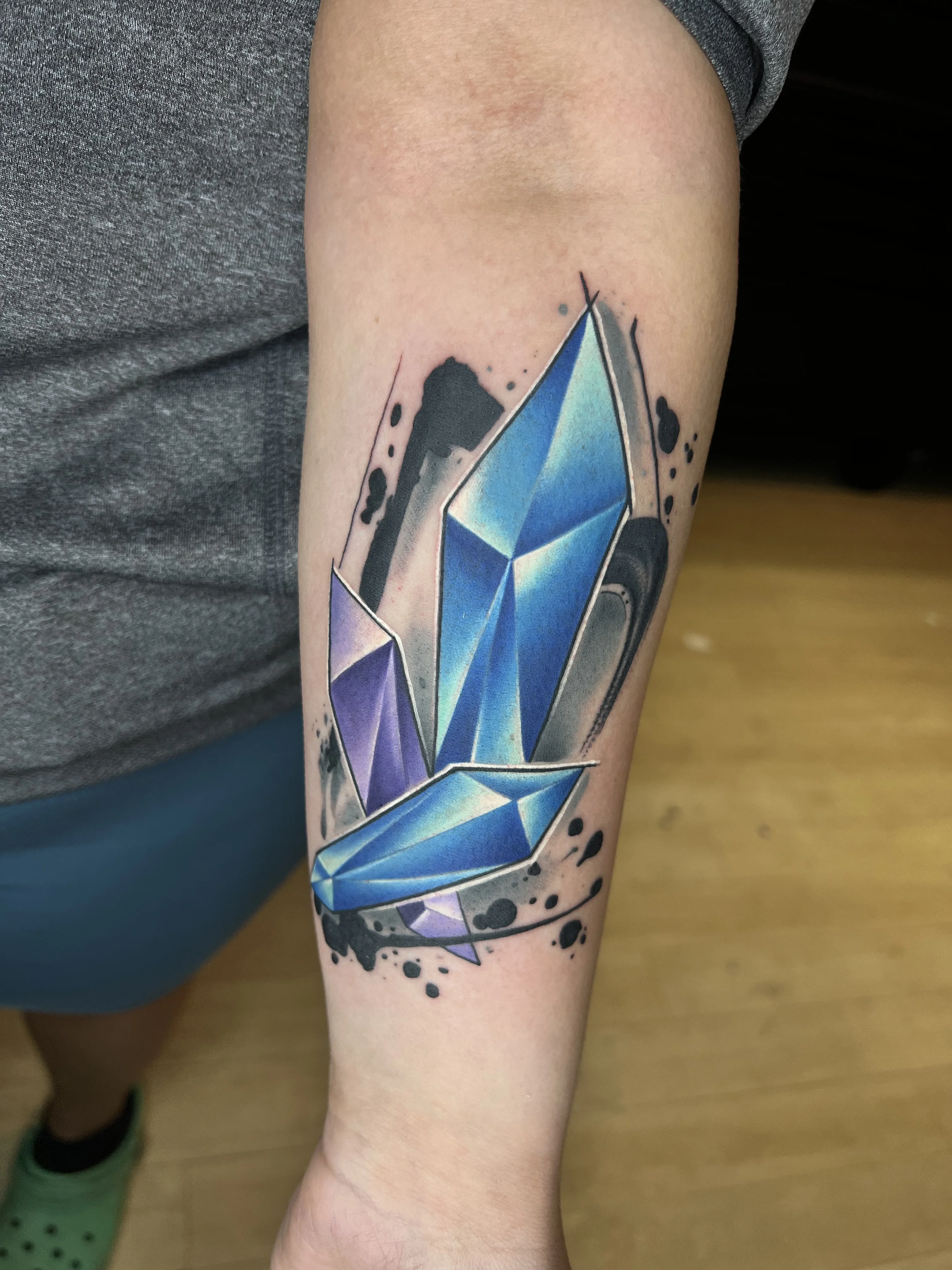
Common subjects on Freshly Inked's geometric work include mandalas, hexagons, abstract geometric shapes, and spiritual symbolism, often designed as sleeves and larger pattern pieces.
How to spot a strong geometric tattoo artist
The technical bar is unforgiving. A line that wobbles by half a millimeter in a free-flowing illustration is invisible, but the same wobble in a circle reads instantly. Look for perfect circles, straight lines that stay straight across curves, and even spacing in repeated shapes. Those are the floor, not the ceiling.
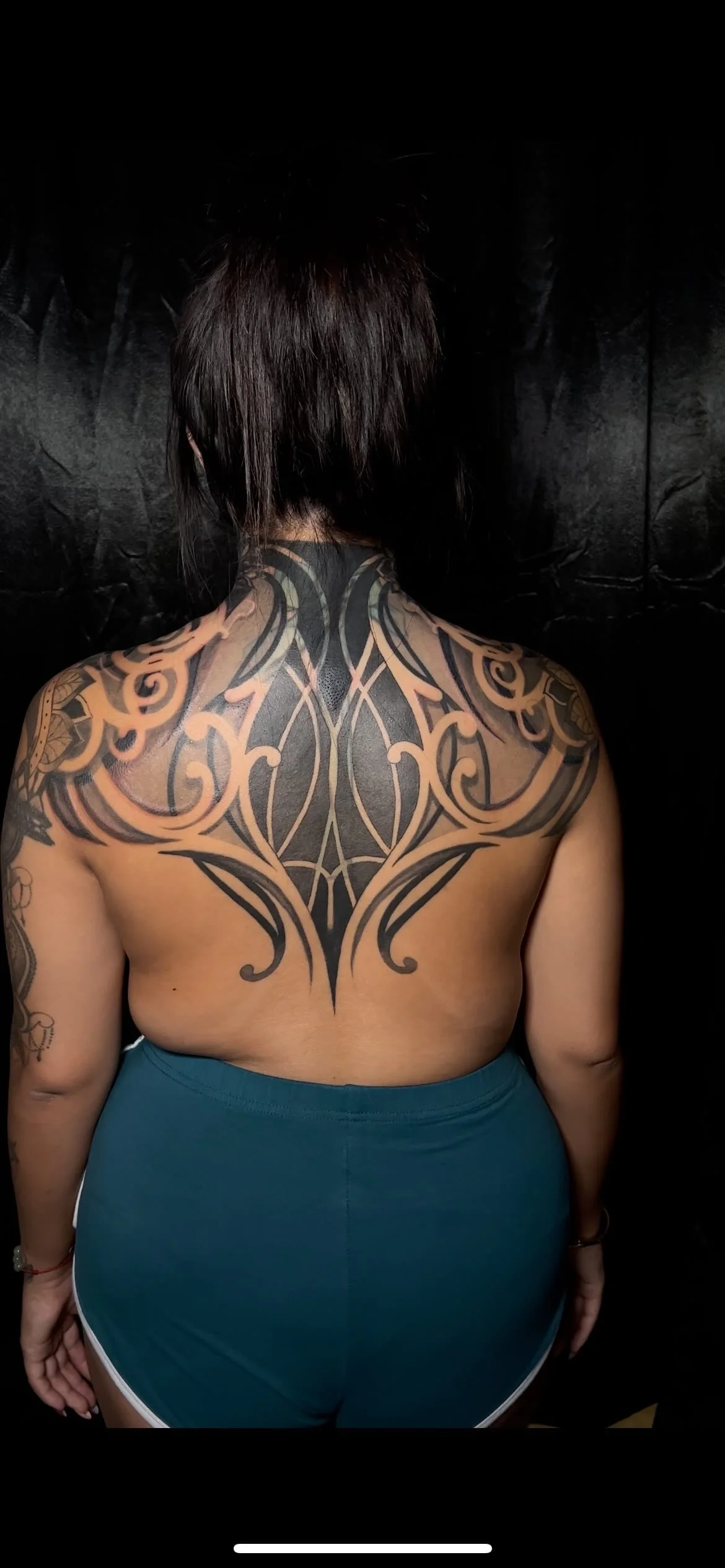
What separates great geometric work from average geometric work is usually how the artist handles transitions, like between filled and unfilled space, between different line weights, and between the geometric design and the body's natural curves. Watch for those transitions in portfolios. A strong artist will also explain how they map the design to your body, since a pattern that looks perfect on paper has to be adjusted to look right on a rounded arm or shoulder.
Best placements for a geometric tattoo
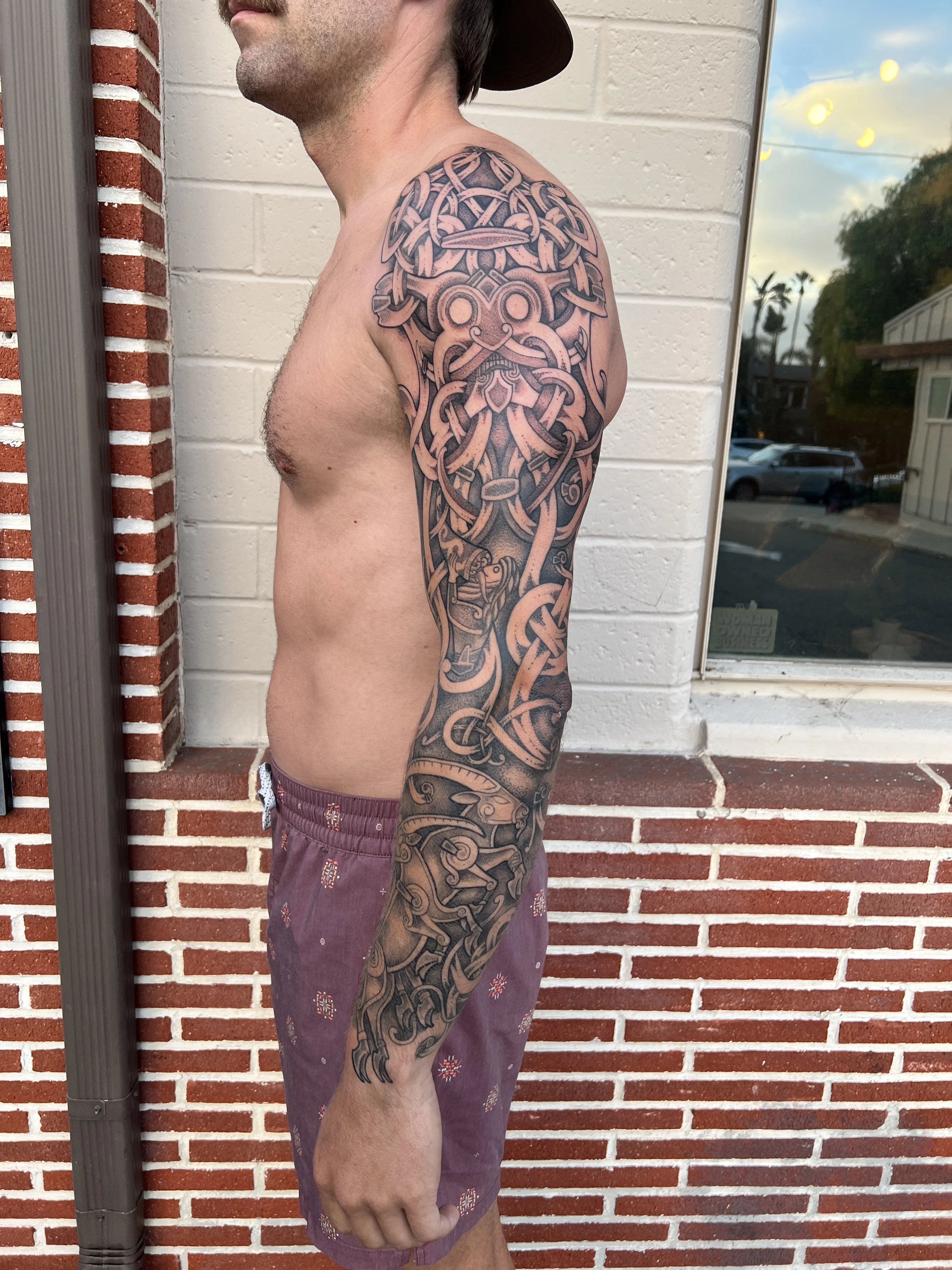
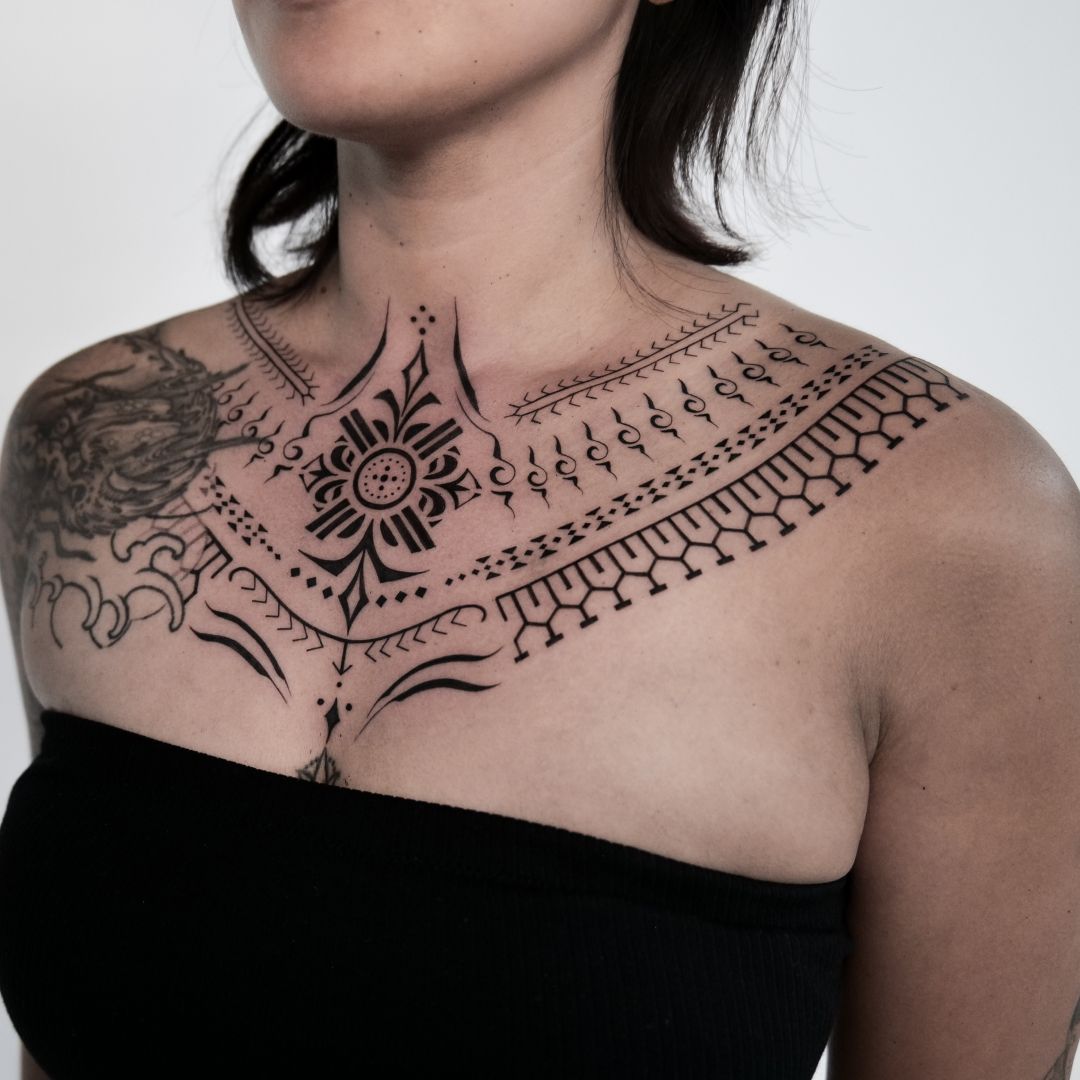
Sleeves, back pieces, chest panels, and shoulder caps are popular because they give the artist enough room to develop a real geometric composition. Shoulder pieces in particular are a common search, since radiating patterns can wrap the curve of the shoulder beautifully. Smaller standalone pieces work too, such as a single mandala, a geometric frame around another image, or a dotwork accent on the forearm or calf. Flatter areas make perfect symmetry easier to execute, while curved areas need more planning but can look stunning when the design follows the shape.
Geometric designs are also easy to expand. Many people start with a single mandala or pattern panel and add connecting linework later, eventually building it into a full sleeve or back piece. If that's the plan, mention it early so your artist can leave clean edges and design the first piece as part of a bigger layout. Bringing references for the shapes and density you like, rather than one exact pattern, lets the artist build something that fits your body and the space you have.
How geometric tattoos age
Geometric tattoos built from solid black linework and well-spaced dotwork generally age well. Lines that are extremely thin or packed very close together can soften and blur slightly over time, which can make tight patterns look less crisp. Designs with confident line weights and enough space between elements hold their precision longest. Sunscreen helps keep the black sharp, and a touch-up years down the road can refresh fine linework if it softens.
What affects the price and time
Geometric tattoos often take more design time than people expect, because the pattern has to be planned and mapped to the body before tattooing starts. Size, pattern complexity, how much dotwork shading is involved, and the artist's experience all affect the price. Large pieces like sleeves are usually done over multiple sessions. Most artists quote after a consultation, and many ask for a deposit to hold your appointment.
Geometric vs. similar styles
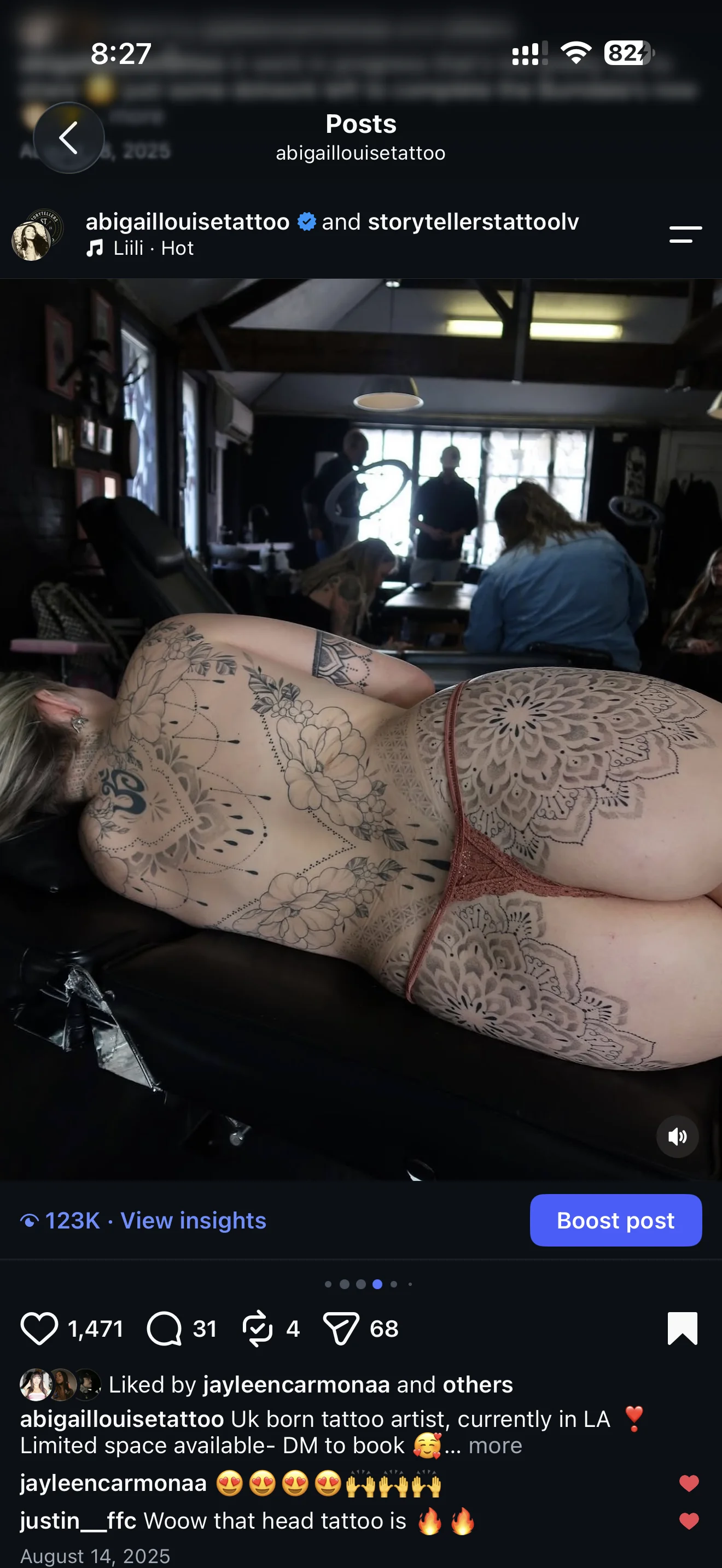
Ornamental tattoos share a lot with geometric work, but they lean decorative, with lace, filigree, and flowing patterns rather than strict shapes. Blackwork is the broader family of tattoos built from solid black ink, and many geometric pieces fall inside it. Fine line tattoos can include delicate geometric elements but usually use thinner lines at a smaller scale.
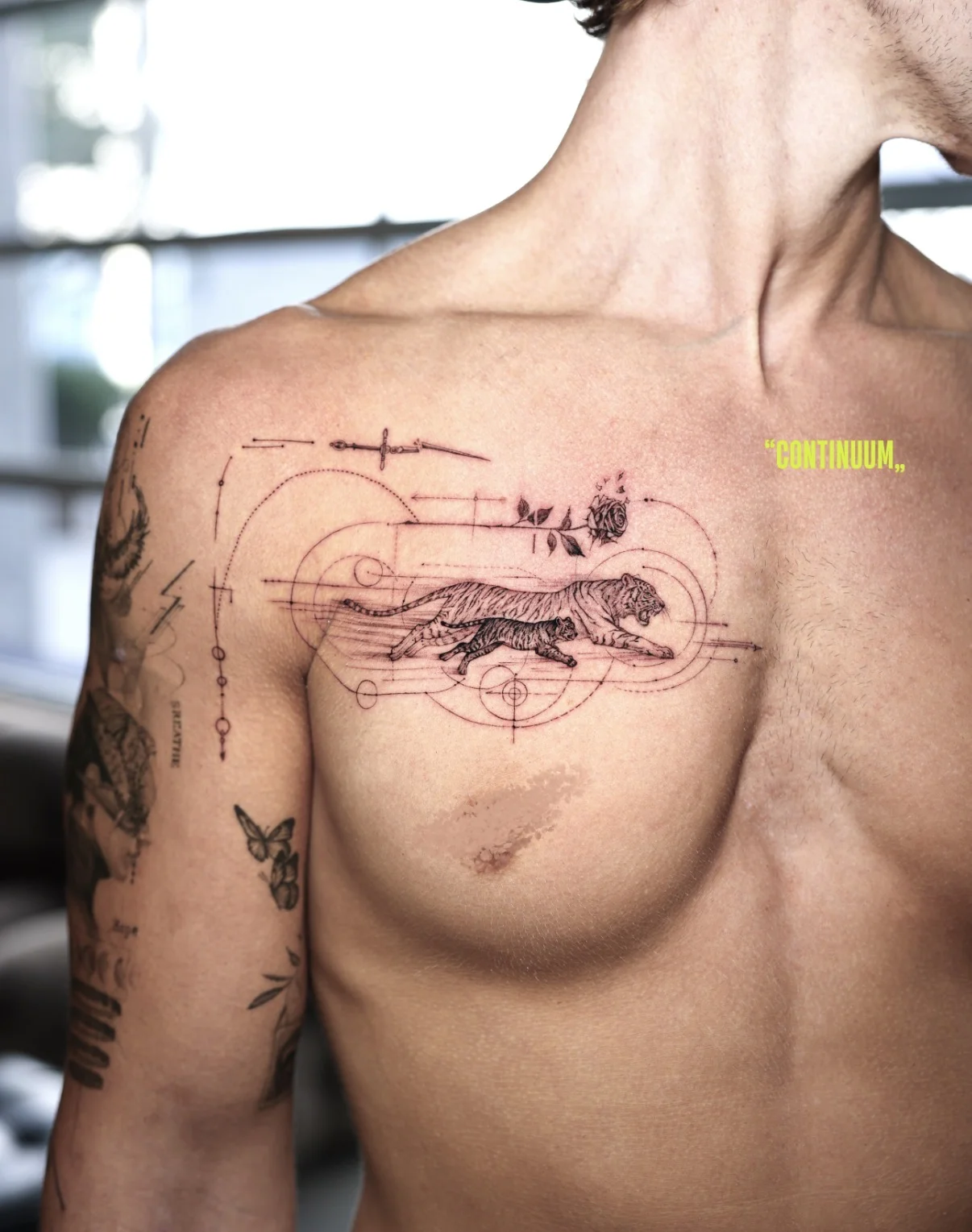
Some geometric tattoos also combine pattern work with a realistic or illustrative subject, like an animal or portrait that transitions into shapes. Those hybrid pieces take an artist who's comfortable in both styles, so look for examples of that combination in their portfolio before you book.
How to find and book a geometric tattoo artist
Browse the geometric work below and save the pieces that feel closest to the direction you're picturing. Open the artist whose style fits, look closely at their linework and symmetry, and send a booking inquiry with your idea, placement, and a few references. Your request goes straight to the artist, and they take it from there.
Artists


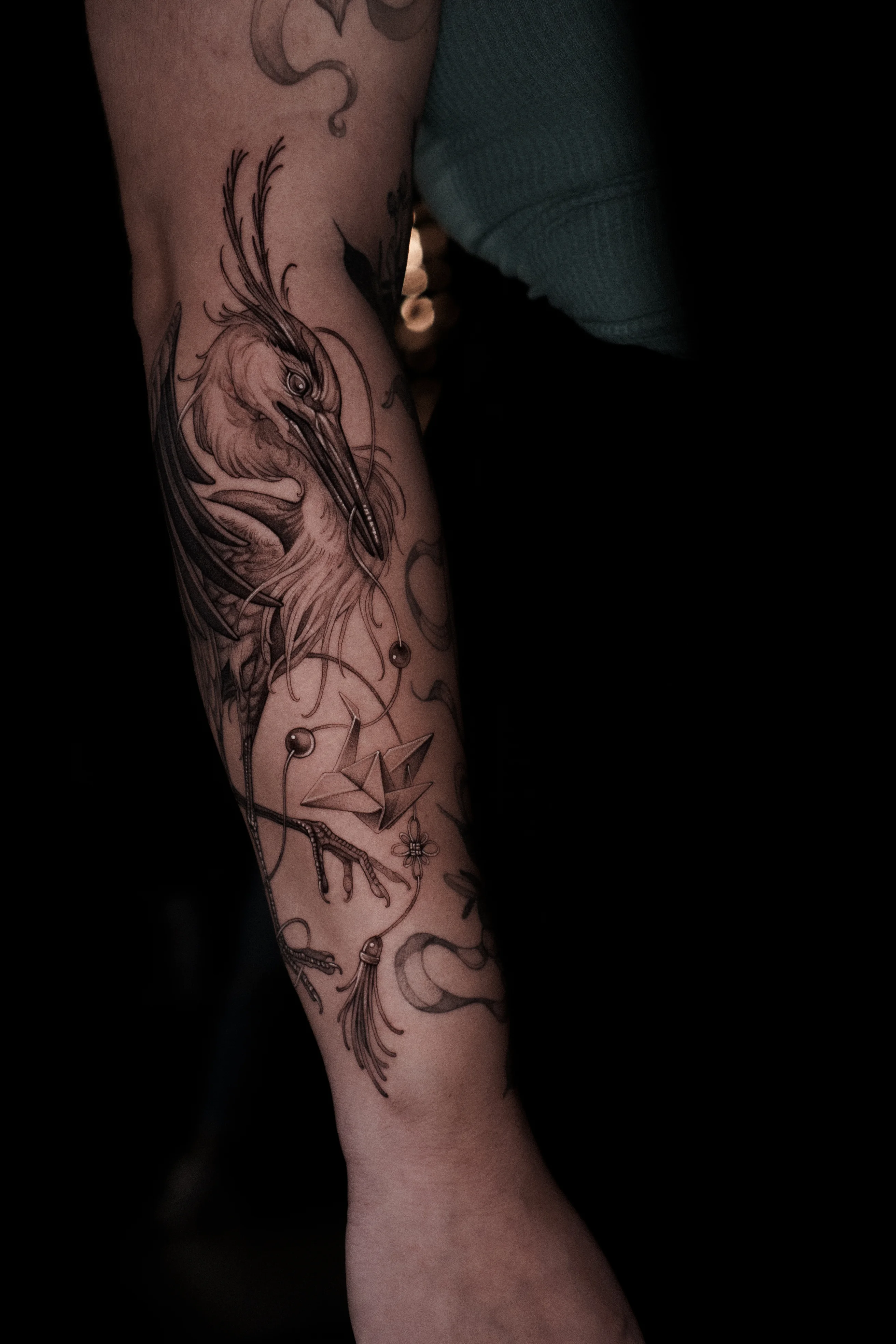

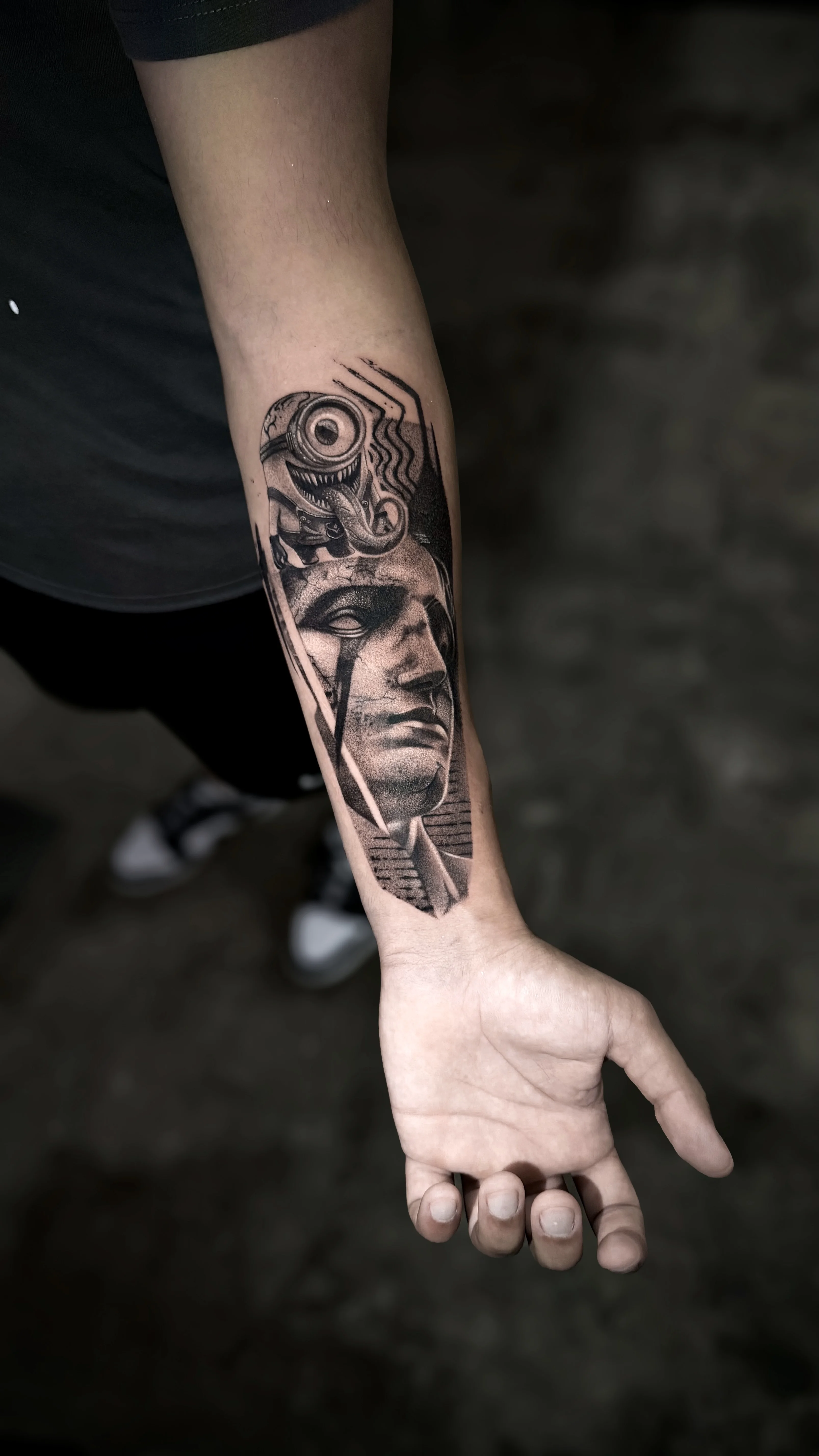
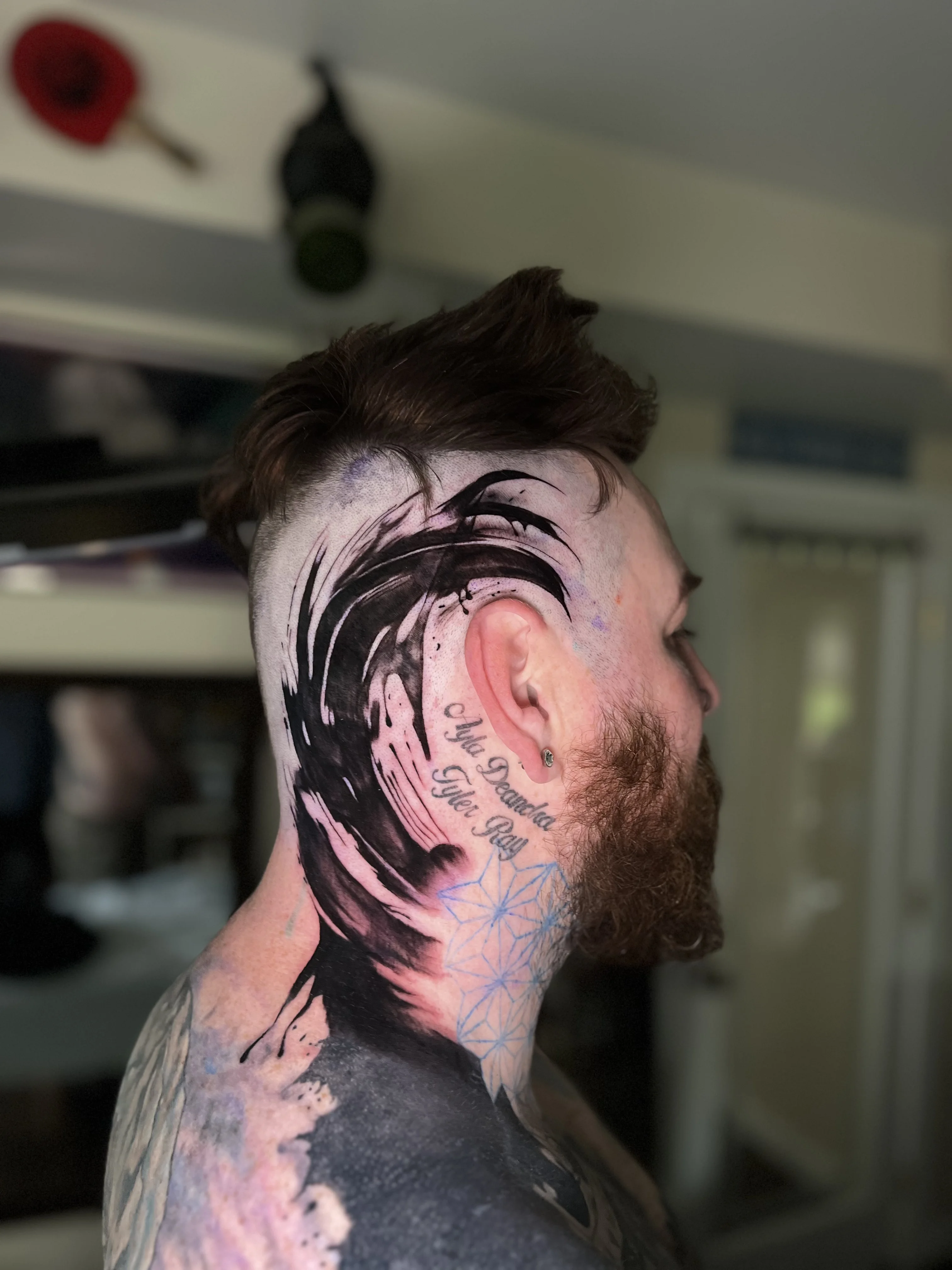
The Work
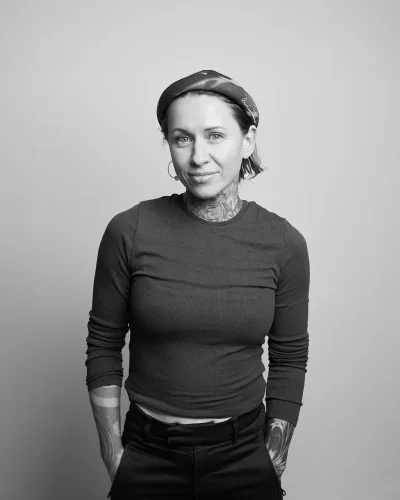
 Erin Manning
 Oliver Kenton
 Thebig_rosstattoo
 Crystal Alexandria
 Abigail Louise
 Kimshine
 Scorpio tattss
 Kirk Nilsen
 Nicole Petrou
 King 'Afa Cocker
 Camilo Gonzalez
 Don Don
 Bbydee
 Konstantin Strokin
 Joshua Gallant
 Gabriella Nova
 Patrick Dunaway
 Sherri Anne Austria
 Erin Manning
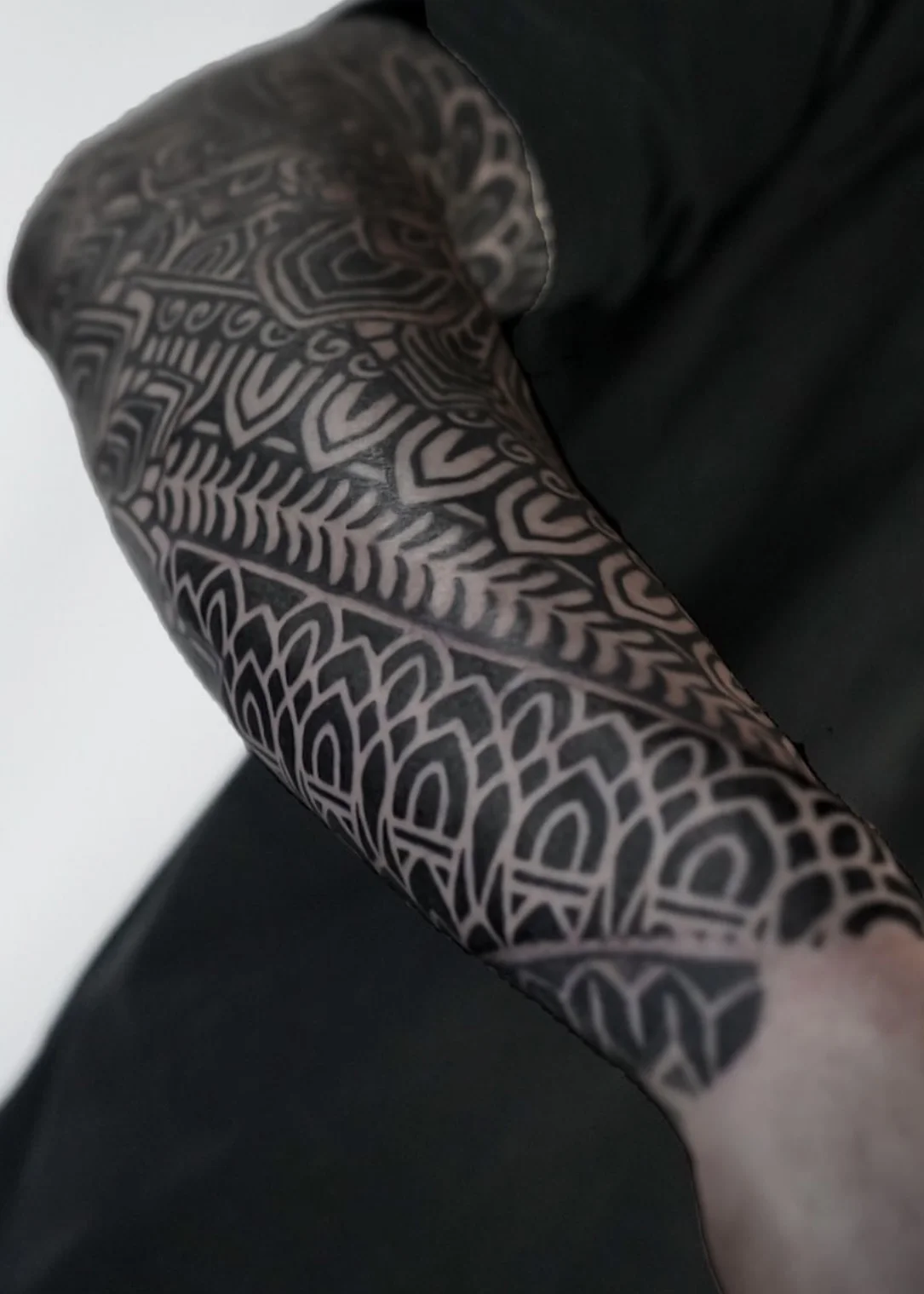 Oliver Kenton
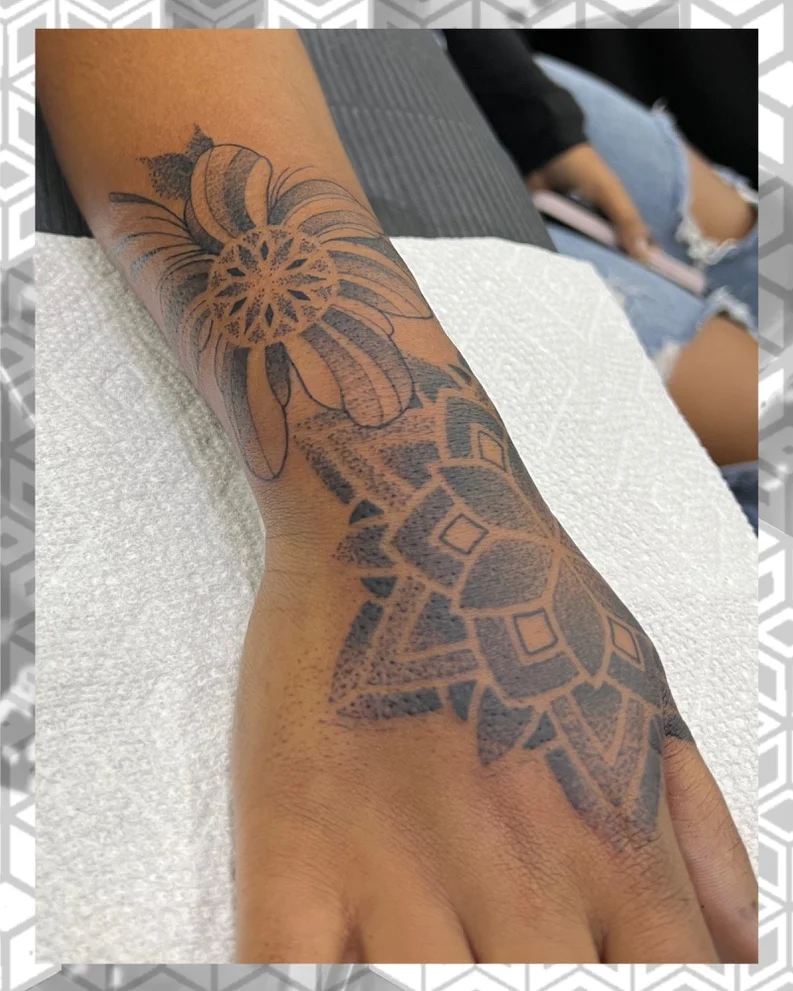 Thebig_rosstattoo
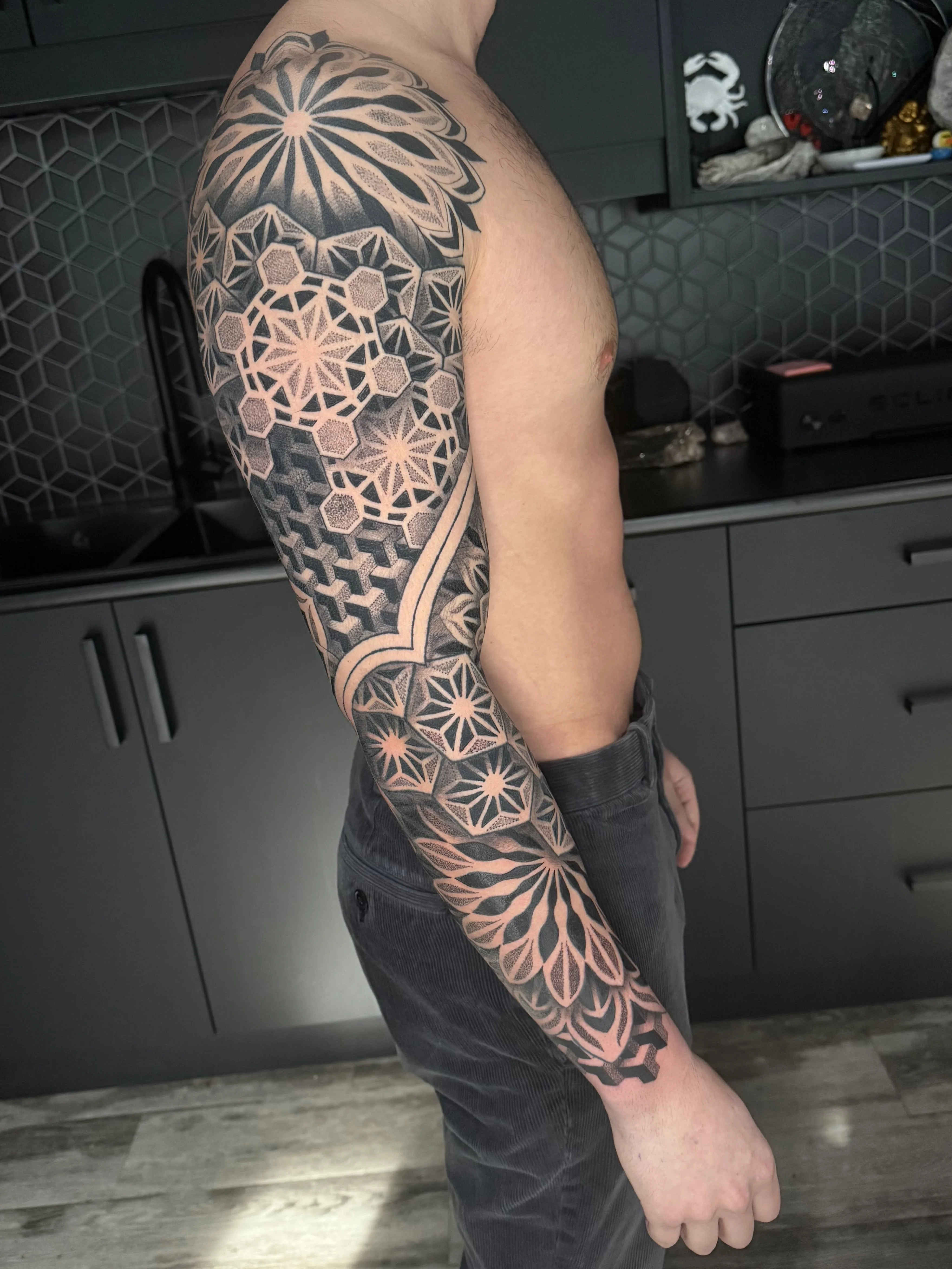 Crystal Alexandria
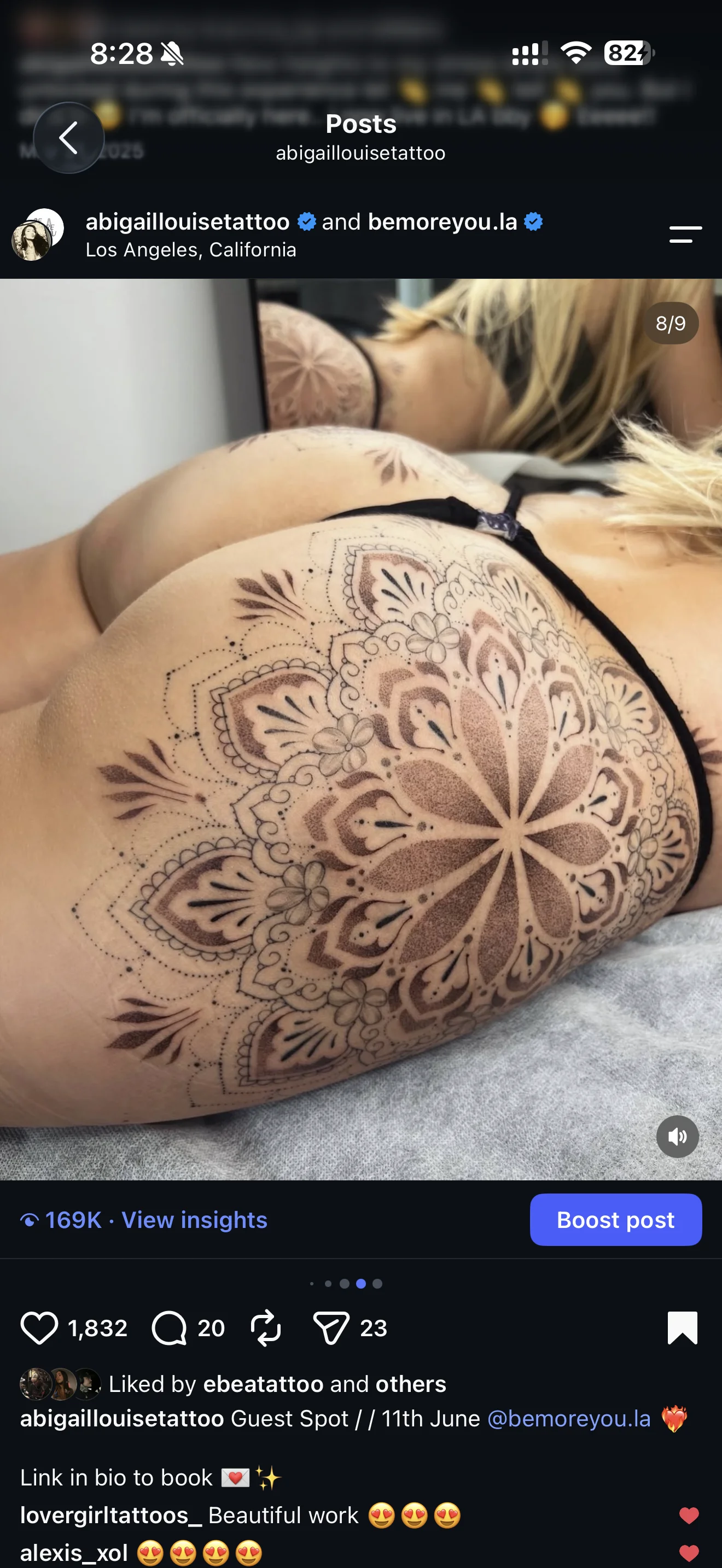 Abigail Louise
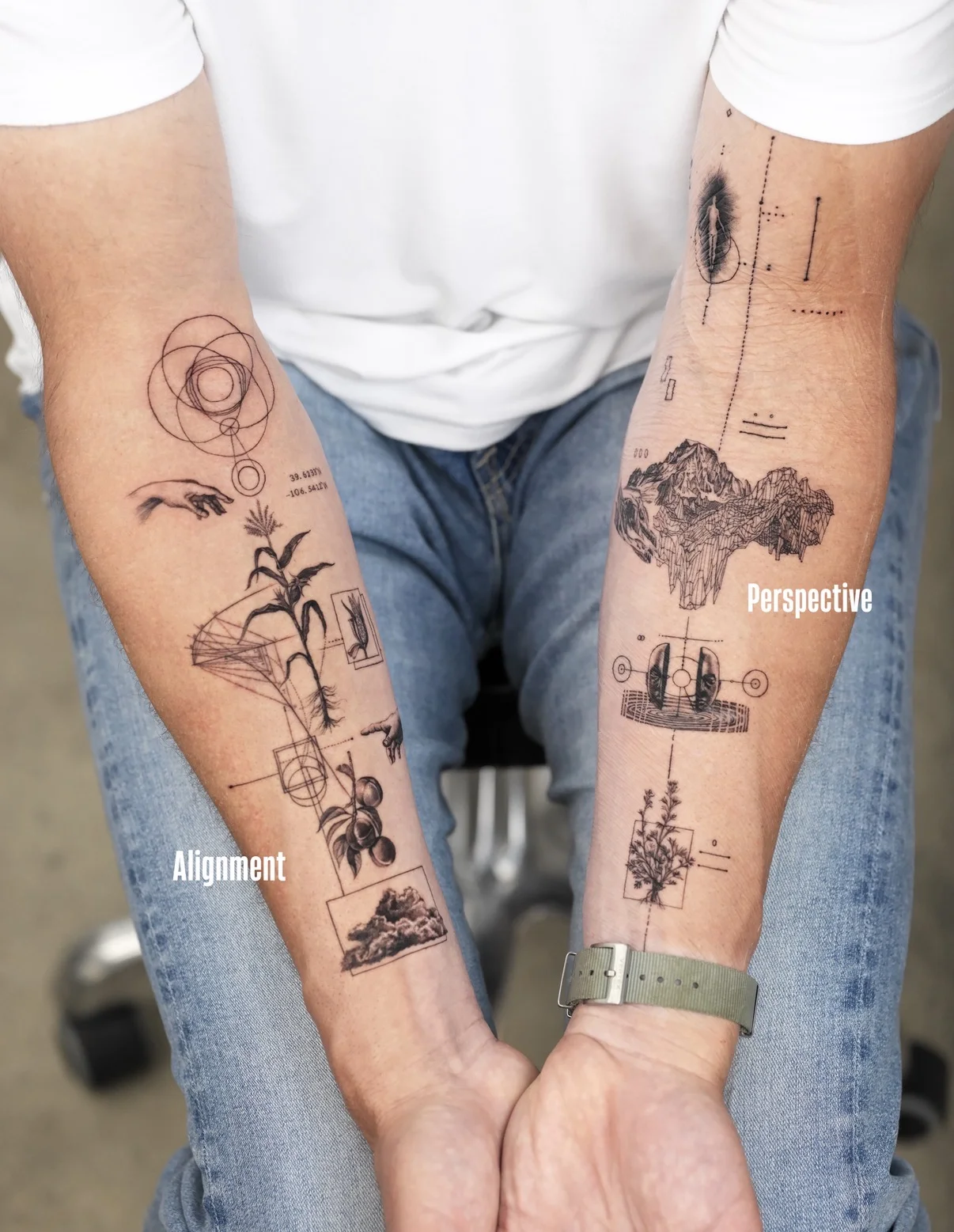 Kimshine
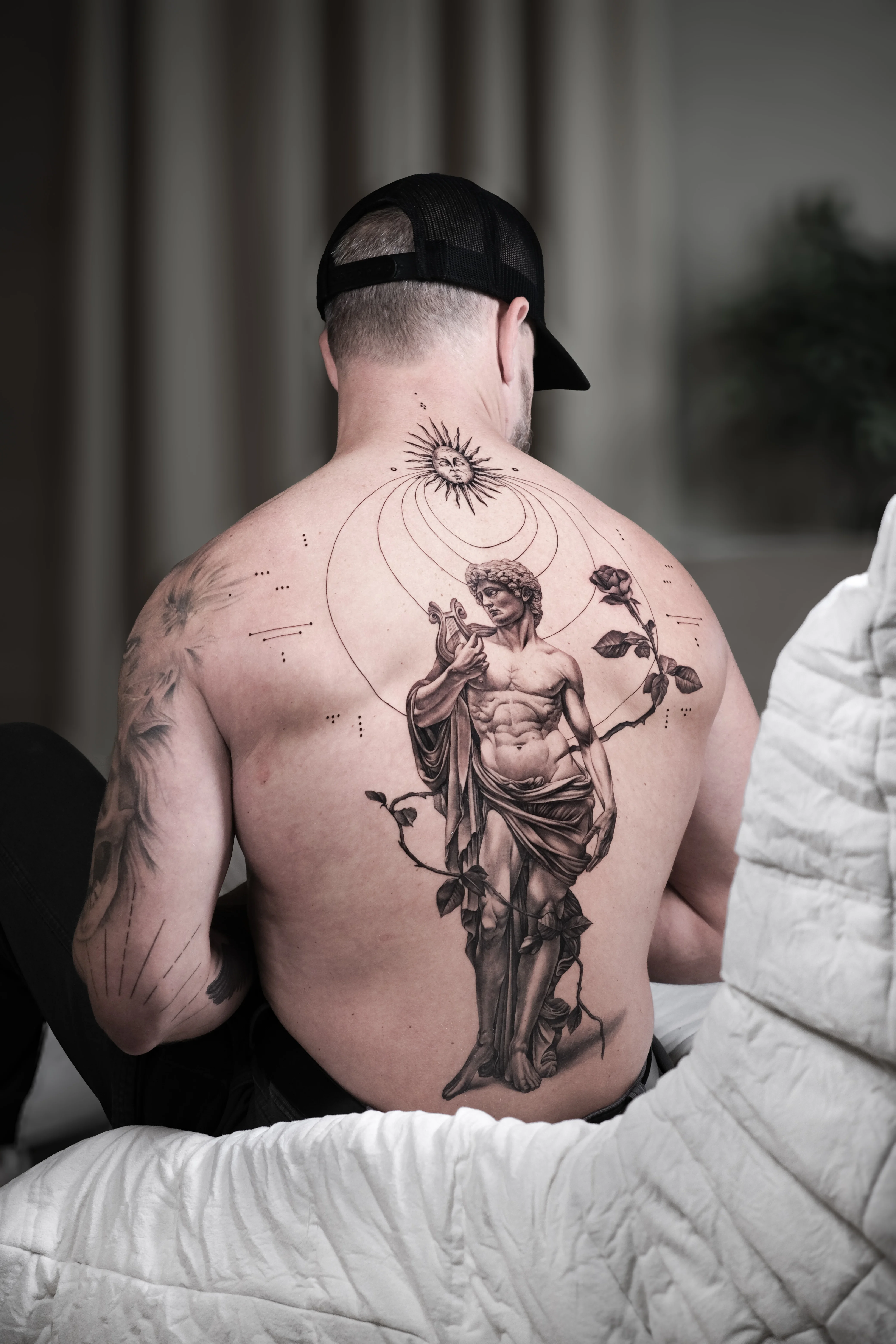 Scorpio tattss
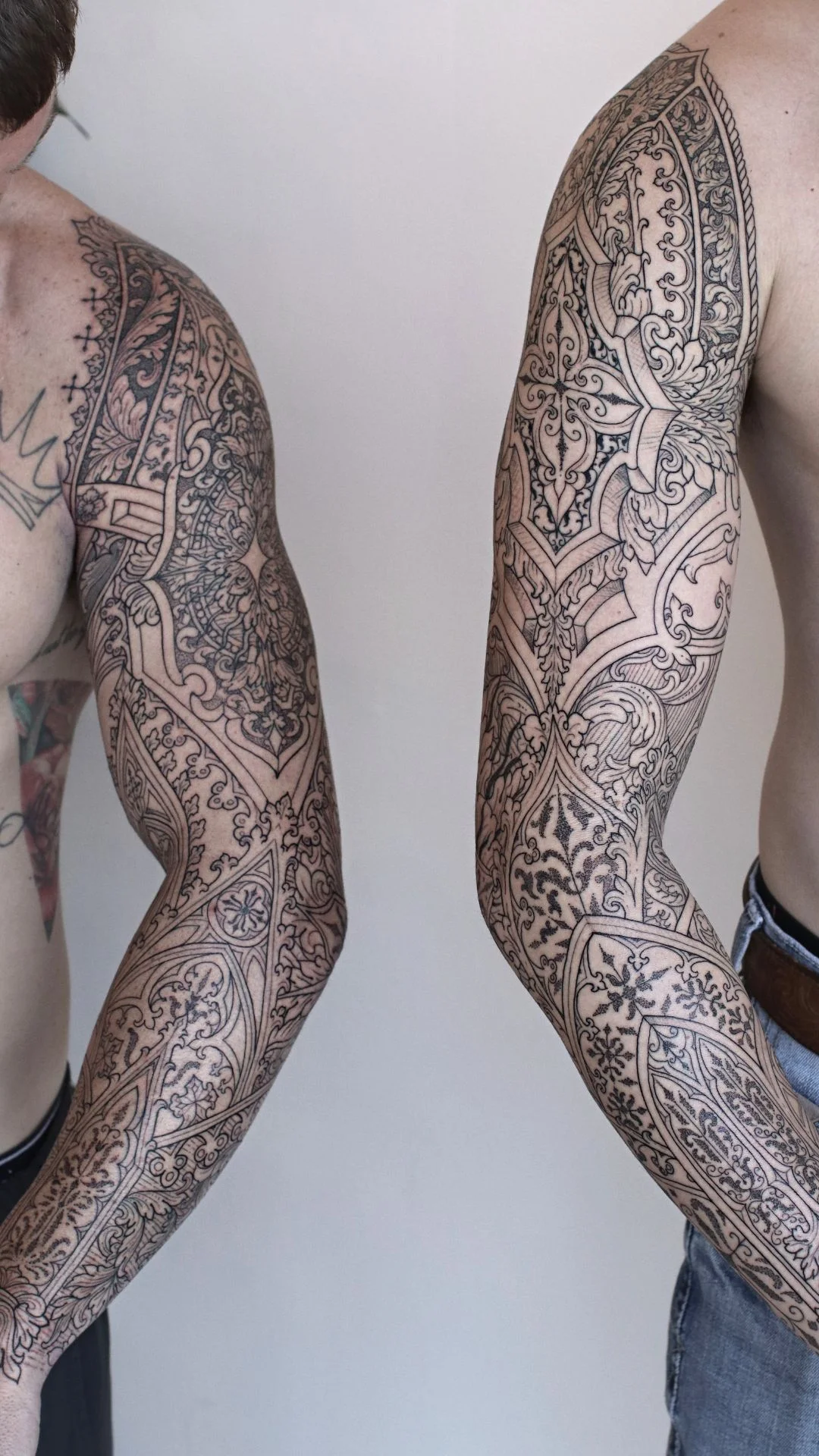 Kirk Nilsen
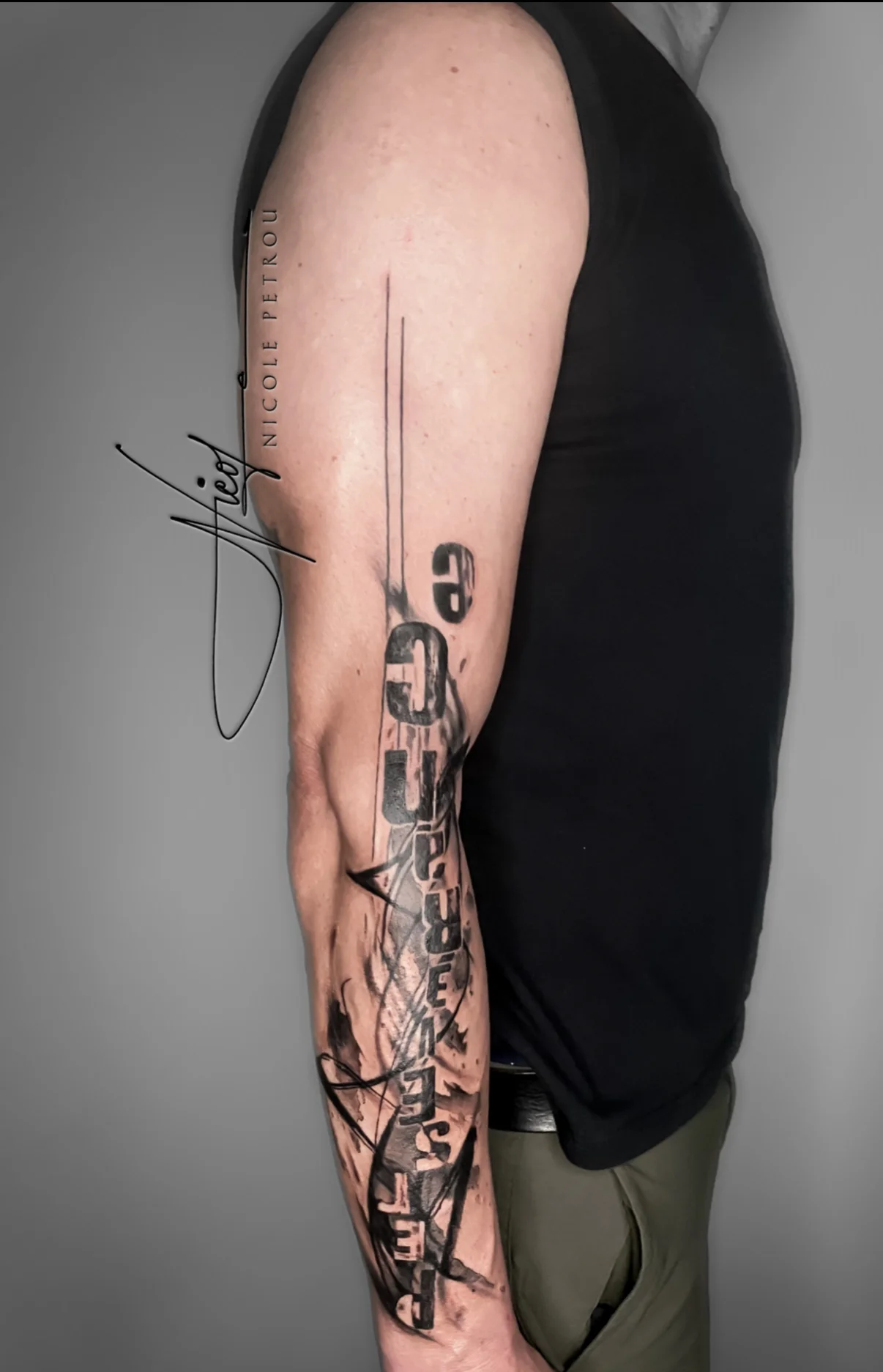 Nicole Petrou
 King 'Afa Cocker
 Camilo Gonzalez
 Don Don
 Erin Manning
 Oliver Kenton
 Thebig_rosstattoo
 Crystal Alexandria
 Abigail Louise
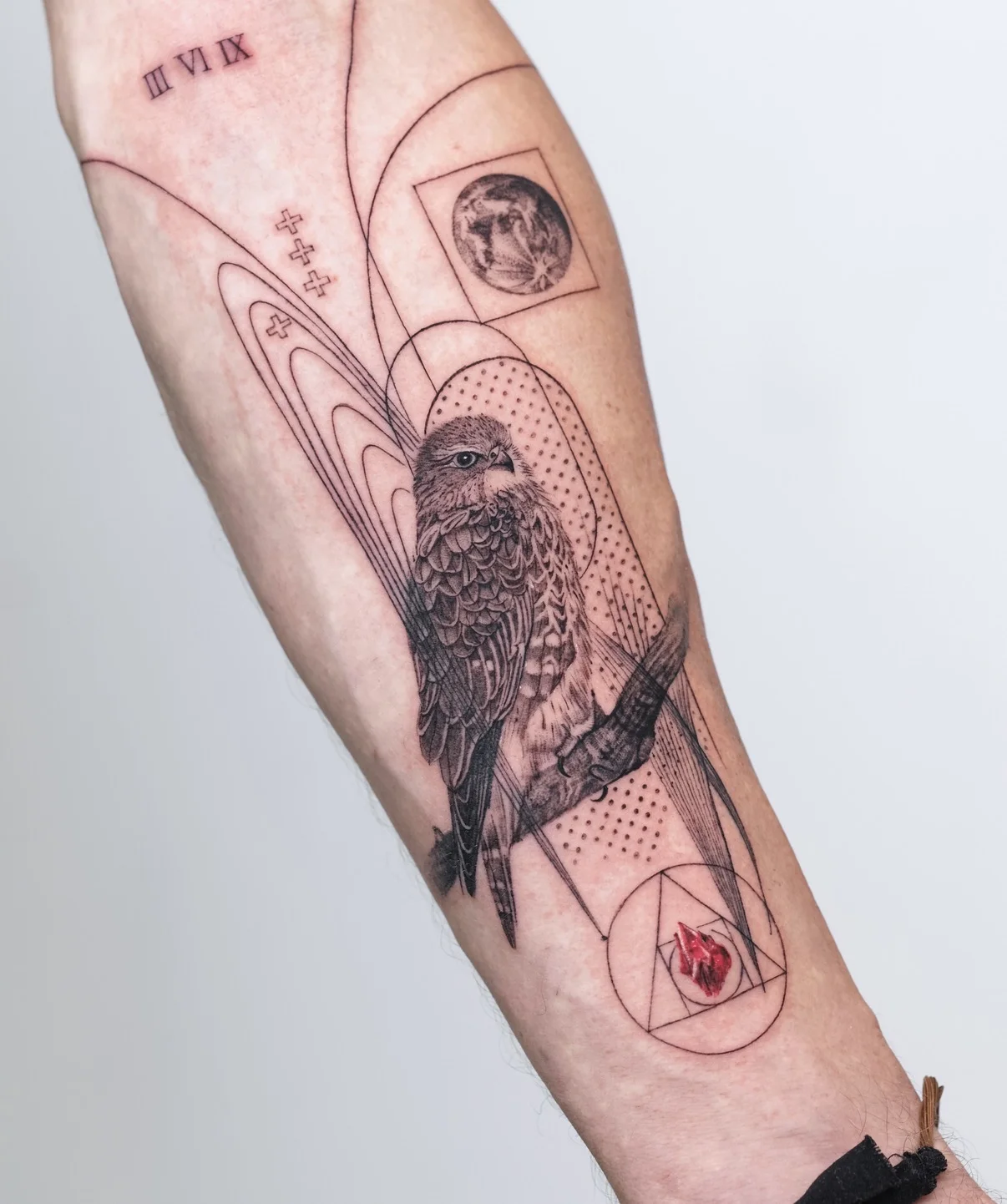 Kimshine
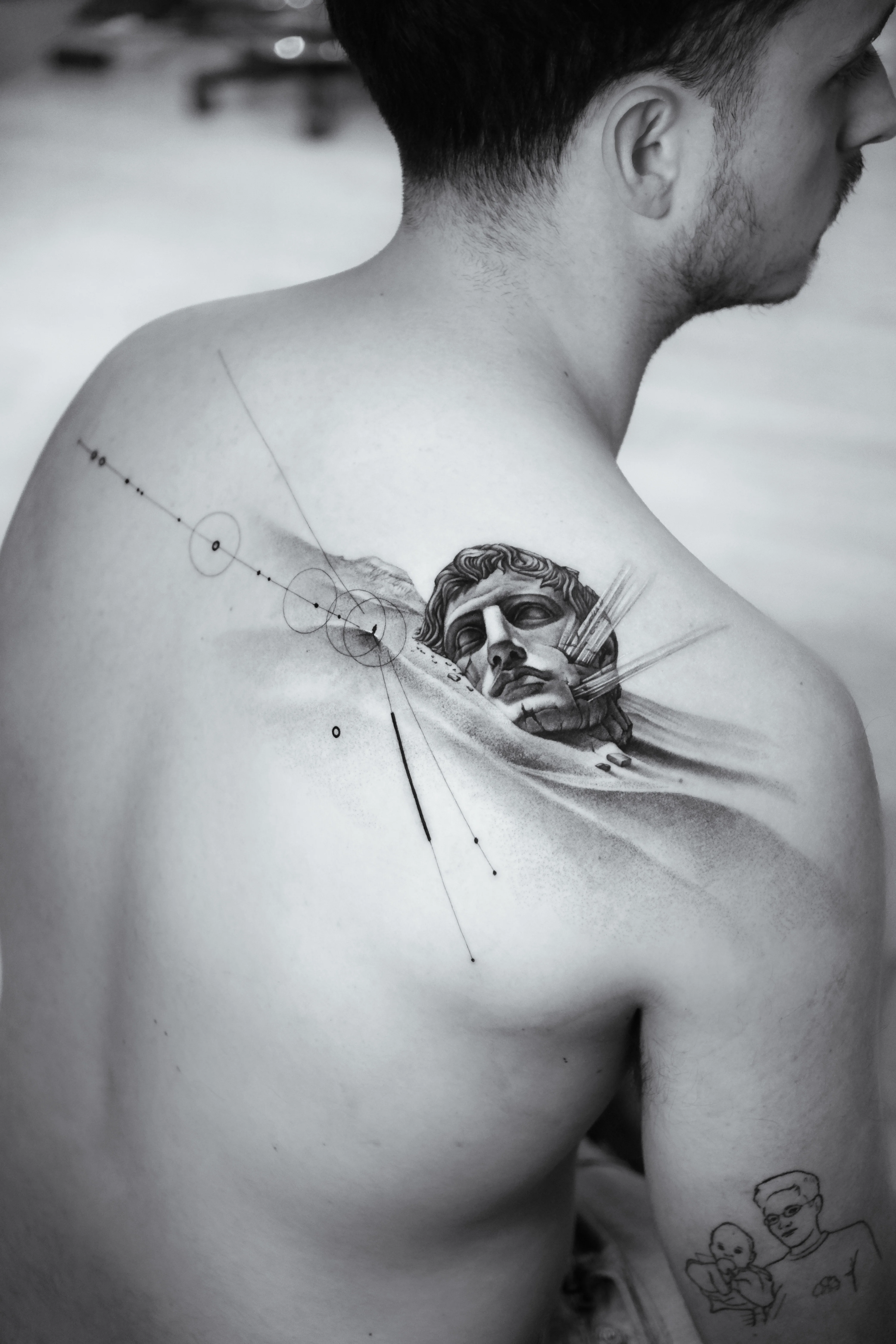 Scorpio tattss
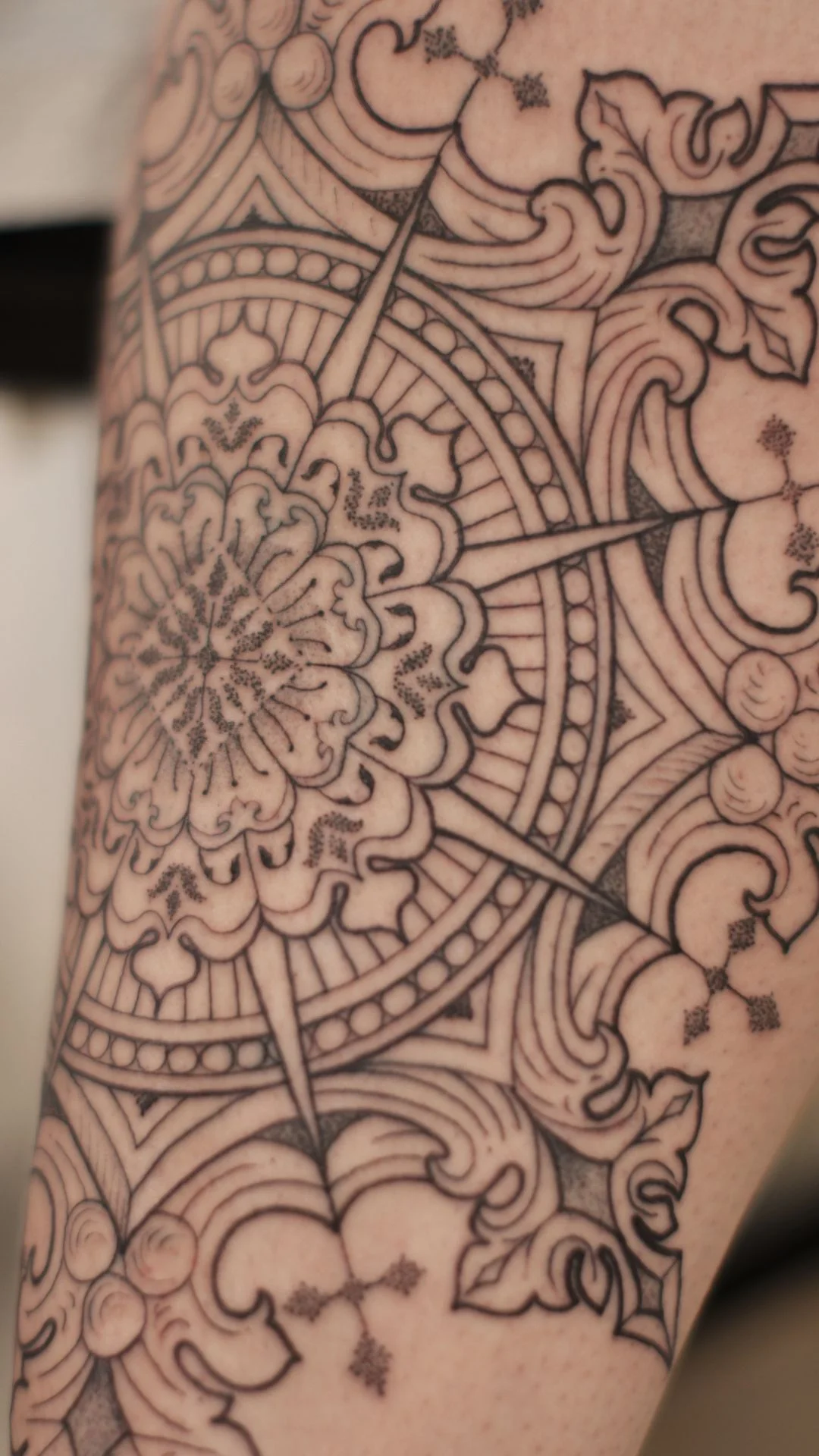 Kirk Nilsen
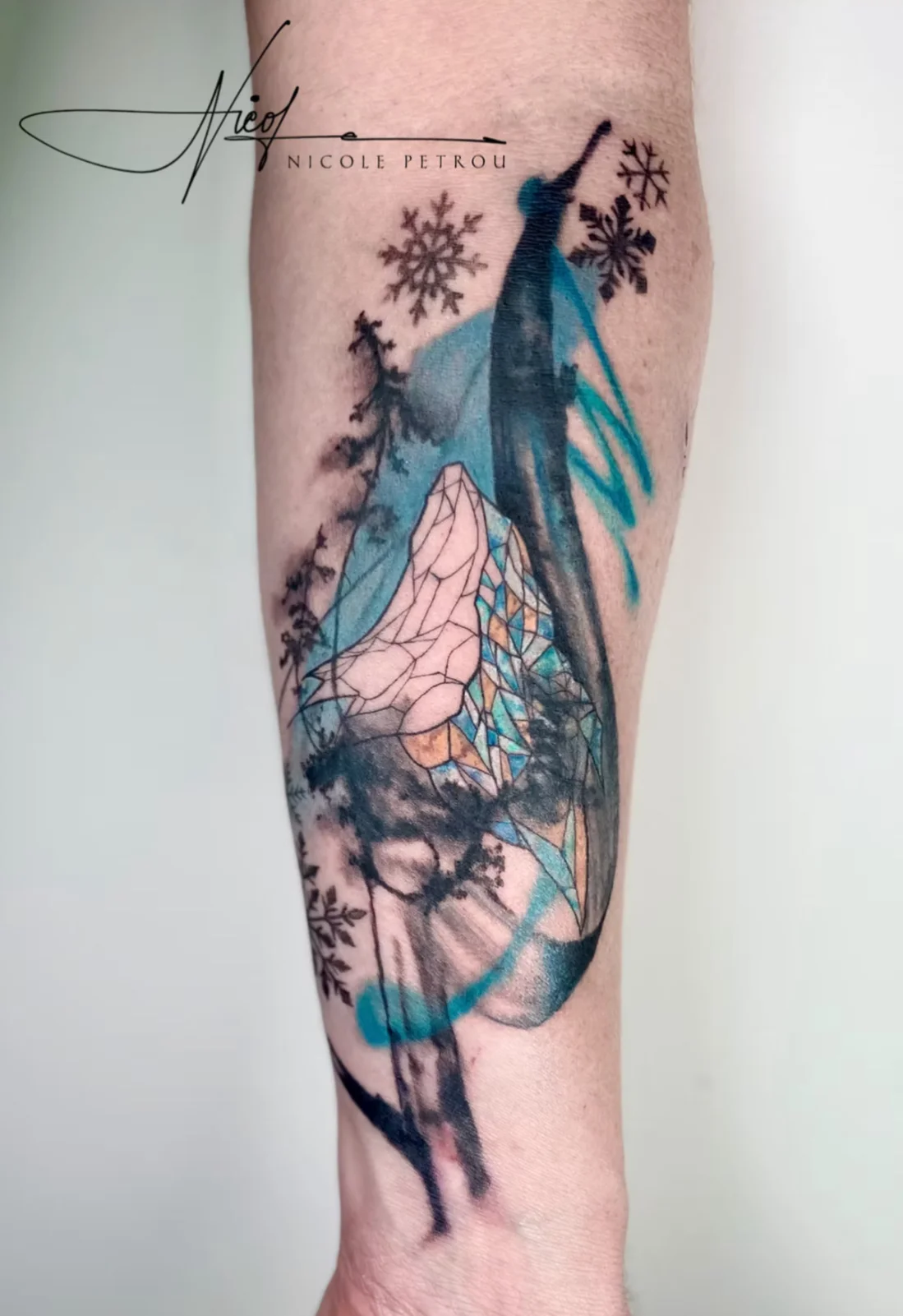 Nicole Petrou
 King 'Afa Cocker
 Camilo Gonzalez
Common Questions
What is a geometric tattoo?
A geometric tattoo uses precise lines, dotwork, symmetry, and shapes like circles, hexagons, and triangles to build the design. Sacred geometry and mandalas are common within the style.
What should I look for in a geometric tattoo artist?
Look for perfect circles, straight lines, even spacing, and clean transitions between filled and open space. Ask how they adjust the design to fit your body's curves.
Is the shoulder a good spot for a geometric tattoo?
Yes. Radiating patterns and mandalas can wrap the curve of the shoulder well, as long as the artist maps the design to the shape of your body.
Do geometric tattoos age well?
Geometric tattoos built from confident black linework and well-spaced dotwork generally age well. Very thin or tightly packed lines can soften over time.
What's the difference between geometric and ornamental tattoos?
Geometric tattoos focus on pure shapes and strict symmetry, while ornamental tattoos are more decorative, using lace, filigree, and flowing patterns.
How do I find a geometric tattoo artist?
Browse the geometric work on this page, open the artists whose style fits, and look closely at their linework. Send your idea and references through the booking inquiry and the artist takes it from there.