Ornamental Tattoos & Artists
Pattern-driven work that wraps and flatters the body. Browse ornamental tattoos and the artists making them, then request to book the one whose work fits the direction you're picturing.
What is an ornamental tattoo?
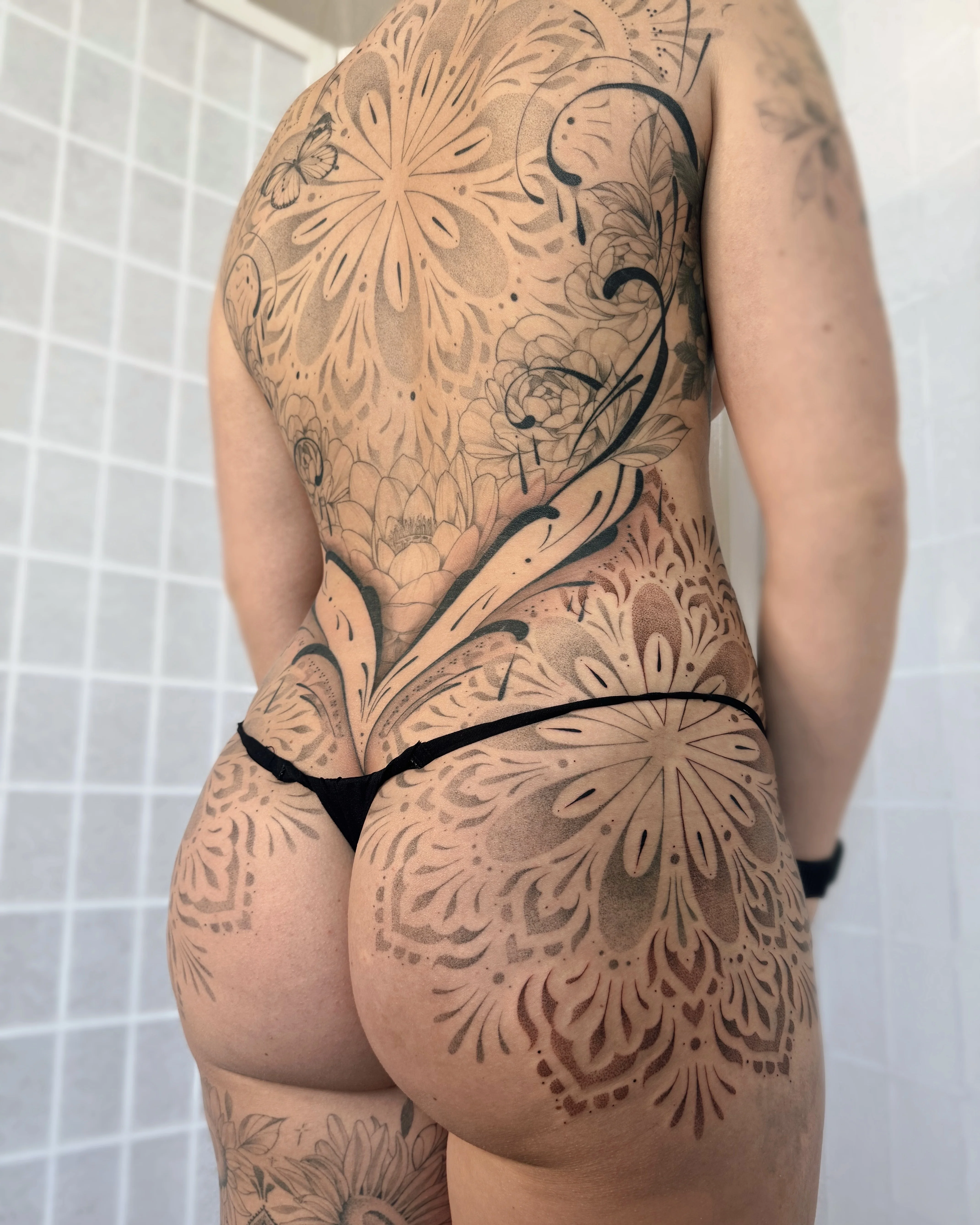
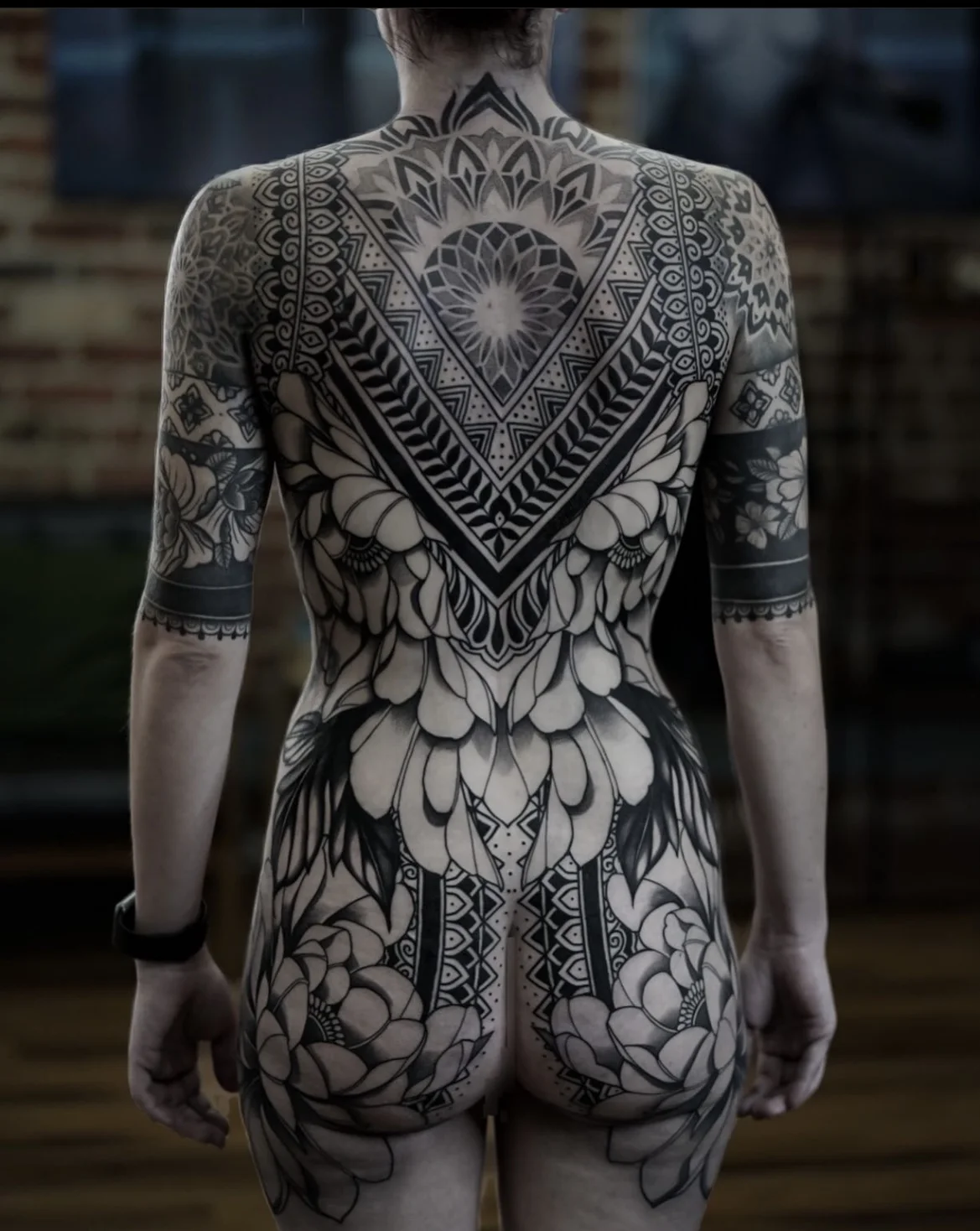
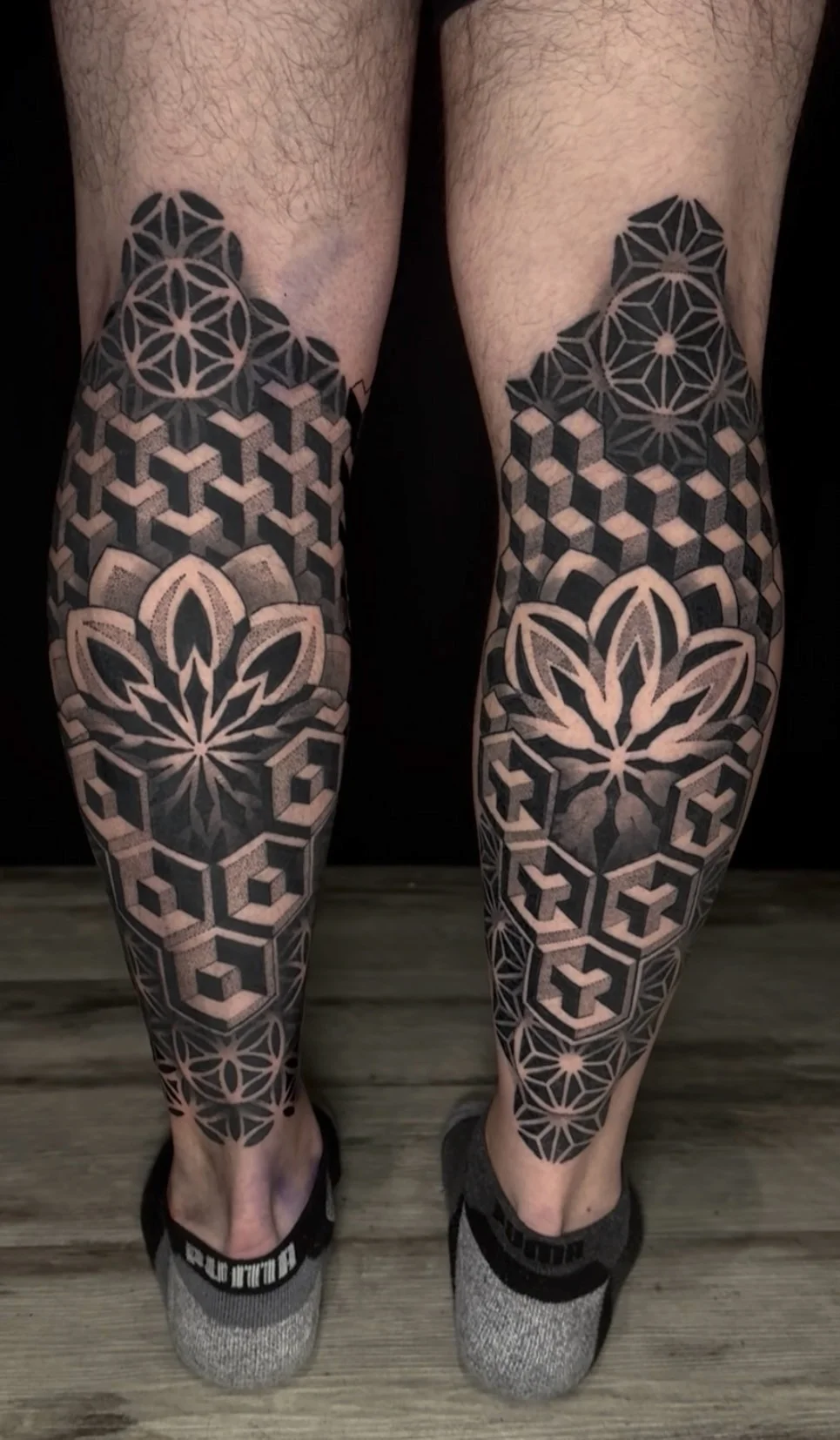
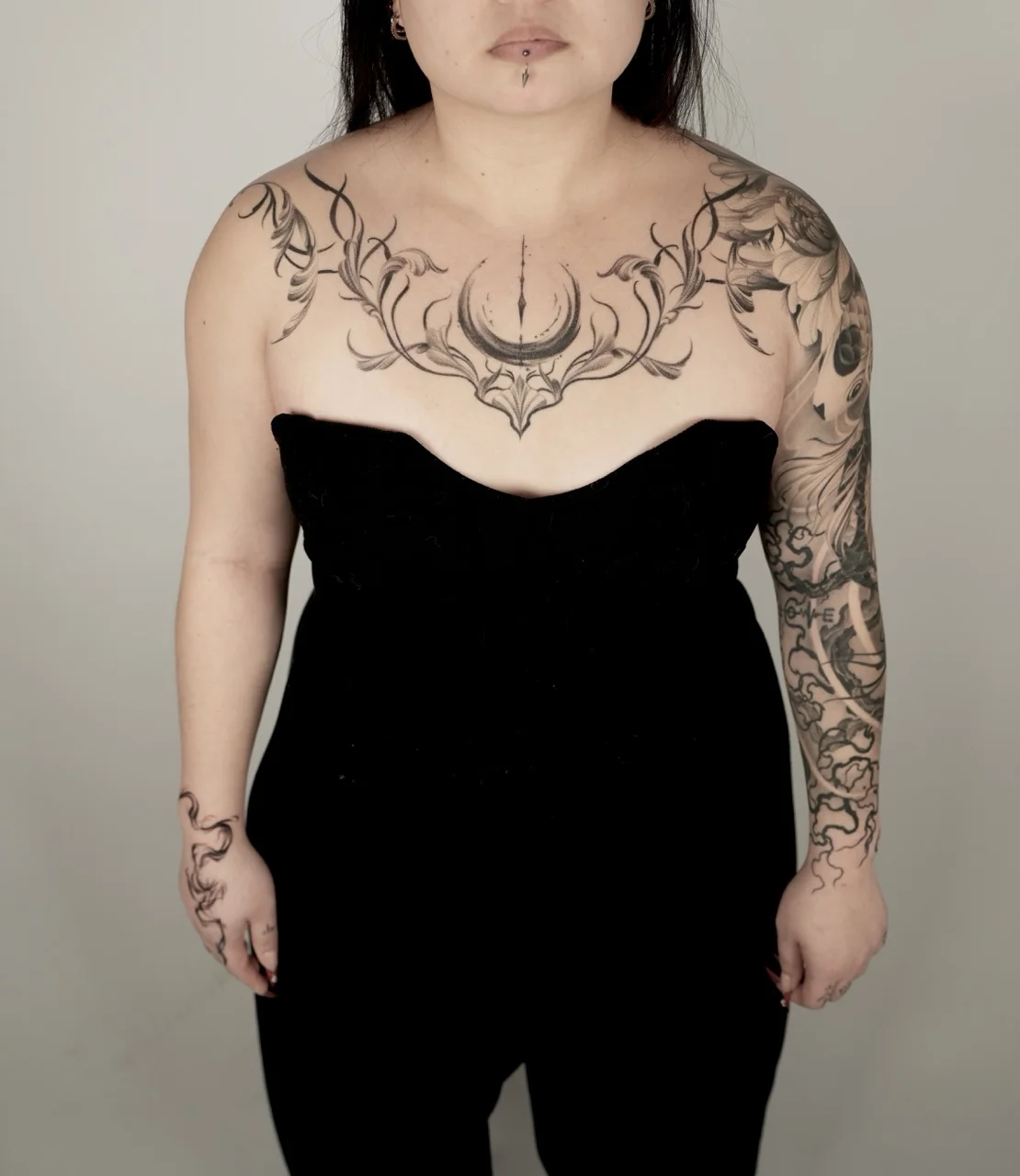
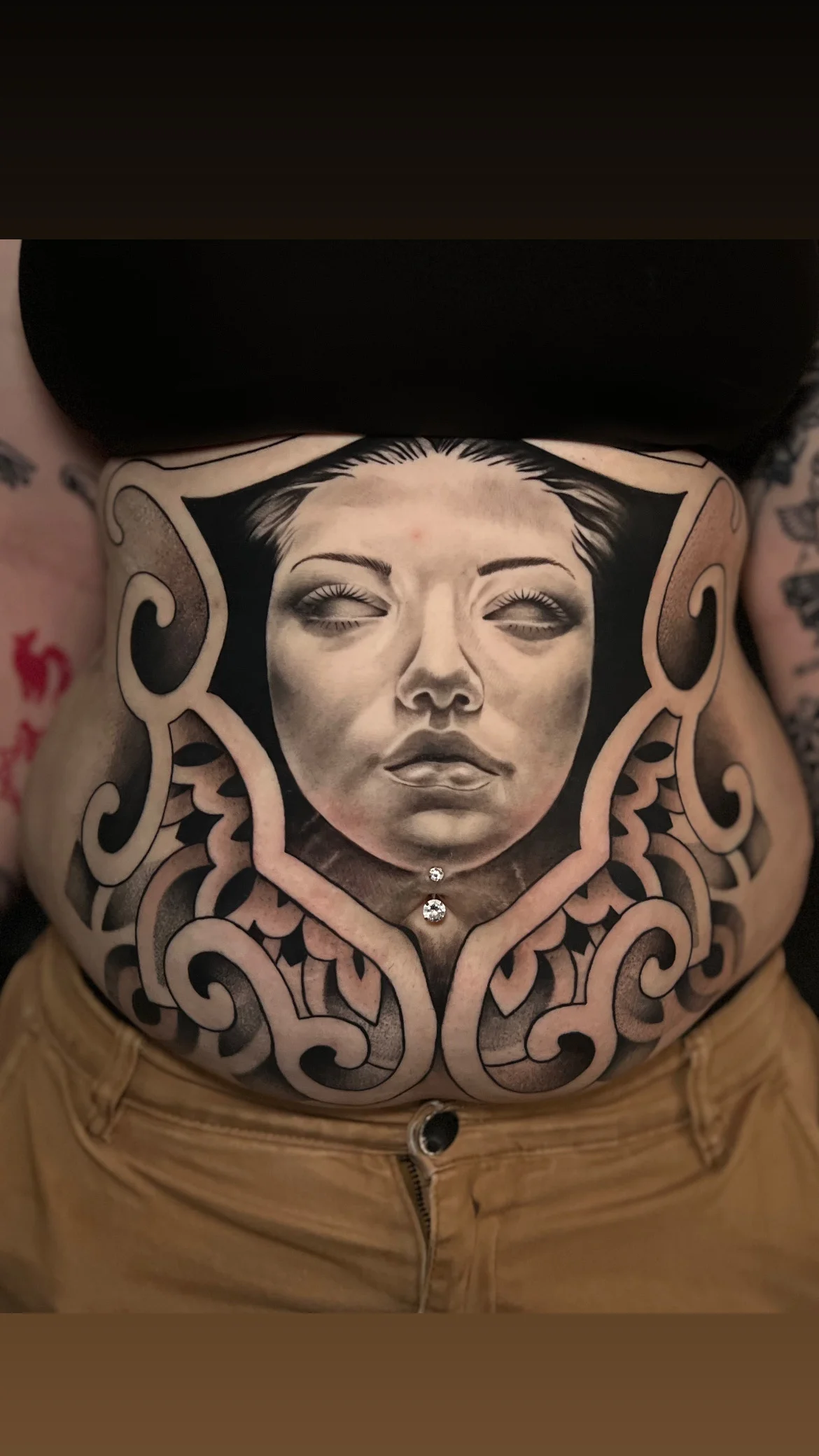
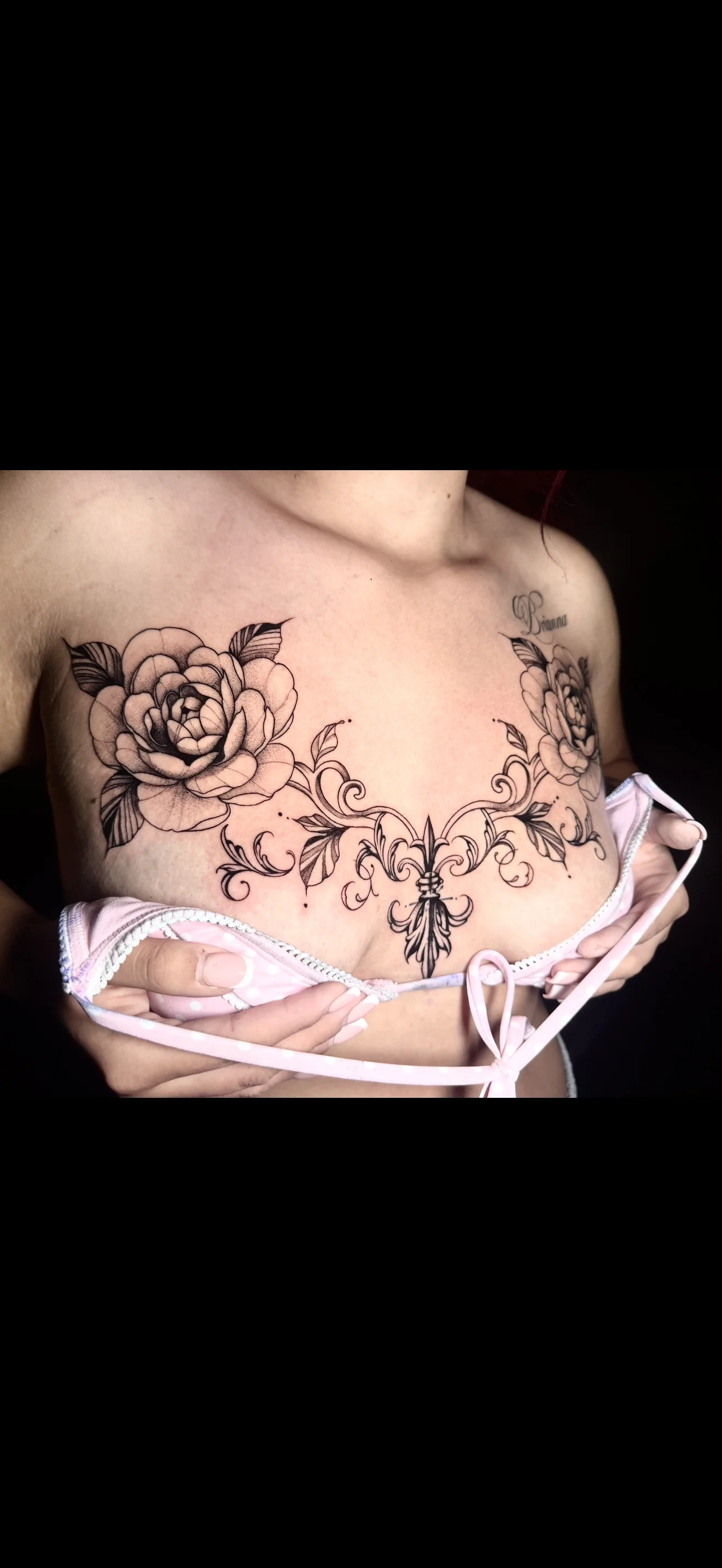
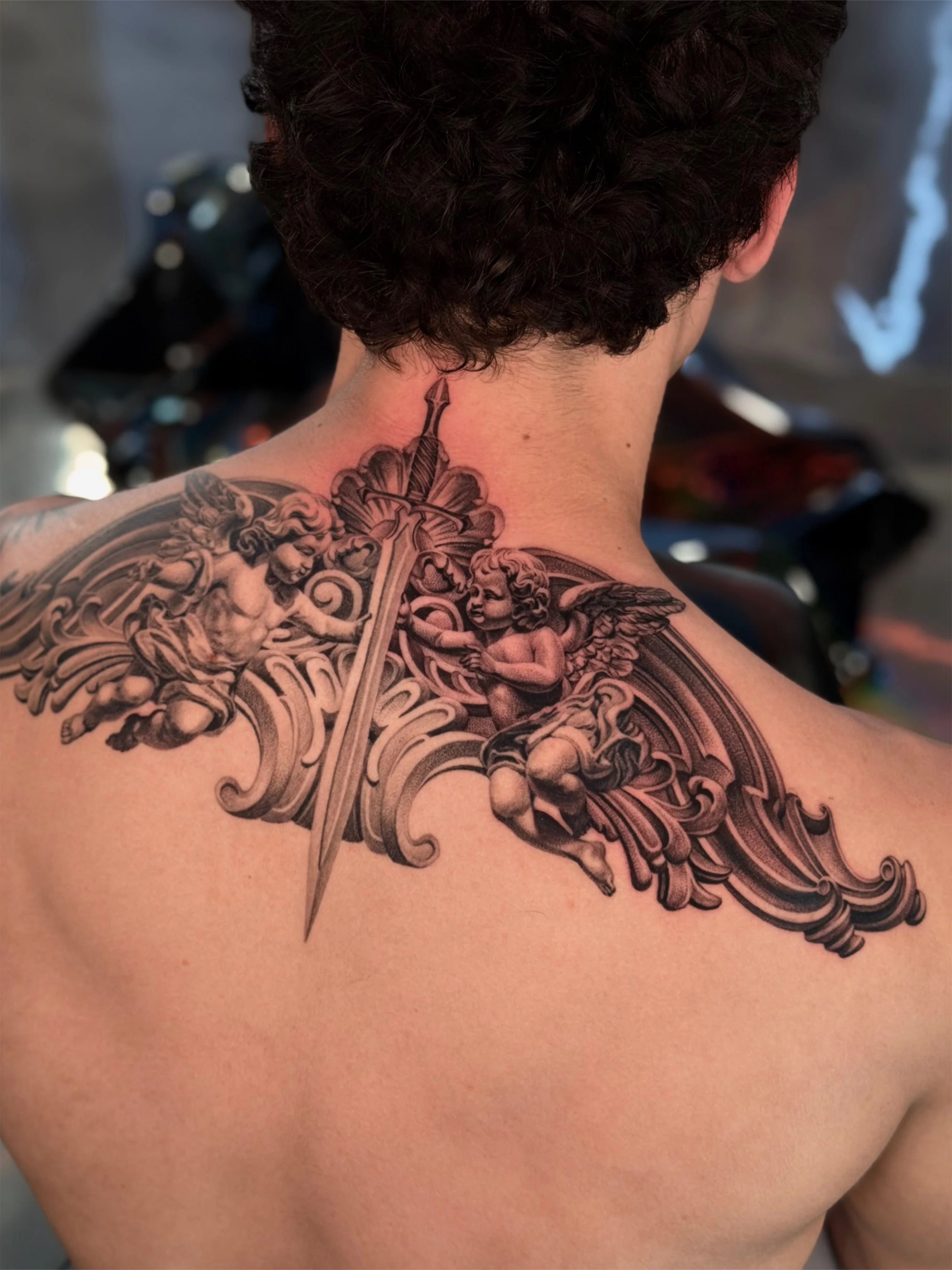
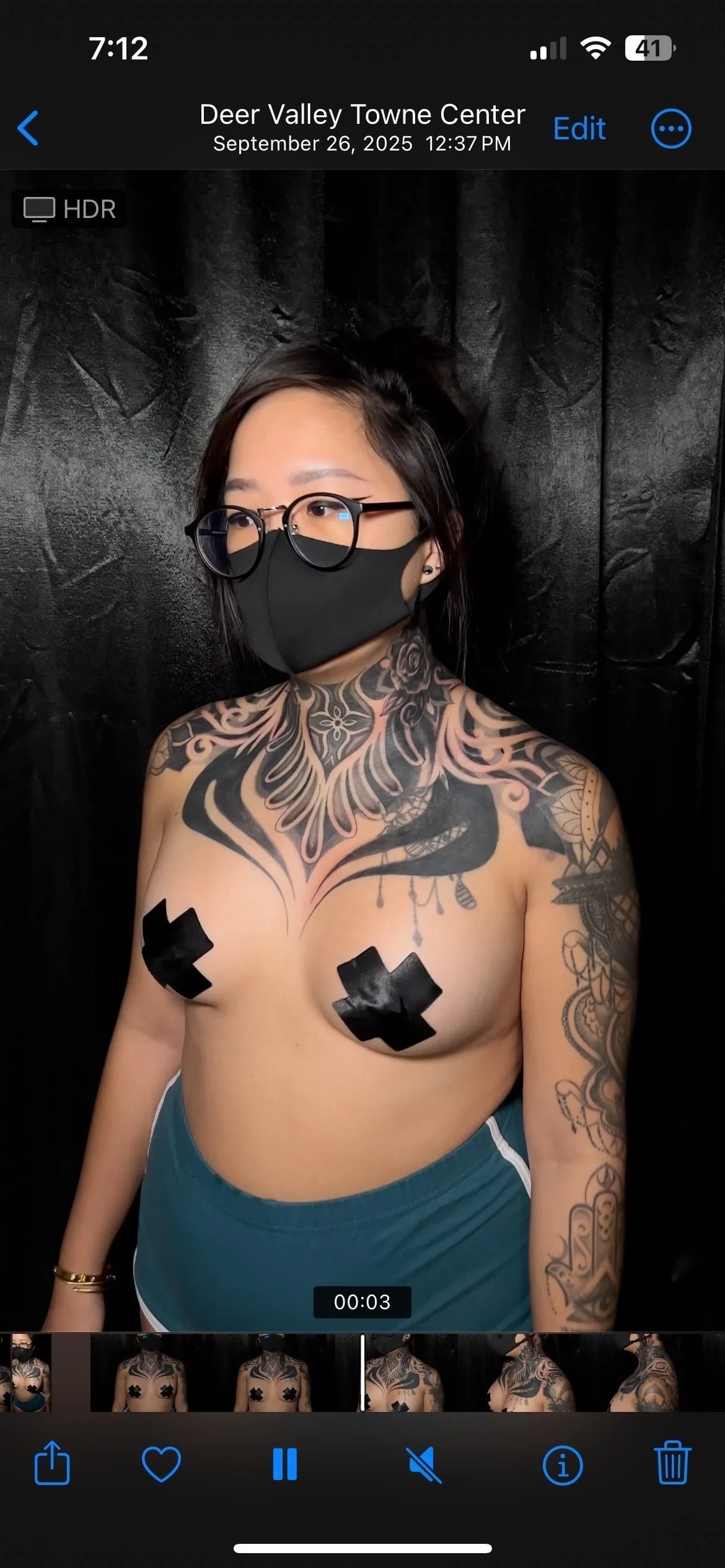
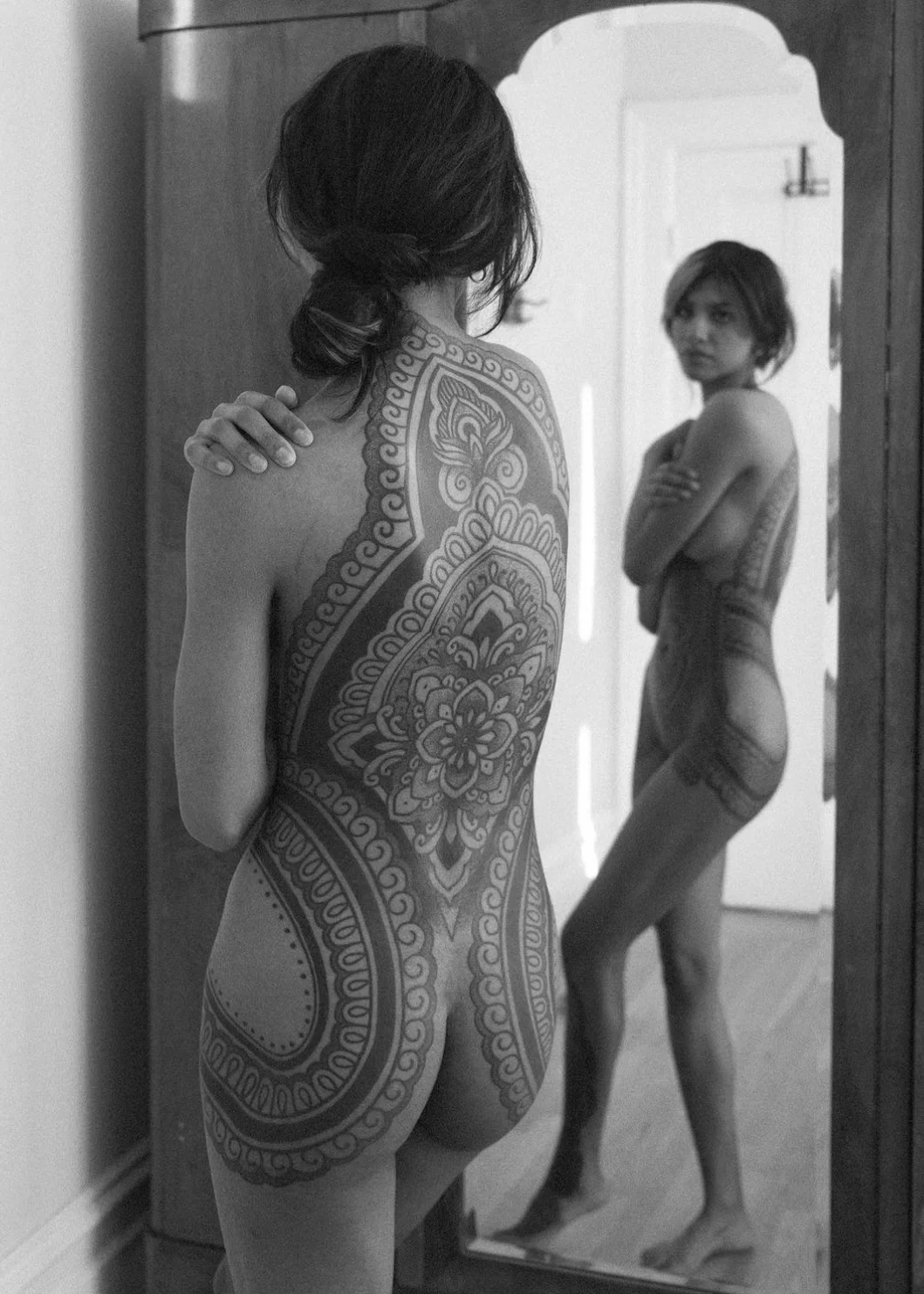
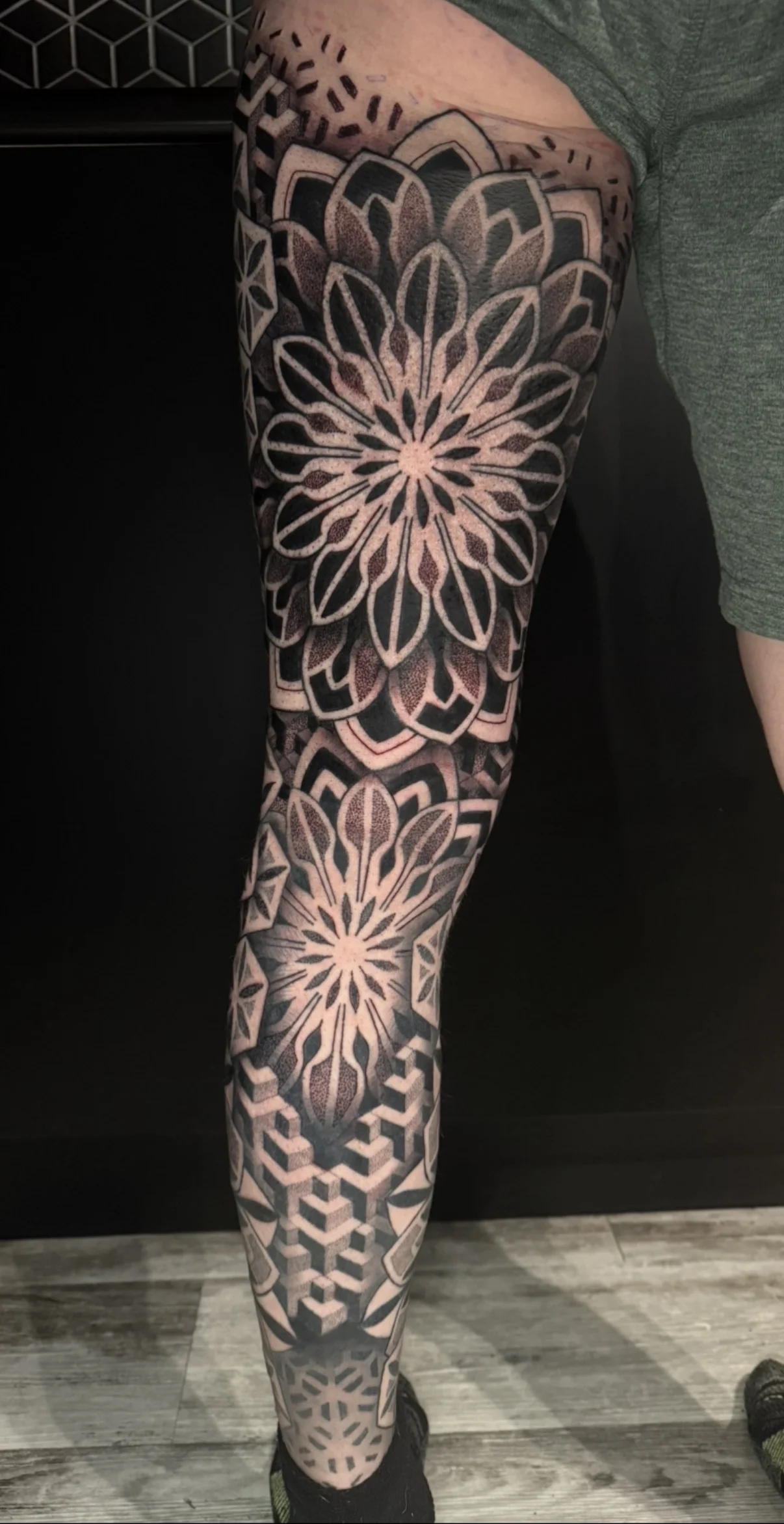
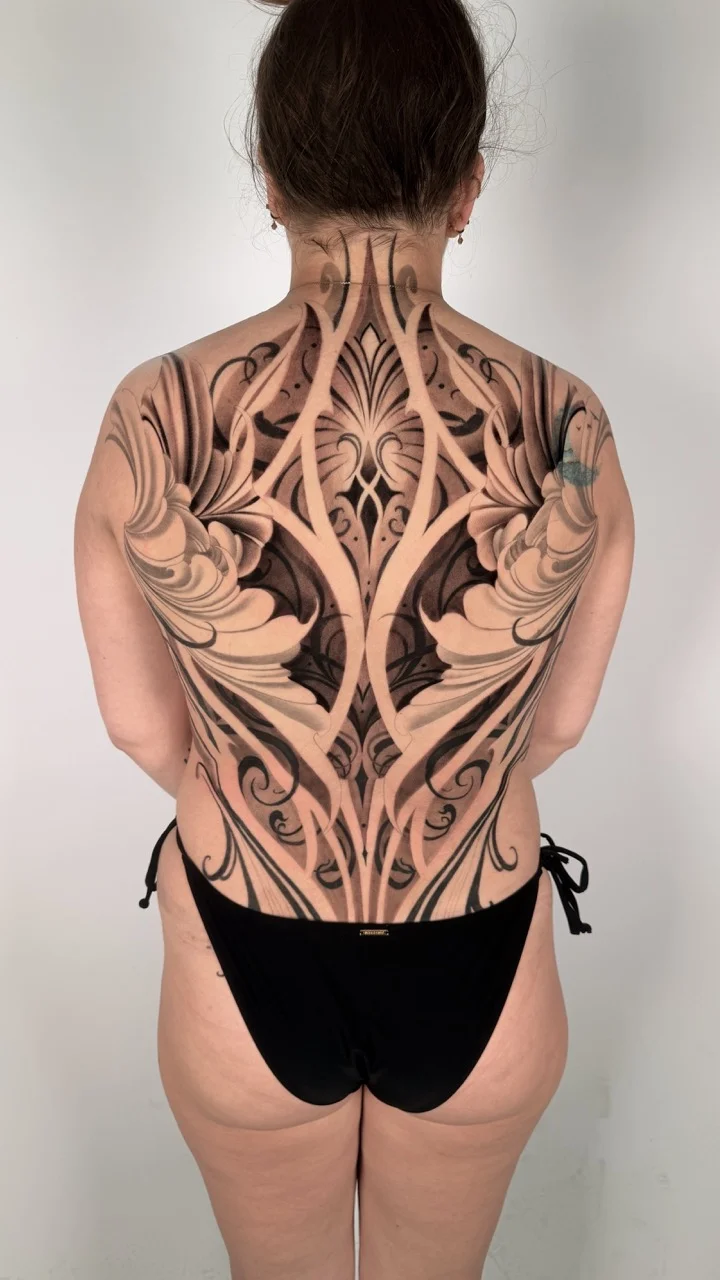
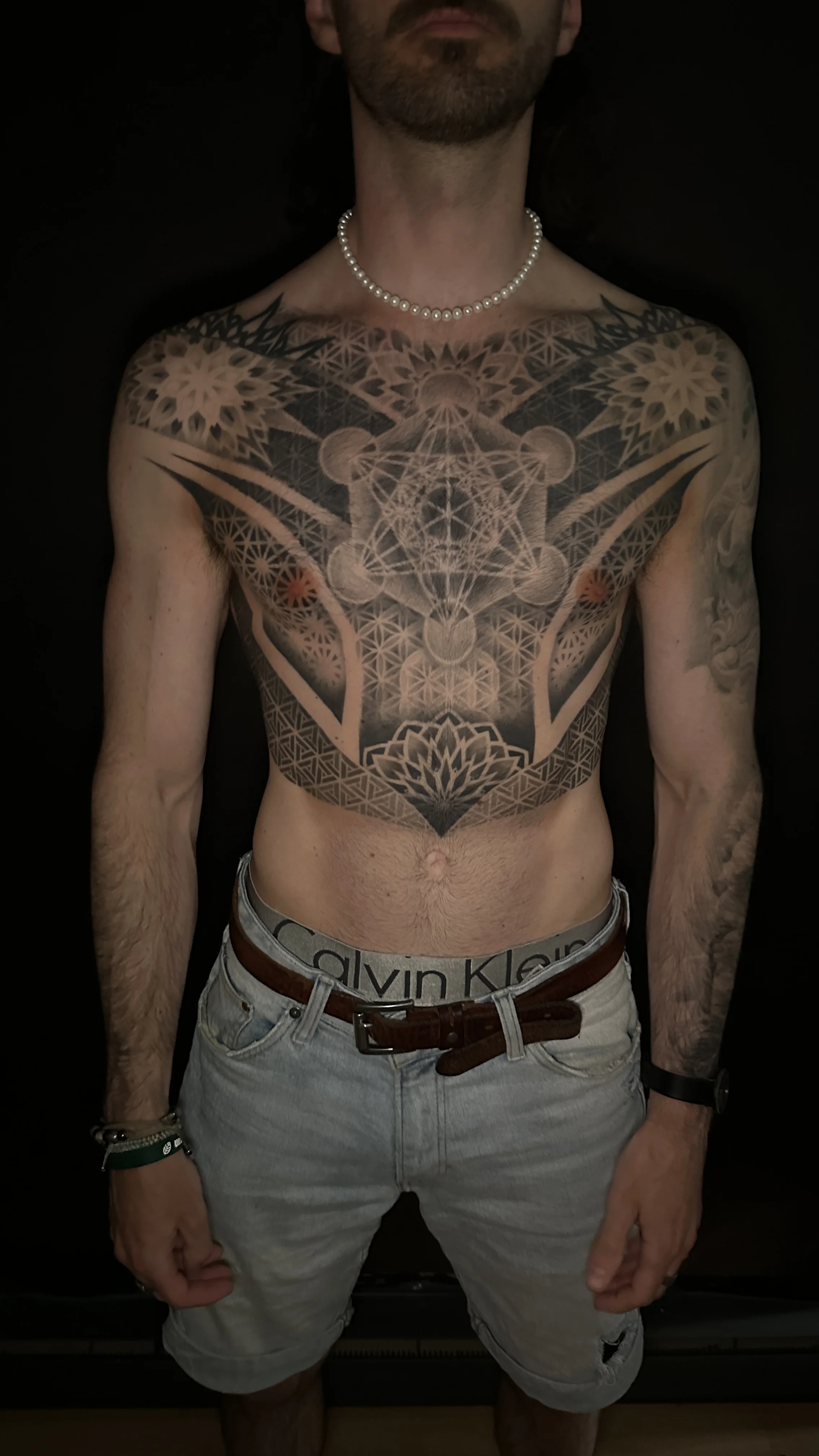
Ornamental tattooing is pattern-driven, body-mapped work. Mandalas, lace-influenced compositions, filigree, jewelry-inspired designs, and repeated motifs are arranged so they flow with the natural lines of the body rather than against them. It's a style where the artist's eye for symmetry, structure, and anatomical fit matters as much as their needle work.
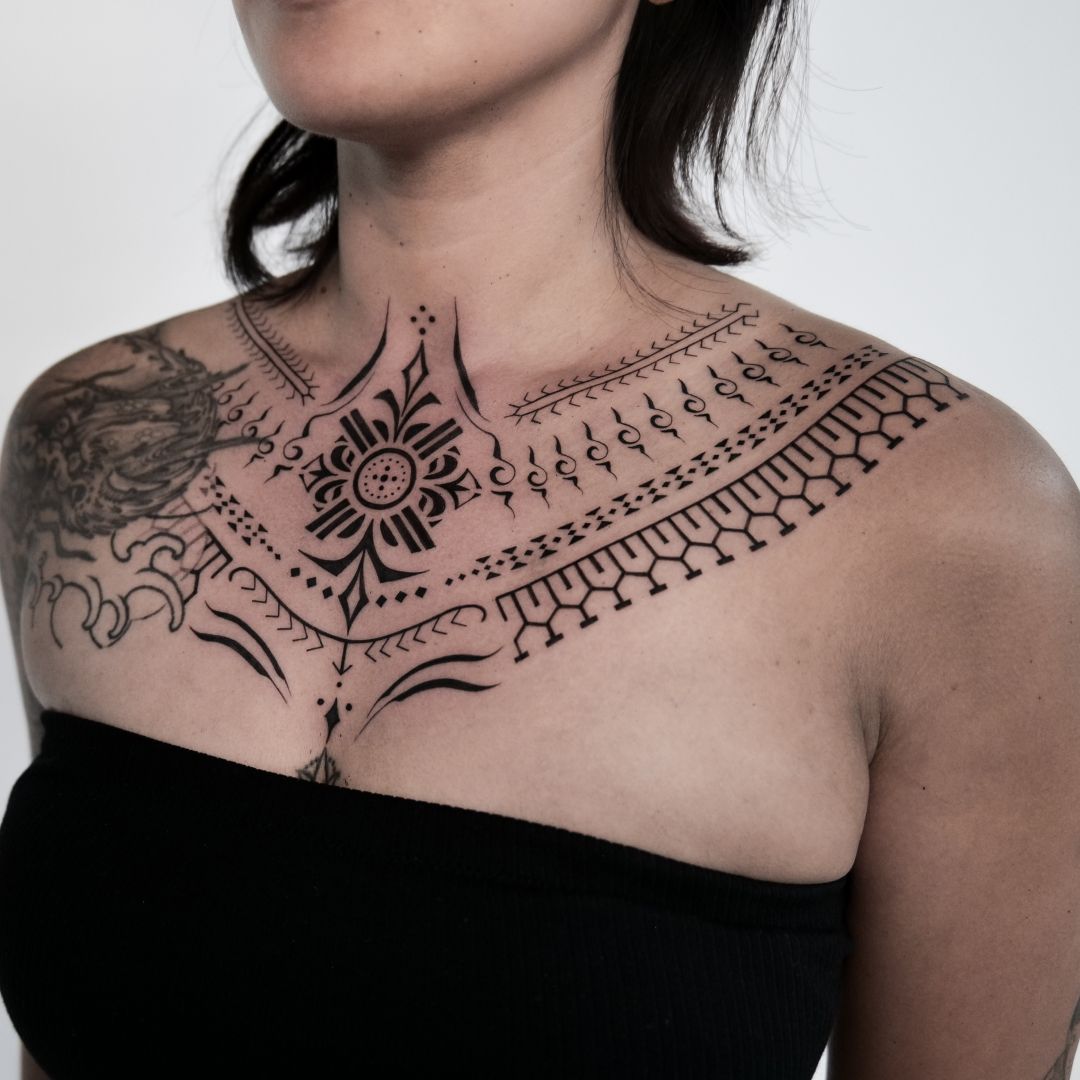
The style draws on a long list of decorative traditions, including mehndi, Polynesian and Maori tatau, Islamic geometric art, and blackwork. Modern ornamental artists borrow from these in different ways, but the unifying idea is the same: the pattern wraps the body rather than sitting on top of it like a sticker.
What makes the style recognizable
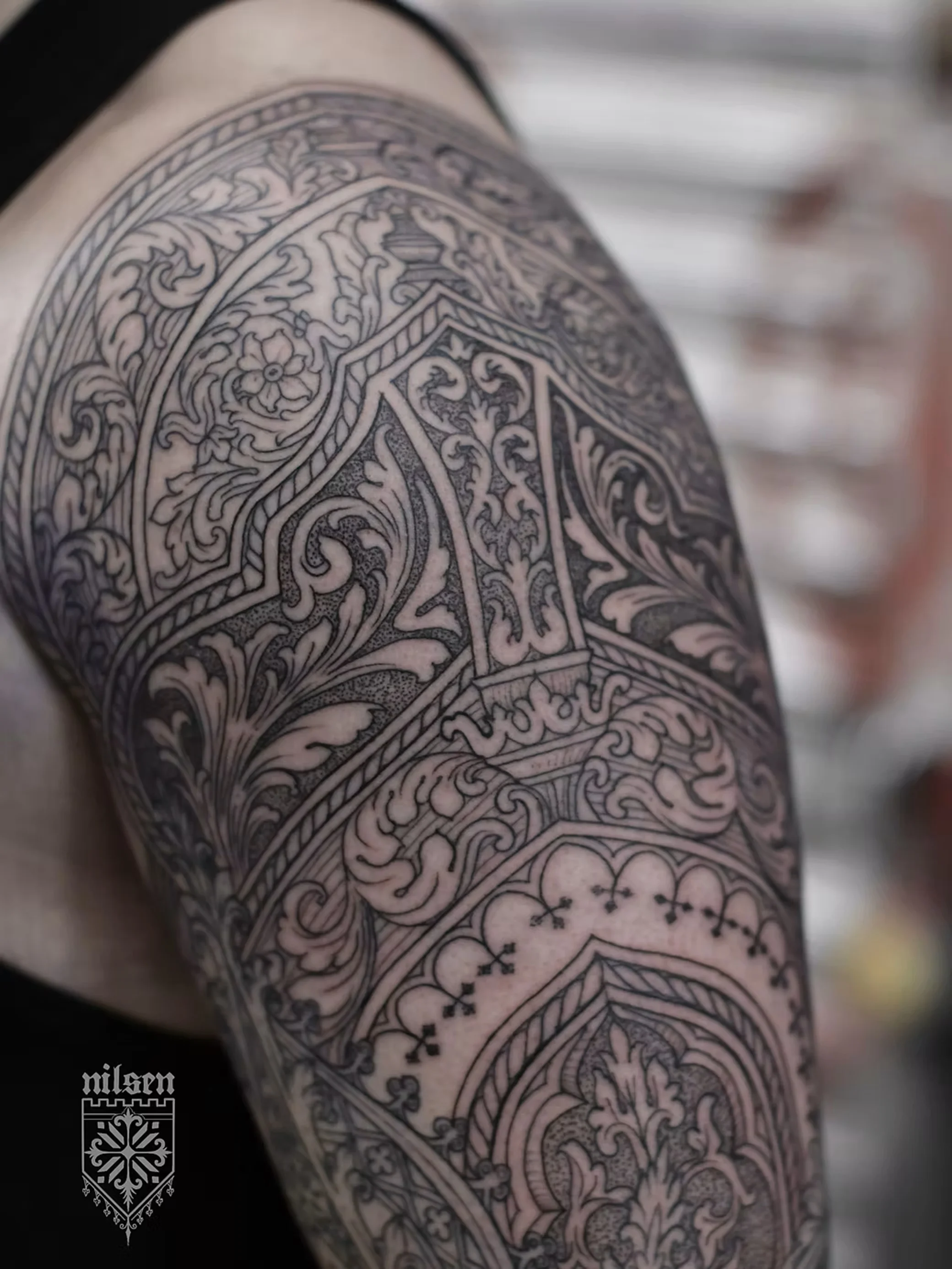
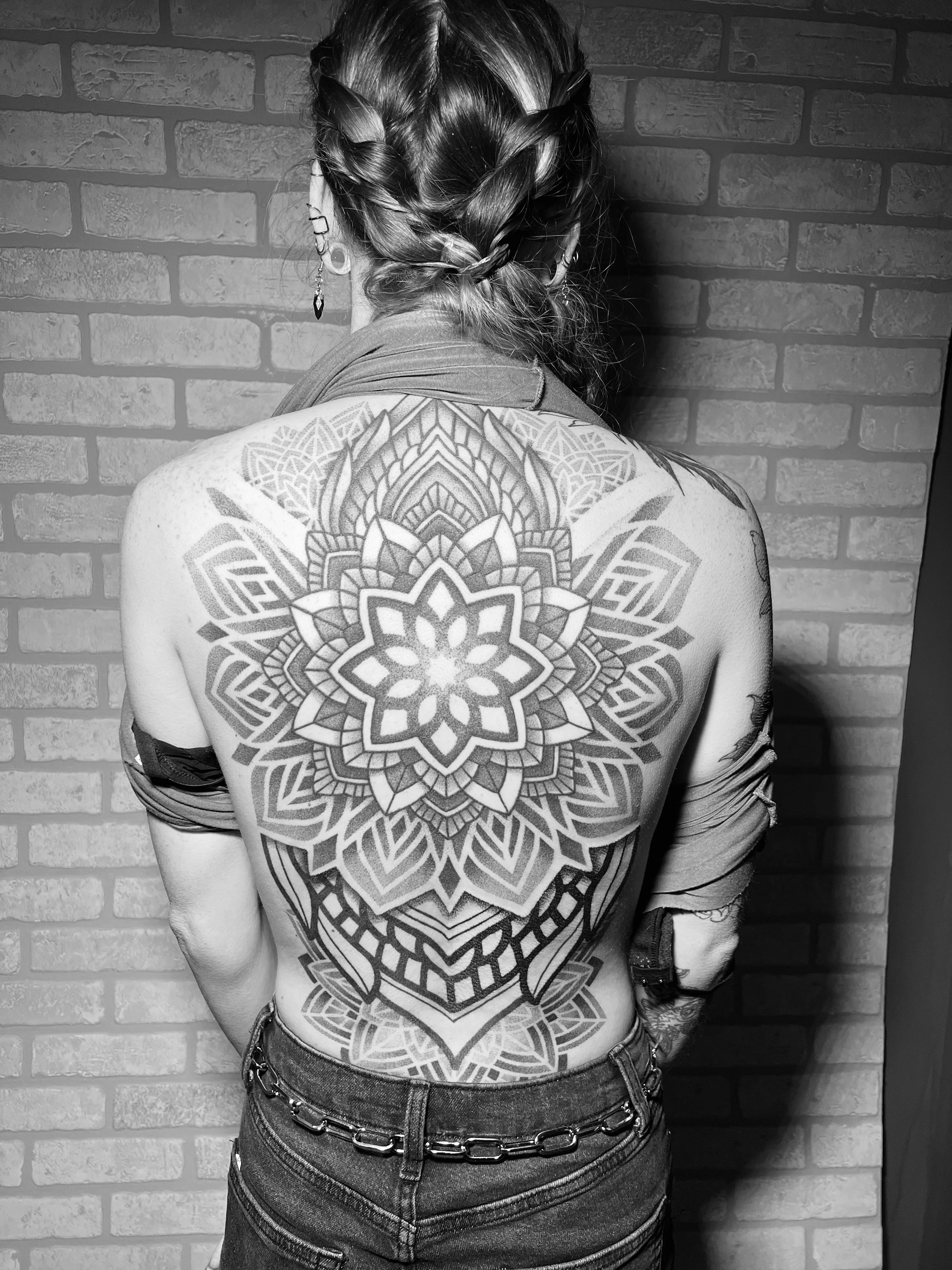
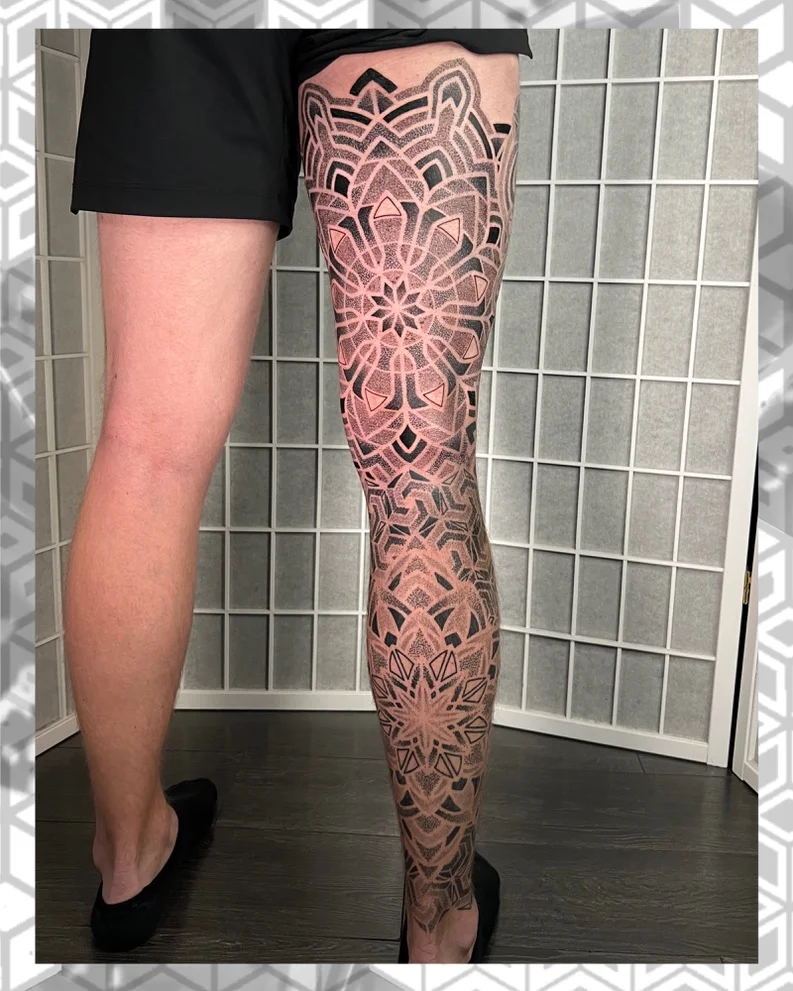
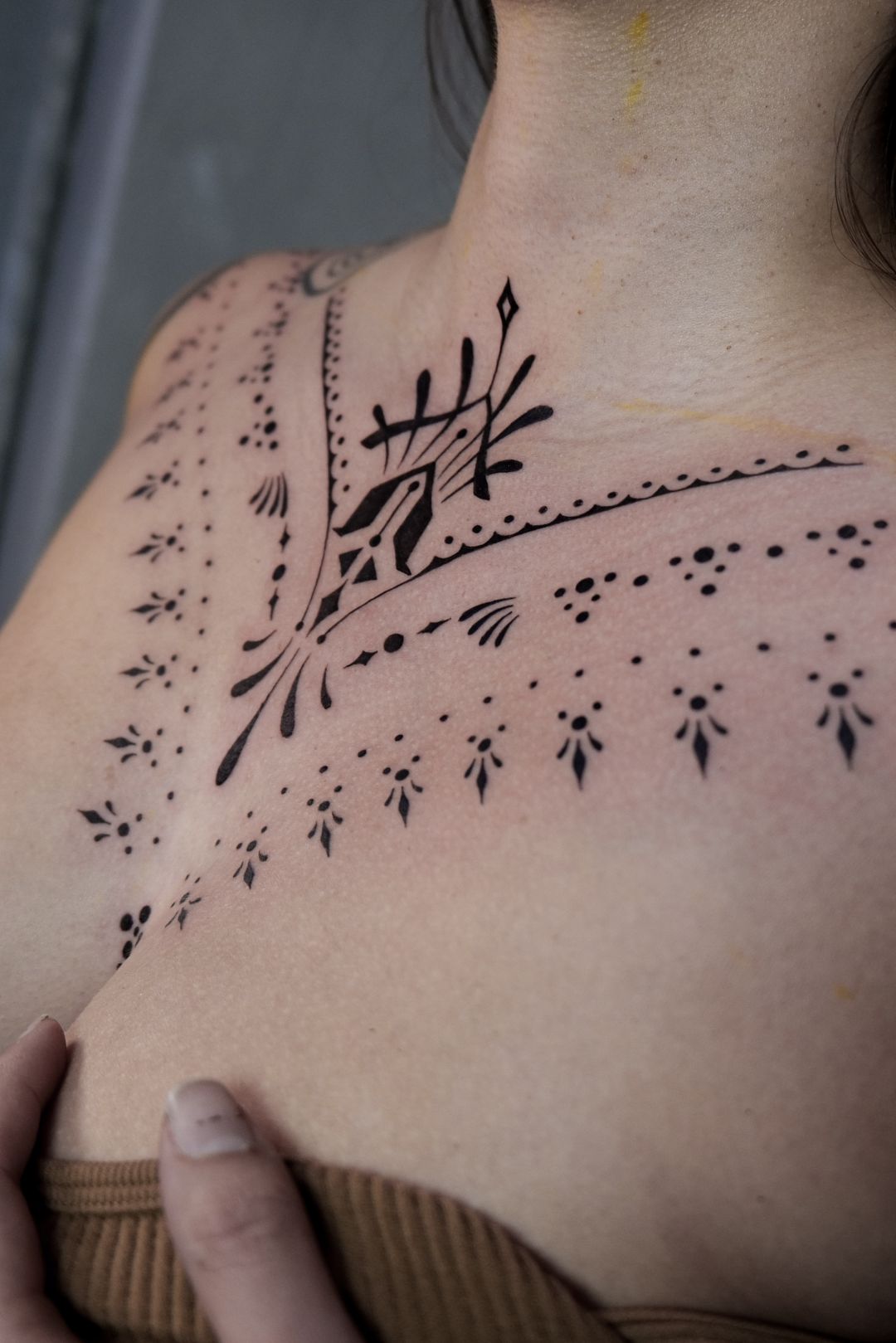
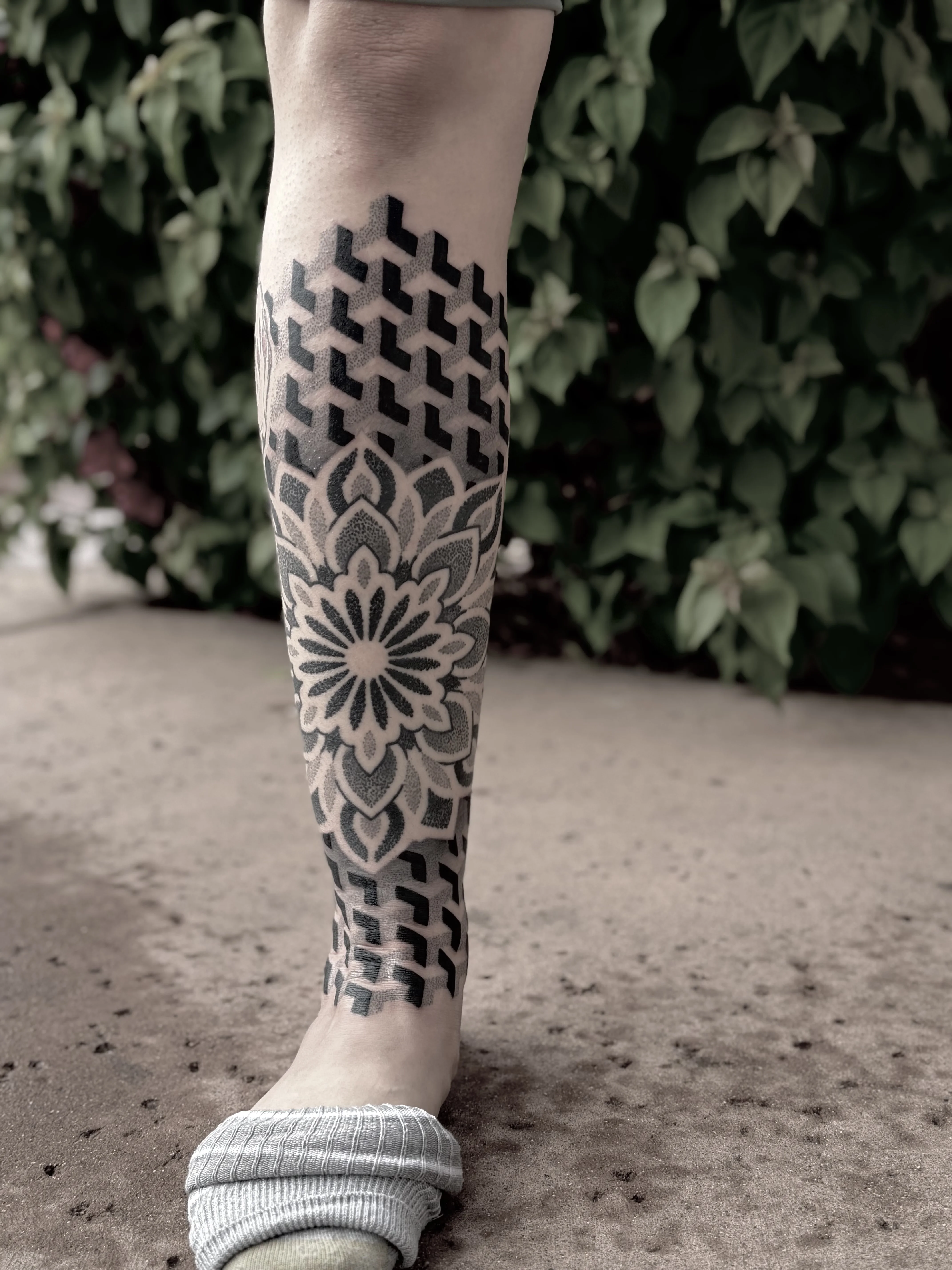
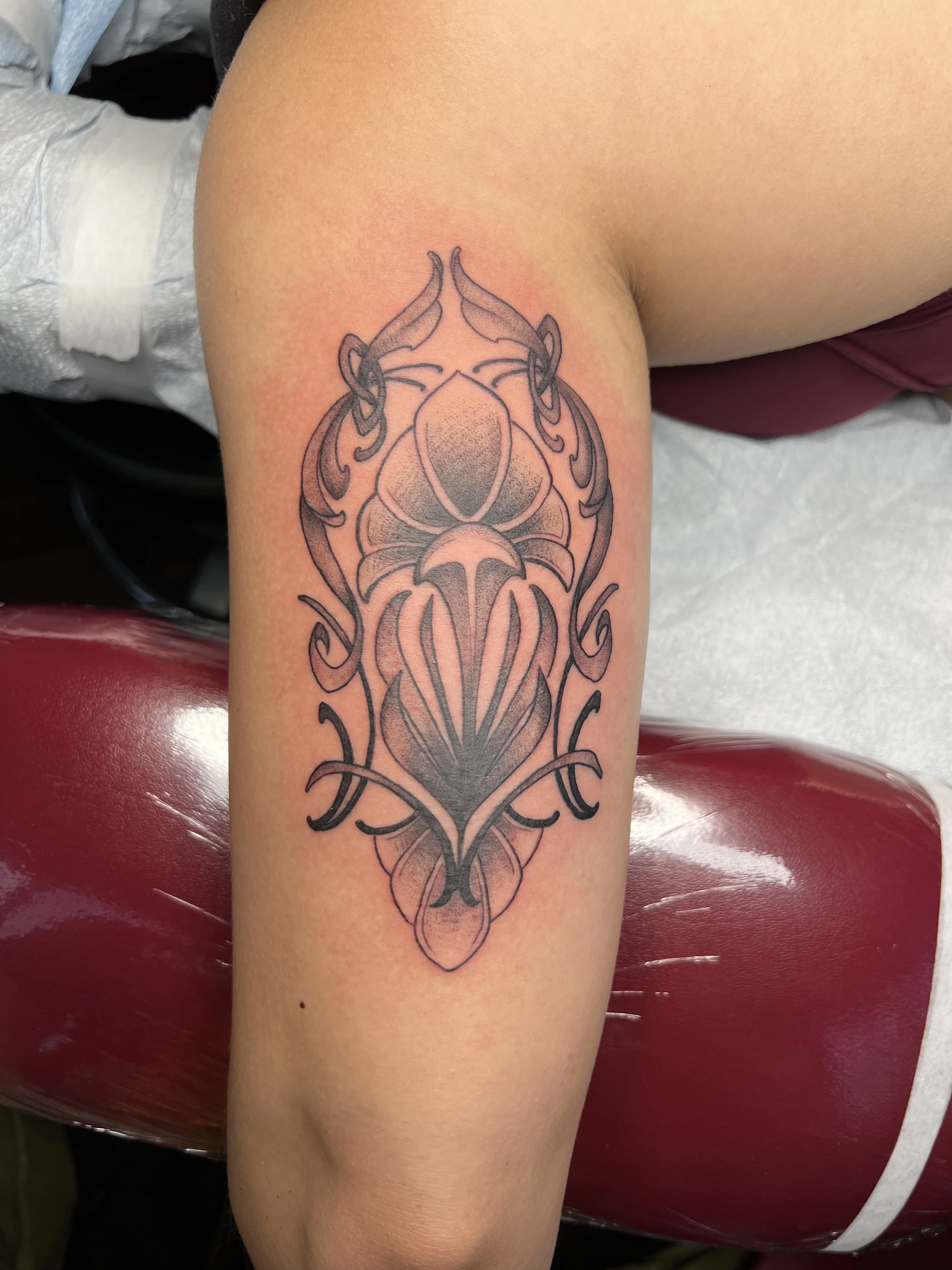
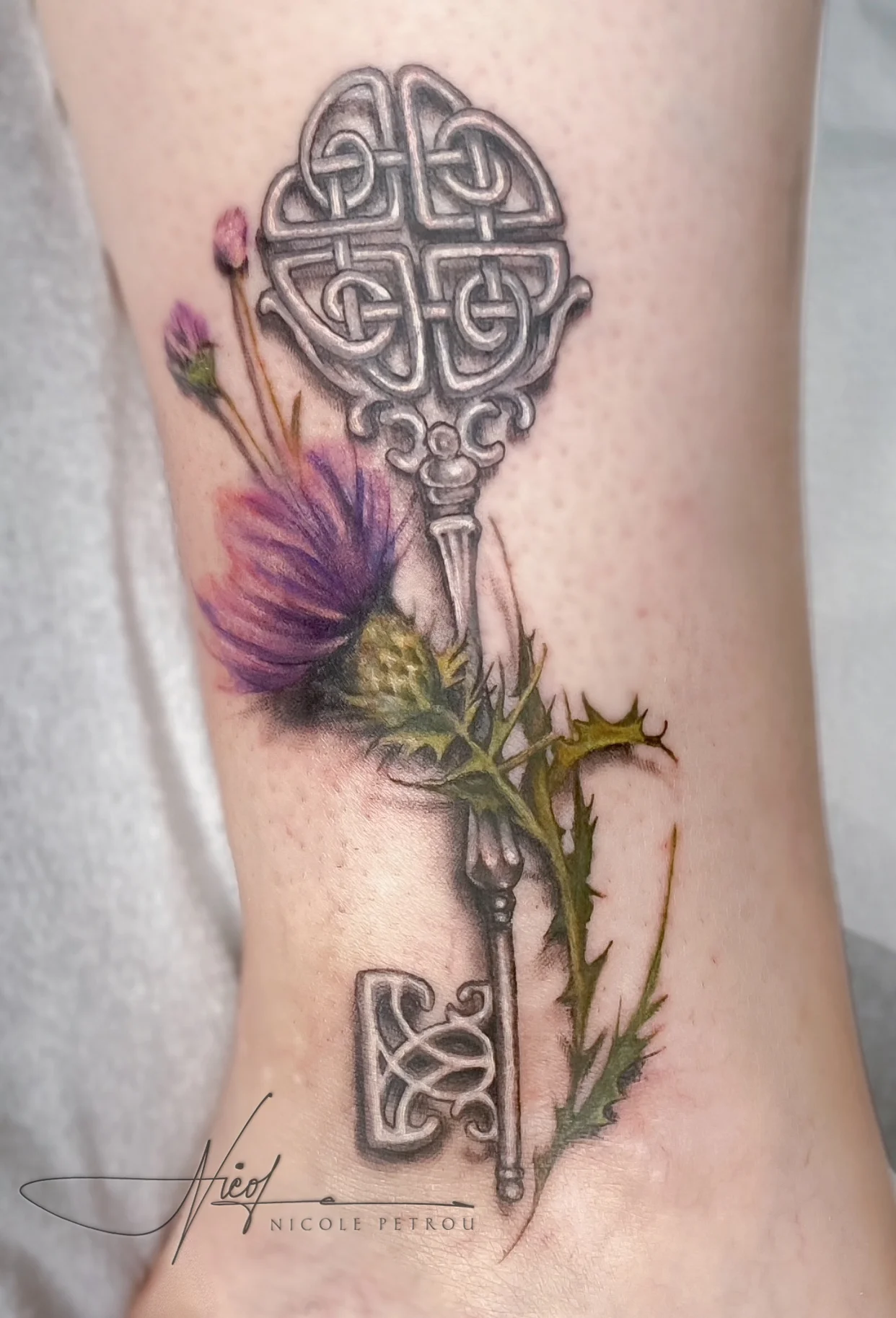
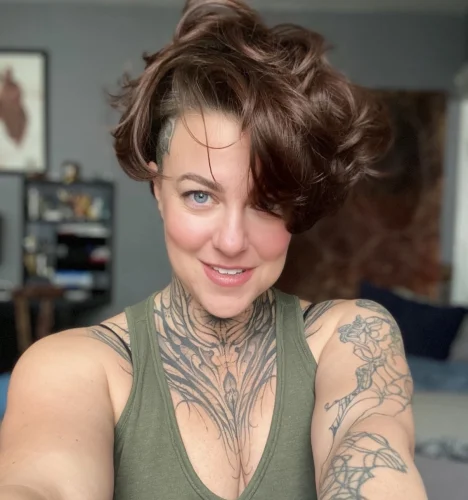
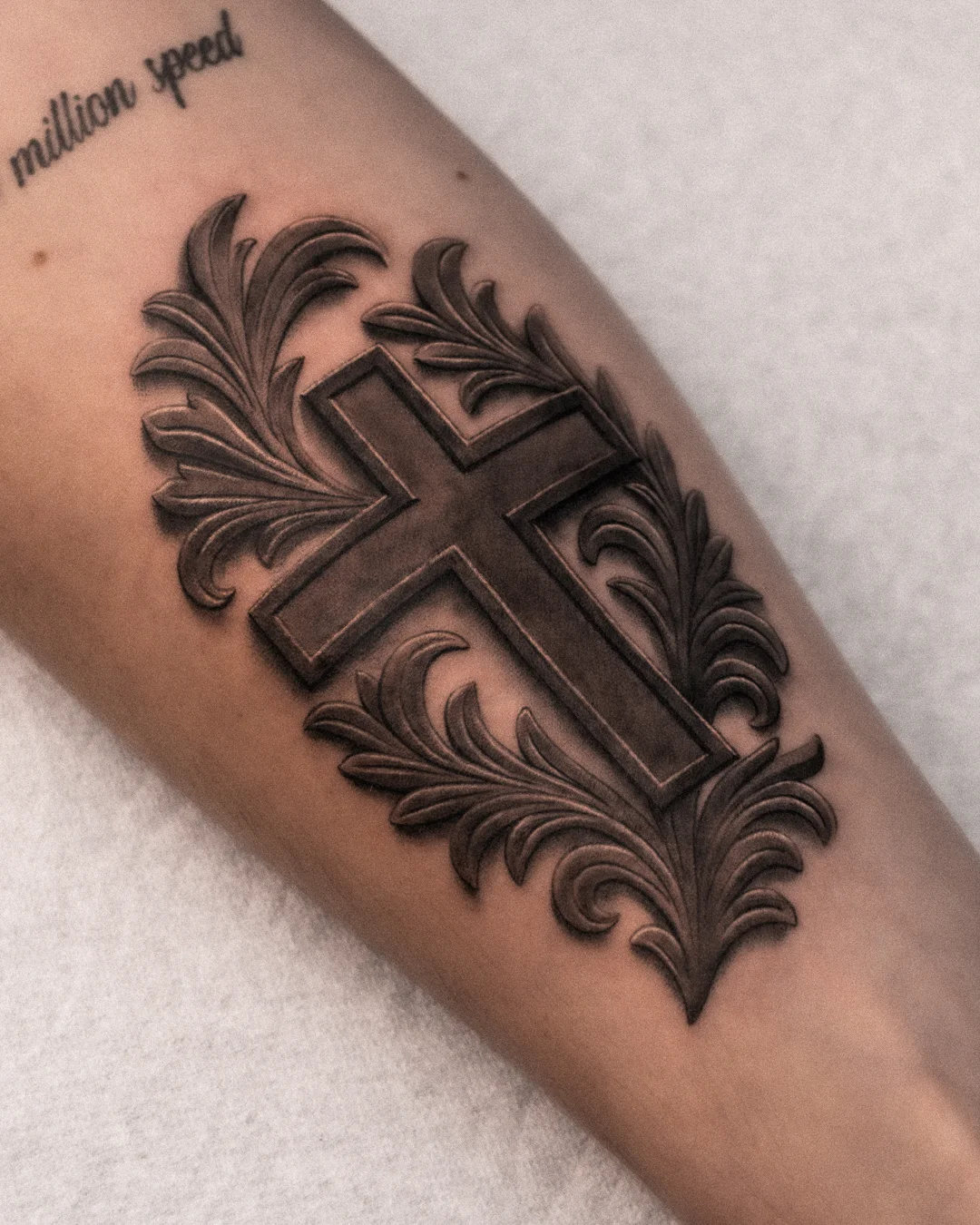
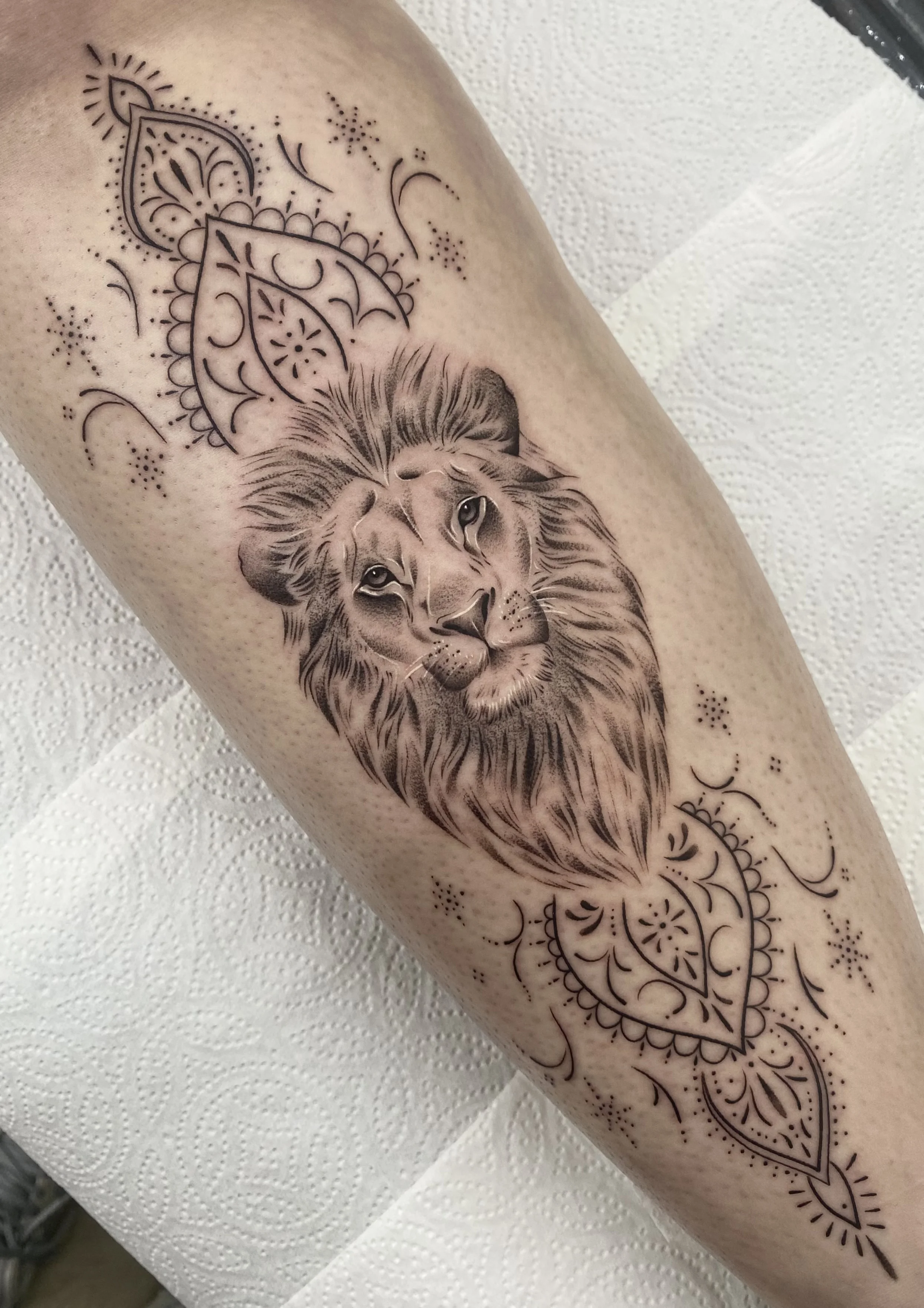
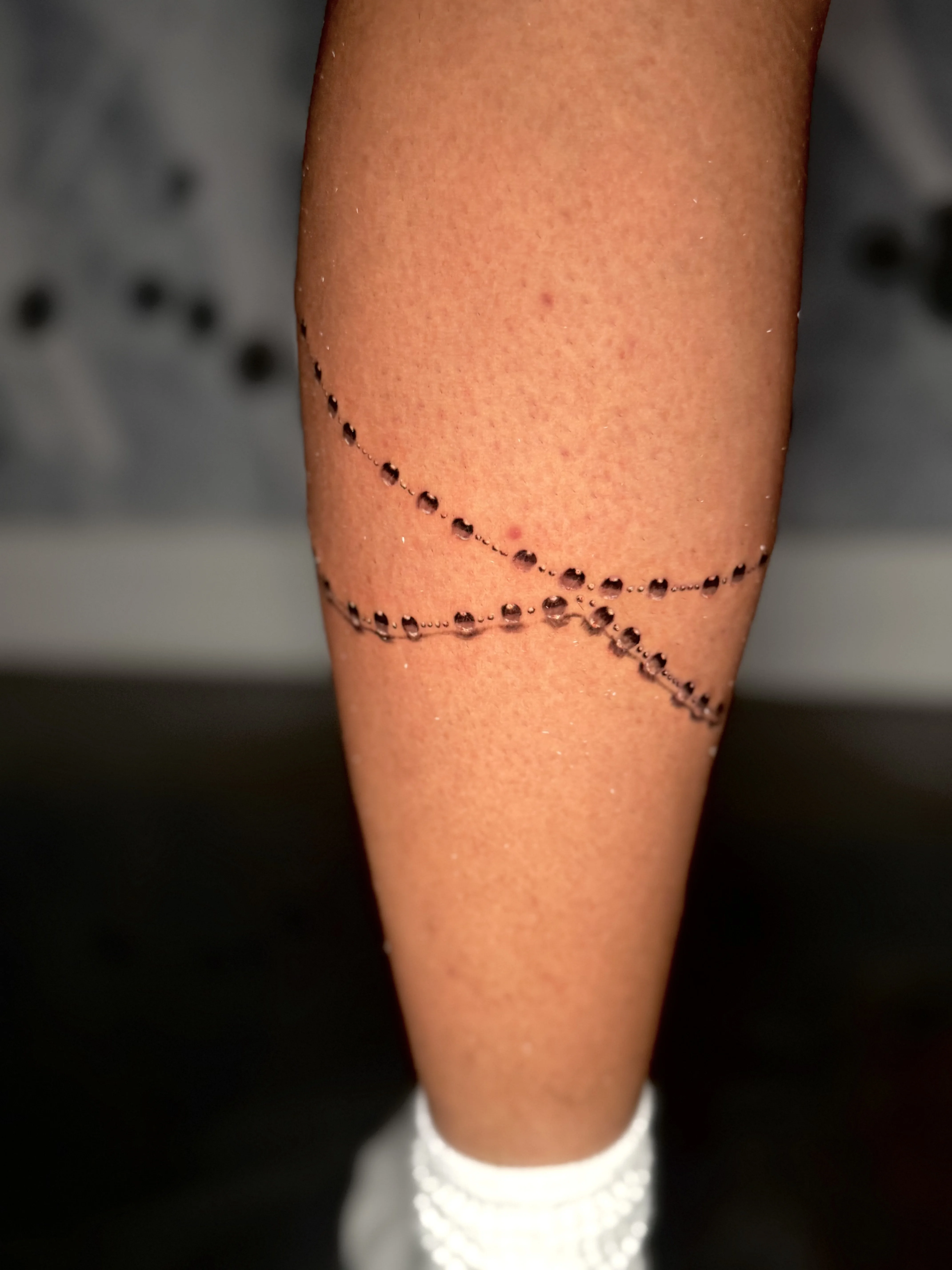
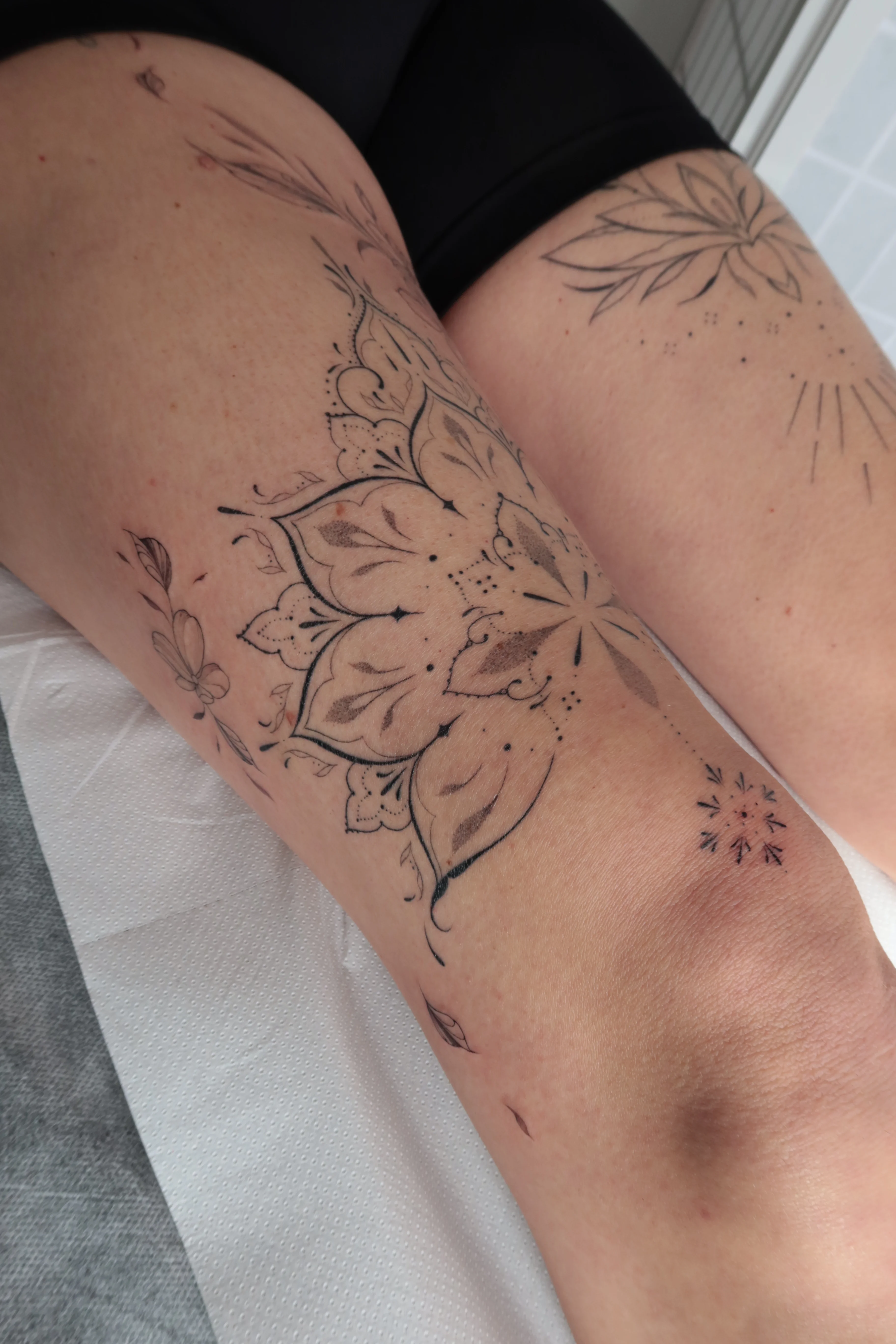
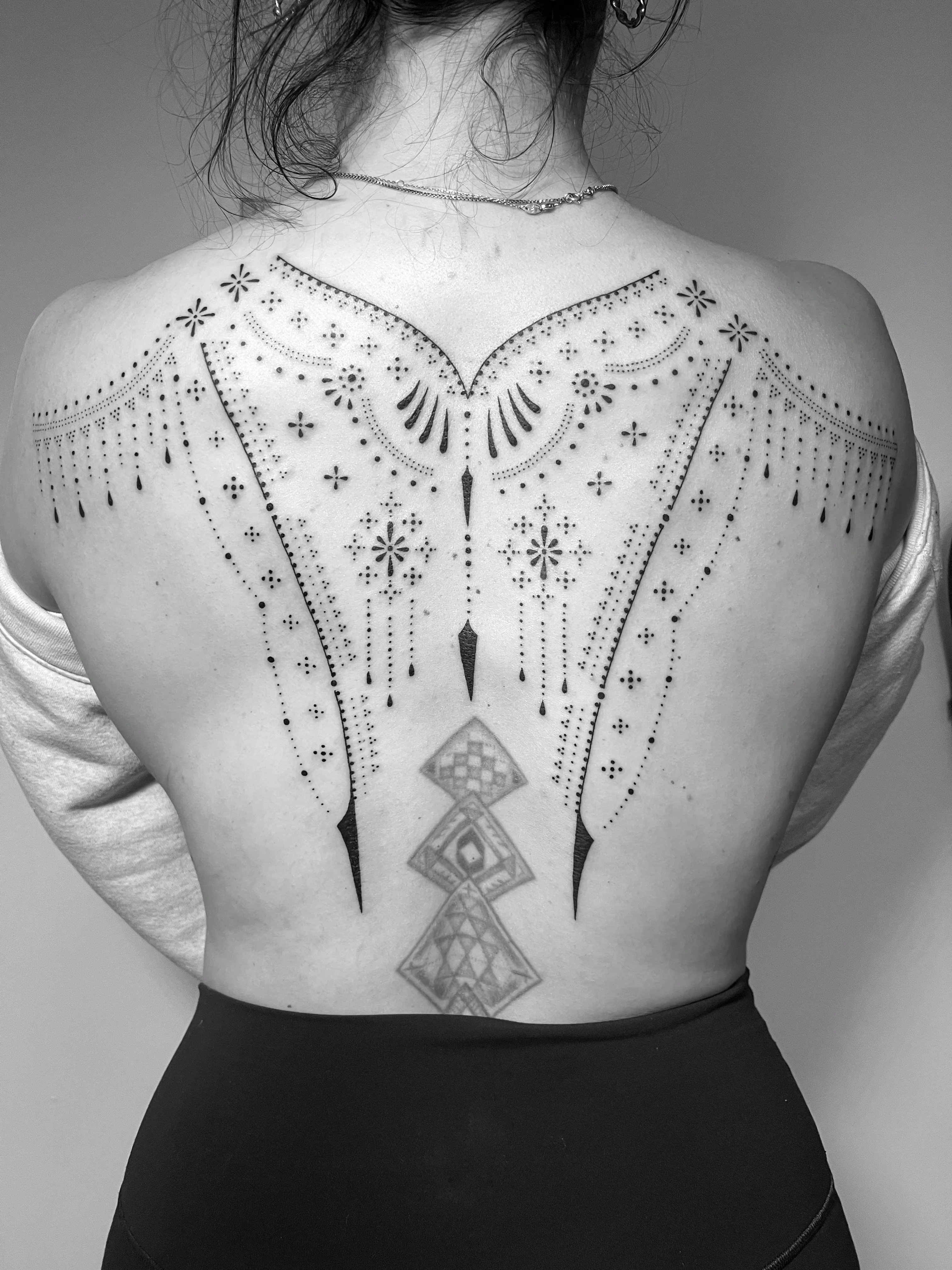
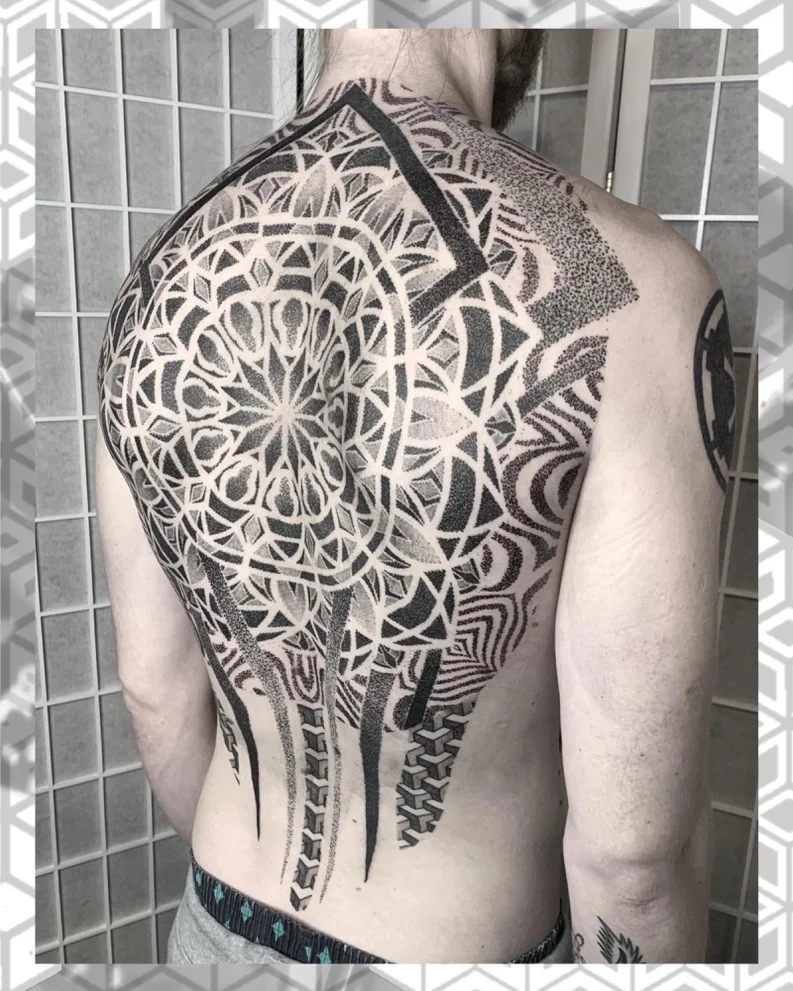
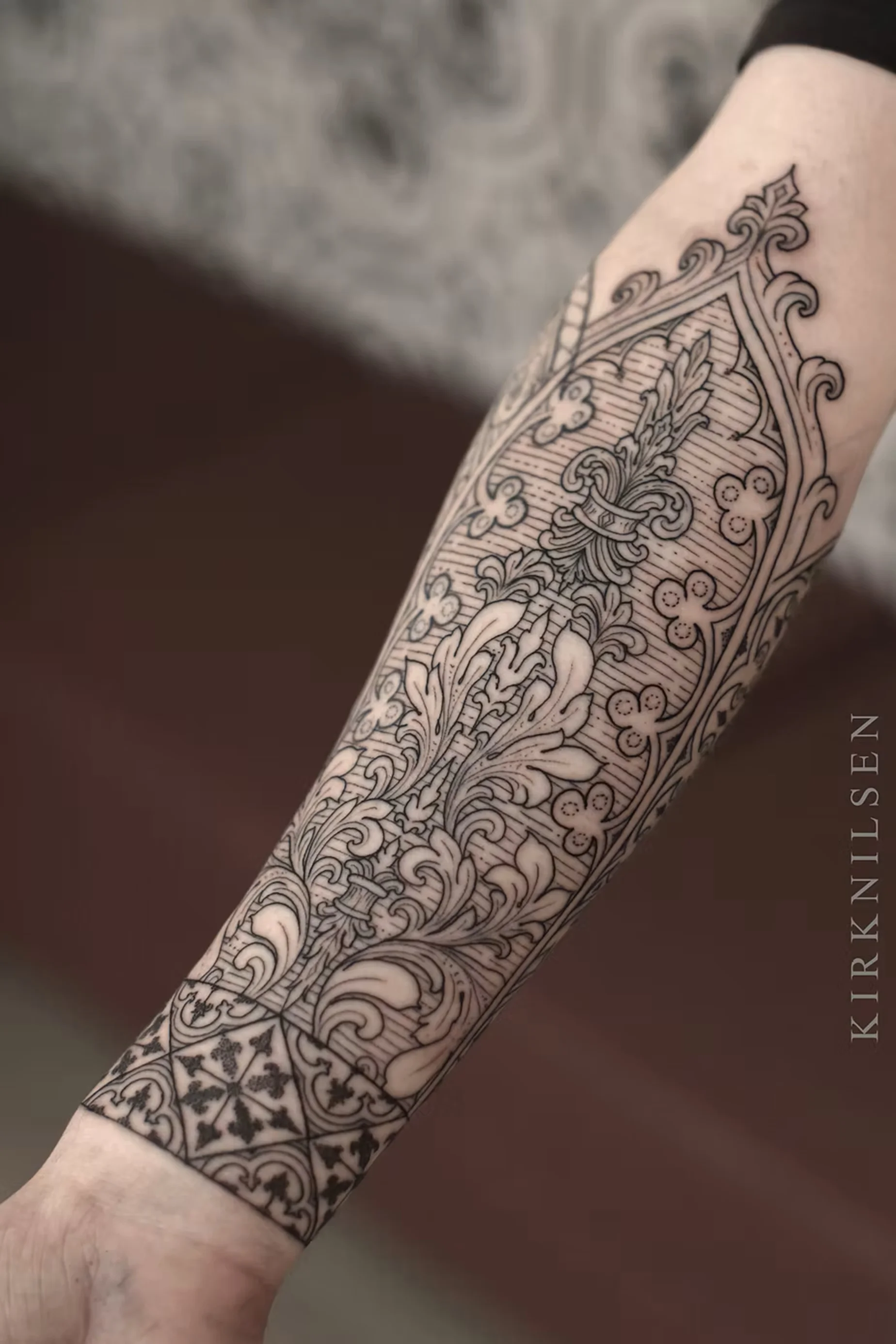
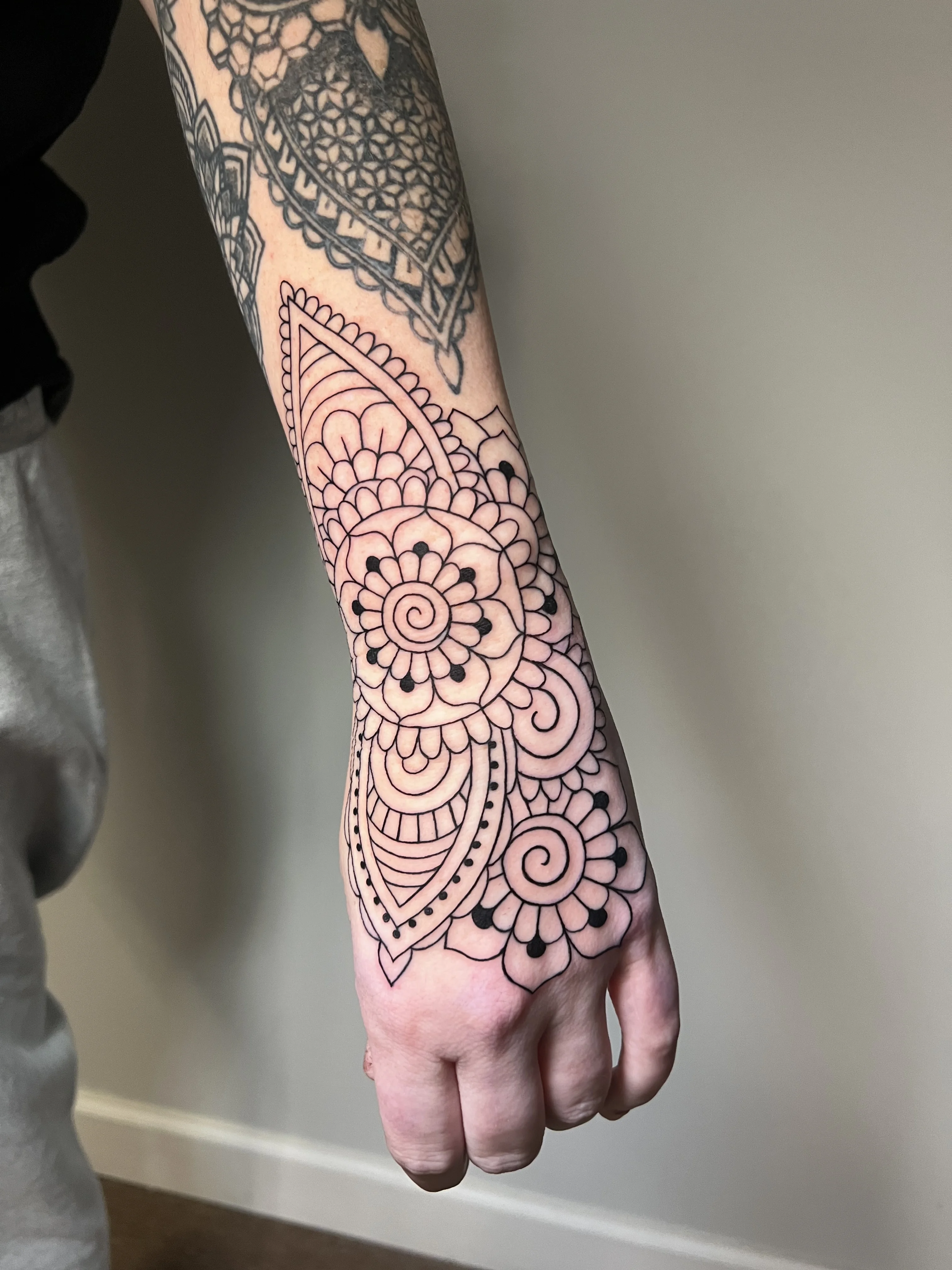
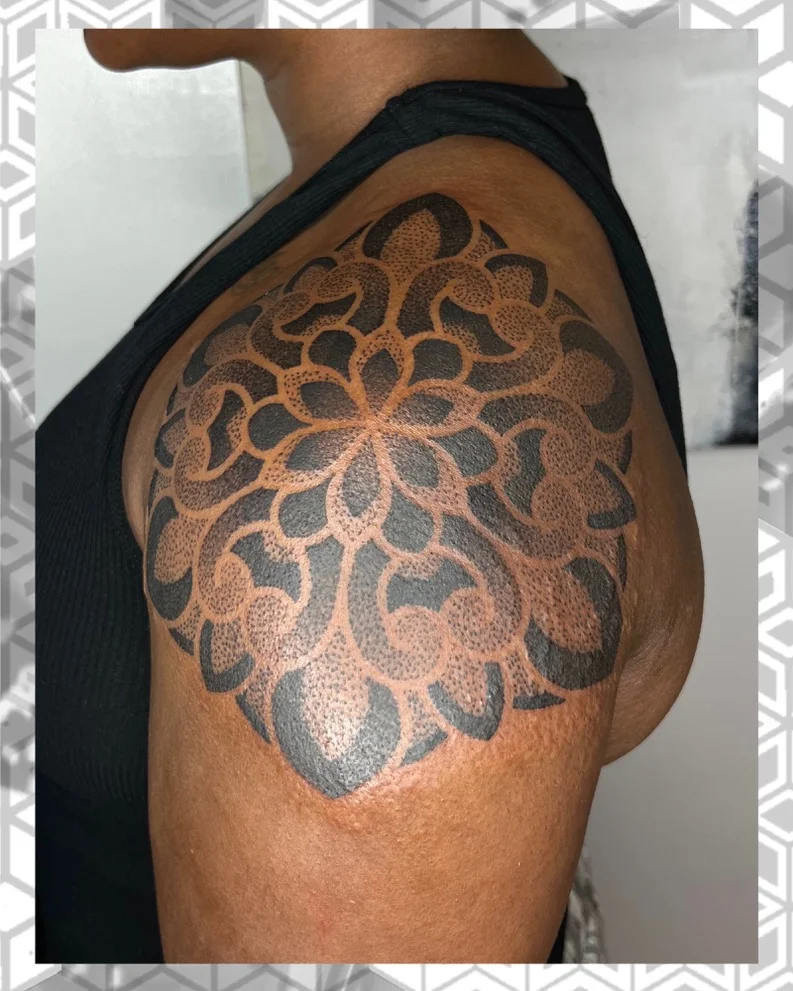
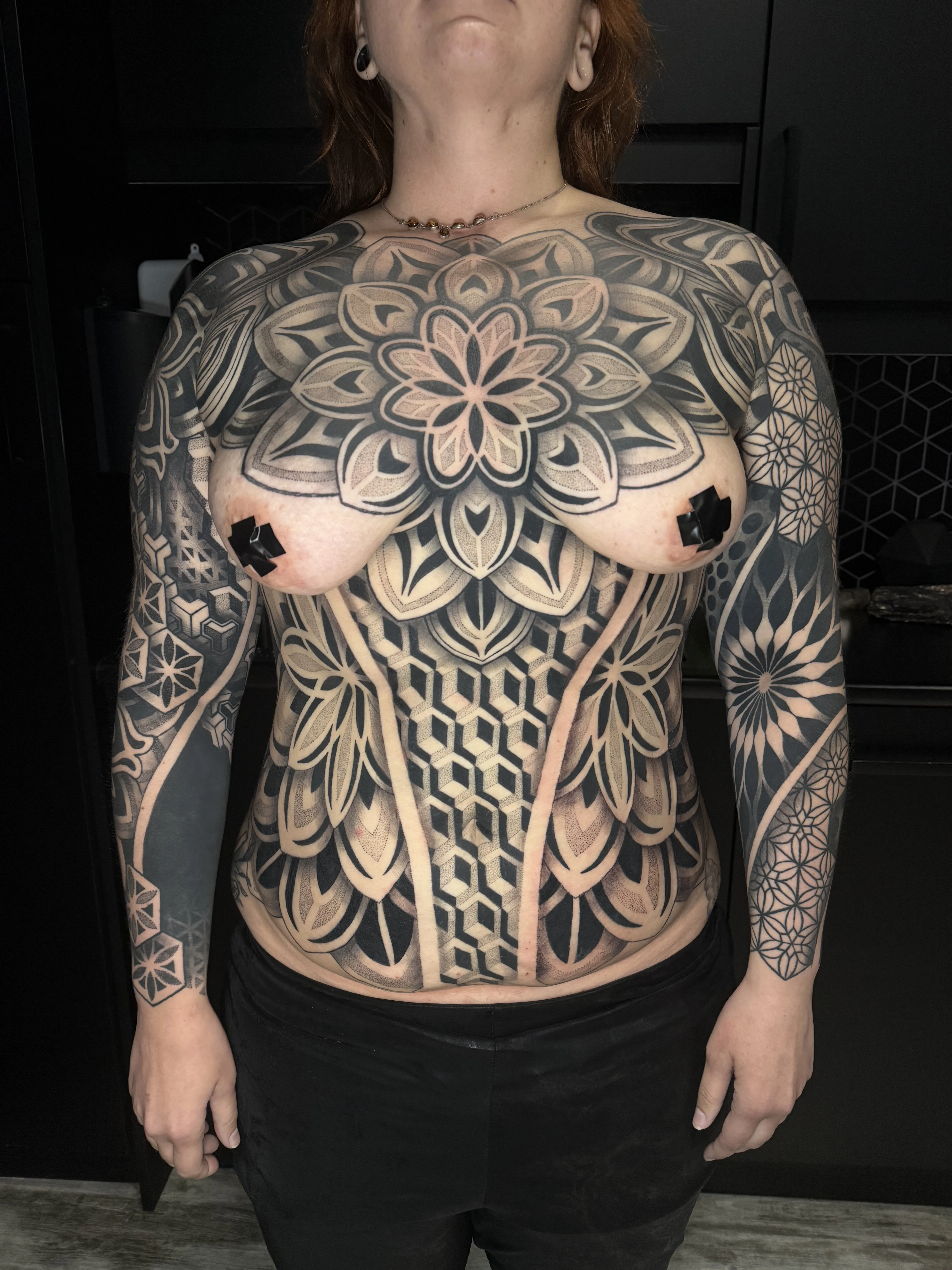
Ornamental pieces are usually built from black ink, with linework and dotwork creating texture and shading instead of smooth gradients. You'll see repeated elements like petals, beads, scallops, lace edges, and radiating mandala shapes, arranged with careful symmetry. The strongest pieces feel designed for one specific body part, with the pattern narrowing at the wrist, opening across the shoulder, or following the curve of the ribs.
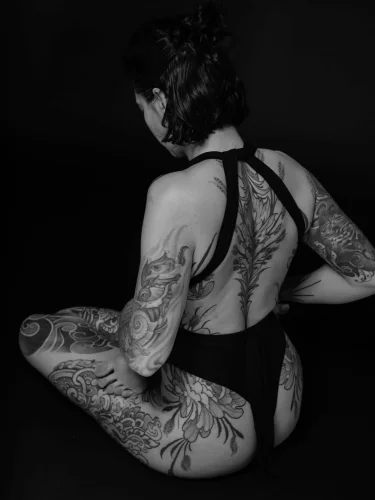
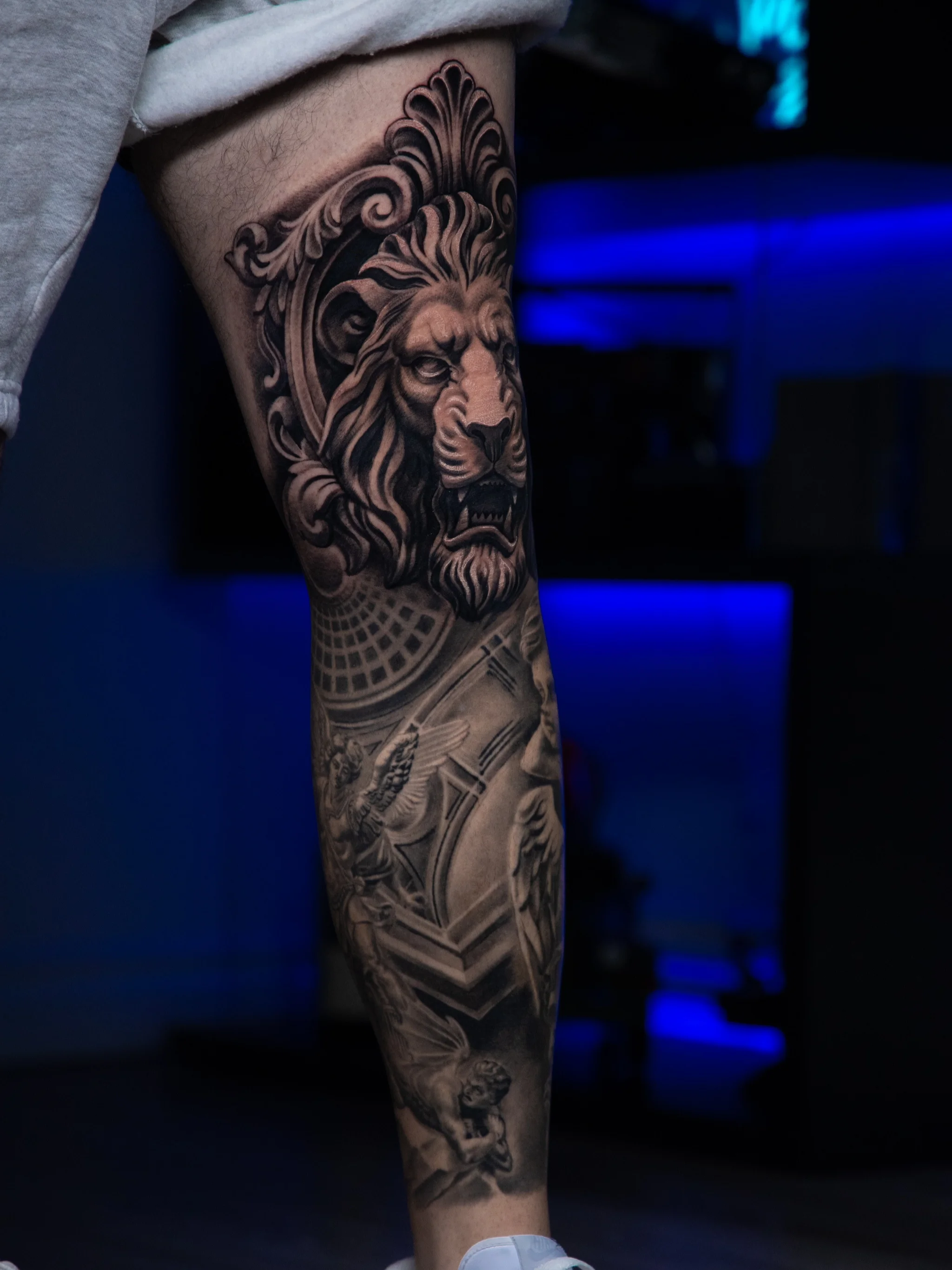
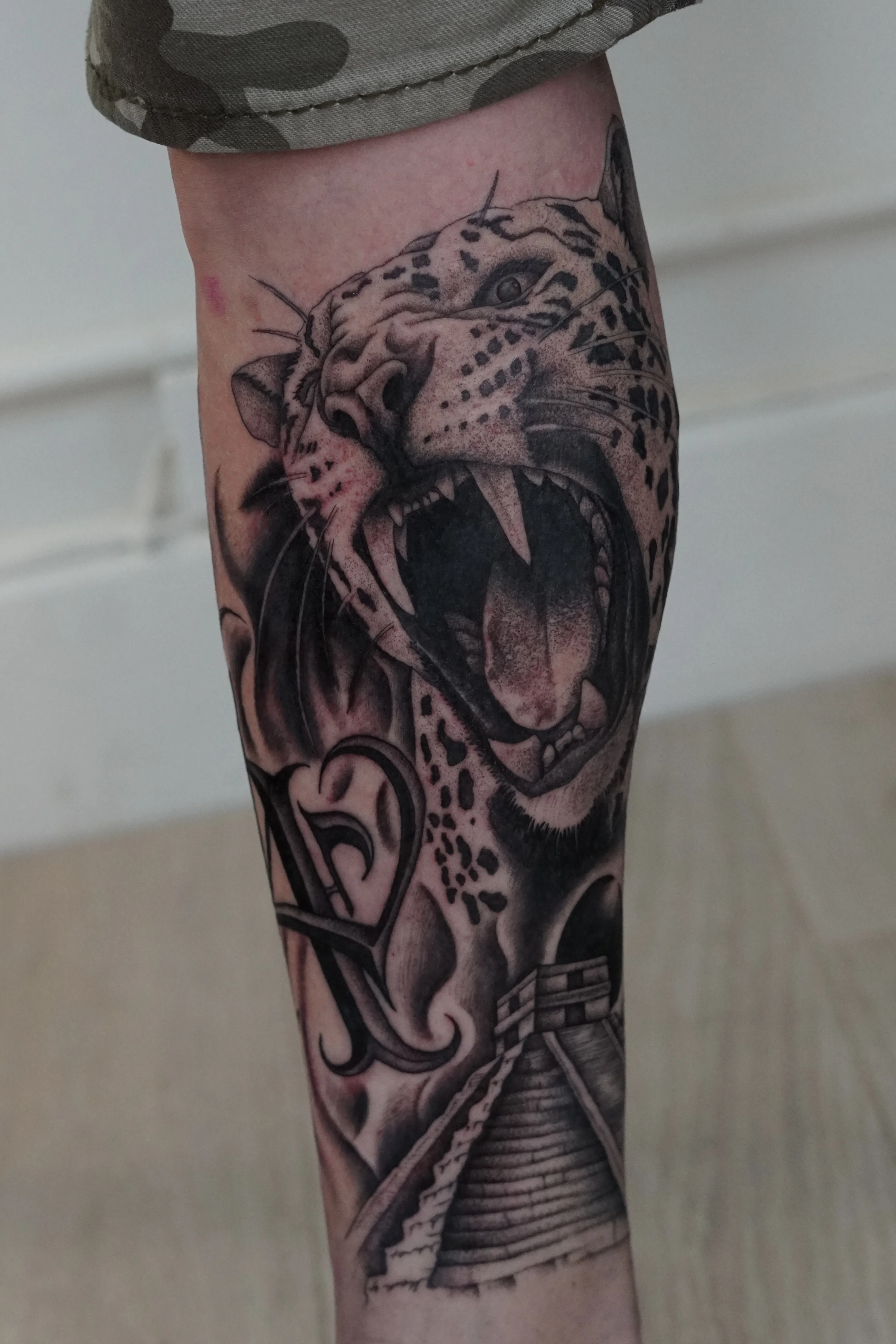
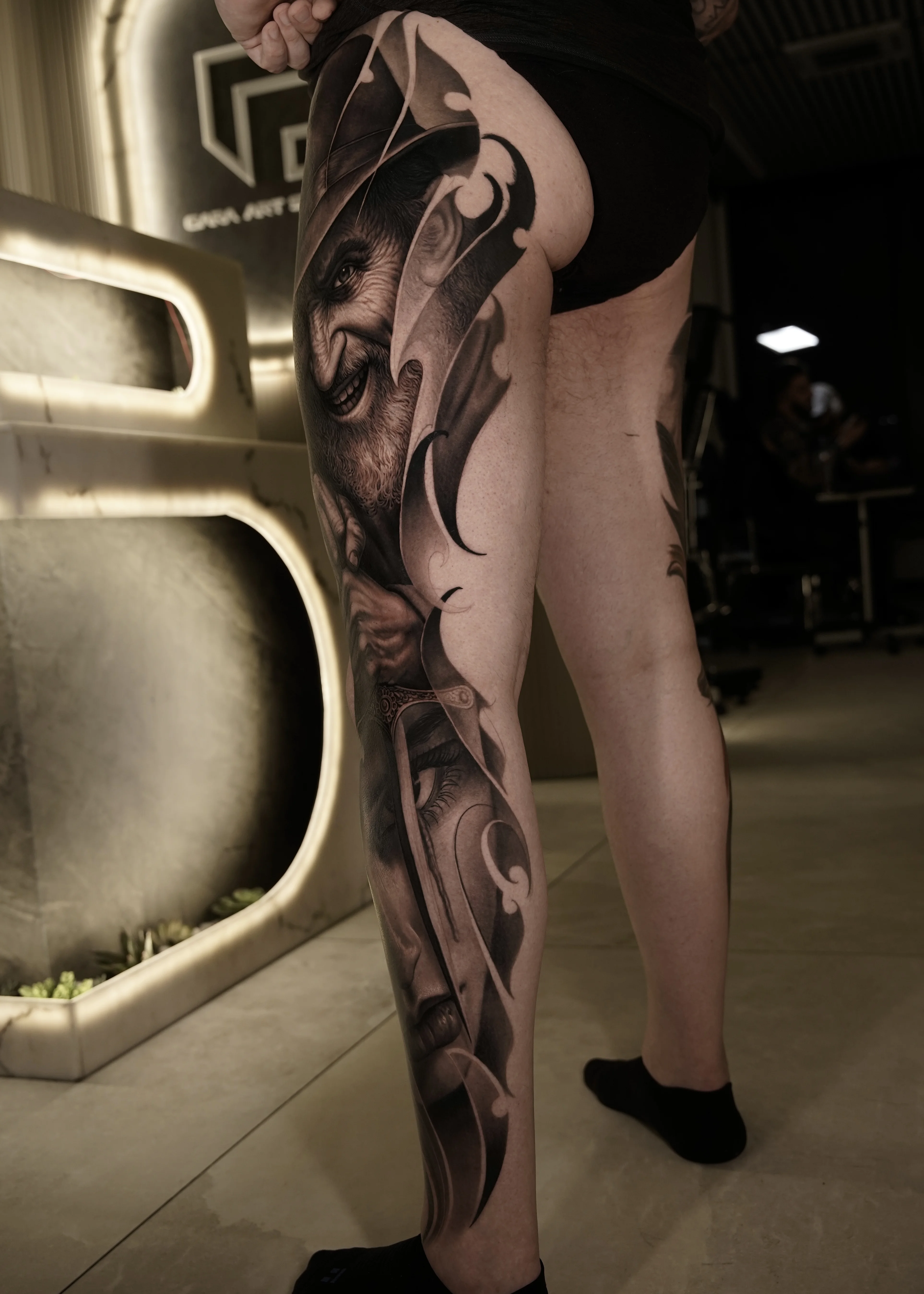
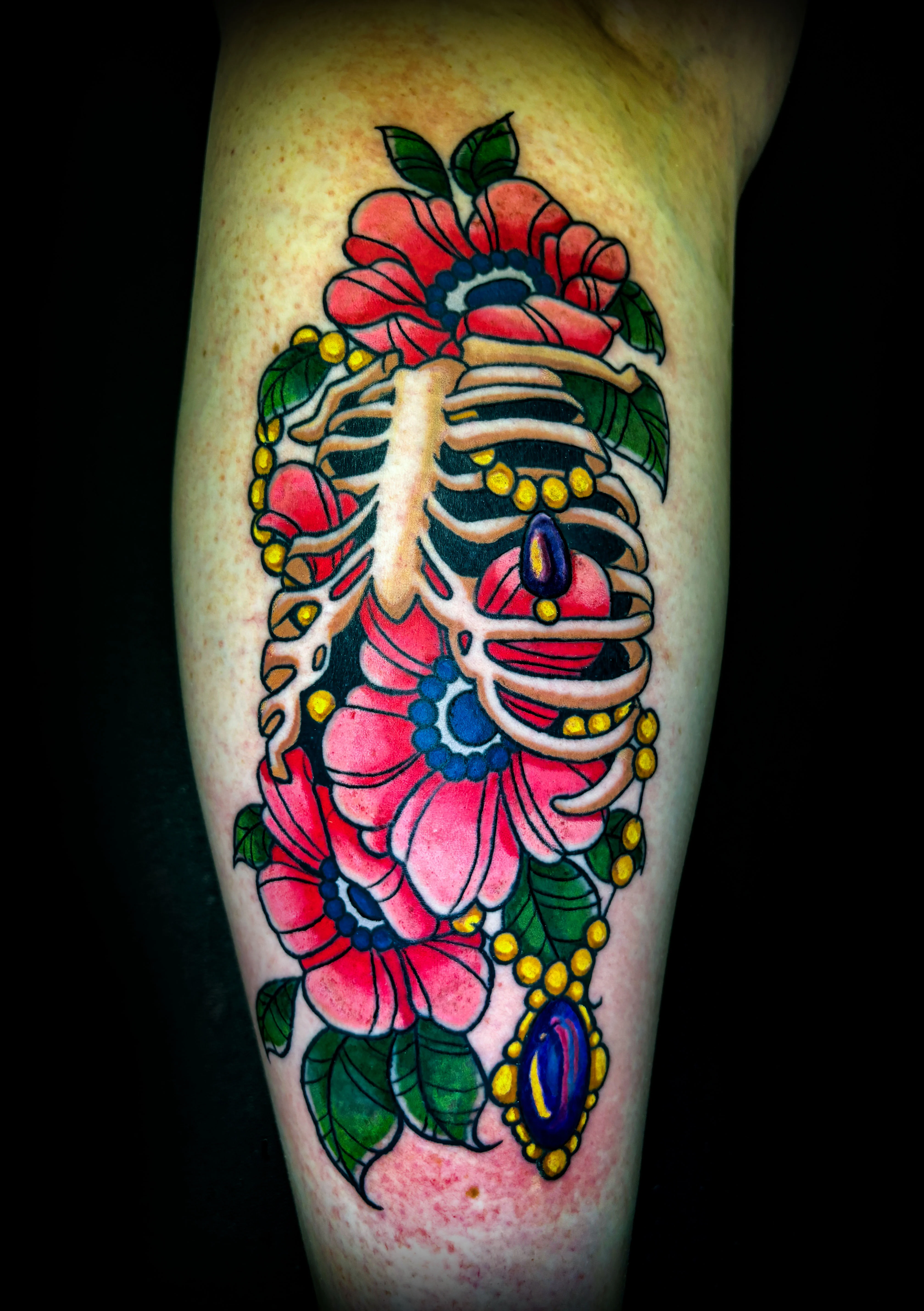
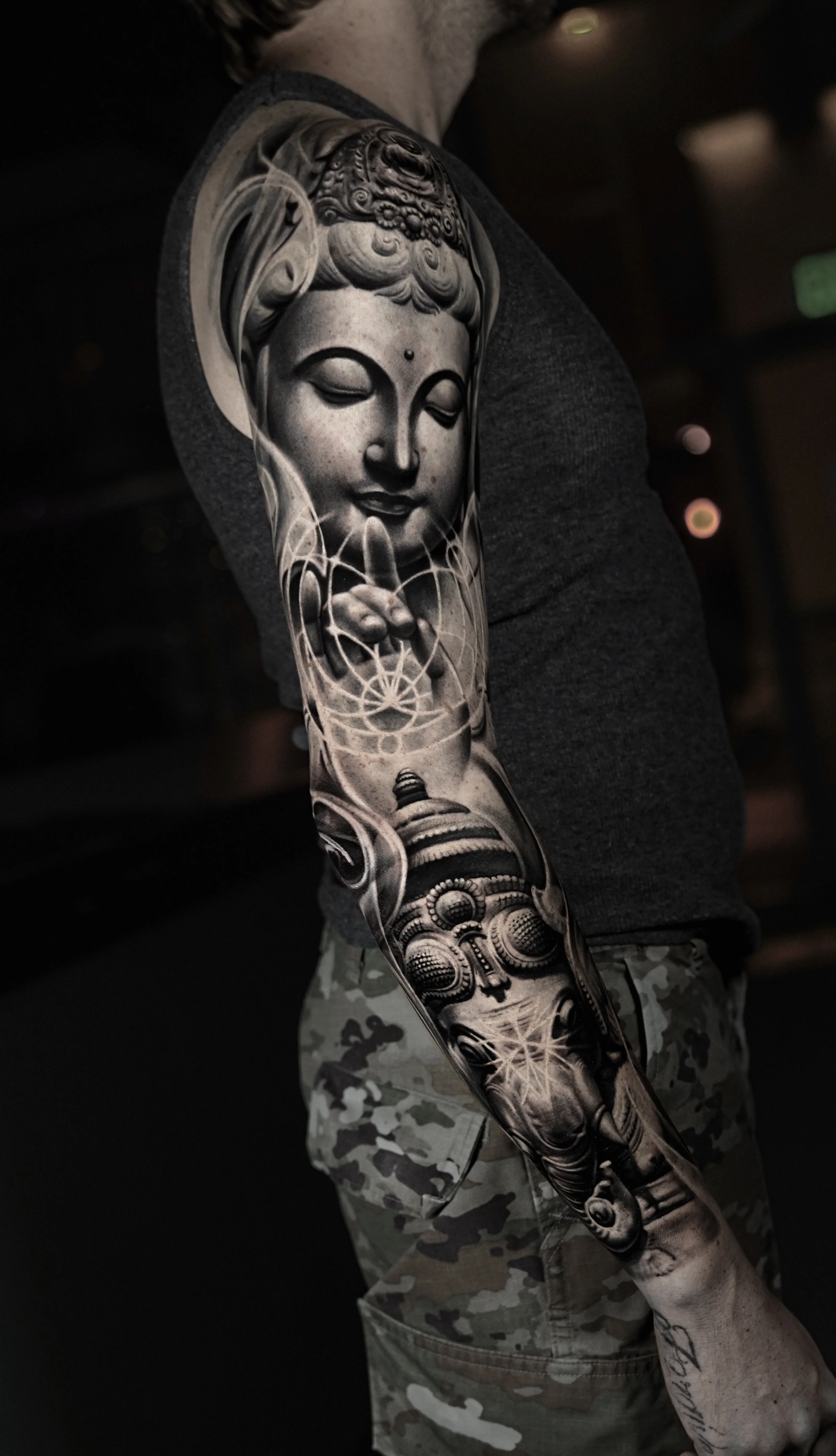
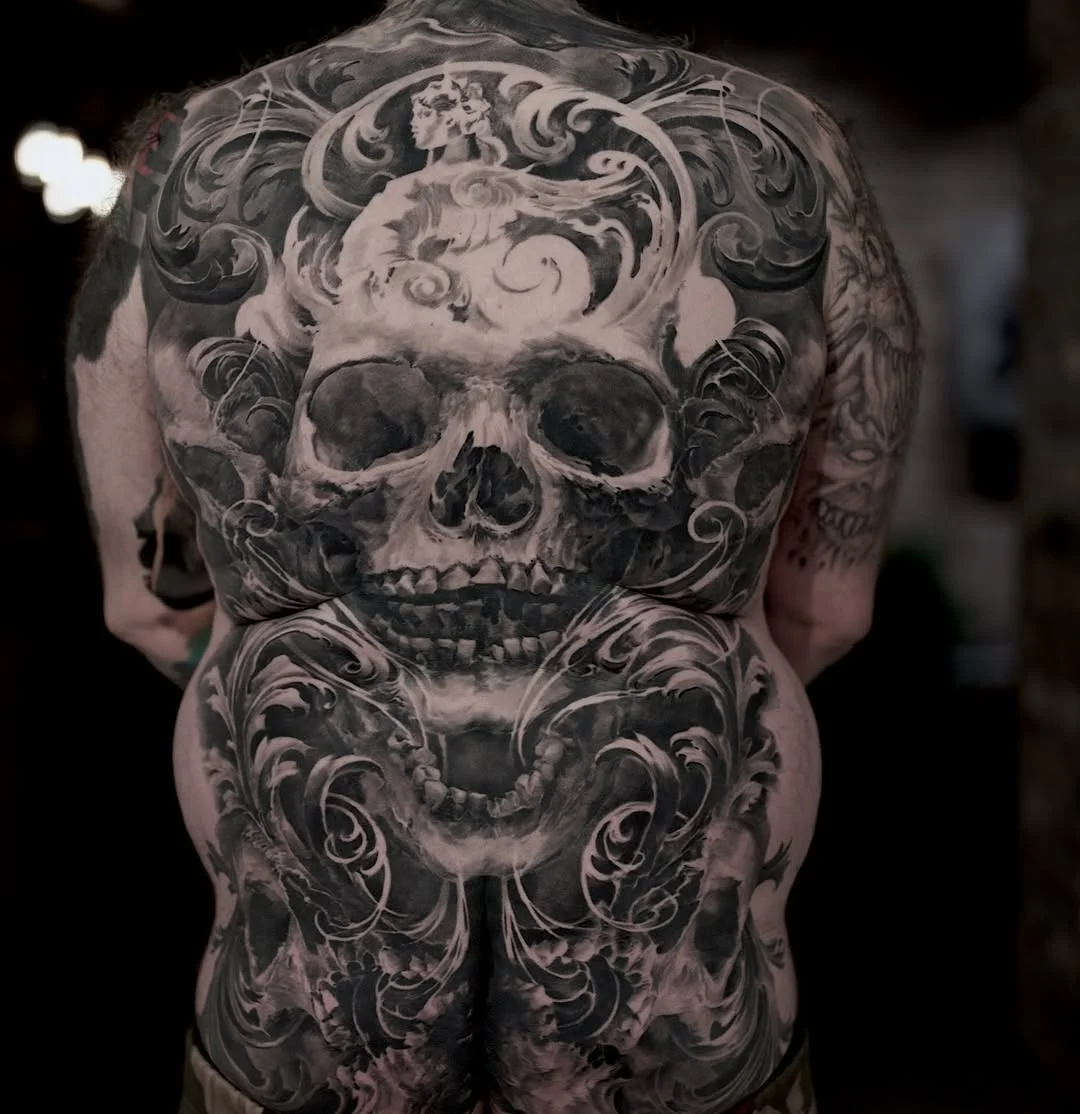
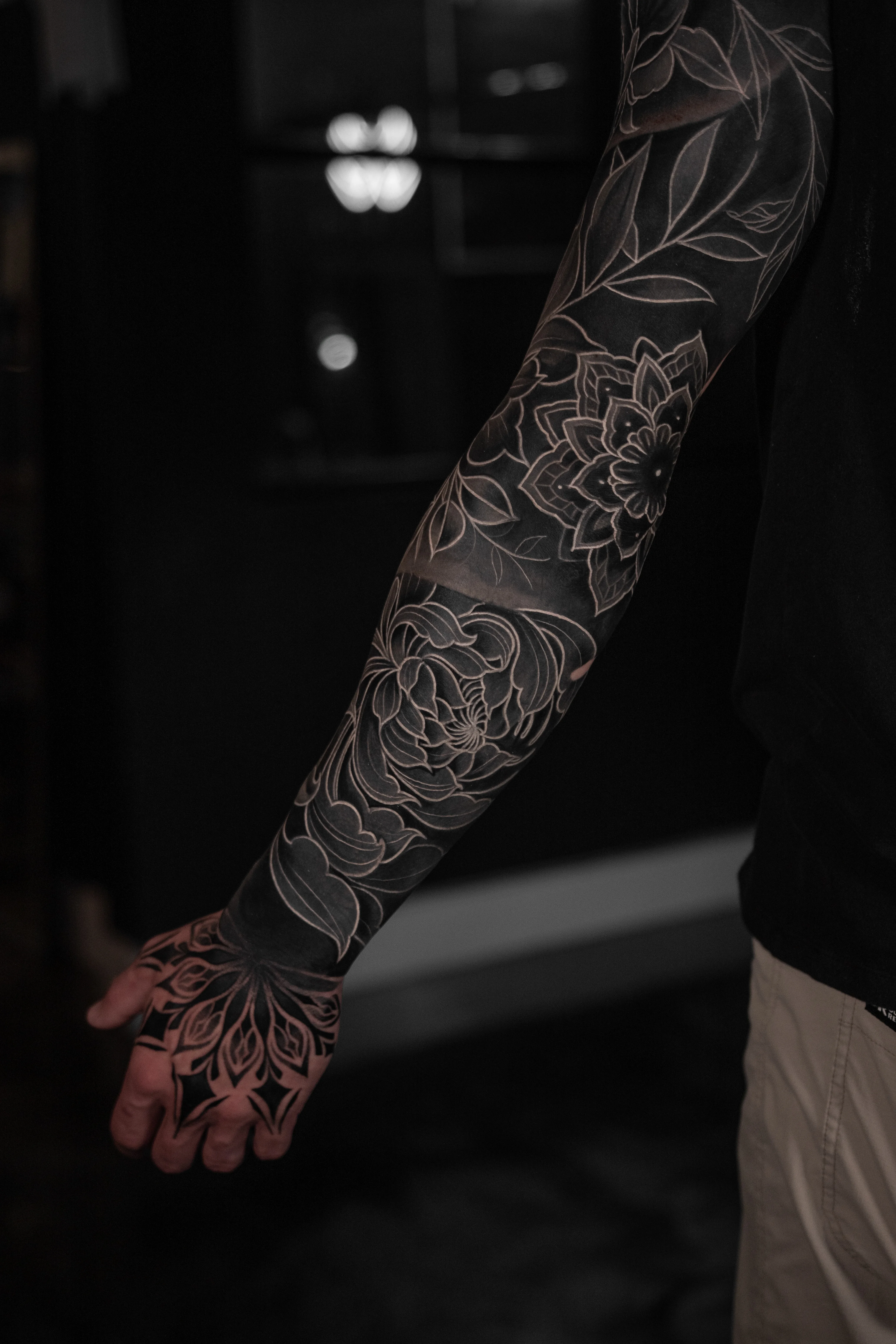
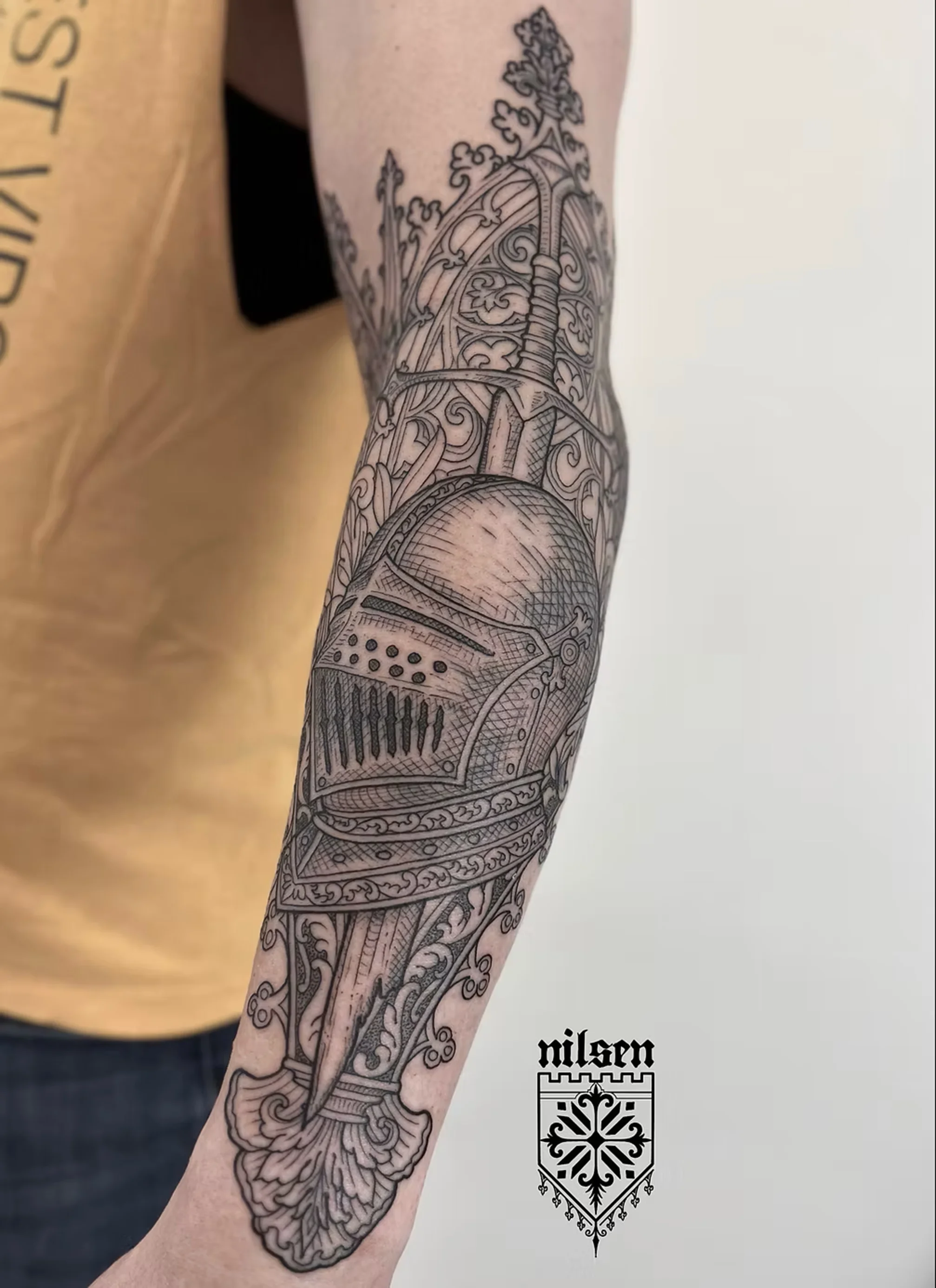
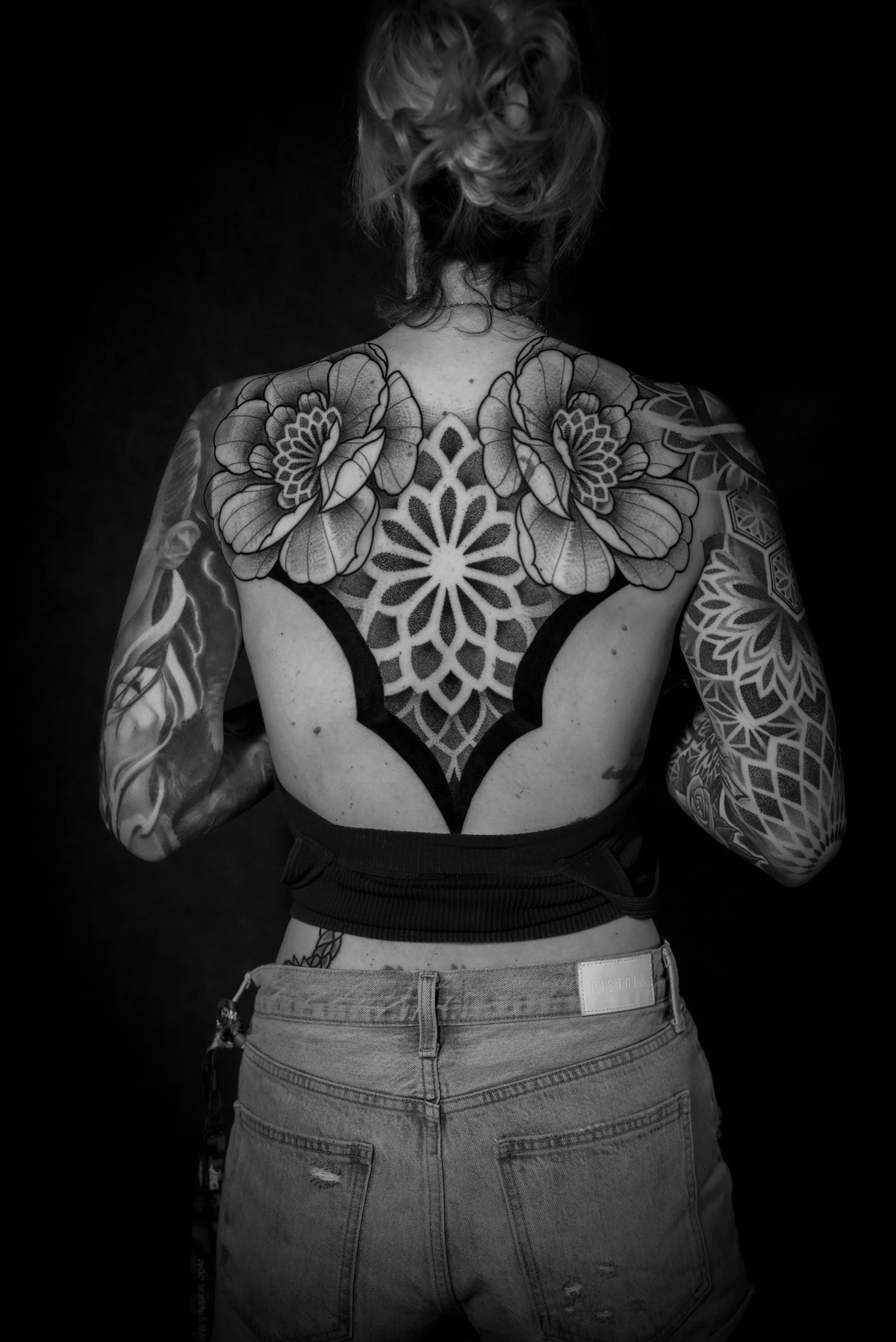
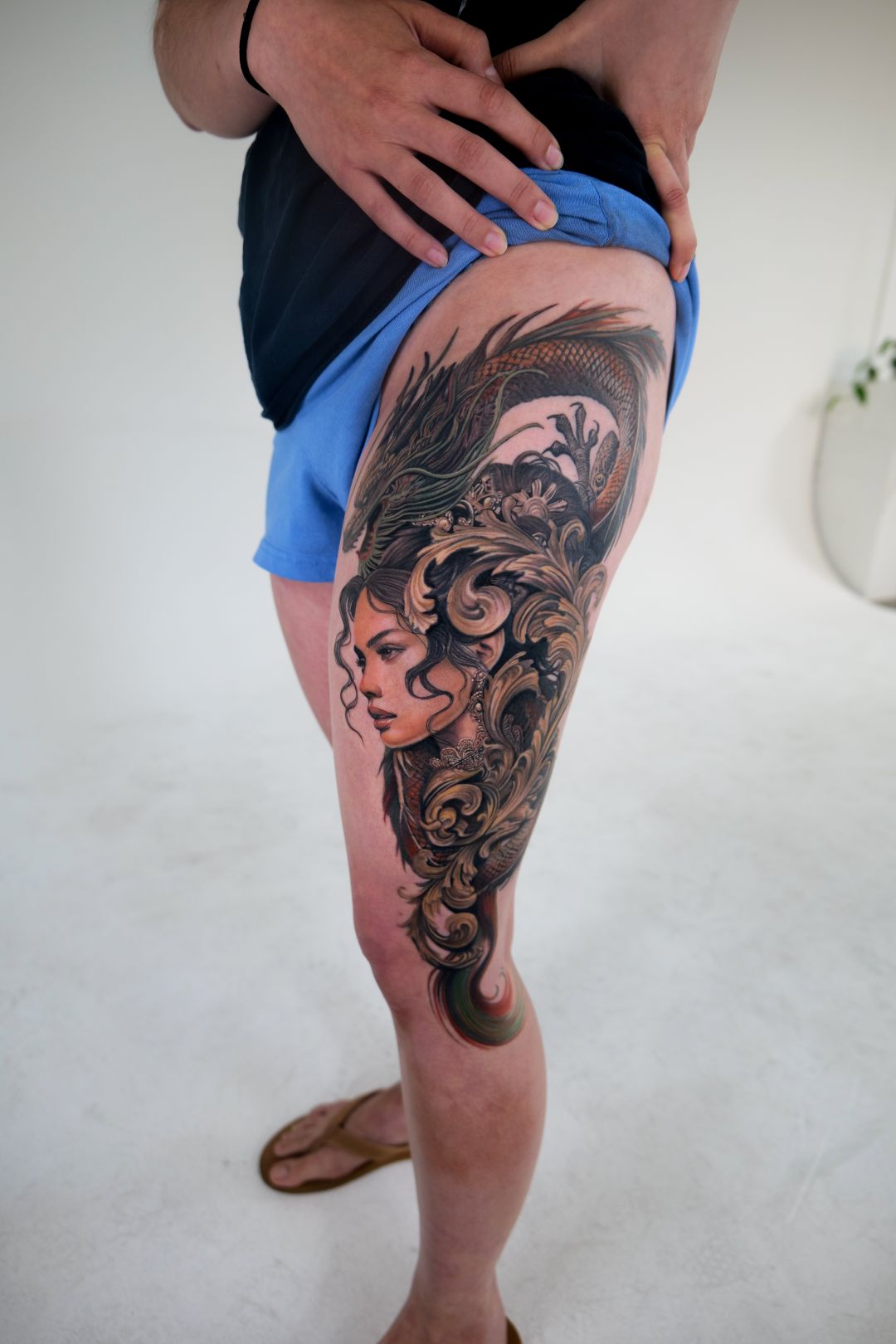
Ornamental work is often combined with other styles, like a mandala framing a portrait or lace detailing around floral work, which is part of why so many people searching for ornamental sleeves end up with a piece that blends patterns and imagery.
How to spot a strong ornamental tattoo artist
Skill shows up in two places. The first is line and dot consistency. The linework or dotwork that builds the pattern has to stay even across the whole surface, even as the artist's hand position changes around the curve of an arm or leg. The second is compositional fit, where every element should belong to the design and to the body at the same time.
When you look through a portfolio, check whether the patterns stay crisp and evenly spaced from one side of the piece to the other, and whether the designs look made for the body part they're on. A good ornamental artist will often draw directly on the skin or adjust the stencil during your appointment to make sure the flow is right, so ask how they handle placement.
Best placements for an ornamental tattoo
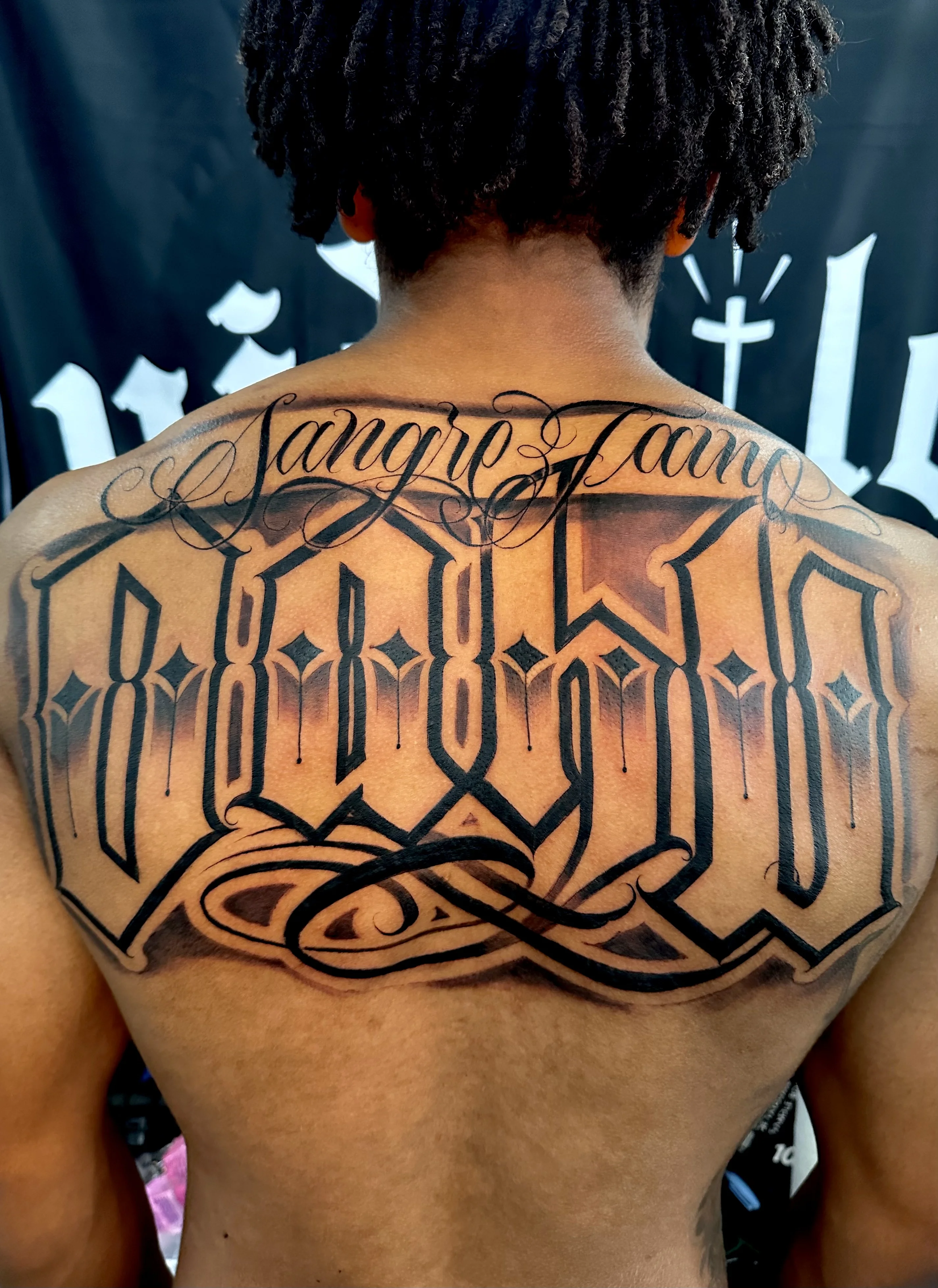
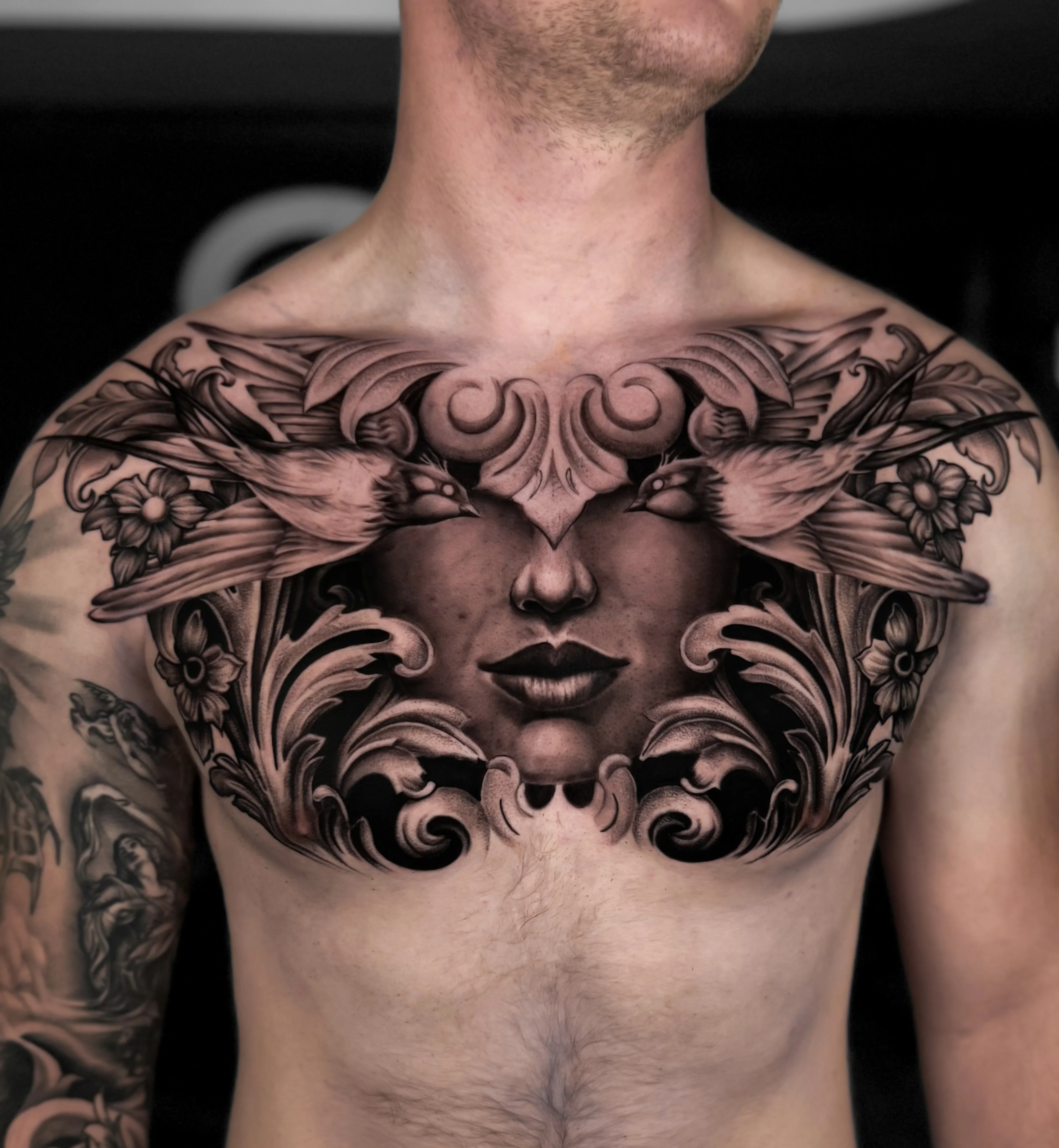
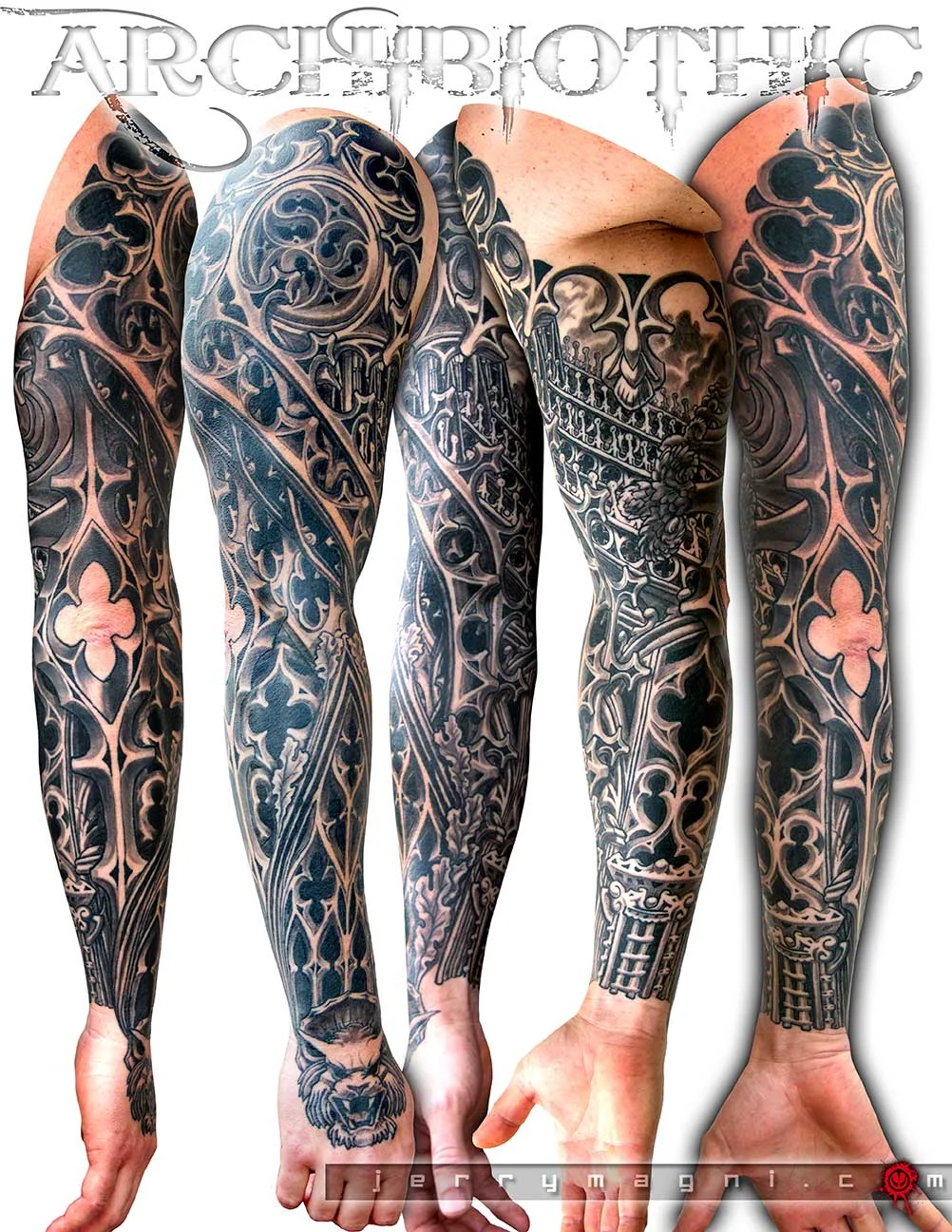
Ornamental work shines when it has room to develop. Full sleeves, half sleeves, back pieces, chest panels, sternum pieces, and thigh and hip wraps are classic placements because they let the pattern follow the body's structure. A good ornamental sleeve emphasizes the shape of the arm, and a chest or sternum piece works with the symmetry of the ribs. Smaller pieces work too, such as a single mandala on the forearm, the back of the neck, or the top of the shoulder, especially as a starting point that can grow into something larger later.
If you're planning an ornamental sleeve or a larger pattern piece over time, it helps to tell your artist early. Many people start with a single section, like a shoulder cap or a forearm band, and add to it later, and a good artist will design the first piece so it can connect cleanly to whatever comes next. Bringing references for the overall feel, rather than one exact design, gives the artist room to build a pattern that's made for your body.
How ornamental tattoos age
Ornamental tattoos usually age well because they're built mostly from black ink with clear structure. The main thing to watch is spacing. Lines and dots that sit very close together can soften and merge a little over the years, so designs with enough breathing room between elements hold their crispness longer. Bolder dotwork and linework age more predictably than ultra-fine detail, and sunscreen on healed work helps keep the black looking sharp.
What affects the price and time
Most ornamental pieces are custom designed to fit your body, so design time and session time drive the price more than anything else. The size of the area, how dense the pattern is, whether it includes heavy dotwork shading, and the artist's experience all play a part. Sleeves and back pieces are usually done over several sessions. Most artists quote after a consultation, once they've seen the placement and understand the direction you're picturing.
Ornamental vs. similar styles
Ornamental overlaps closely with geometric tattooing. Geometric work is usually about pure shapes, perfect symmetry, and sacred geometry, while ornamental leans decorative, with lace, filigree, and flowing patterns. Blackwork is a broader category built from solid black ink, and a lot of ornamental work sits inside it. Fine line can also create delicate patterns but usually uses thinner lines and less density than a full ornamental piece.
Some ornamental pieces also mix in a small amount of soft shading or a single accent color, which can add depth without losing the clean, patterned look. If you're drawn to that, look for artists who show it in their healed work, since subtle shading has to be placed carefully to keep the pattern readable.
How to find and book an ornamental tattoo artist
Browse the ornamental work below and save the pieces that feel closest to the direction you're picturing. Open the artist whose style fits, look at how their patterns sit on different parts of the body, and send a booking inquiry with your idea, placement, and a few references. Your request goes straight to the artist, and they take it from there.
Artists








The Work
 Abigail Louise
 Oliver Kenton
 Kirk Nilsen
 Erin Manning
 Thebig_rosstattoo
 Crystal Alexandria
 Gabriella Nova
 Sherri Anne Austria
 Don Don
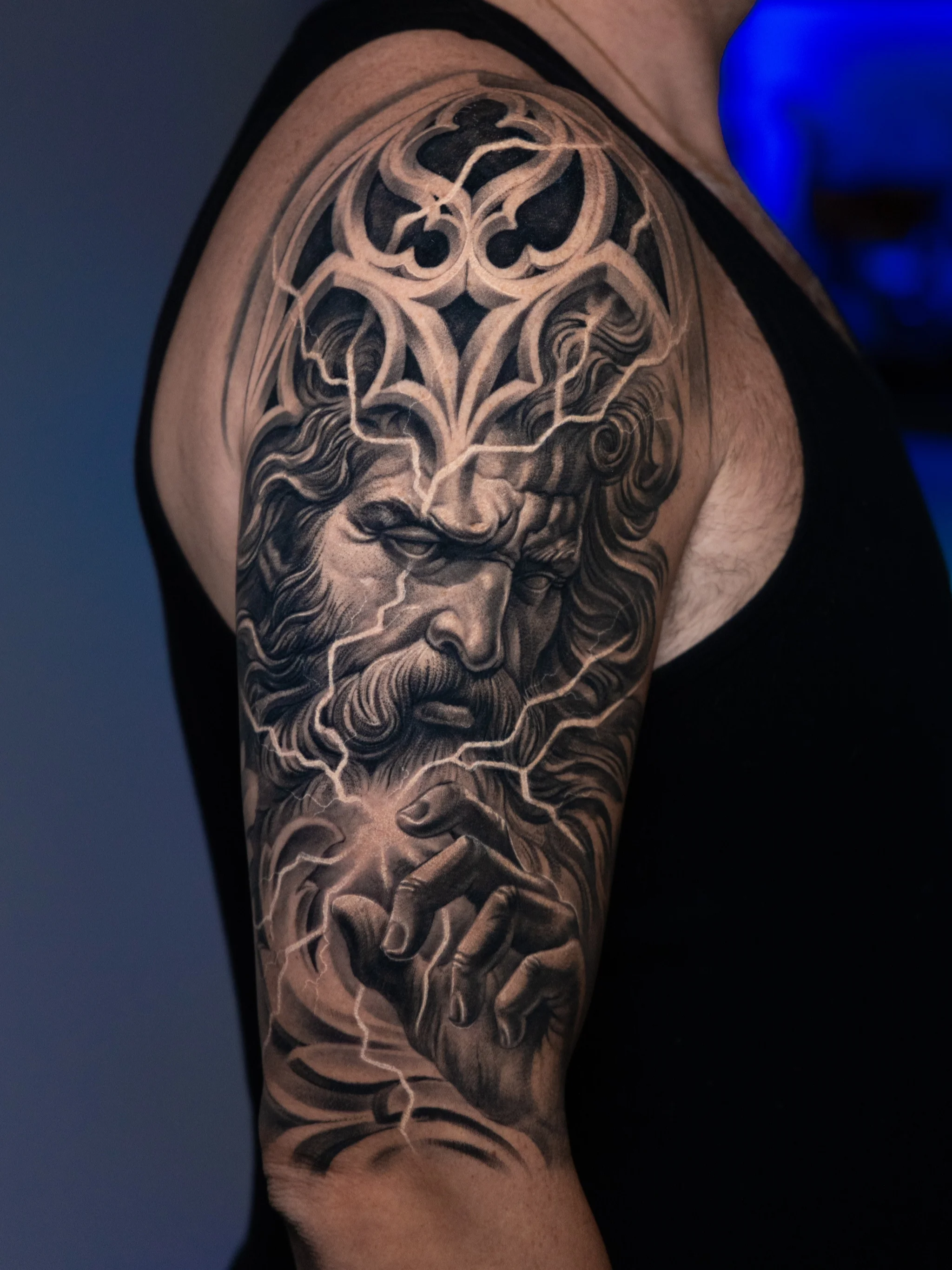 T-GRAN Ink
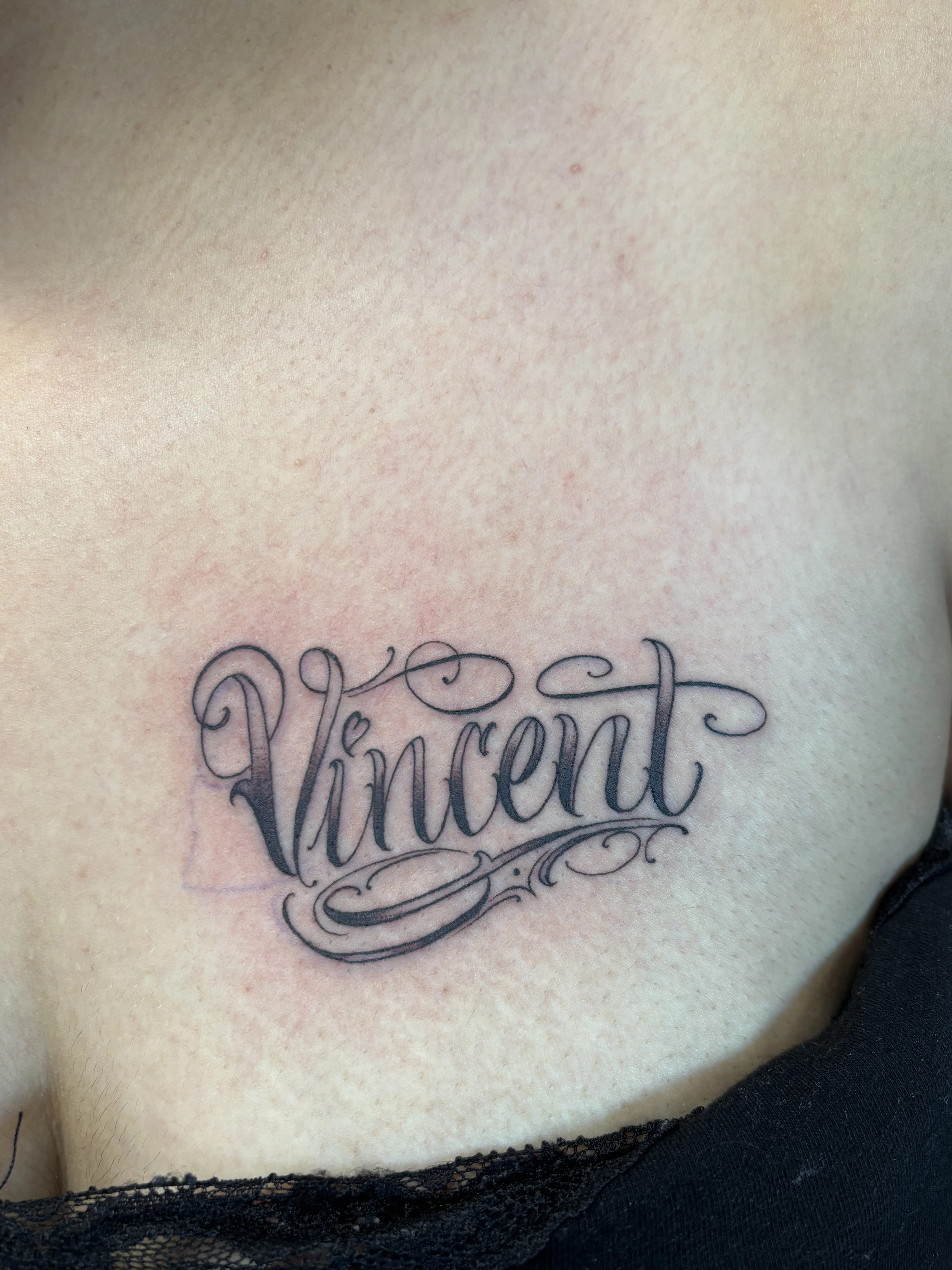 Bbydee
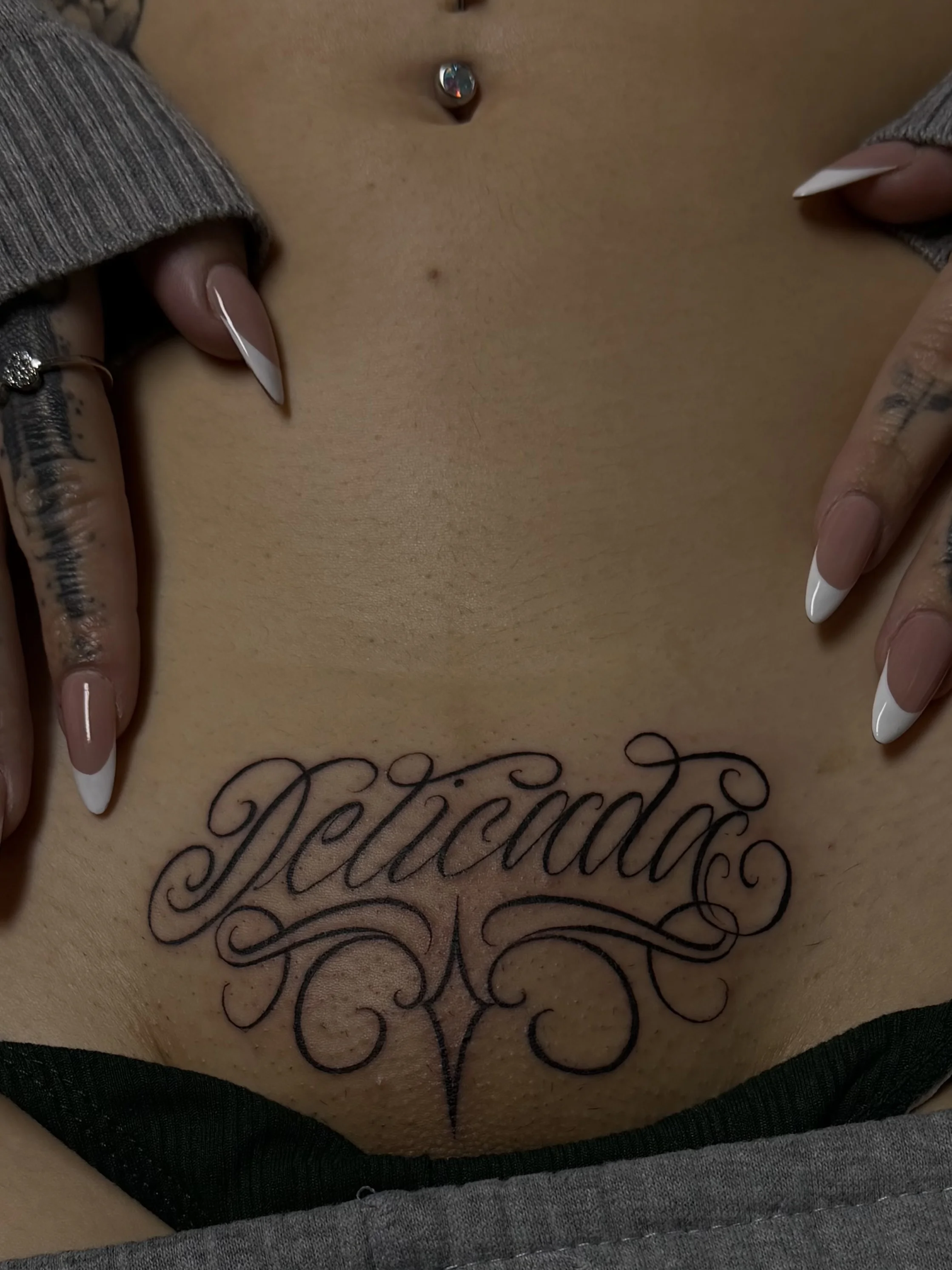 Toto G
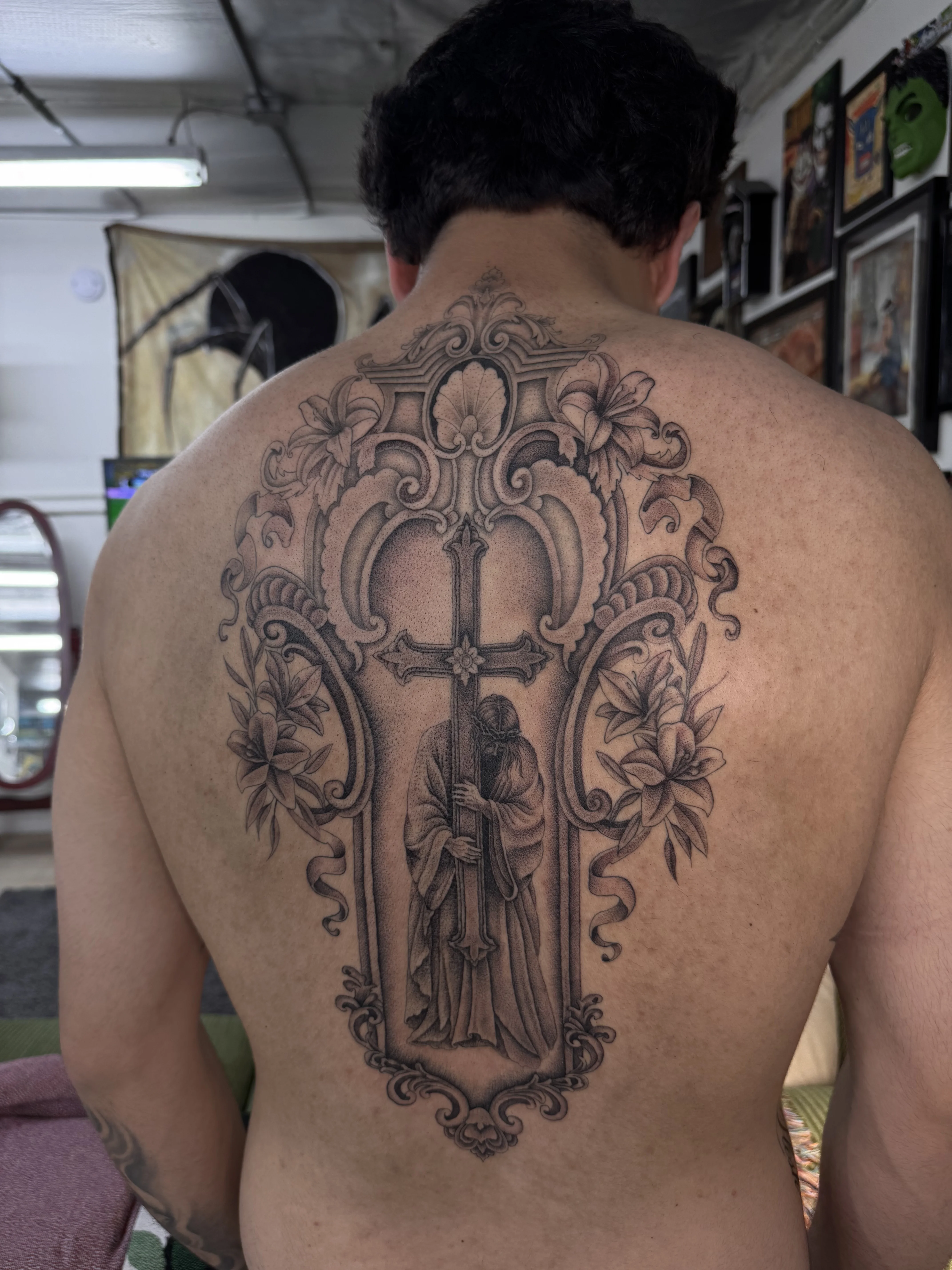 Kobe Virgen
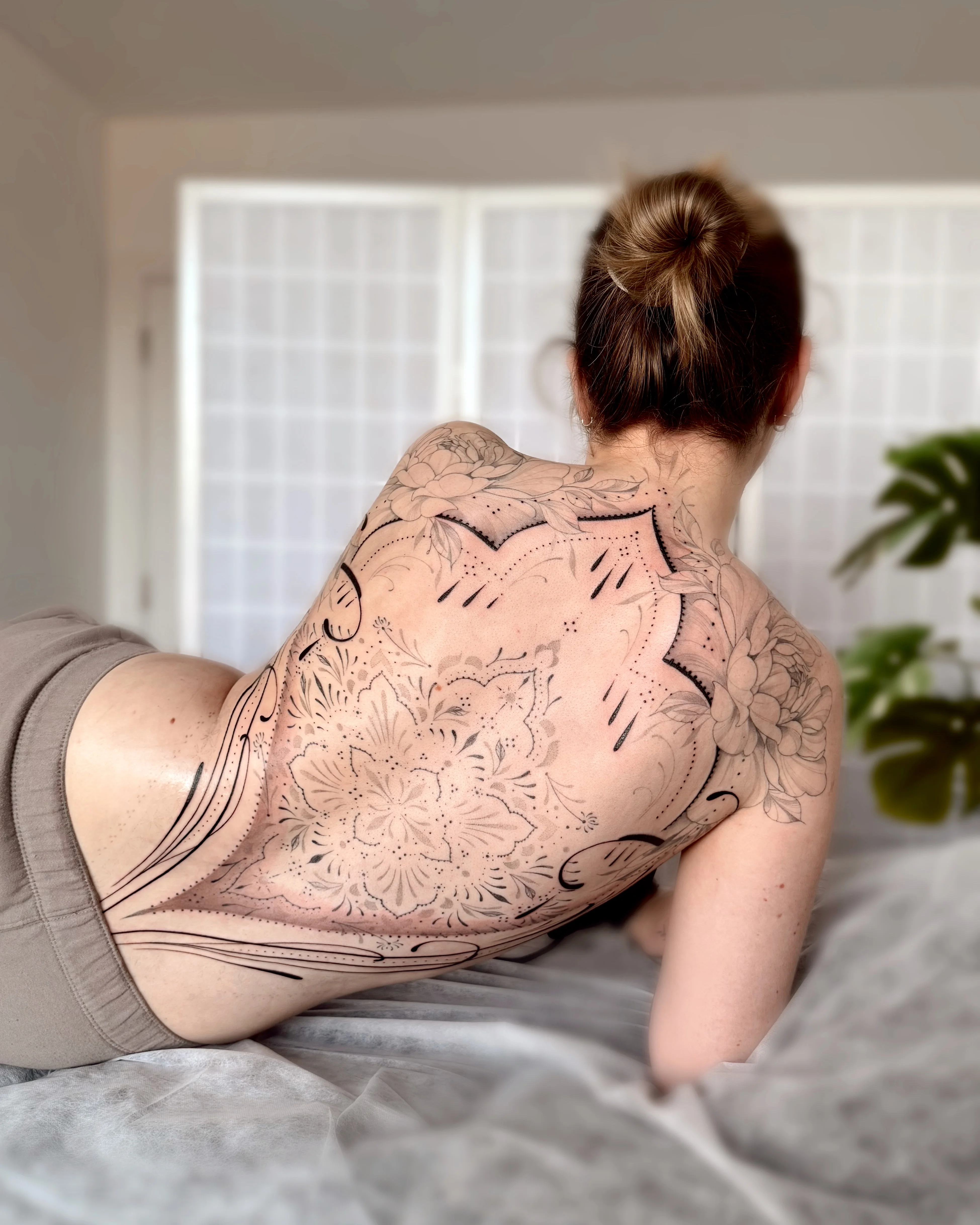 Abigail Louise
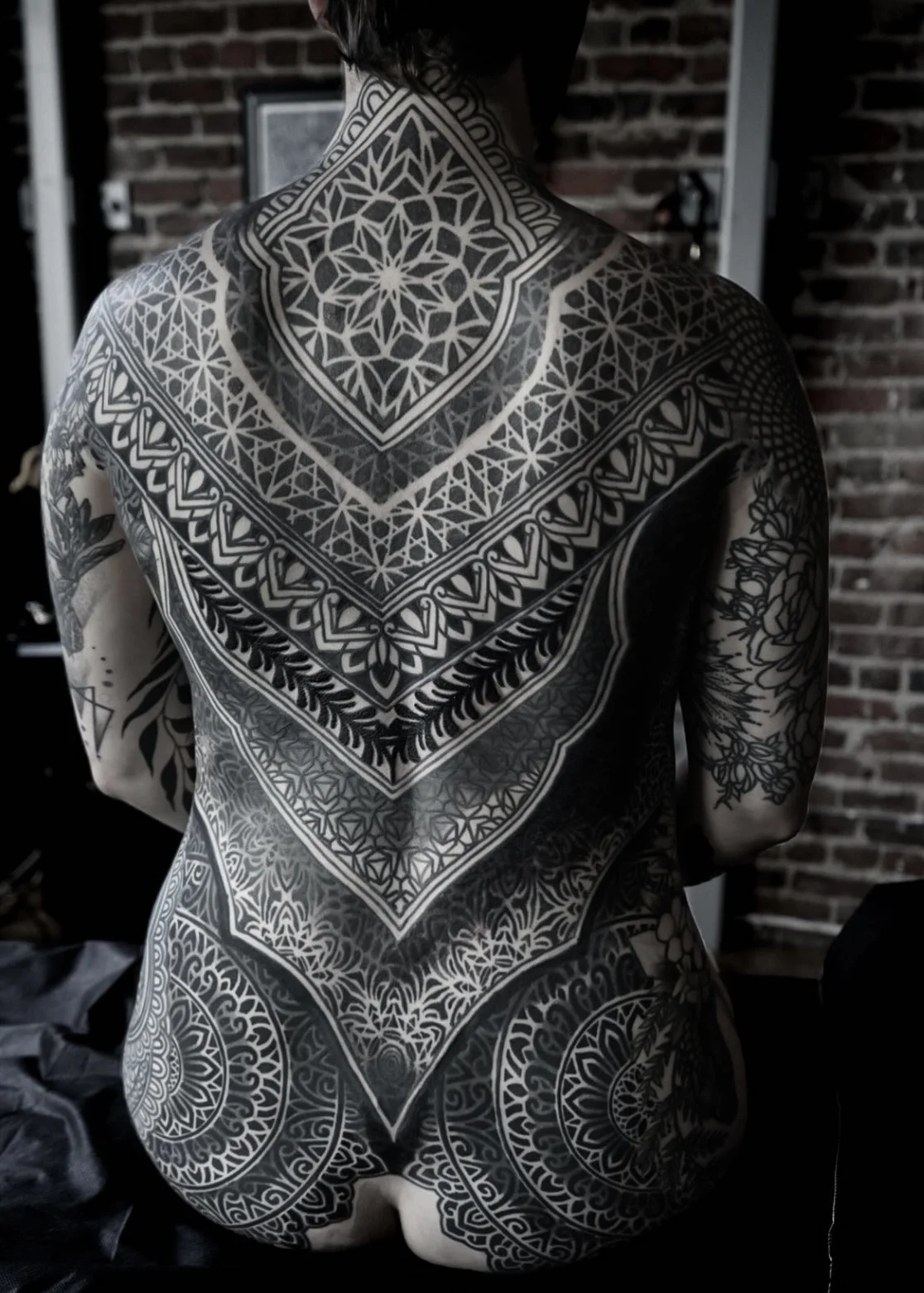 Oliver Kenton
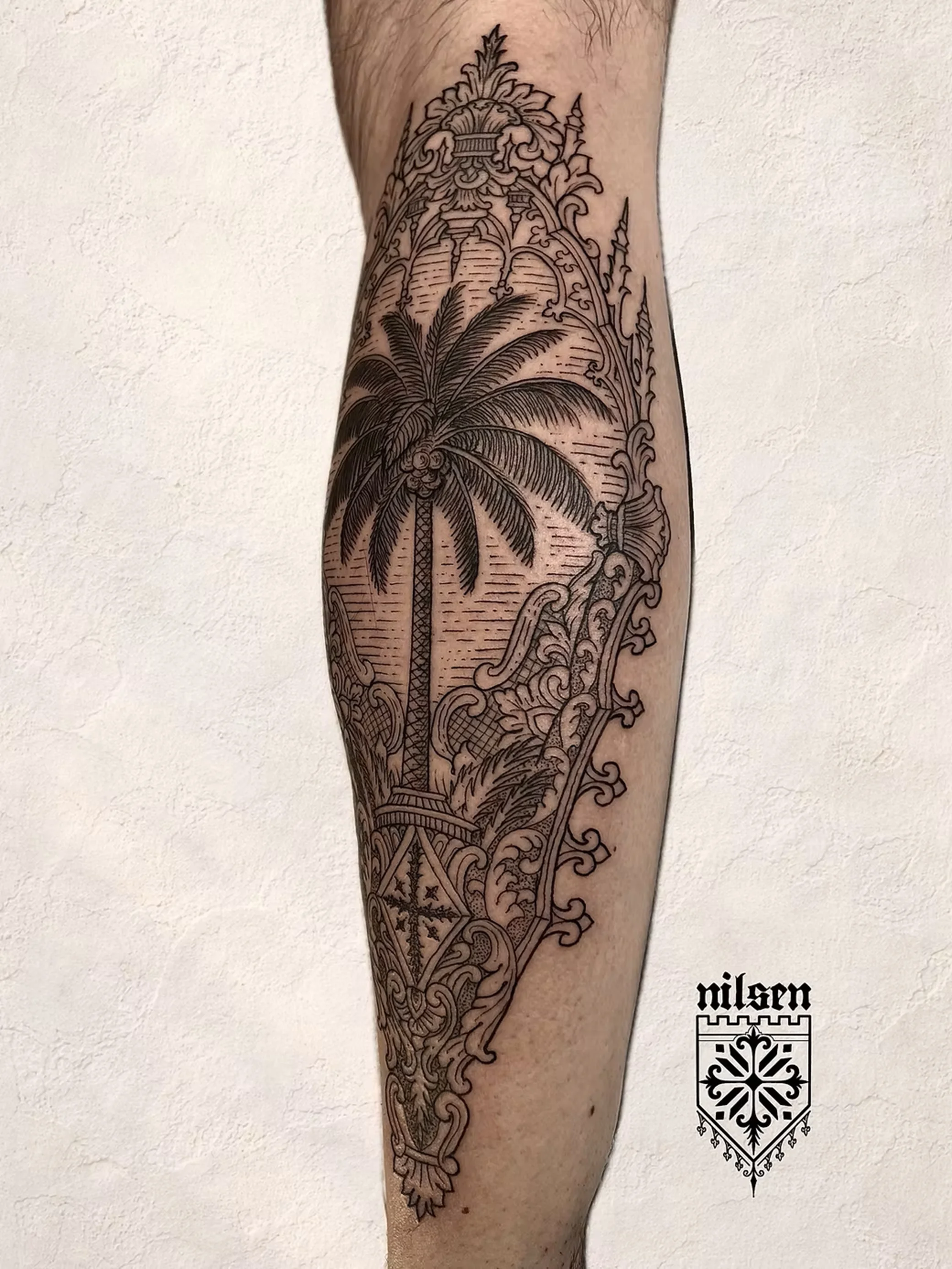 Kirk Nilsen
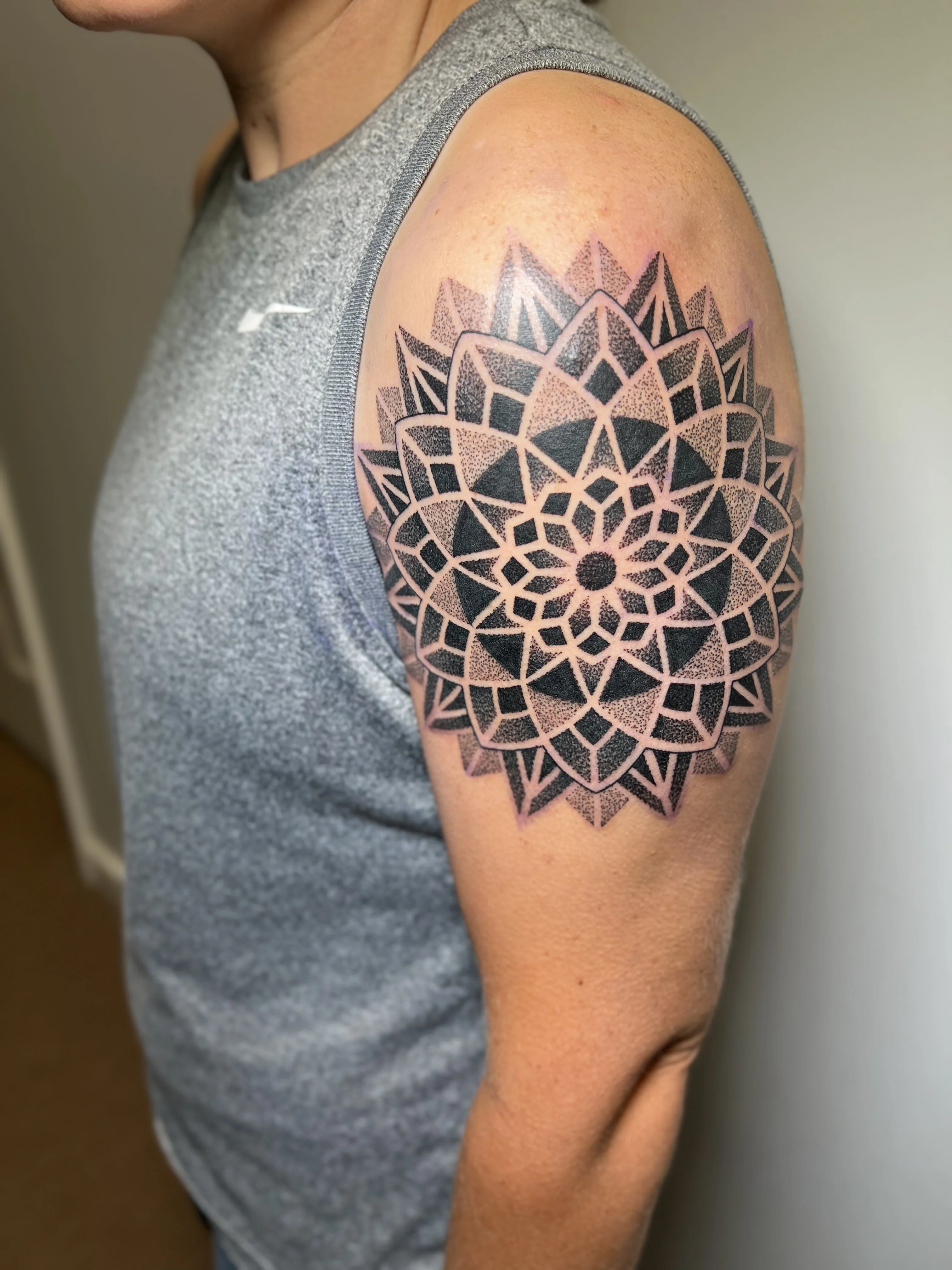 Erin Manning
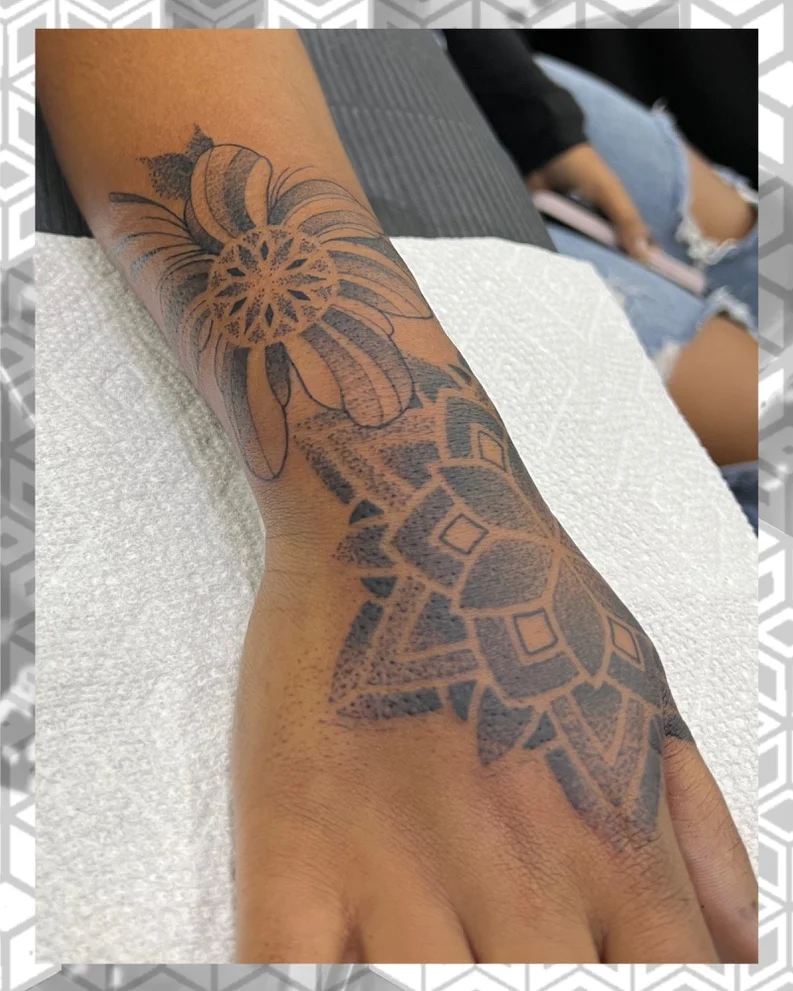 Thebig_rosstattoo
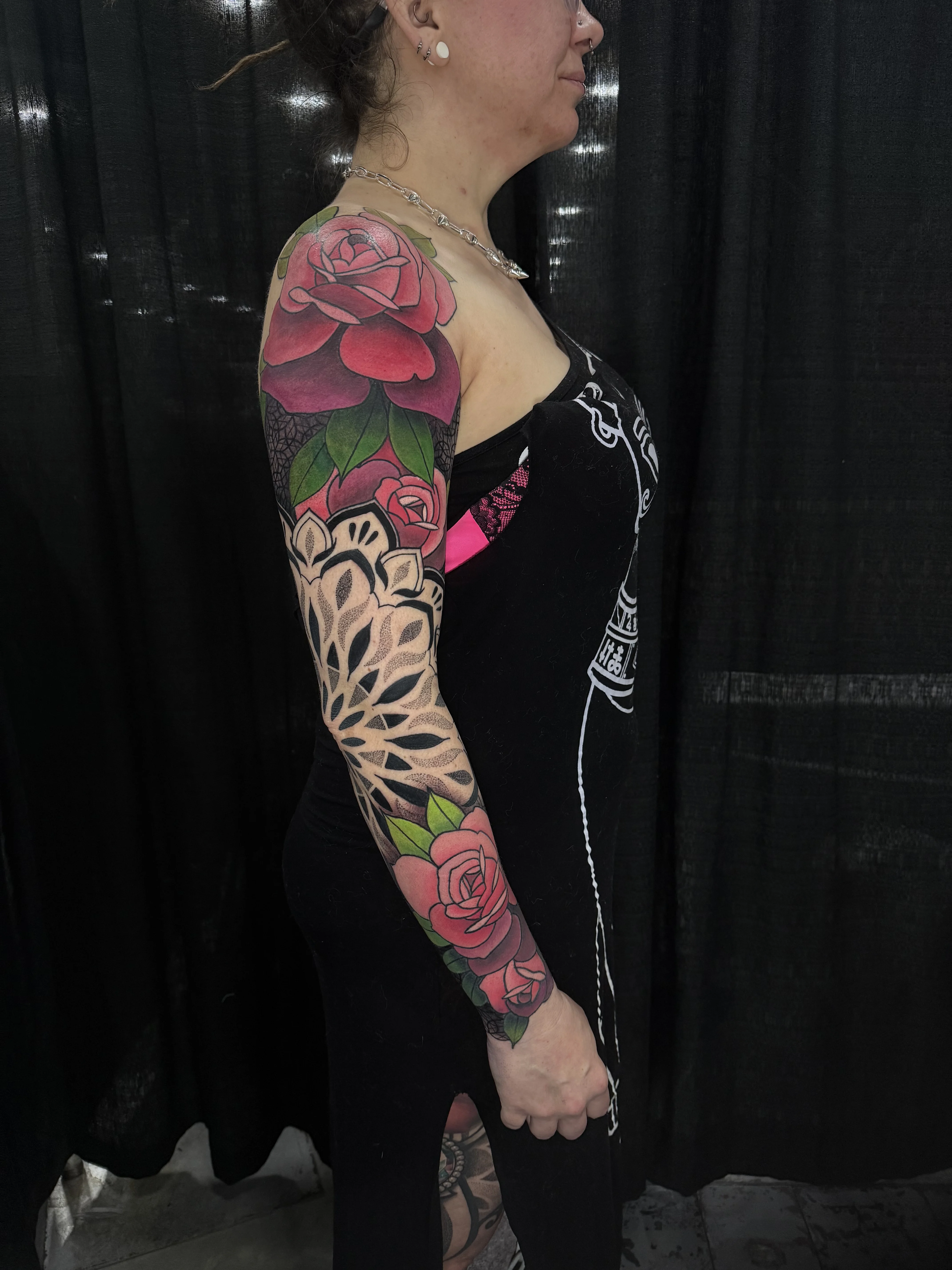 Crystal Alexandria
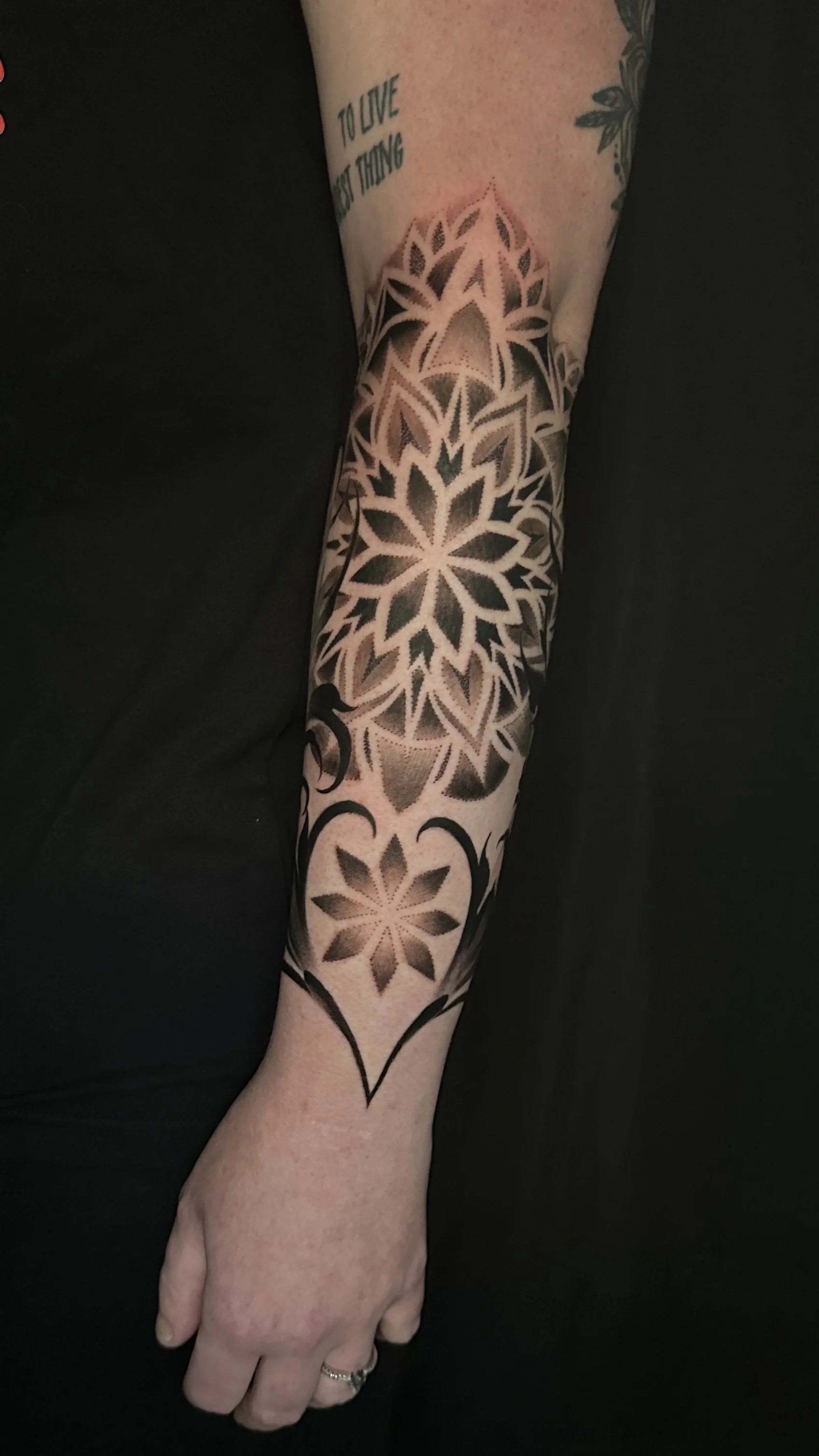 Gabriella Nova
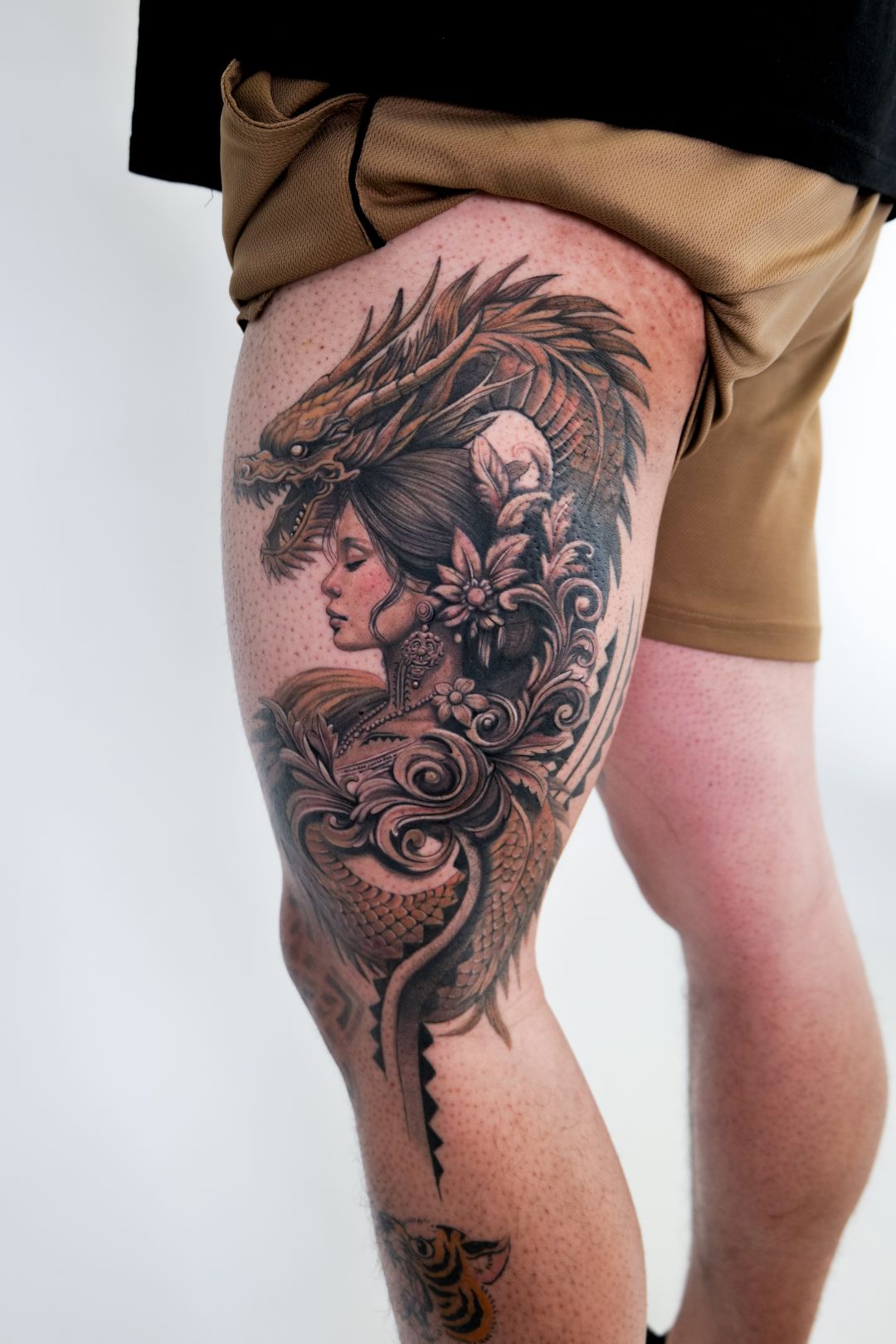 Sherri Anne Austria
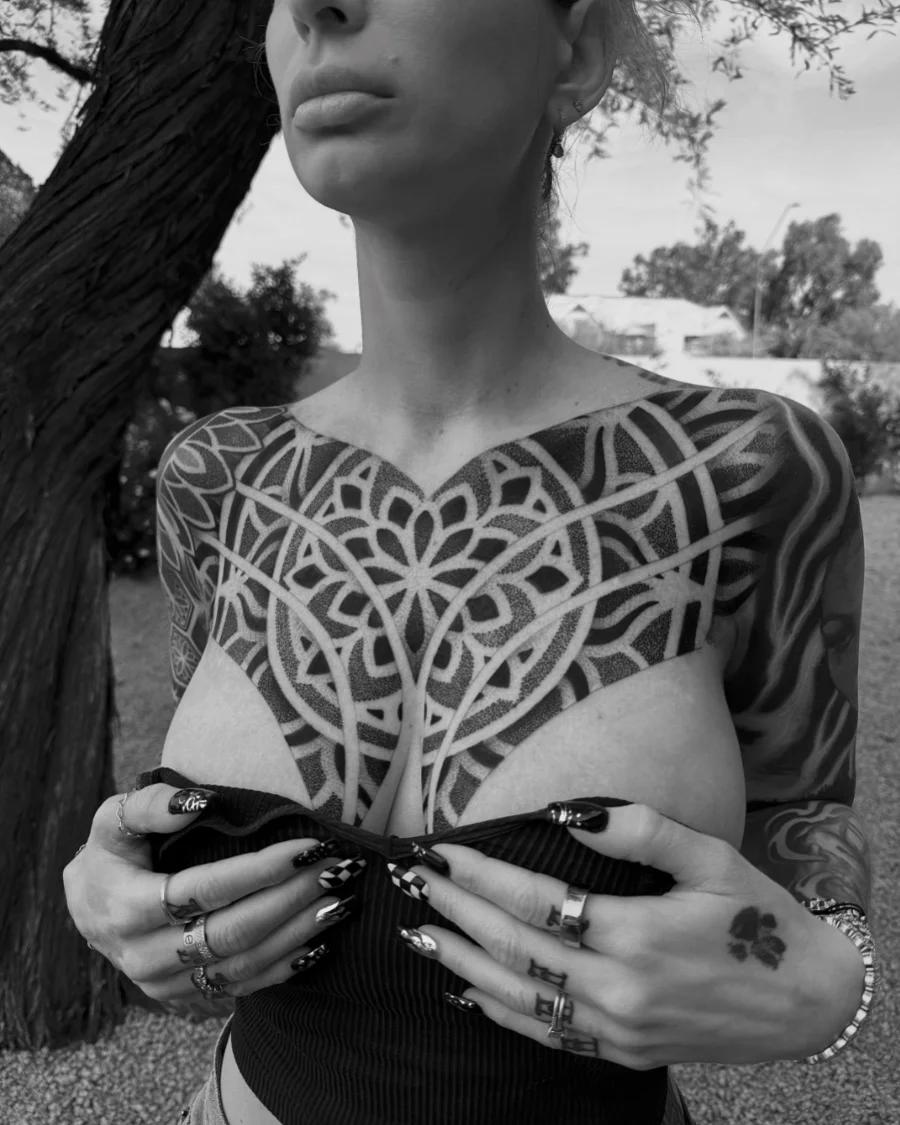 Don Don
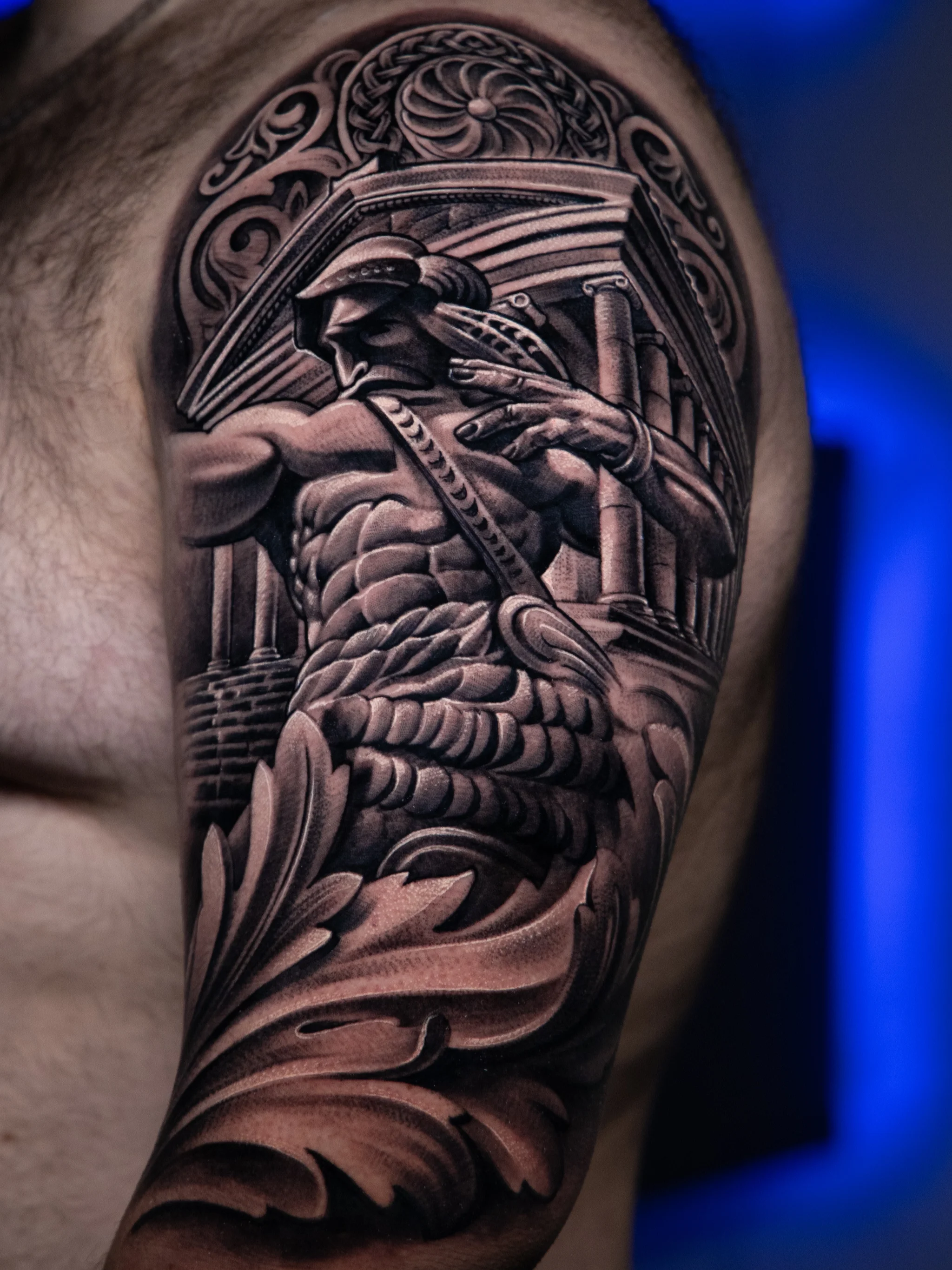 T-GRAN Ink
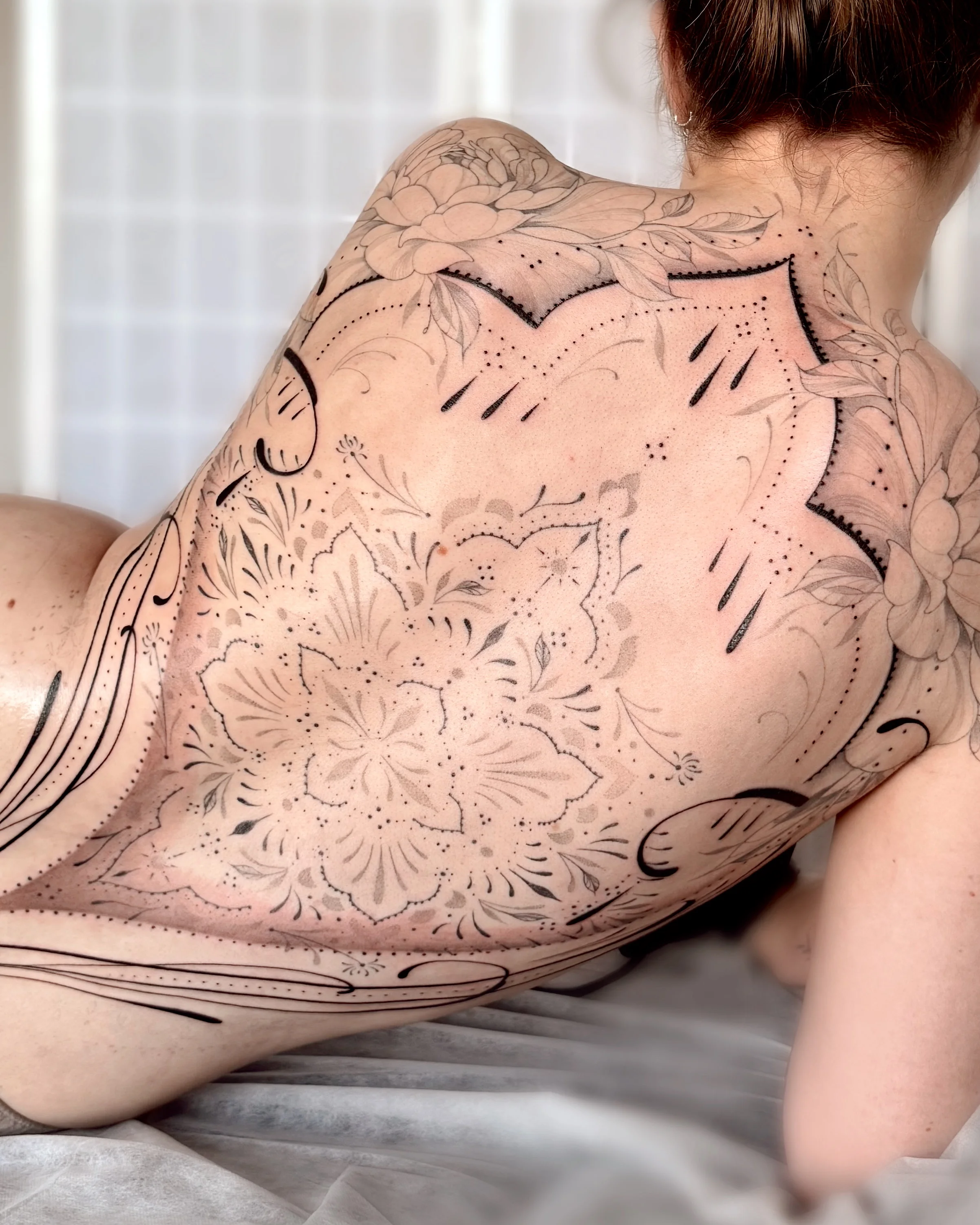 Abigail Louise
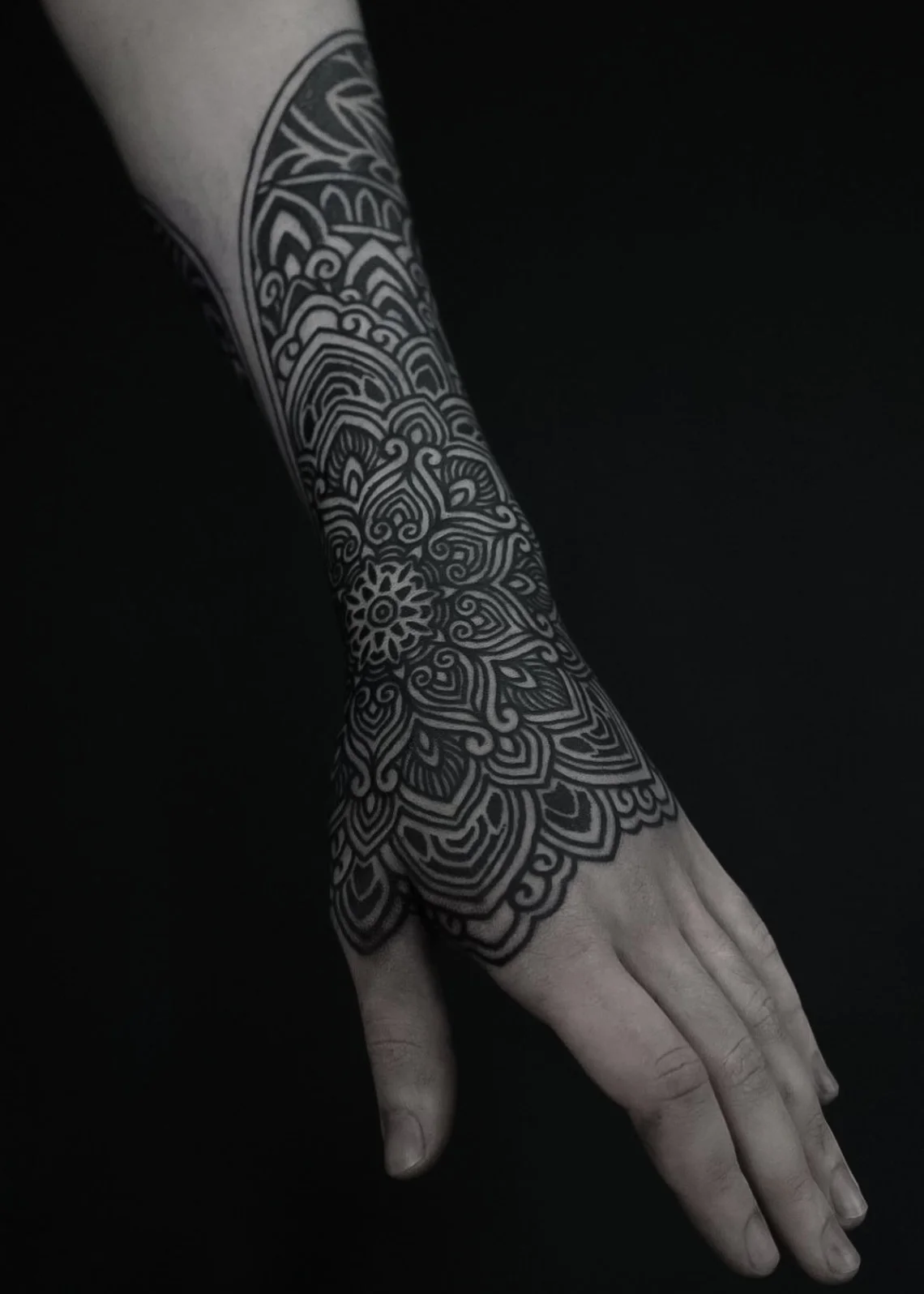 Oliver Kenton
 Kirk Nilsen
 Erin Manning
 Thebig_rosstattoo
 Crystal Alexandria
 Gabriella Nova
 Sherri Anne Austria
Common Questions
What is an ornamental tattoo?
An ornamental tattoo is a pattern-driven design, like mandalas, lace, filigree, or repeated motifs, arranged to flow with the shape of the body. It's usually done in black ink using linework and dotwork.
What is an ornamental tattoo sleeve?
An ornamental sleeve wraps the arm in pattern work that follows its natural shape, often narrowing toward the wrist and opening across the shoulder. It can be all pattern or combine ornamental elements with other imagery.
What's the difference between ornamental and geometric tattoos?
Geometric tattoos focus on pure shapes and perfect symmetry, while ornamental tattoos are more decorative, using lace, filigree, and flowing patterns designed around the body.
Do ornamental tattoos age well?
Usually yes, because they're built mostly from black ink with clear structure. Designs with enough space between lines and dots hold their crispness longest.
Where is the best placement for an ornamental tattoo?
Sleeves, back pieces, chest and sternum pieces, and thigh or hip wraps let the pattern follow the body. Smaller mandalas work well on the forearm, shoulder, or back of the neck.
How do I find an ornamental tattoo artist?
Browse the ornamental work on this page, open the artists whose style fits, and look at how their patterns sit on different body parts. Send your idea and references through the booking inquiry and the artist takes it from there.