Japanese Traditional Tattoos & Artists
One of the oldest tattoo traditions in the world, with its own imagery and rules for how a piece flows across the body. Browse real Japanese traditional tattoos and the artists making them, then request to book the one whose work fits the direction you're picturing.
What is a Japanese traditional tattoo?
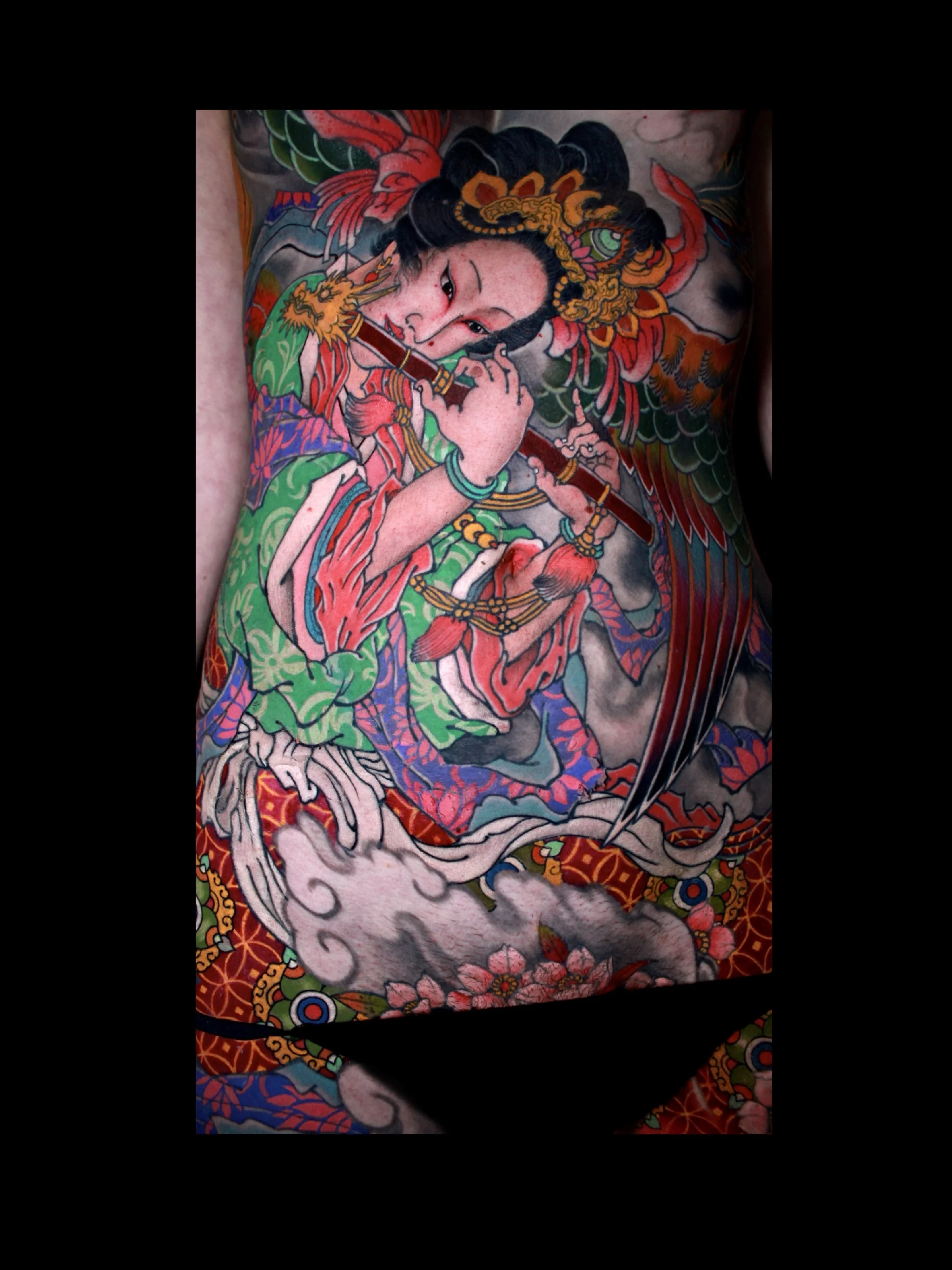
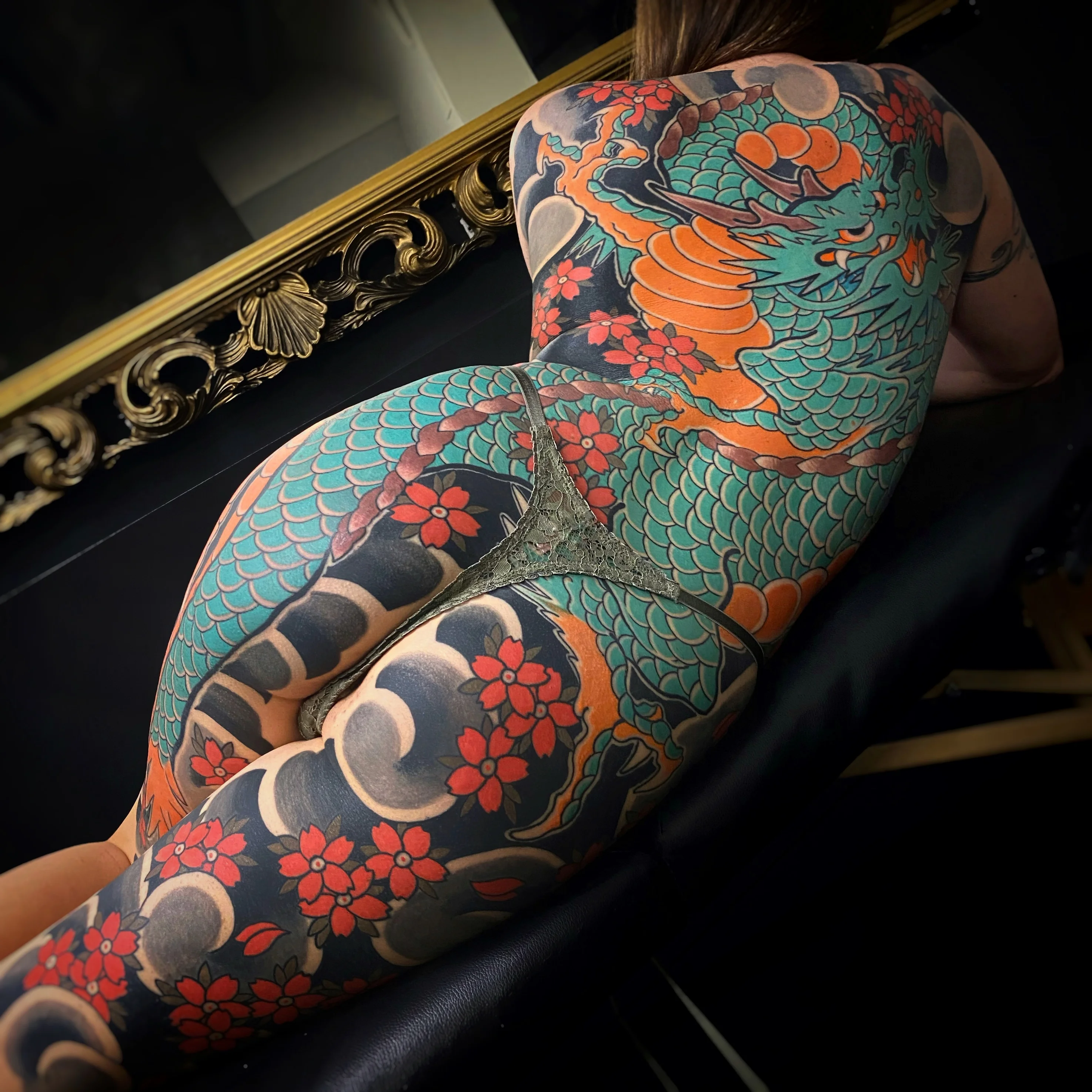
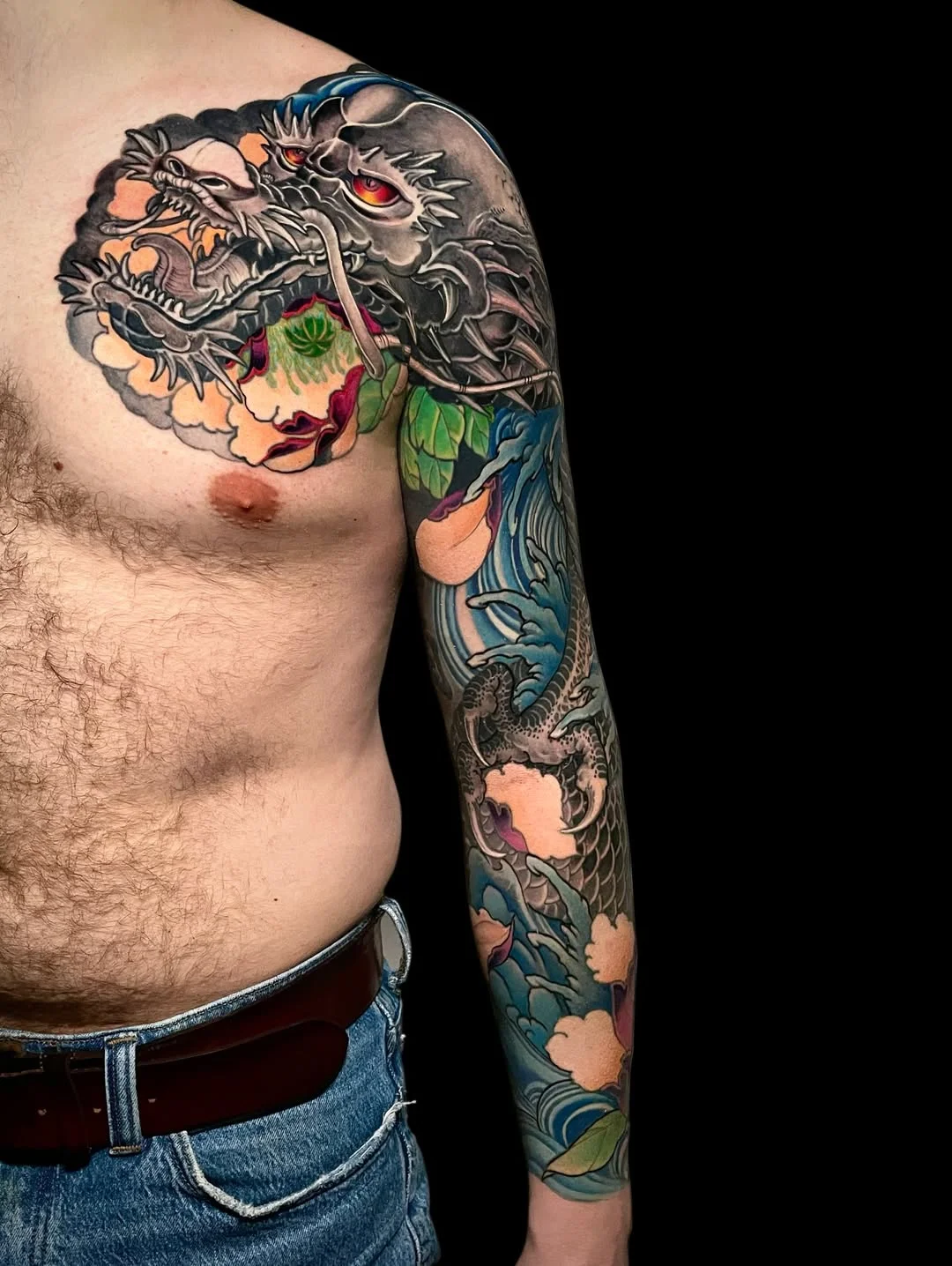
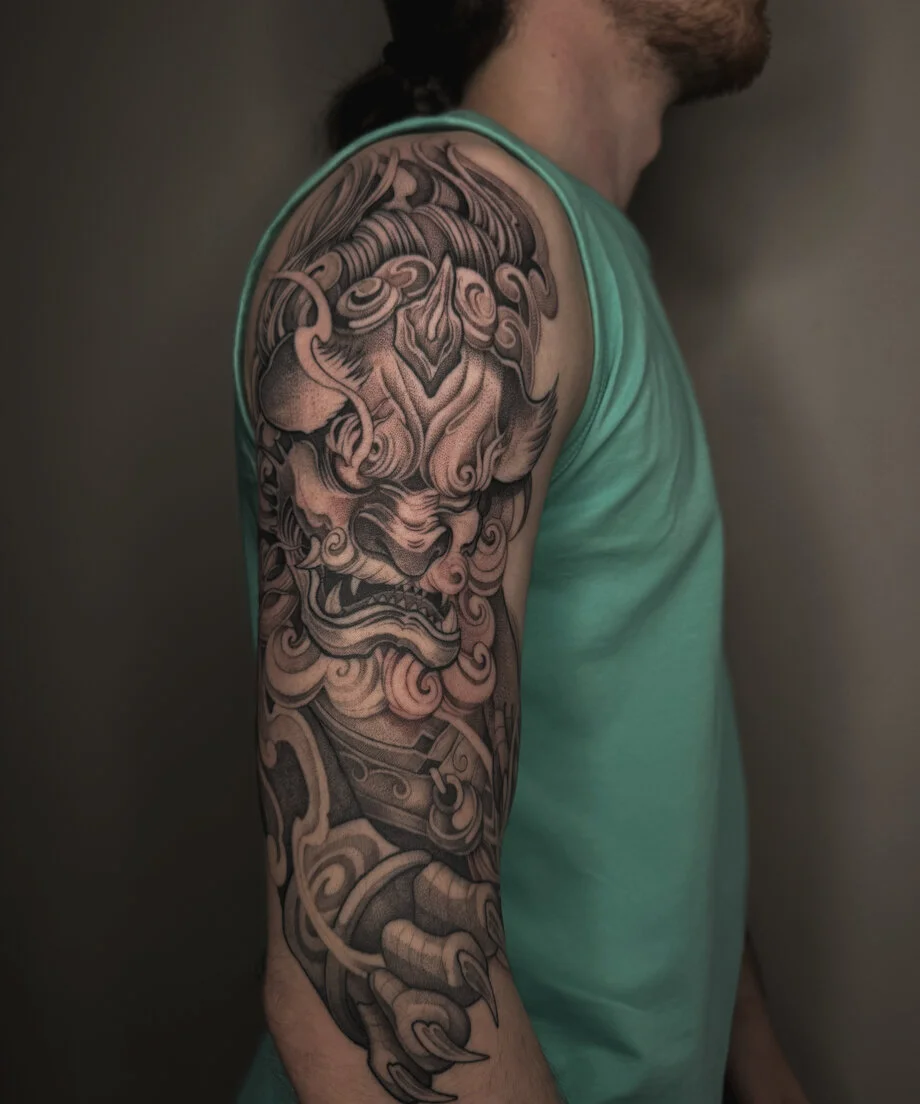
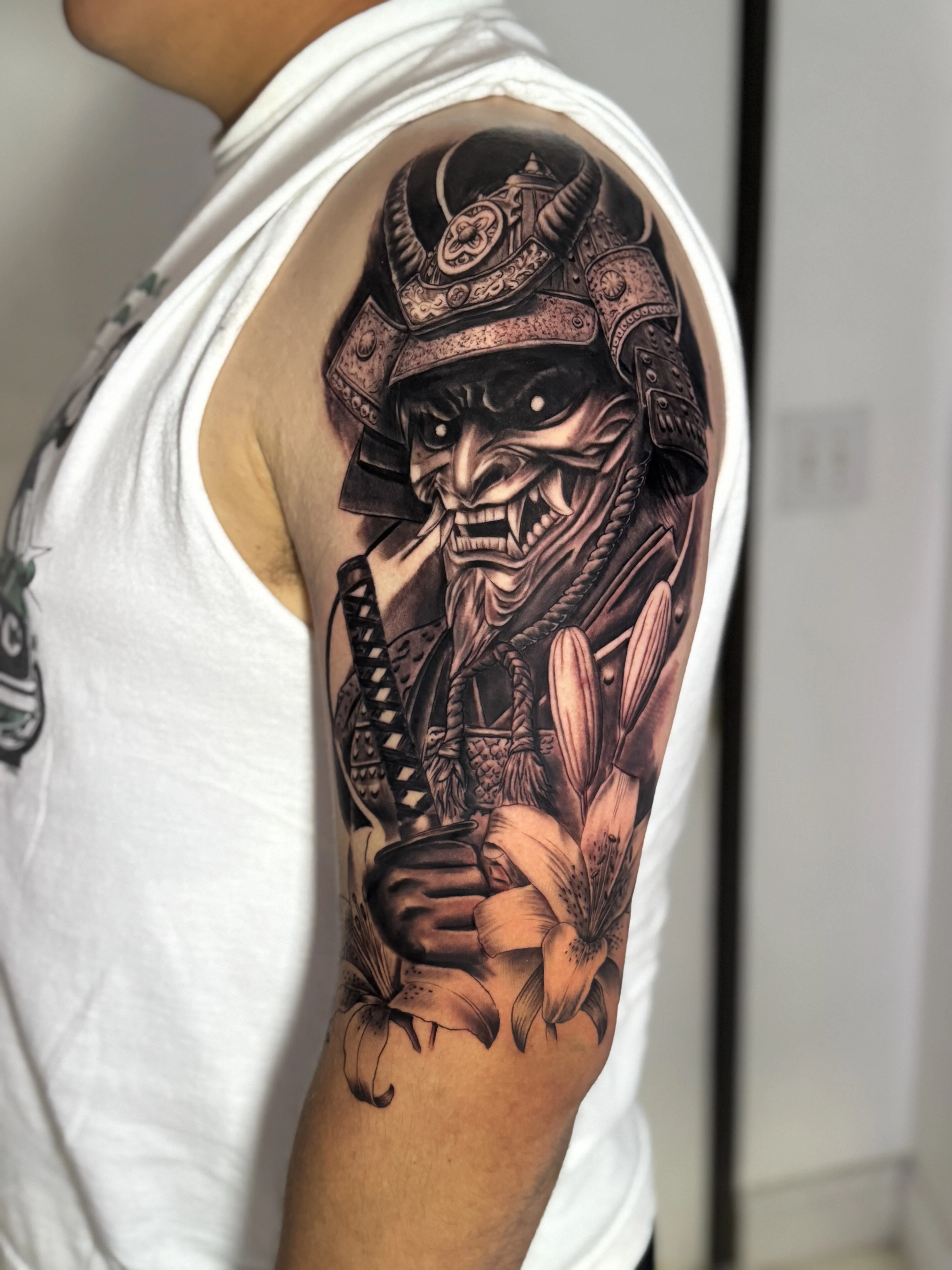
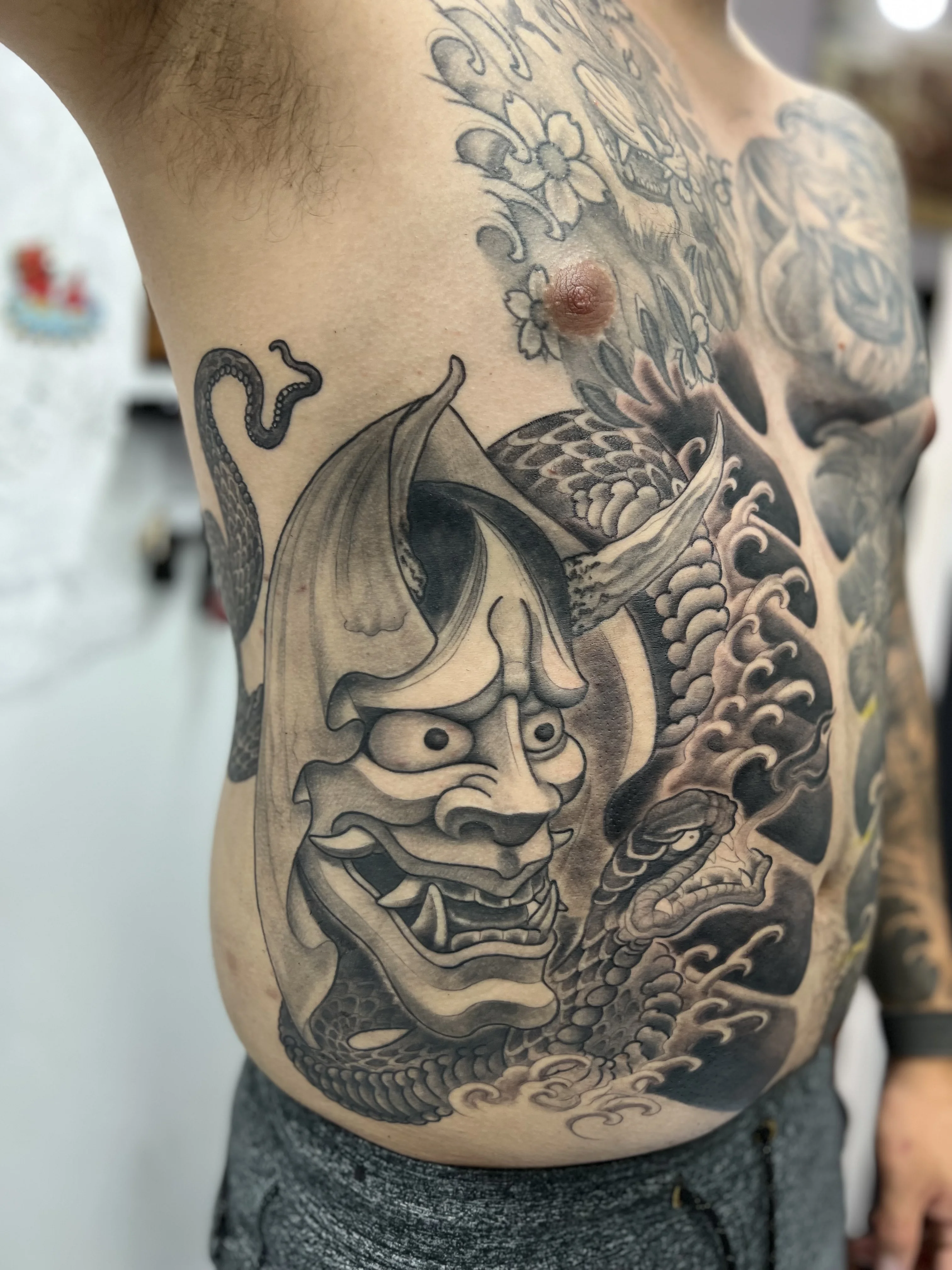
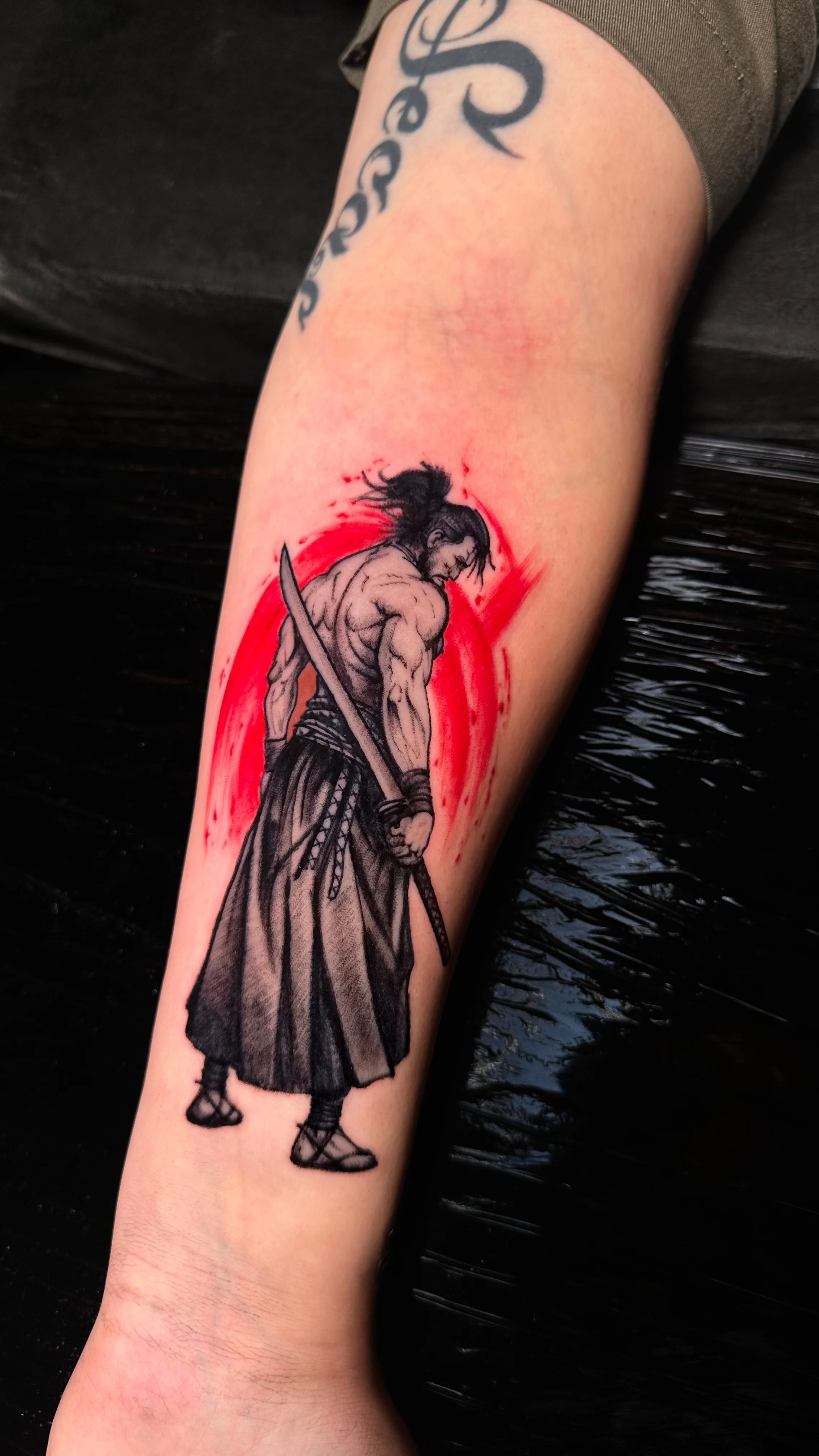
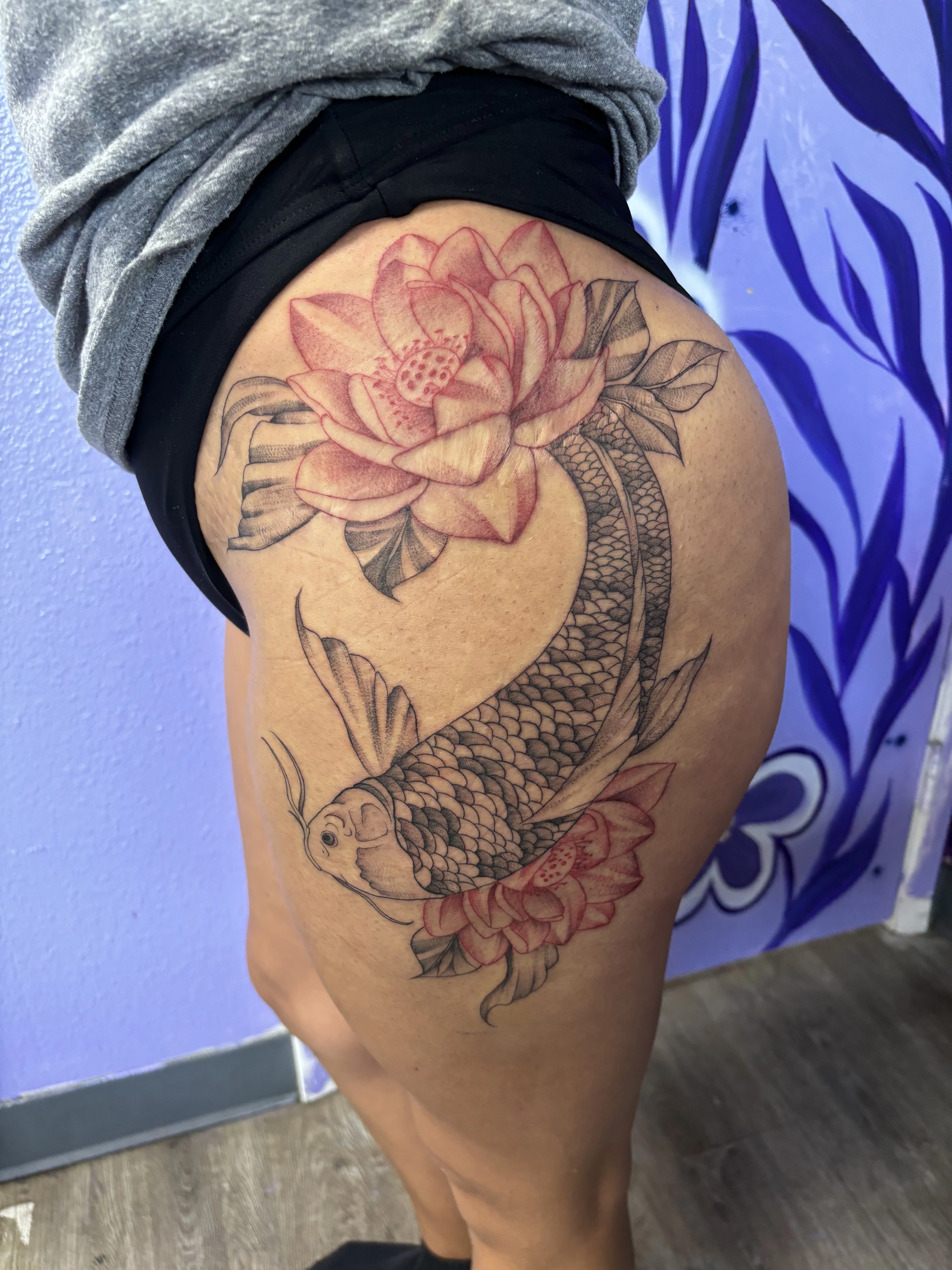
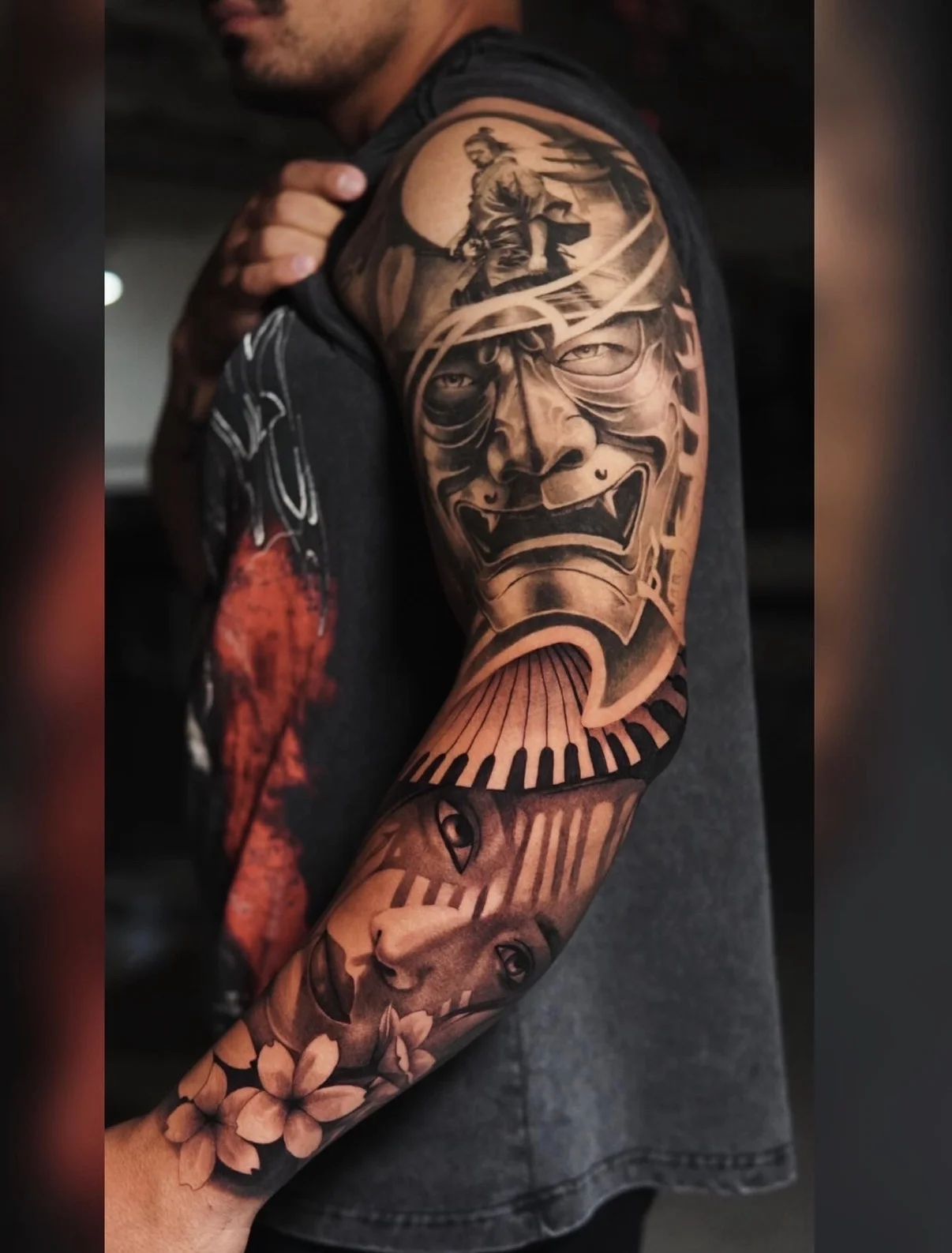
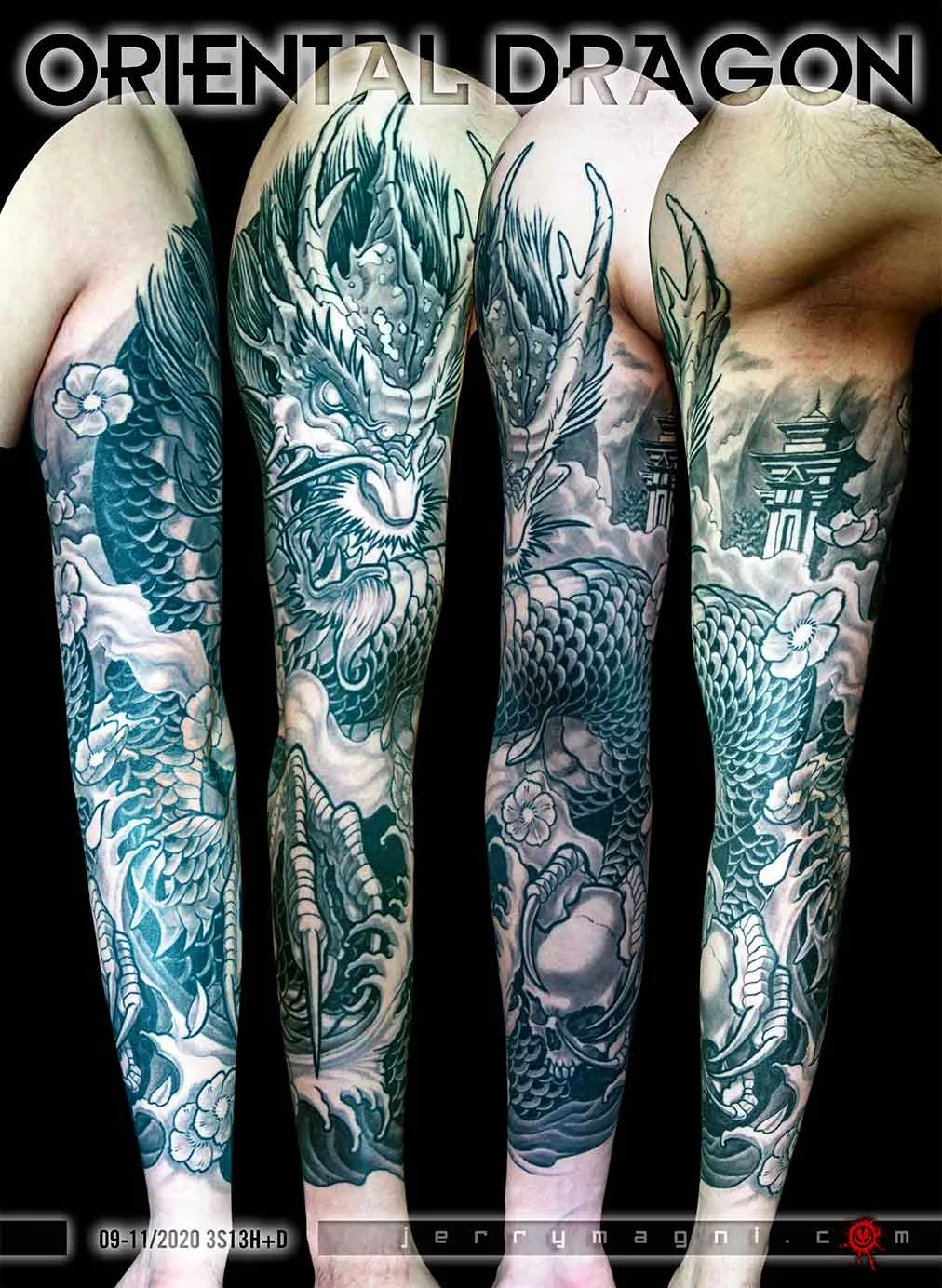
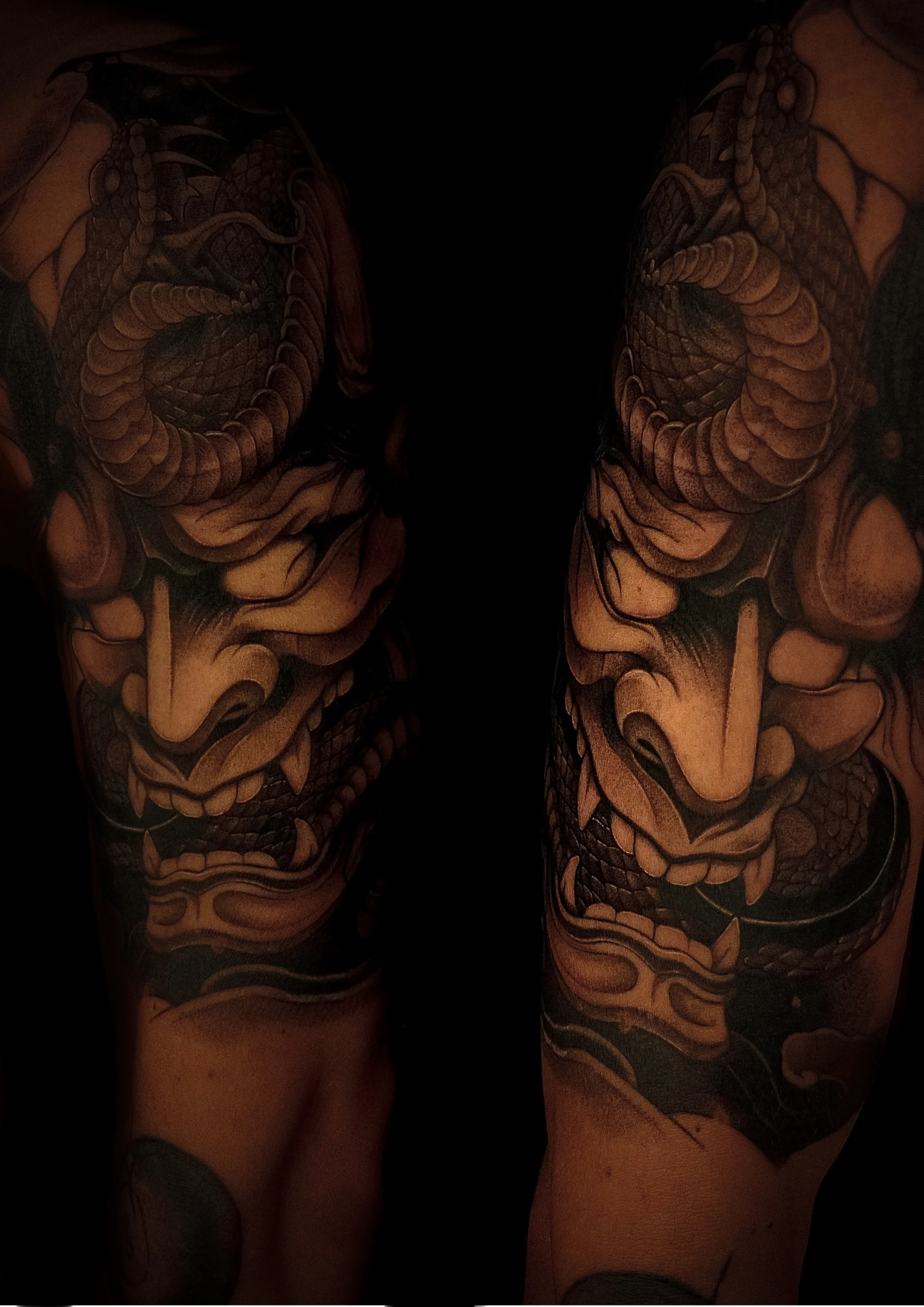
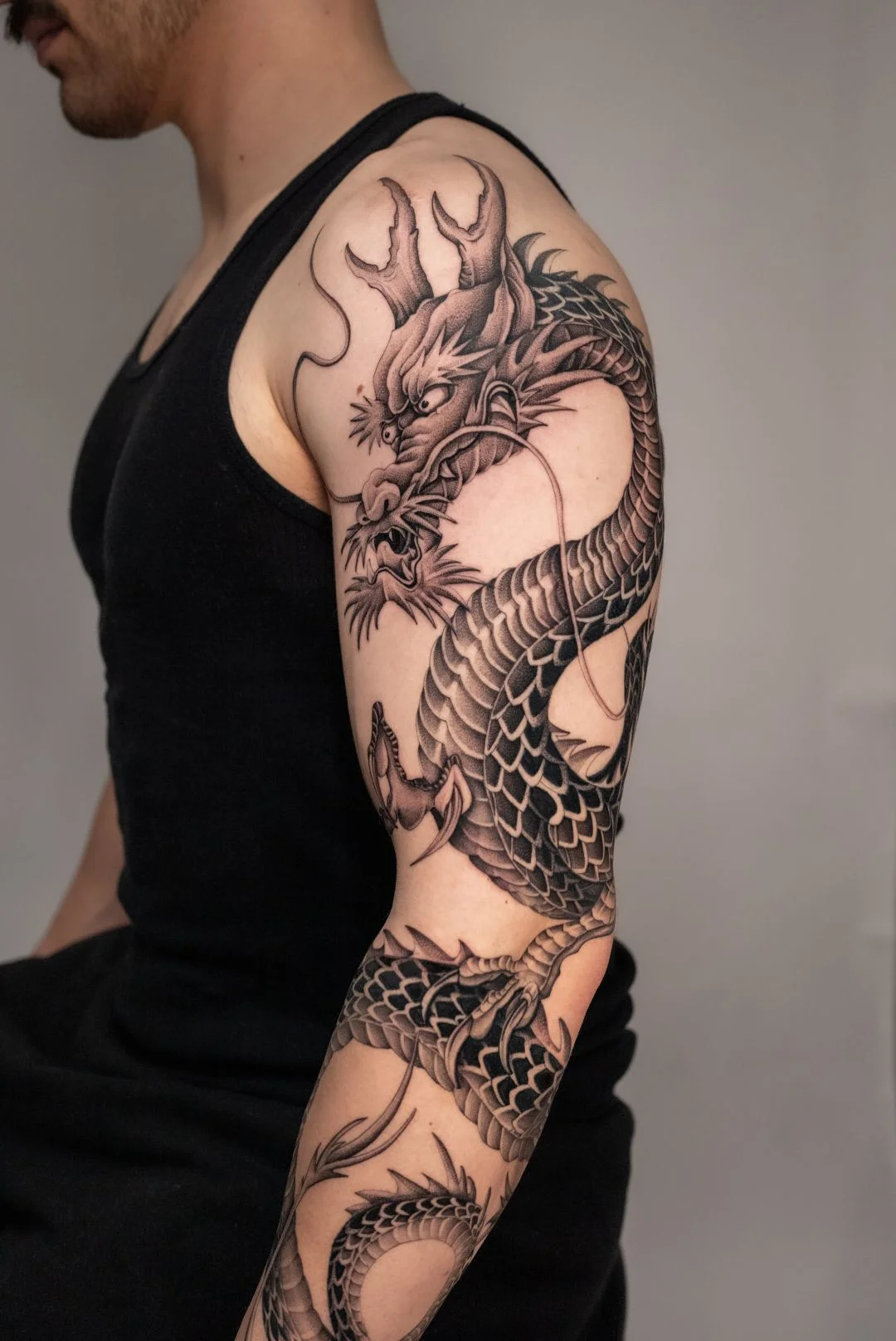
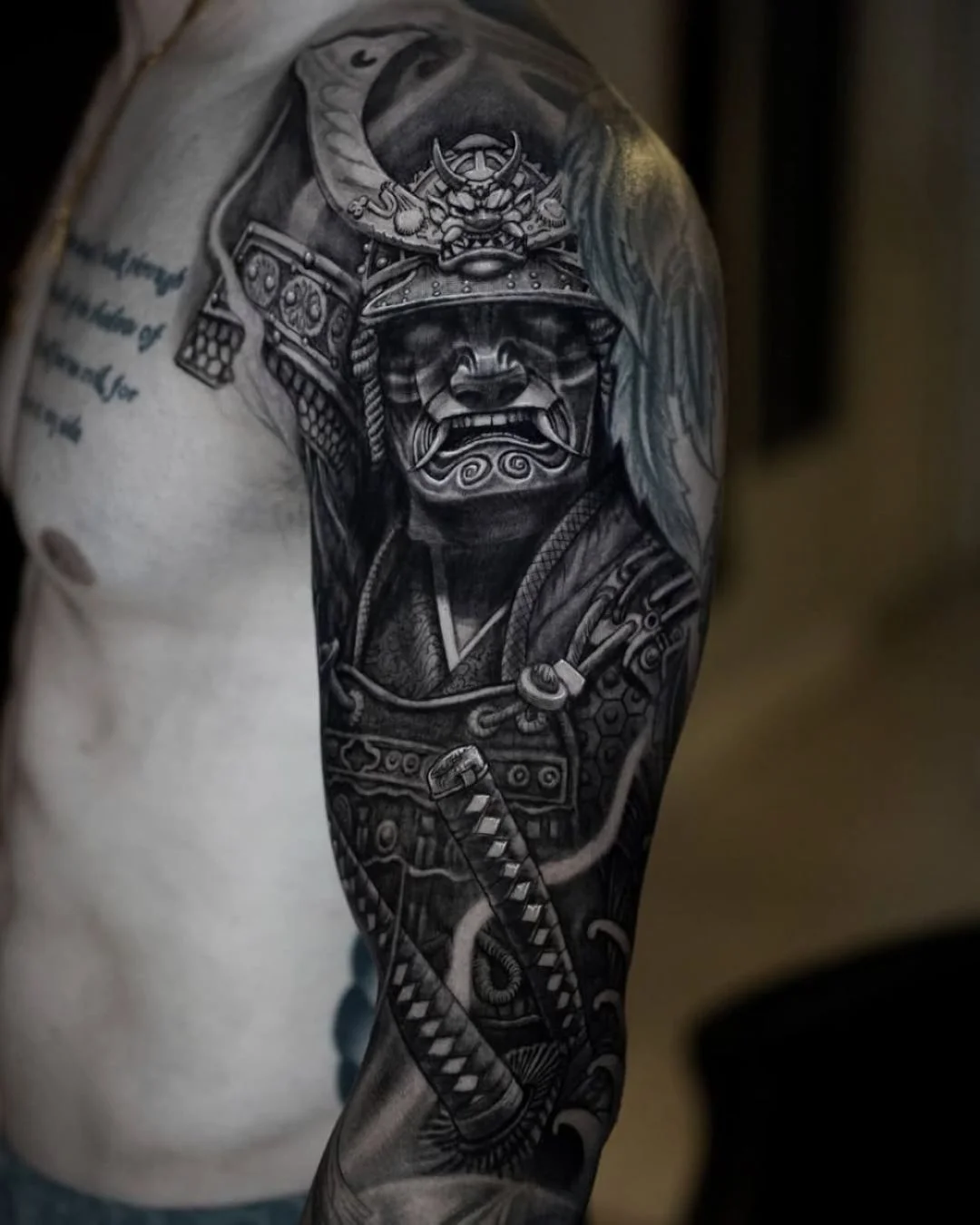
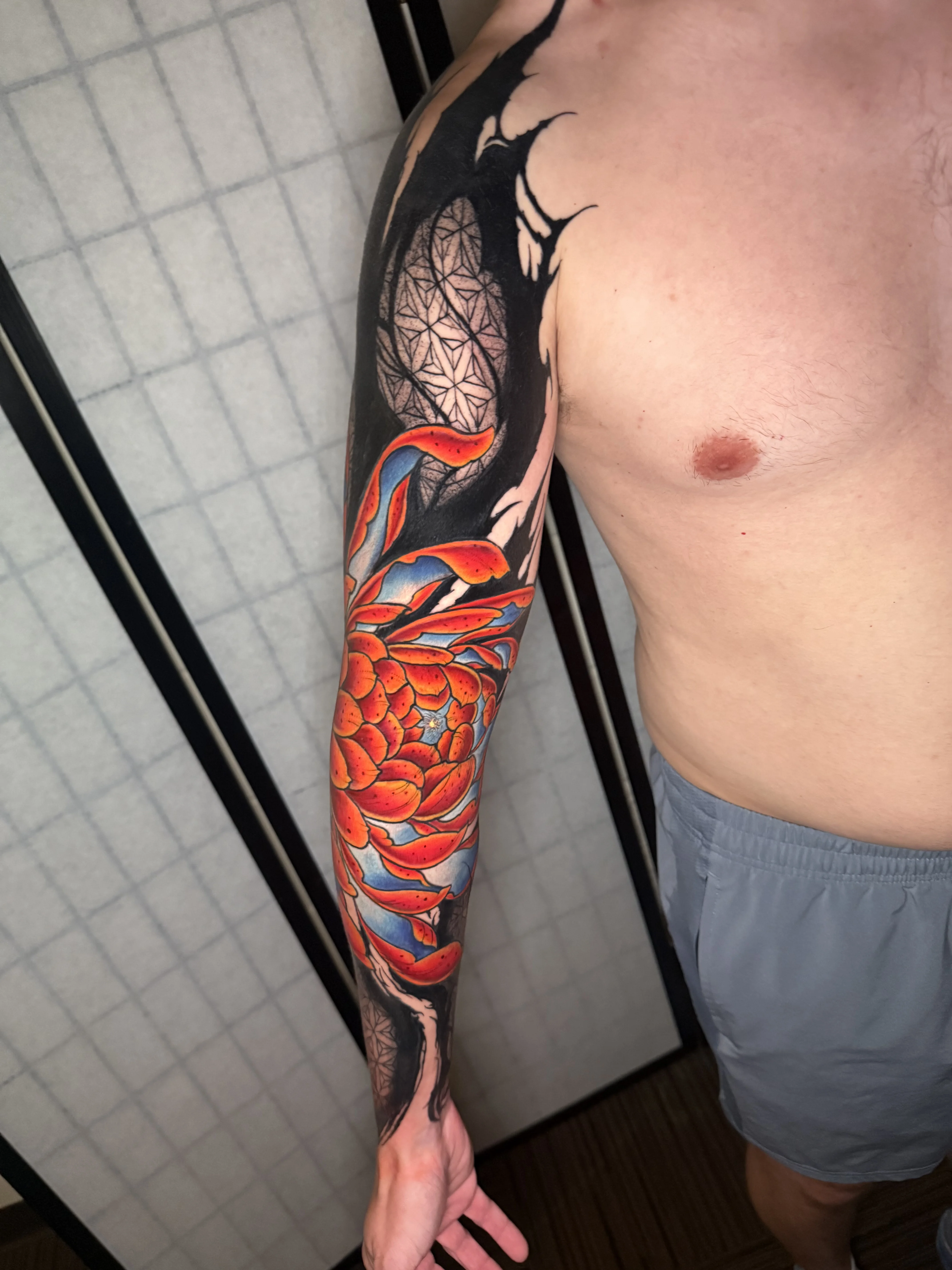
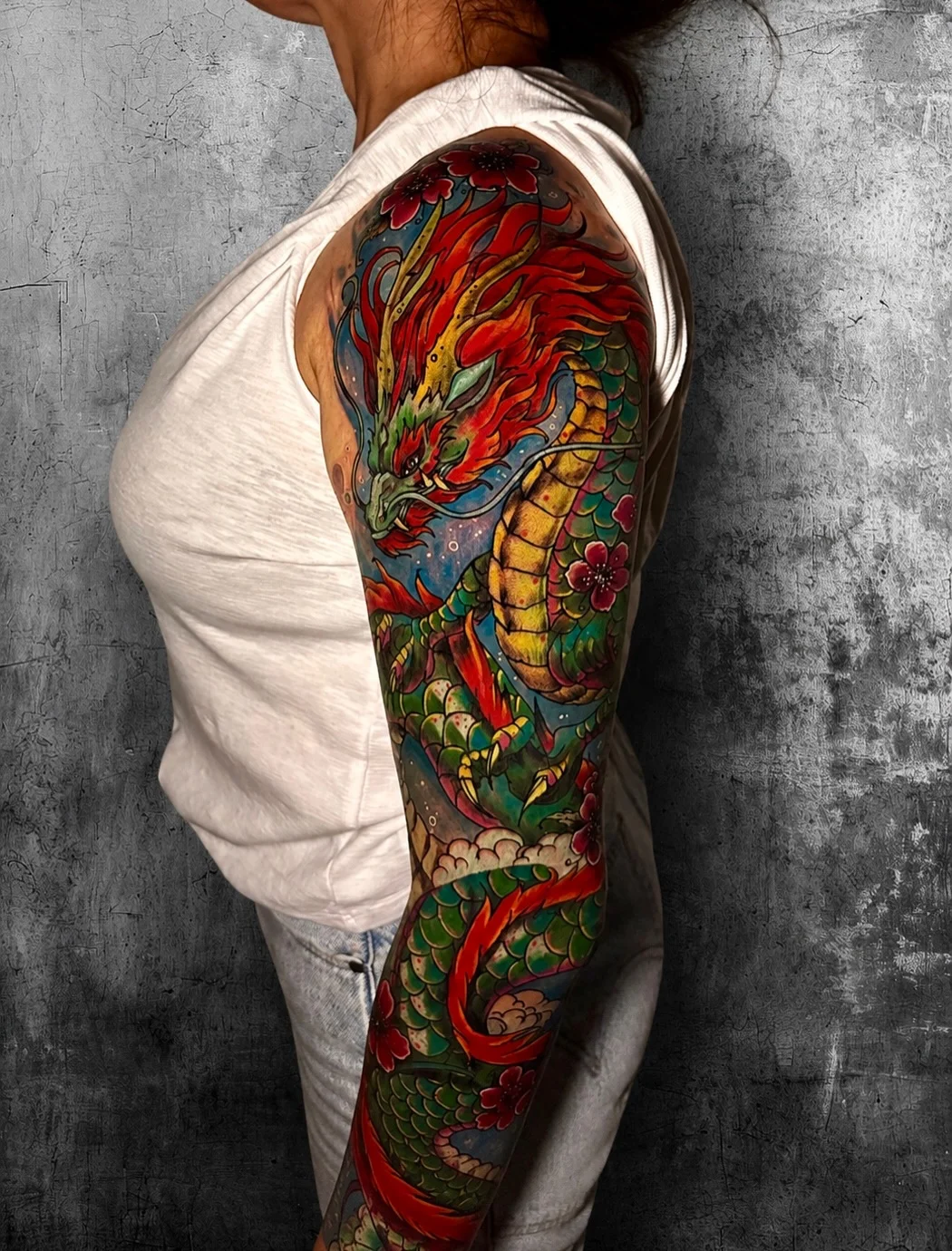
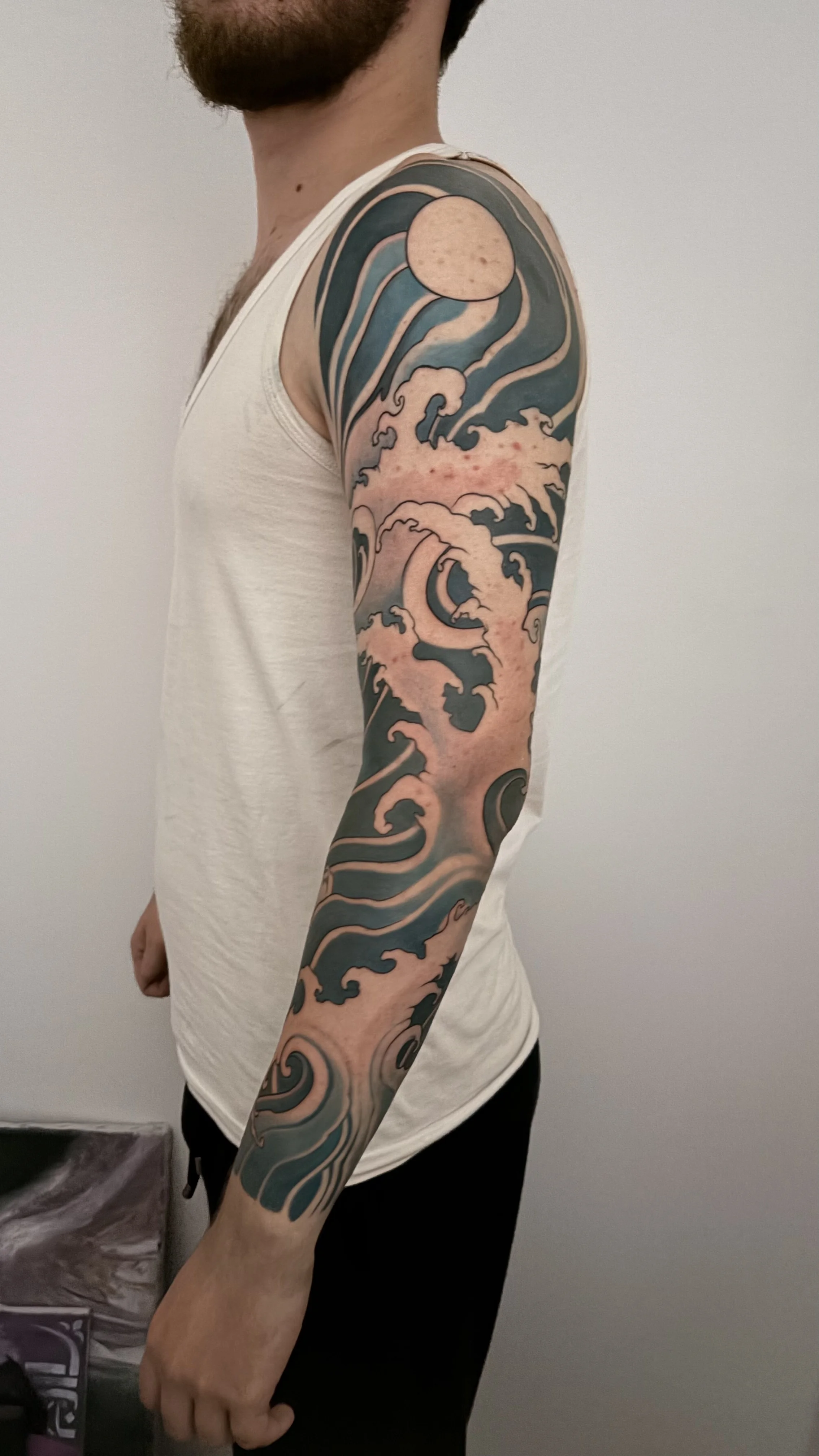
Japanese traditional tattooing, often called irezumi-influenced work, is one of the oldest continuously practiced tattoo lineages in the world. It carries a specific visual vocabulary: koi, dragons, tigers, peonies, chrysanthemums, cherry blossoms, hannya masks, Fudō Myōō, samurai, and the waves, clouds, and wind bars that connect them. It also carries rules about how images should flow across the body, which is what separates real Japanese work from a collection of Japanese-looking images.
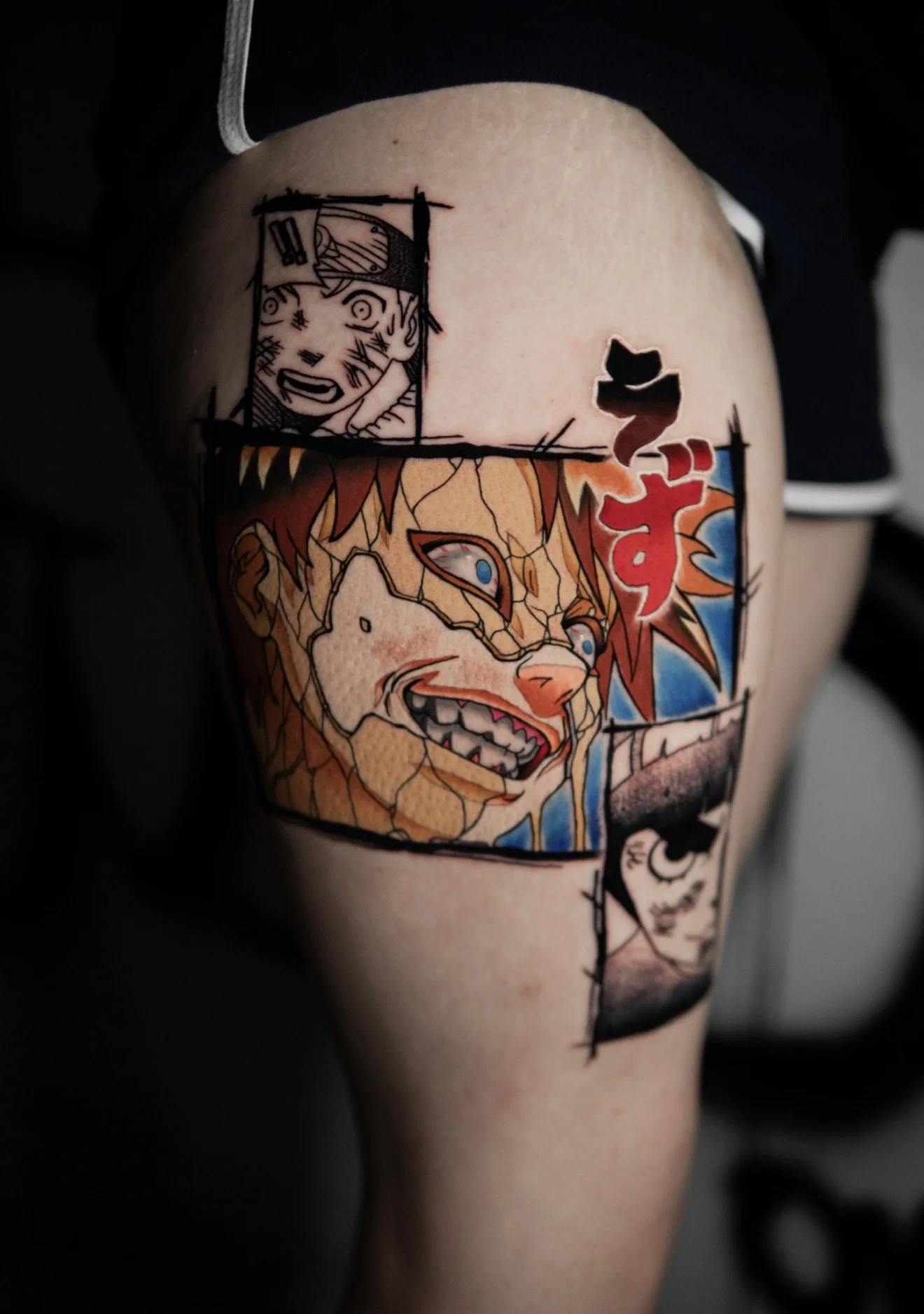
Many artists today work in a modern take on the style, sometimes called neo Japanese, that keeps the traditional imagery and composition while adding their own rendering and color choices.
What makes the style recognizable
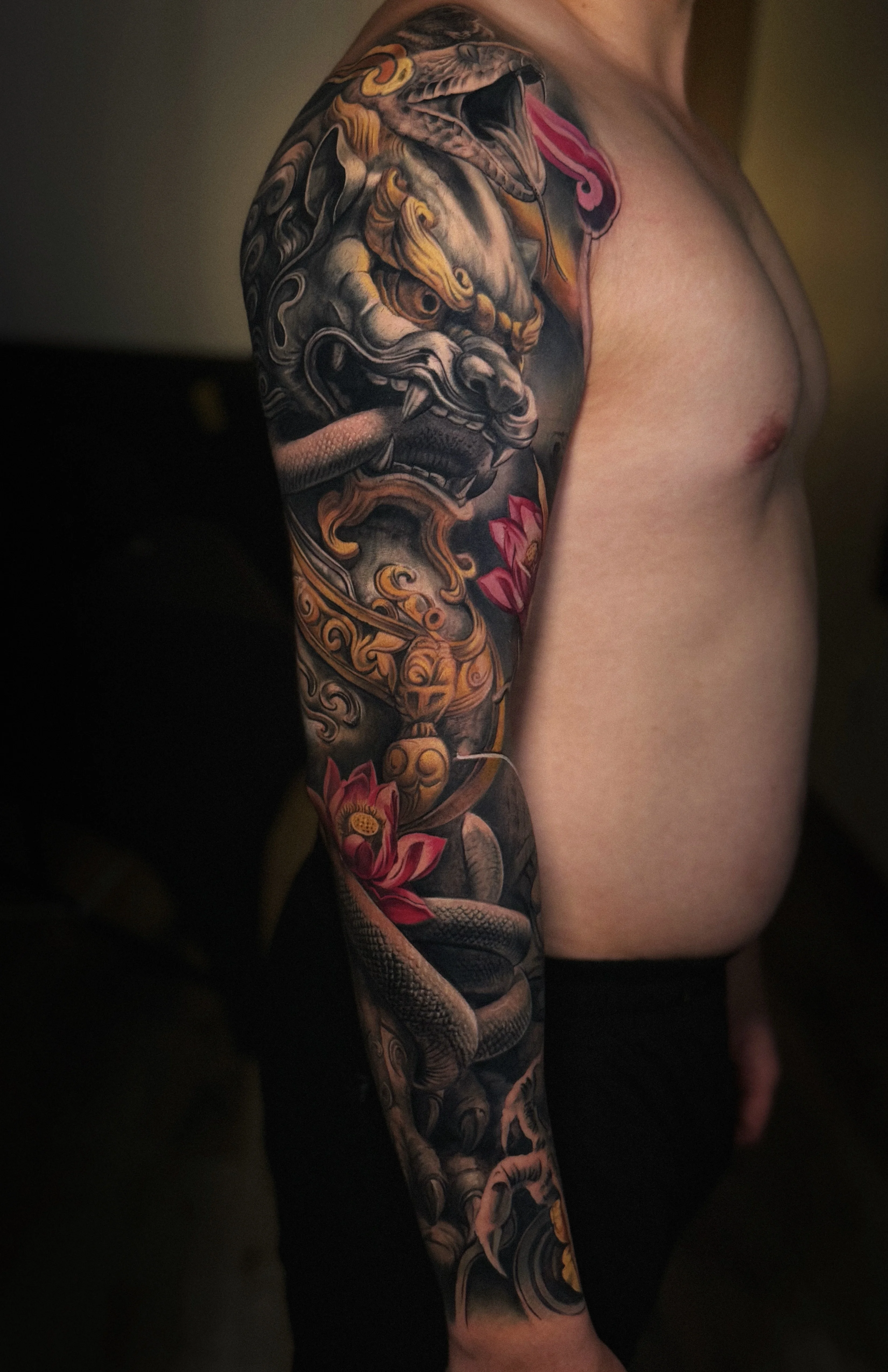
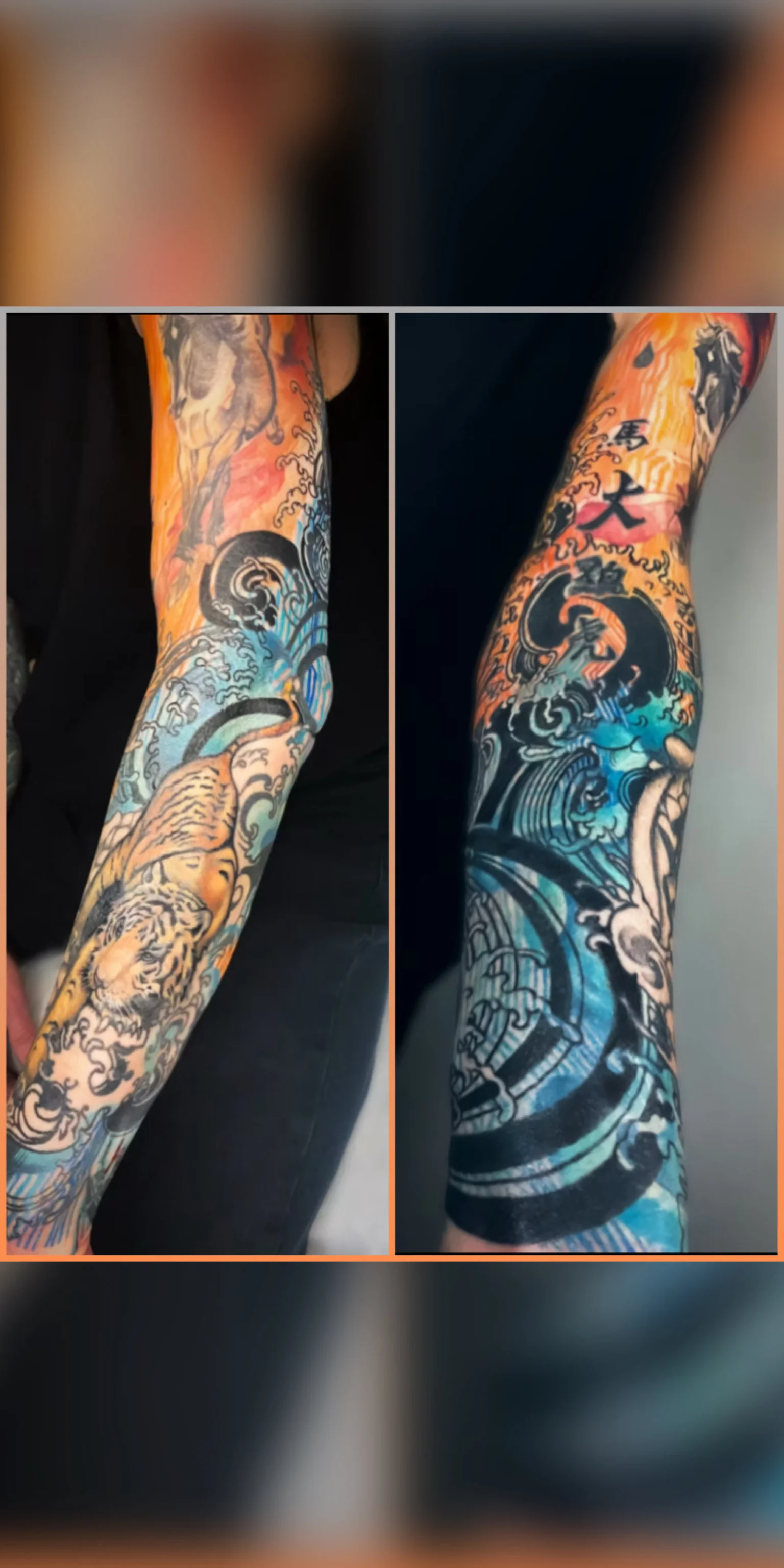
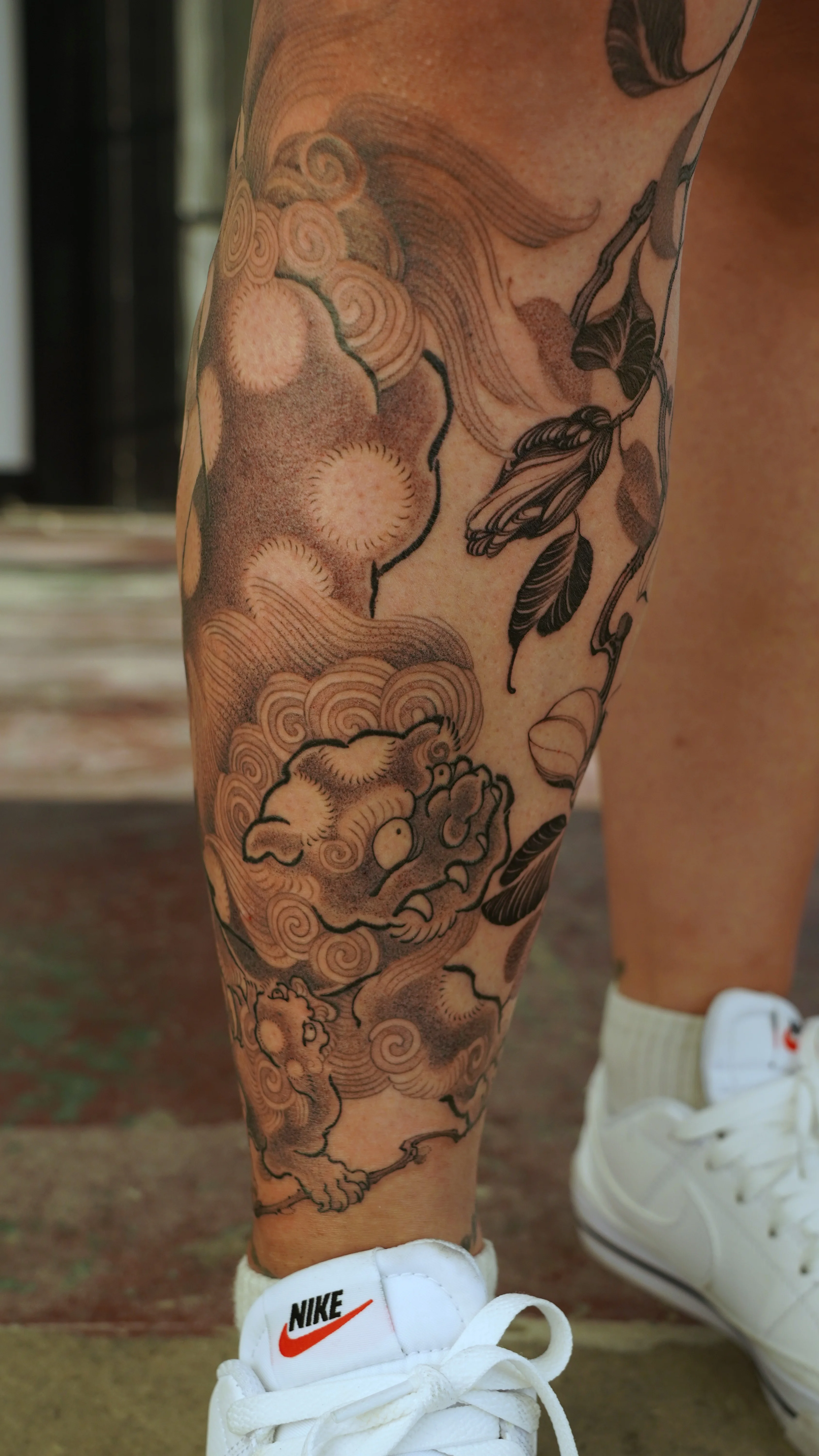
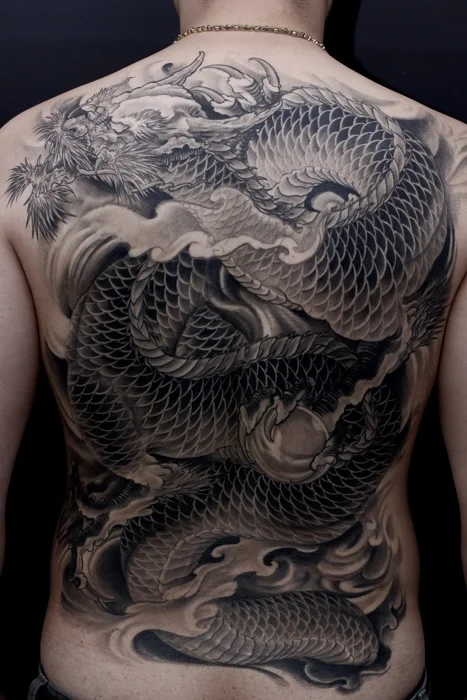
Japanese traditional work is built for scale and movement. A sleeve, back piece, or body suit is meant to read as a single composition, with a main subject in the foreground and wind bars, waves, or clouds guiding your eye through the background and negative space, the way a traditional painter would compose a scroll. Bold black outlines and shading carry most of the contrast, and the color palette is limited and deliberate, with reds, blacks, oranges, and soft greens doing most of the work.
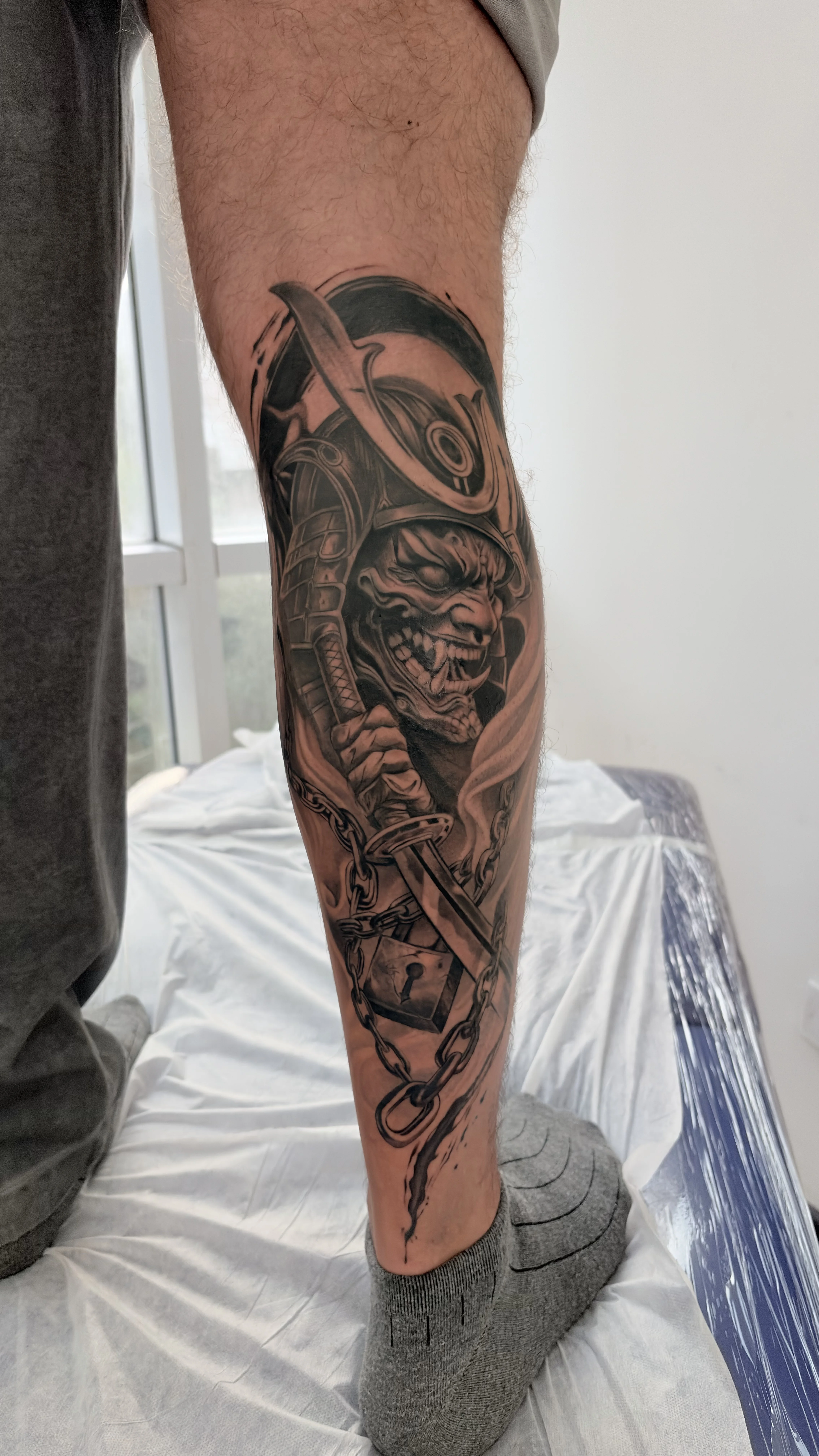
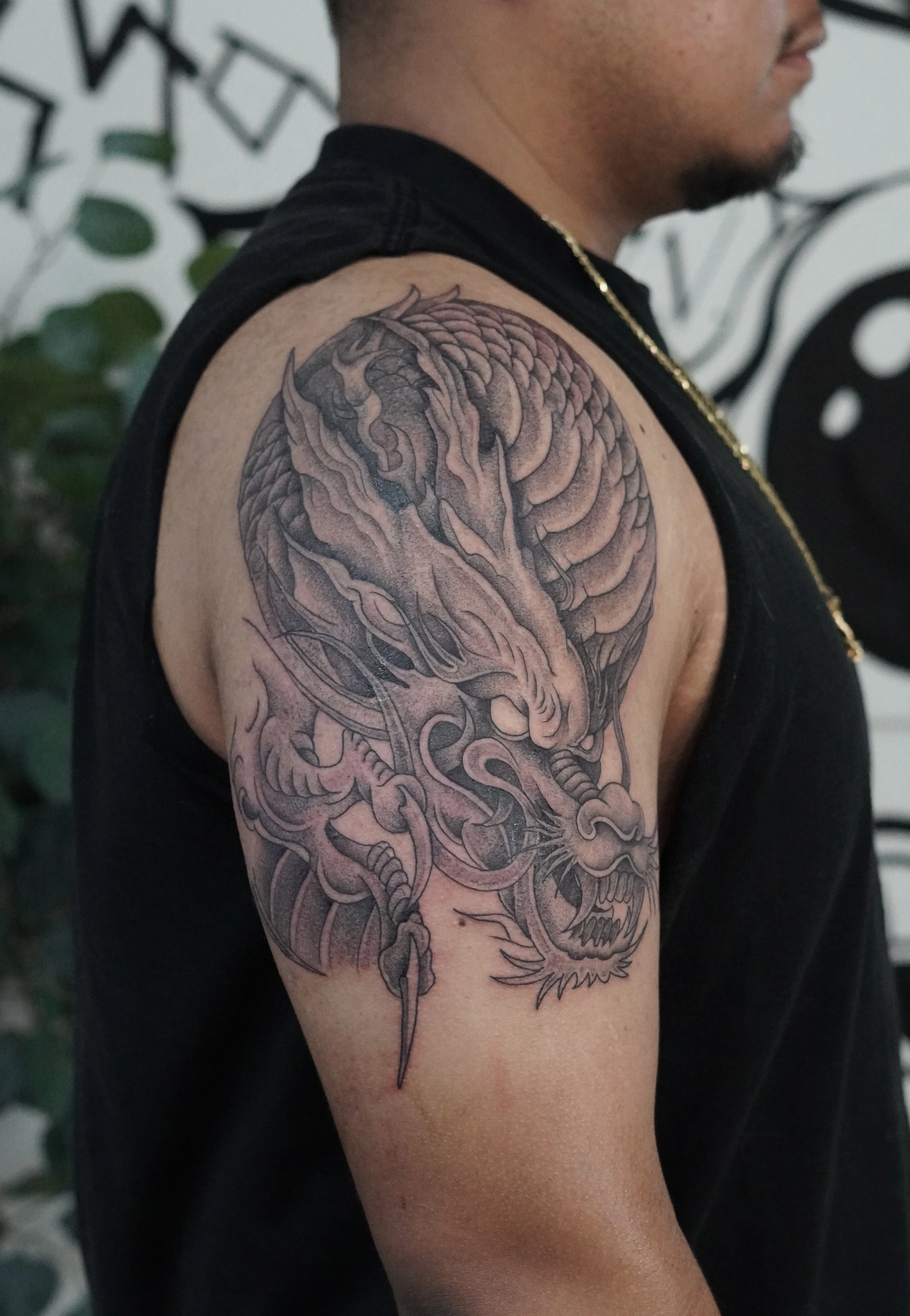
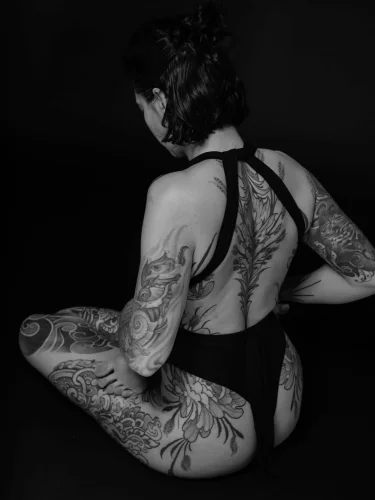
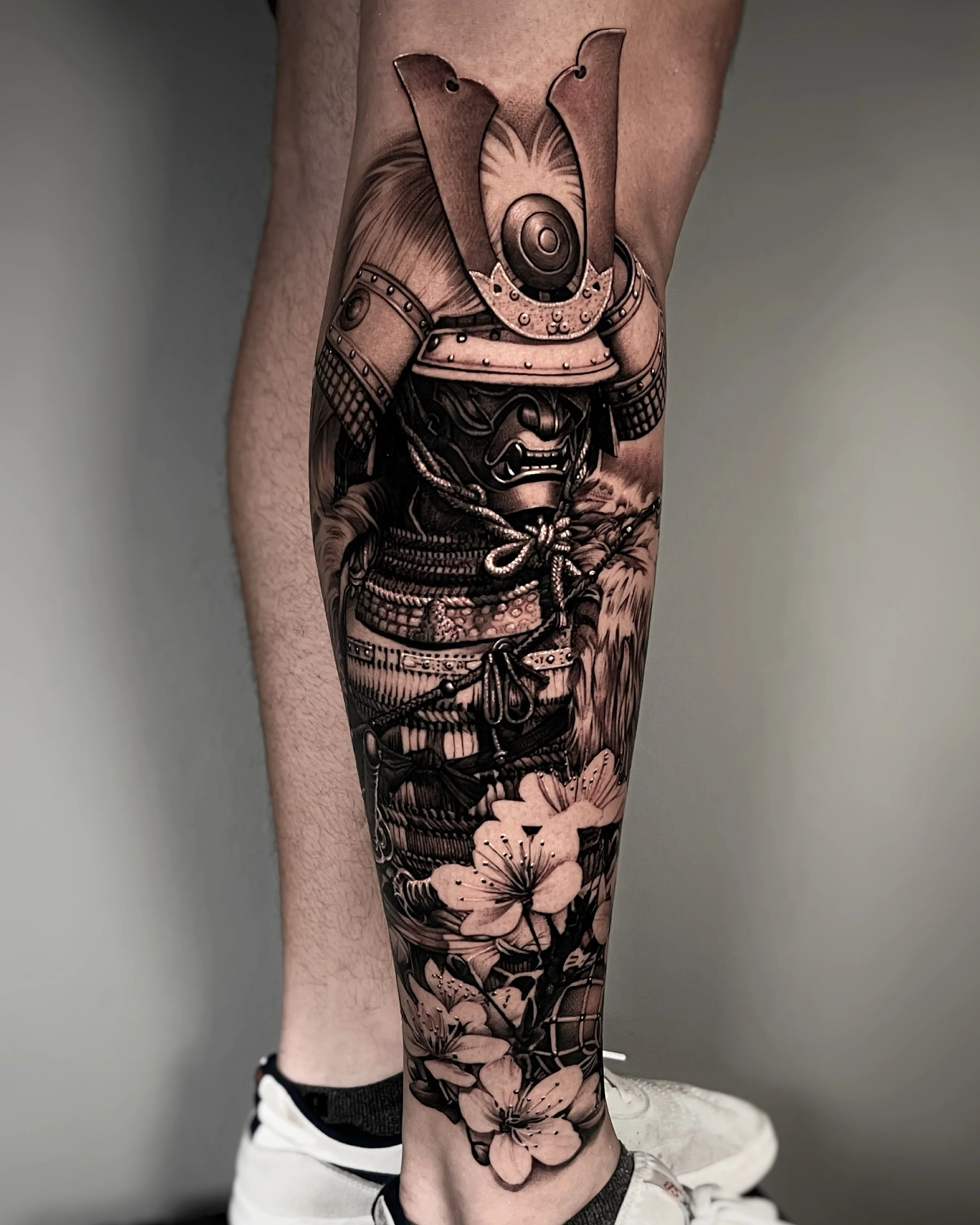
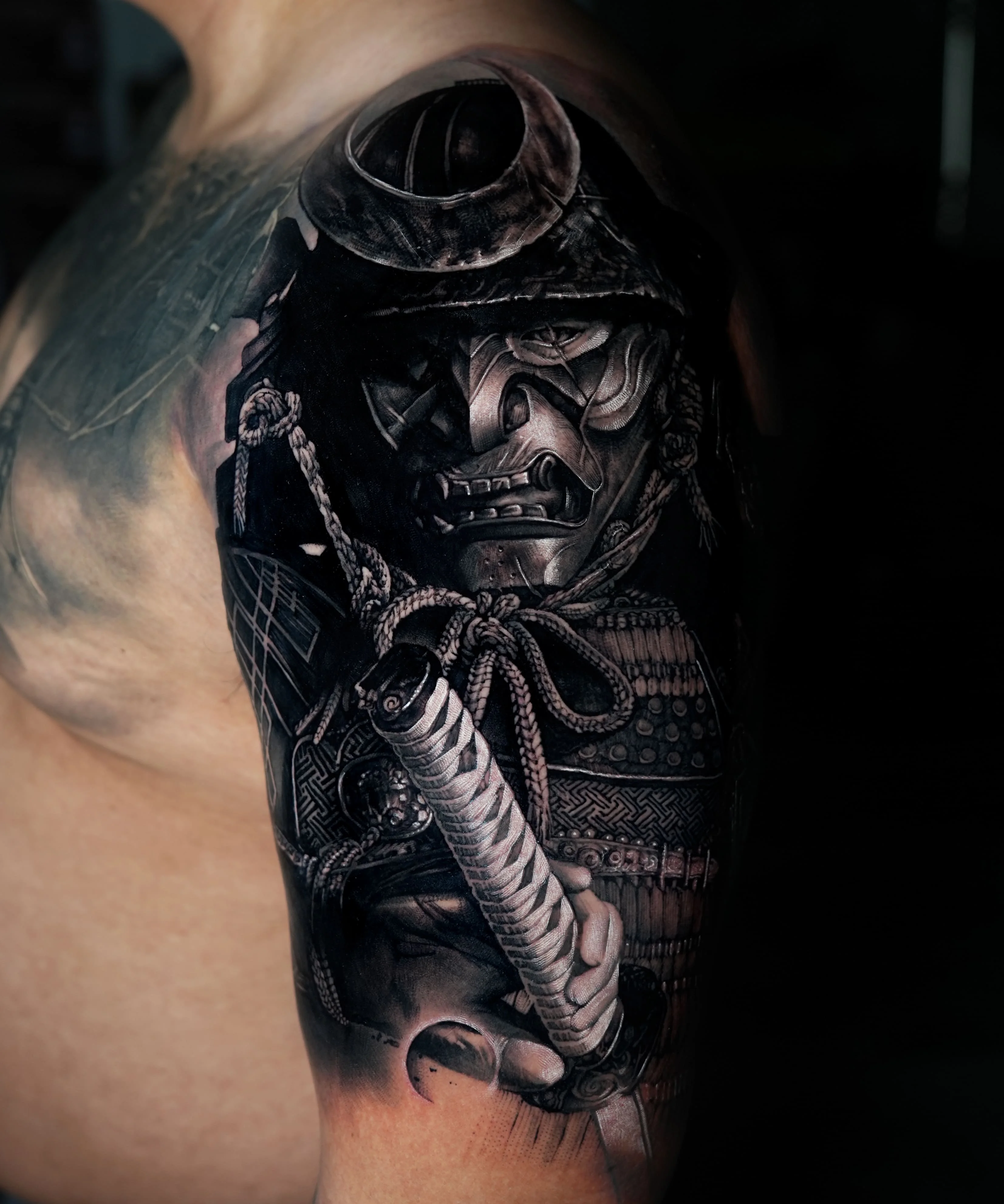
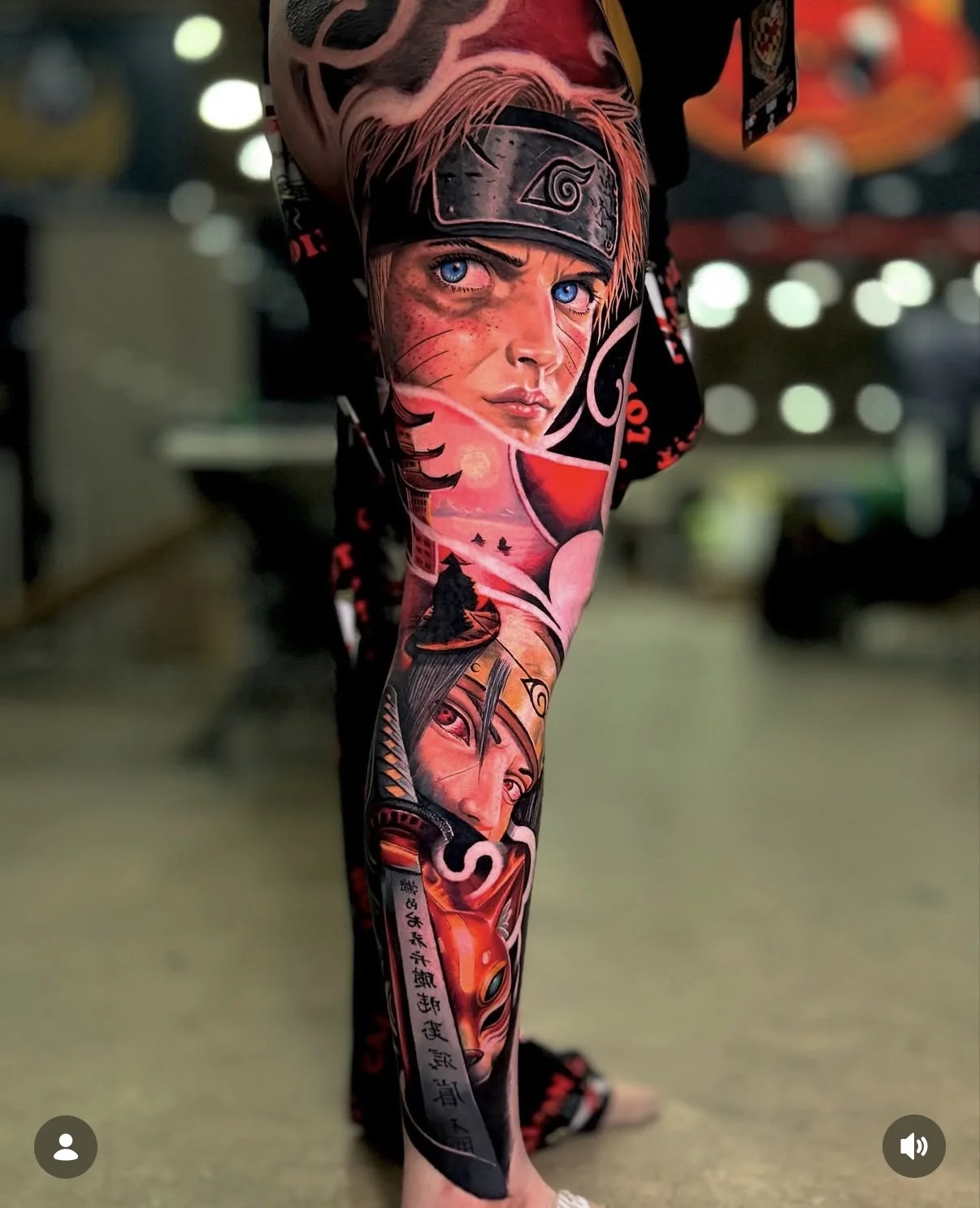
Common subjects in the Japanese traditional work on Freshly Inked include dragons, mythology, animals, flowers, clouds, and bold full-arm and full-sleeve compositions.
How to spot a strong Japanese traditional tattoo artist
Look for an artist whose body of work shows mastery of the iconography rather than borrowed elements stitched together. Real Japanese-style work has internal consistency that's hard to fake. The background elements should feel as intentional as the main subject, the flow should follow the muscles and shape of the body, and the symbols should be used with an understanding of what they mean.
It's also worth asking how the artist approaches large projects. The best Japanese traditional artists think in terms of the whole sleeve or back piece from the first session, even if you're starting with one section.
Before your first session, it's worth learning a little about the imagery you're drawn to. Many traditional subjects come with seasonal pairings and meanings, like certain flowers paired with certain animals, and artists who work in this style often care about getting those combinations right. Telling your artist what the piece means to you, rather than only what it should look like, gives them what they need to build a composition that's true to the tradition and personal to you.
Best placements for a Japanese traditional tattoo
This is a style built for large placements. Full sleeves, half sleeves, back pieces, chest panels, and leg sleeves are where Japanese work is at its best, because the composition needs room to flow. Smaller single pieces can work, like a koi or a peony on the forearm or calf, but if you think you might want more later, talk with your artist about placing the first piece so it can grow into a larger composition.
How Japanese traditional tattoos age
Japanese traditional work ages well for the same reasons American traditional does. Bold outlines, solid black shading, a limited established palette, and clear composition all hold up over time. Large pieces with strong contrast stay readable from across a room for many years. As with any color work, sunscreen on healed skin helps the reds and oranges stay bright.
What affects the price and time
The most important conversation to have with a Japanese traditional artist is about your timeline. A serious sleeve or back piece isn't a single-session project, and the artists who do this well typically plan it over months or even years, with each session adding work that fits the larger composition. Price depends on size, coverage, and the artist's experience, and many artists in this style quote large projects by session. Expect a consultation first and a deposit to hold your spot.
Japanese traditional vs. similar styles
American traditional shares the bold lines and limited palette but uses a different set of subjects and doesn't follow the same full-body composition rules. Neo-traditional often borrows Japanese subjects with a more illustrated, modern rendering. Blackwork artists sometimes take on Japanese imagery in solid black only. If you want a large, flowing piece with deep tradition behind it, Japanese traditional is the style to look at.
How to find and book a Japanese traditional tattoo artist
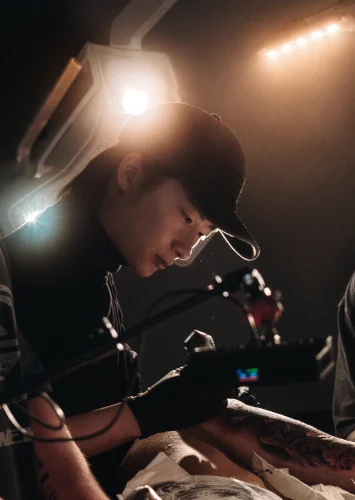
Browse the Japanese traditional work below and save the pieces that feel closest to the direction you're picturing. On Freshly Inked, Japanese traditional artists are working in cities including San Francisco, Long Beach, Los Angeles, and Rome. Open the artist whose work fits, look through their full portfolio, and send a booking inquiry with your idea, the placement you're considering, and a few references. Your request goes straight to the artist, and they take it from there.
Artists

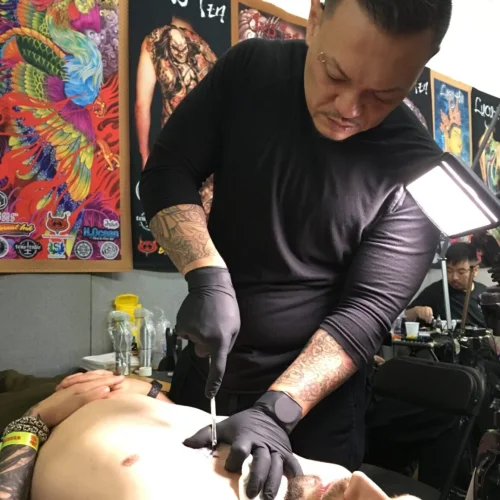
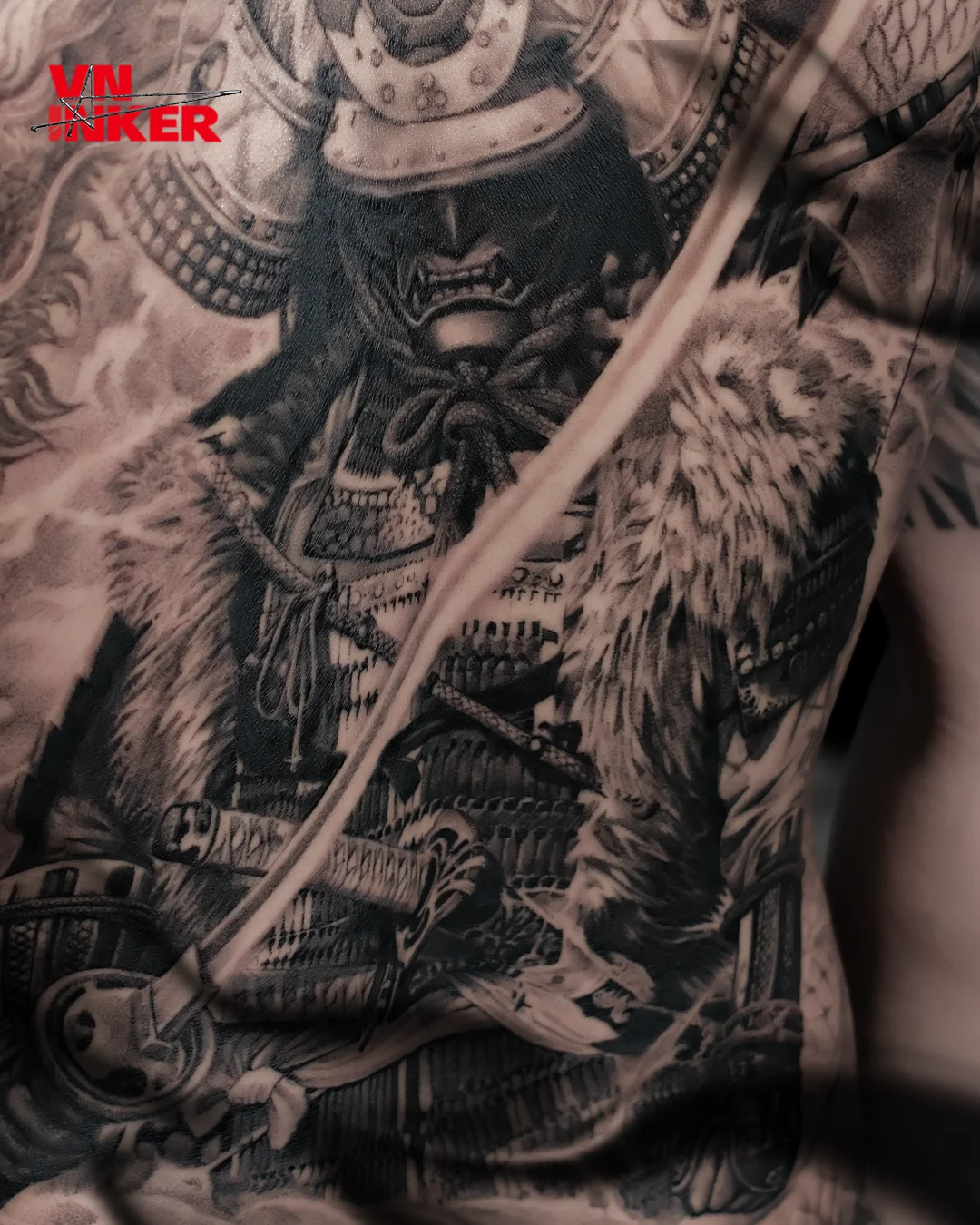
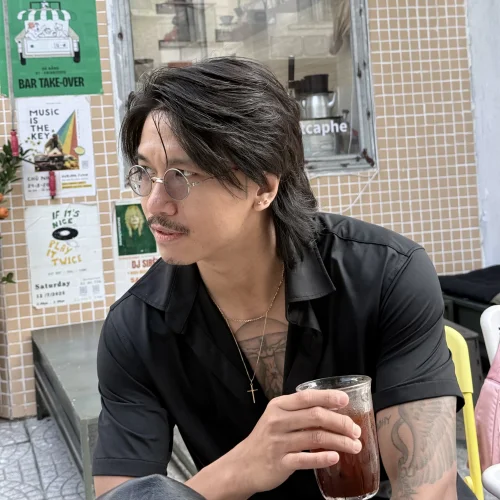
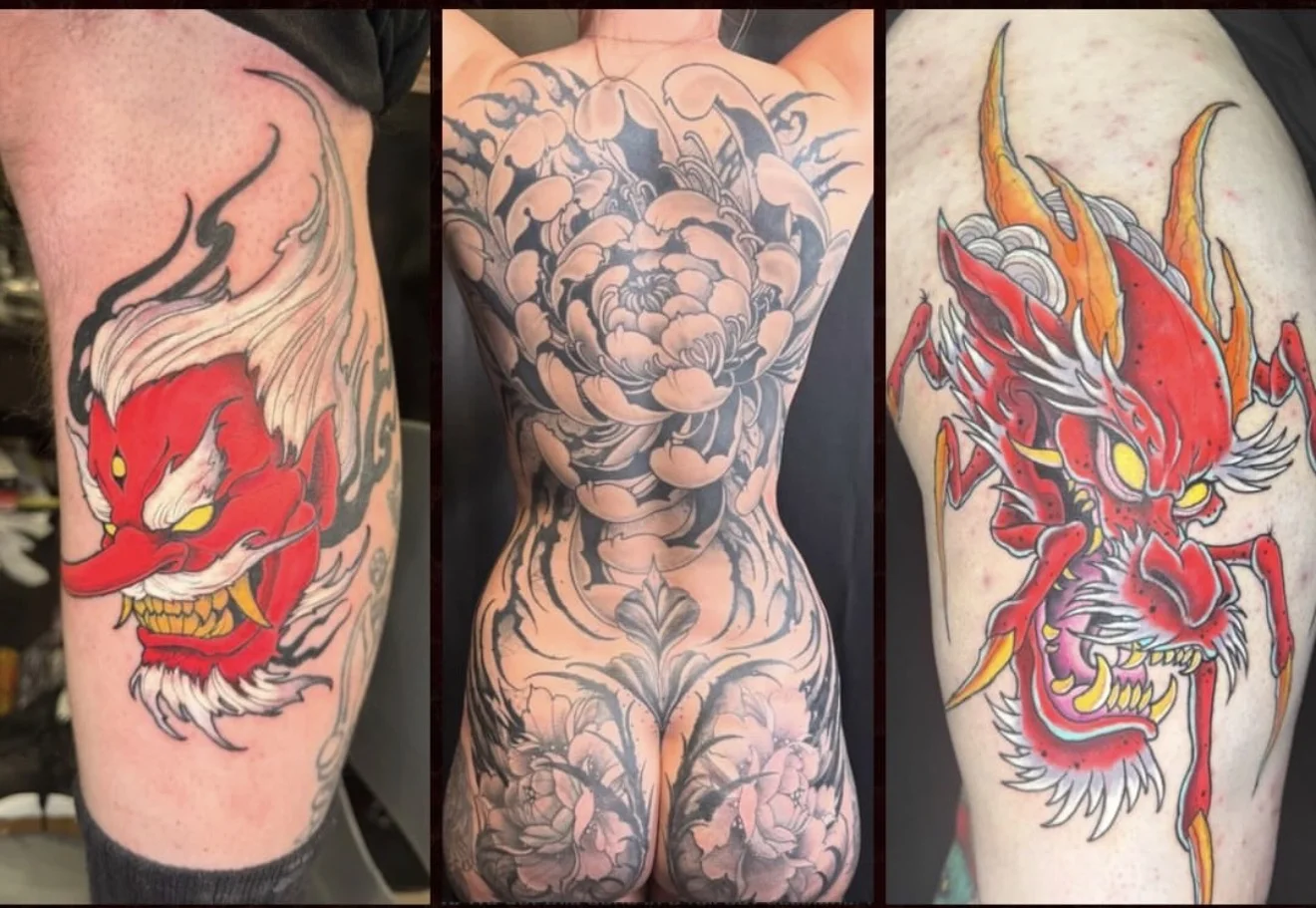
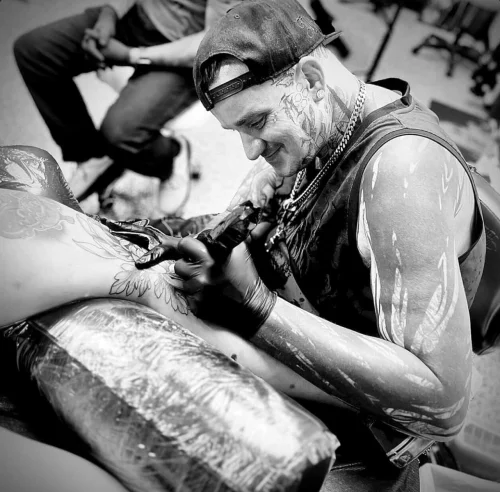
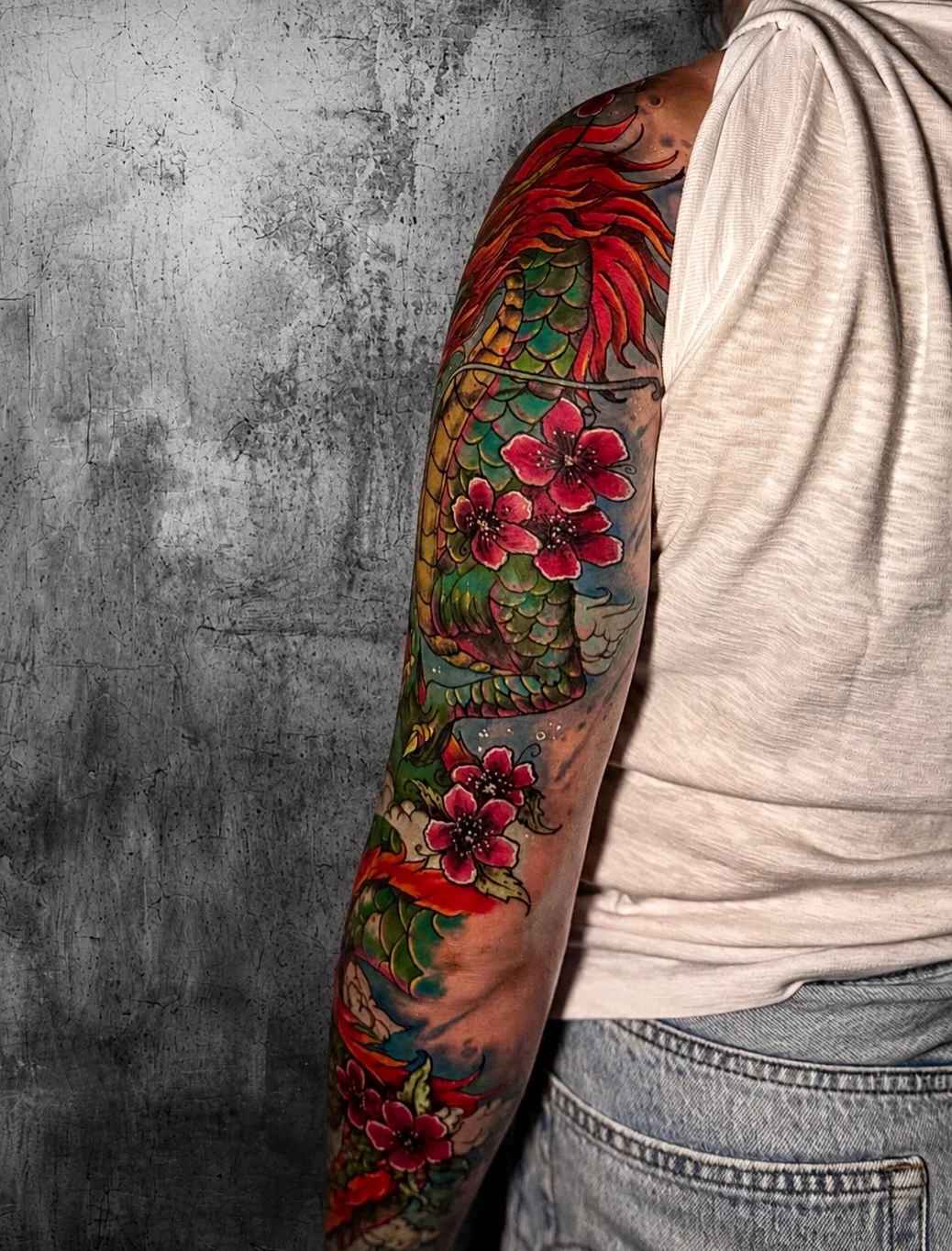

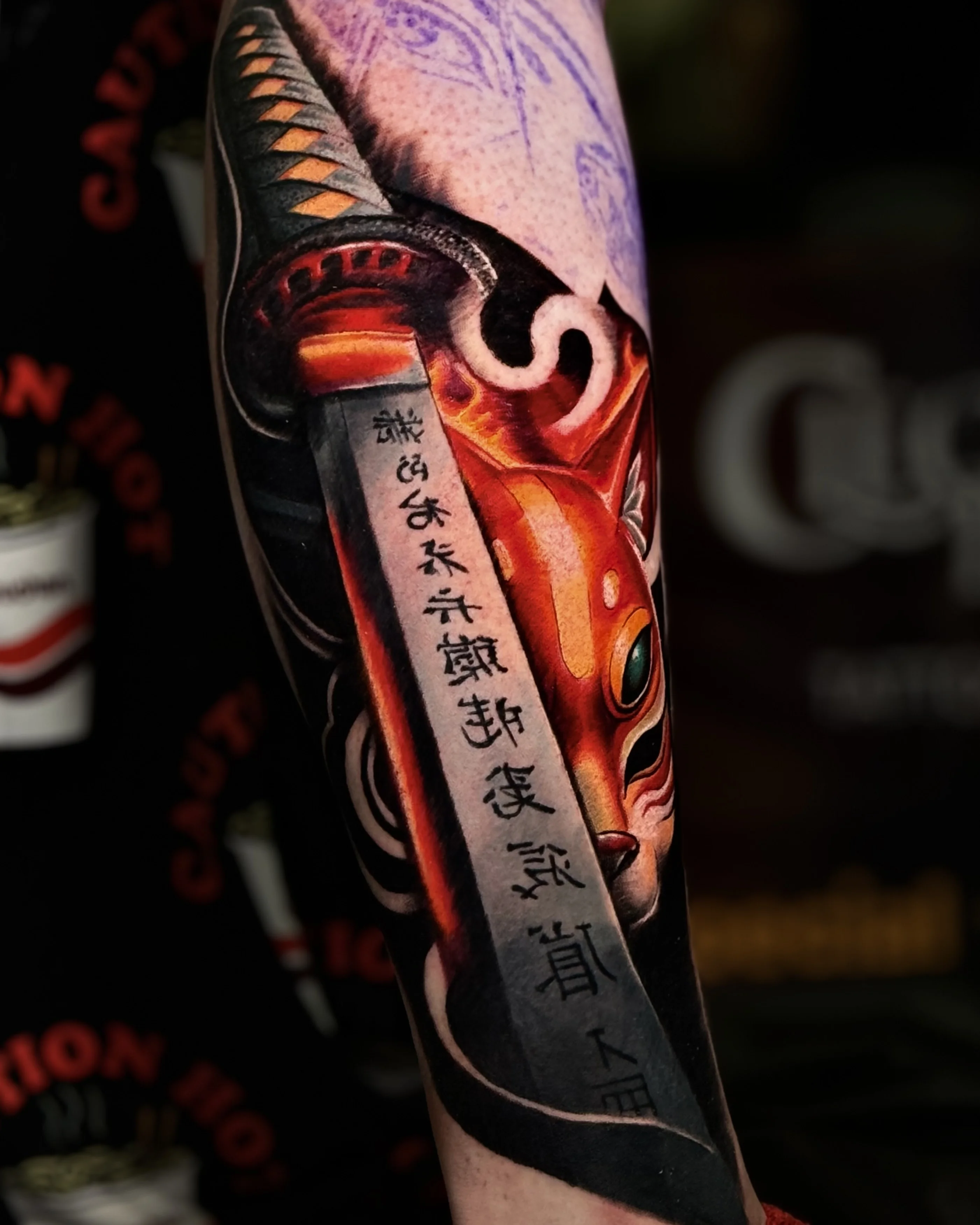
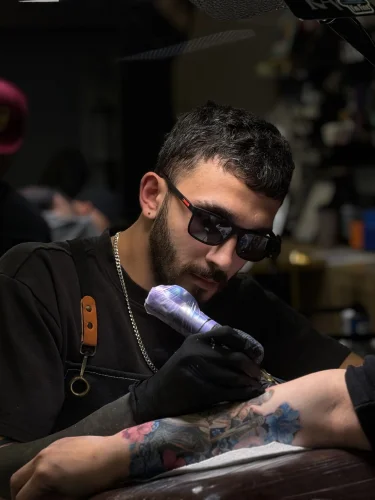







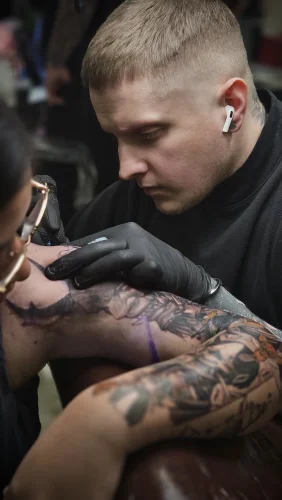
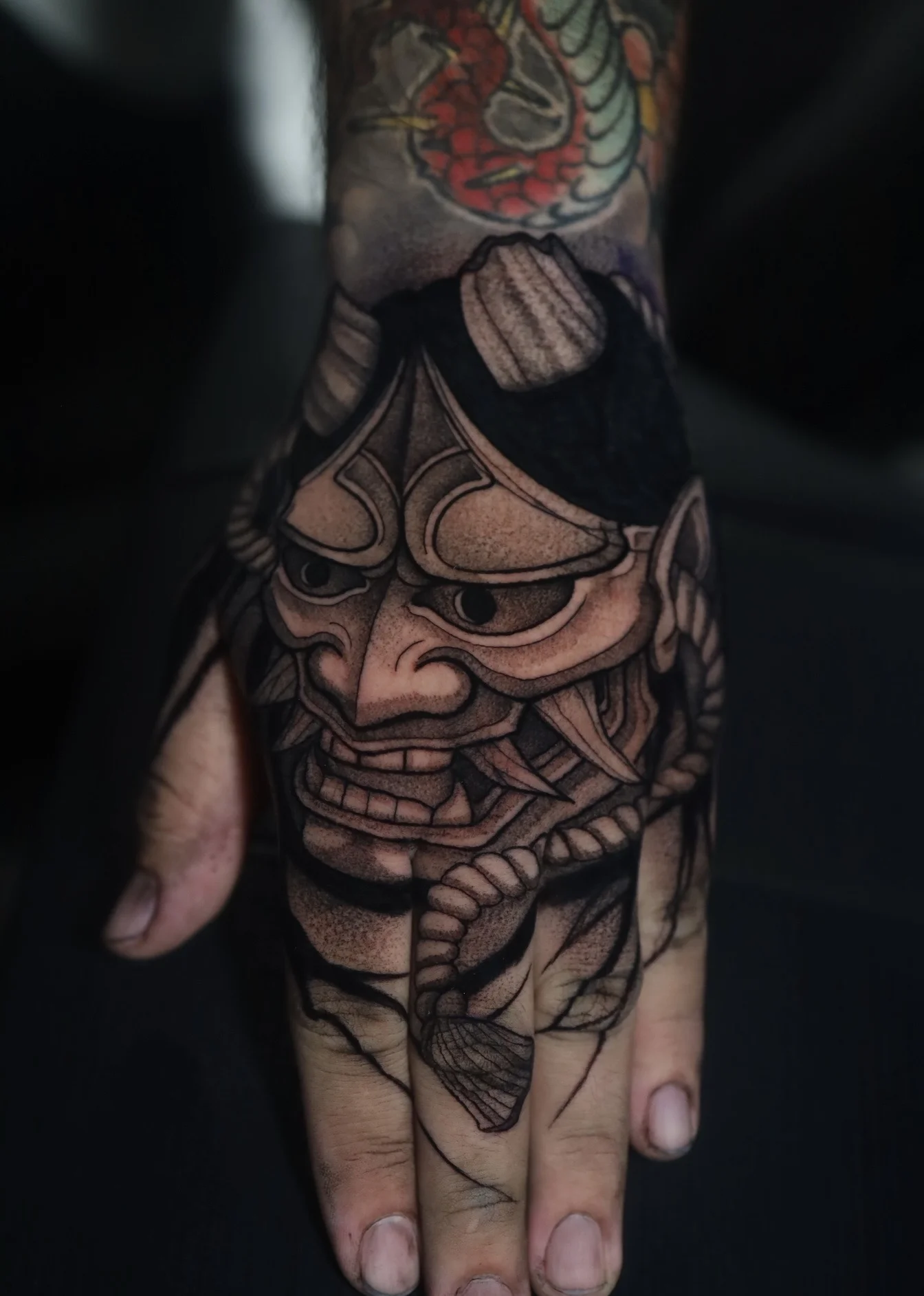
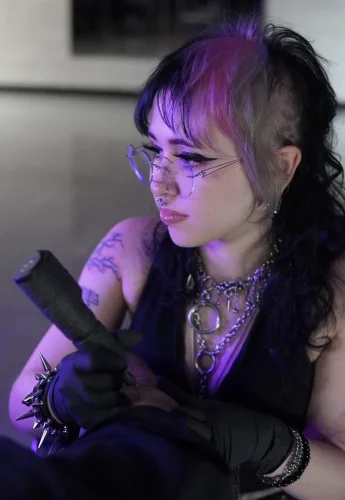
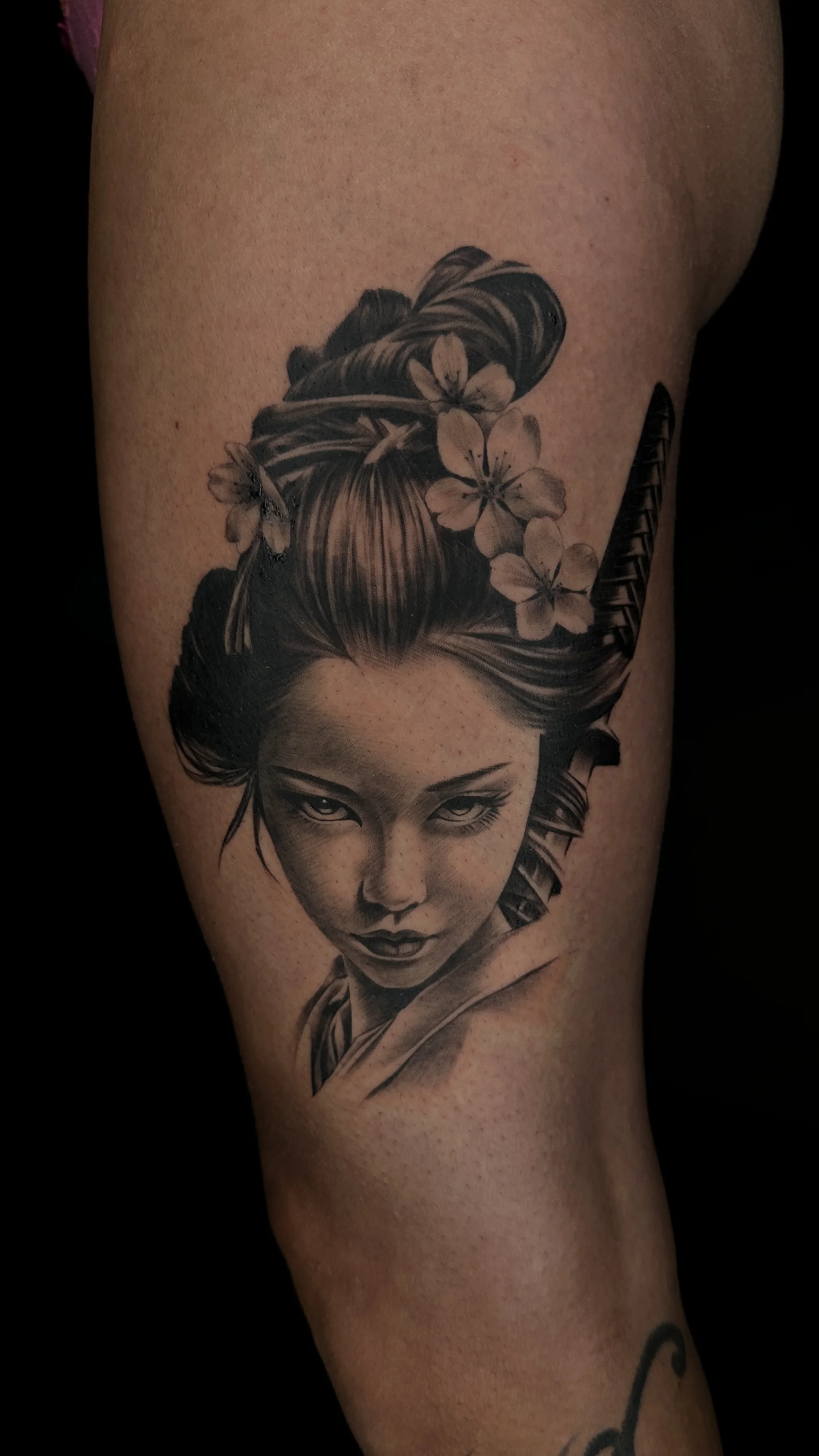



The Work
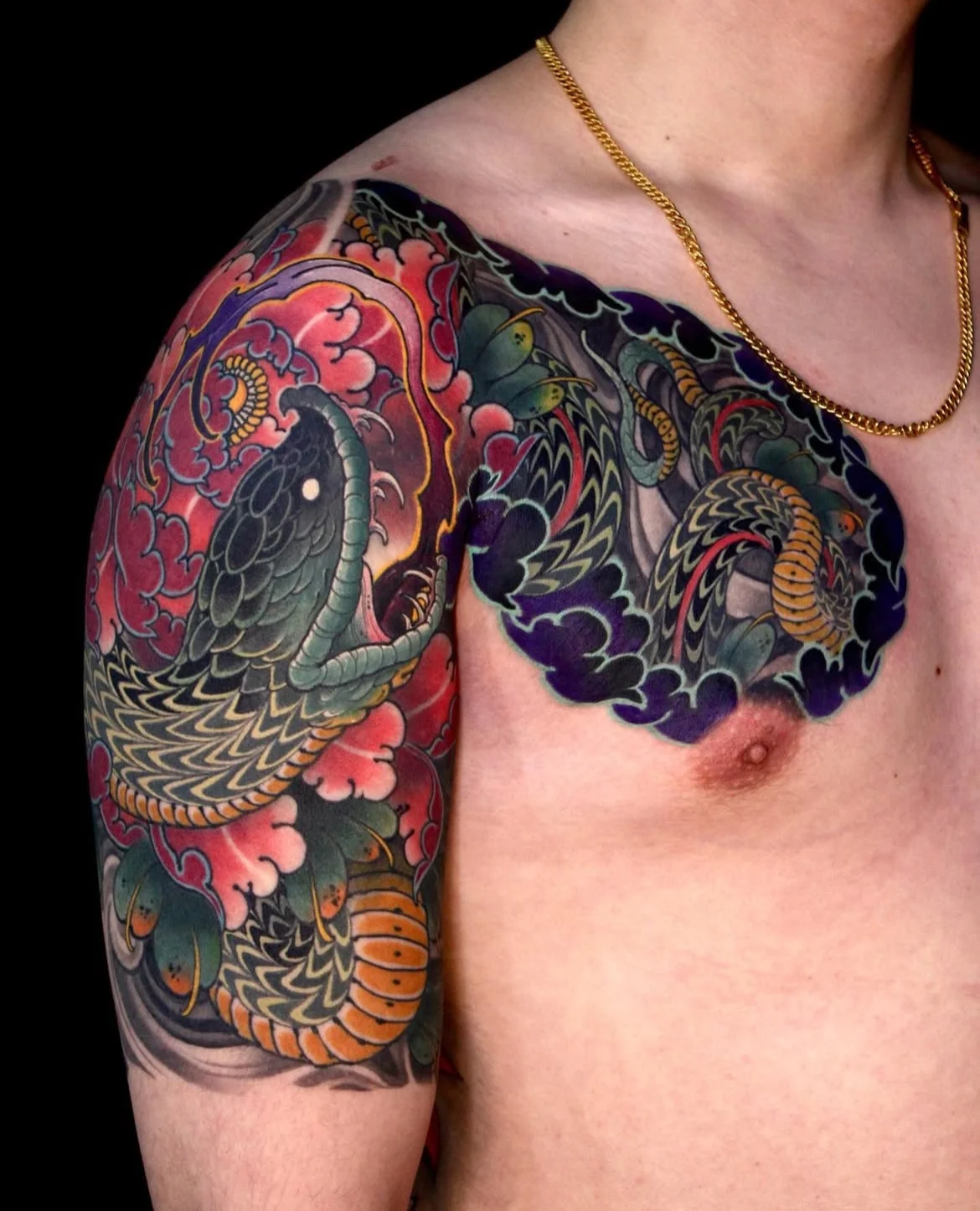 Hocheon ART
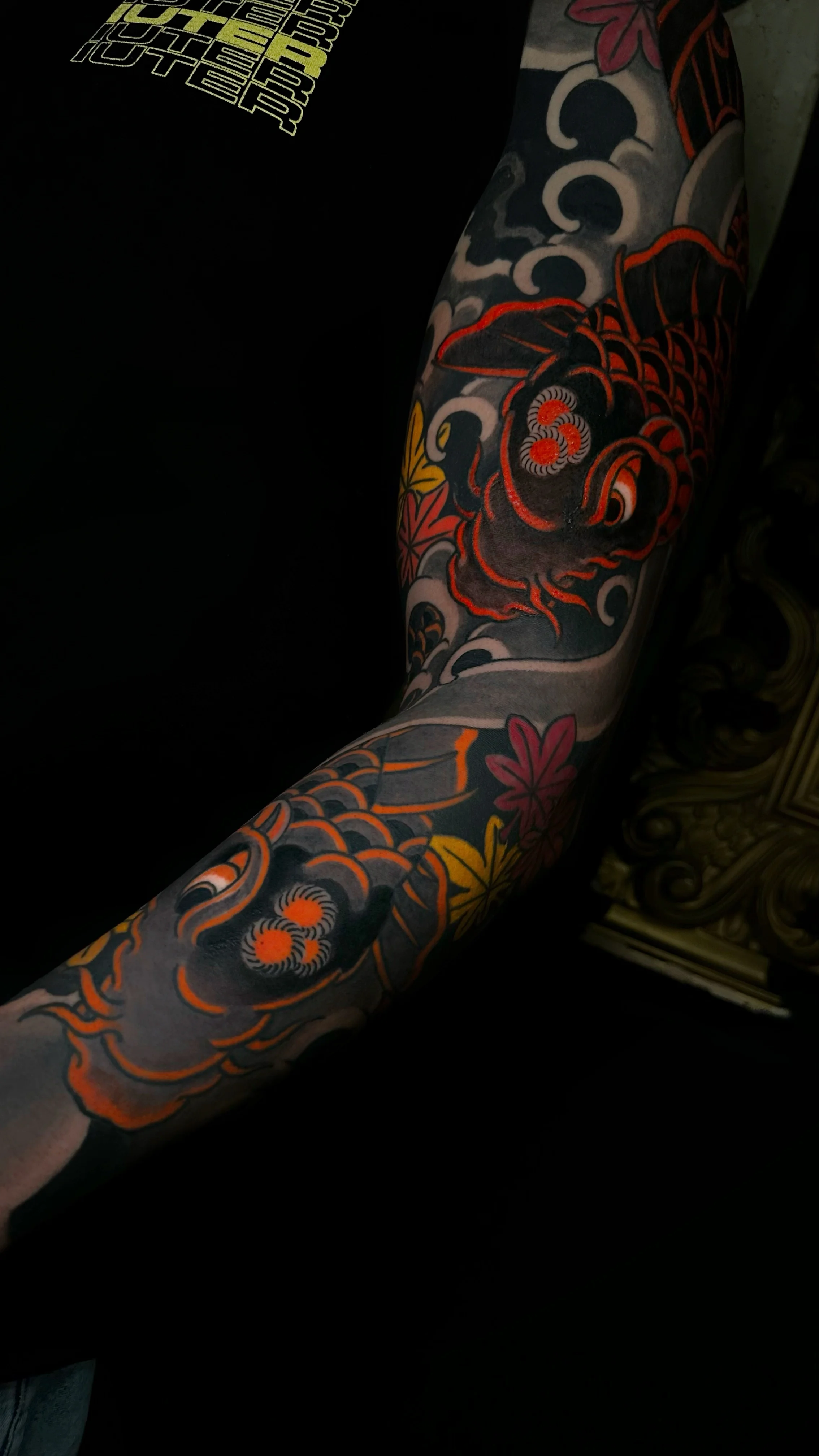 Alessio Ventimiglia
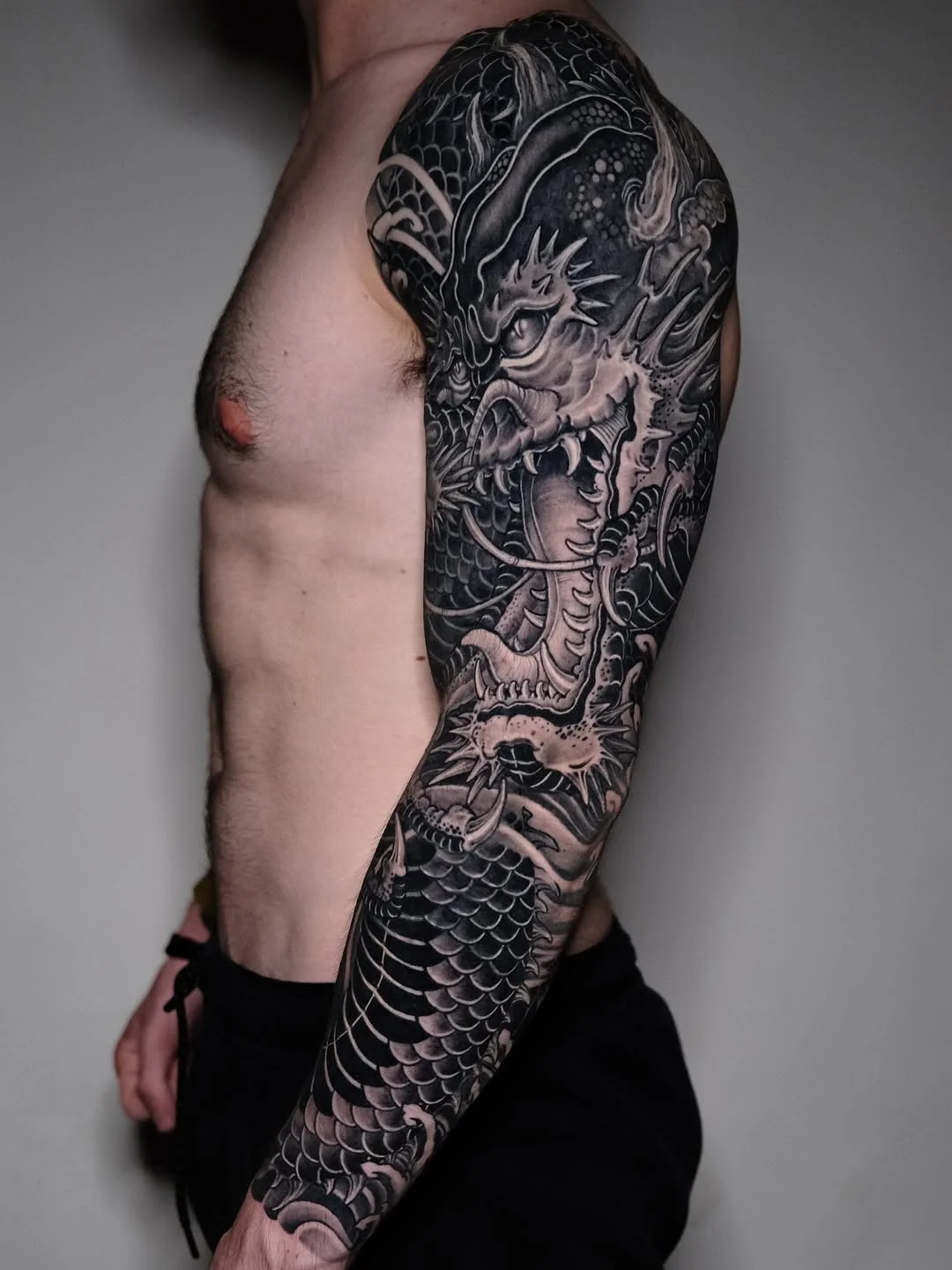 Jess Yen
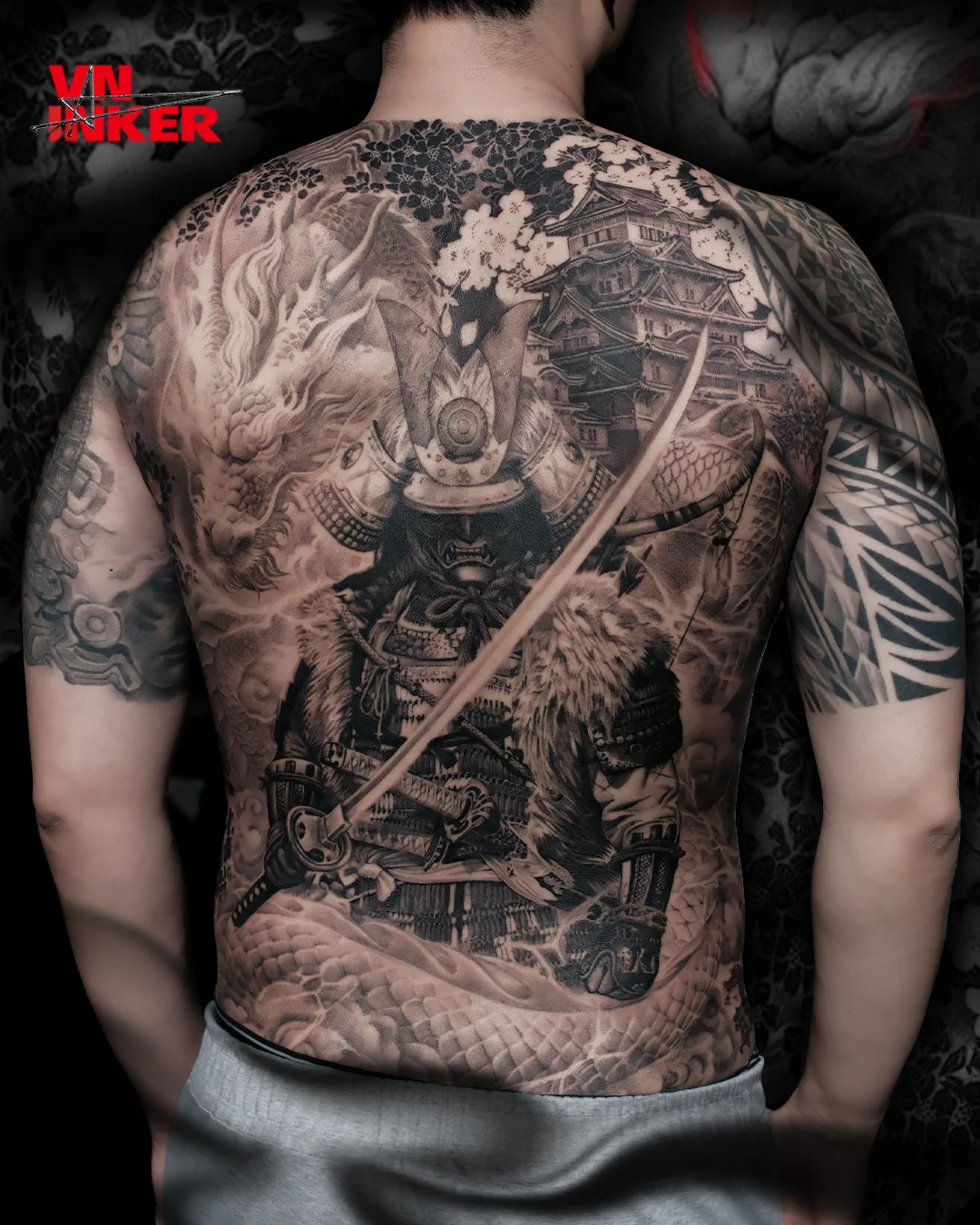 LongBor
 Donnie Chapman
 Art.Joker
 Umid Panahov
 Kerasu
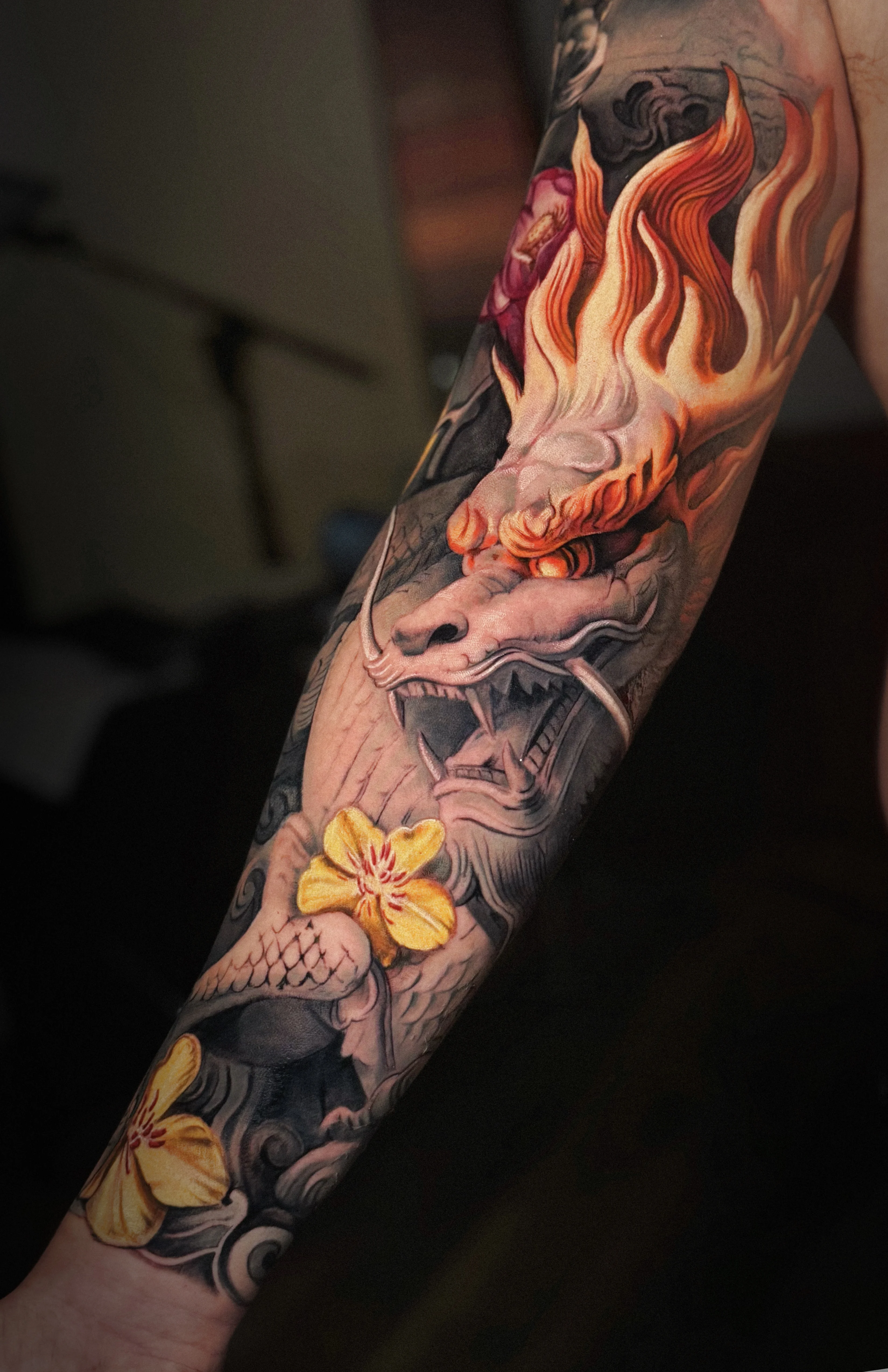 Yam Stigmata
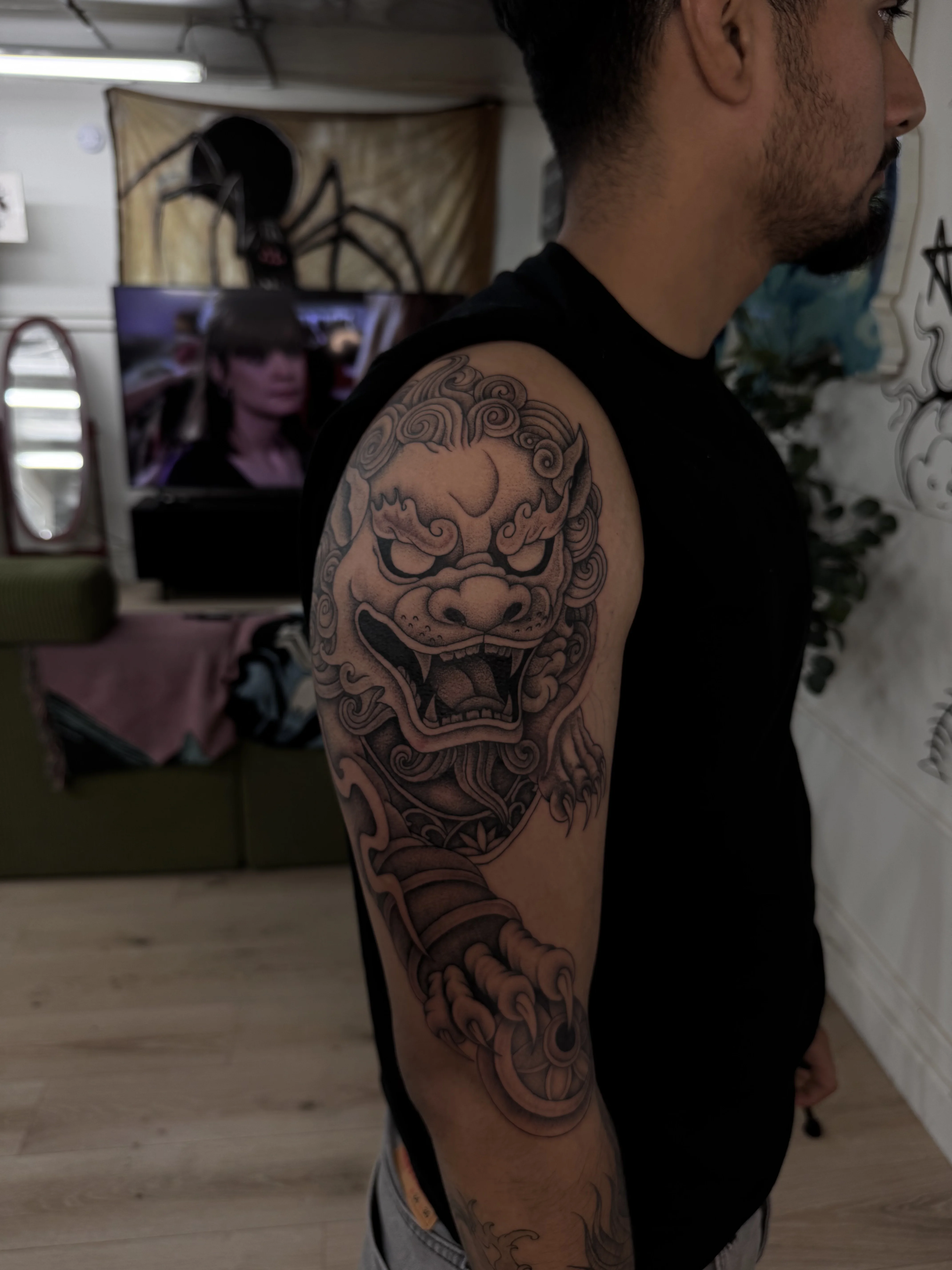 Kobe Virgen
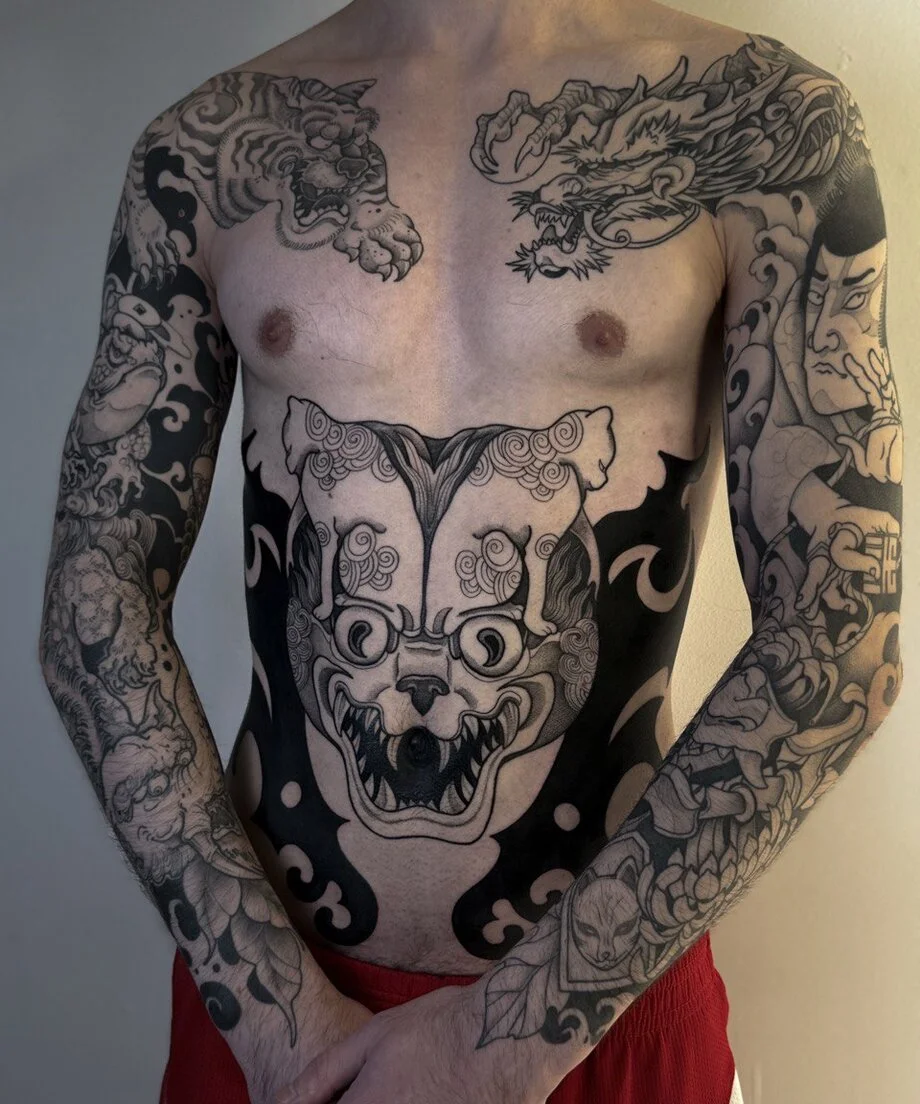 kisha.tattoo
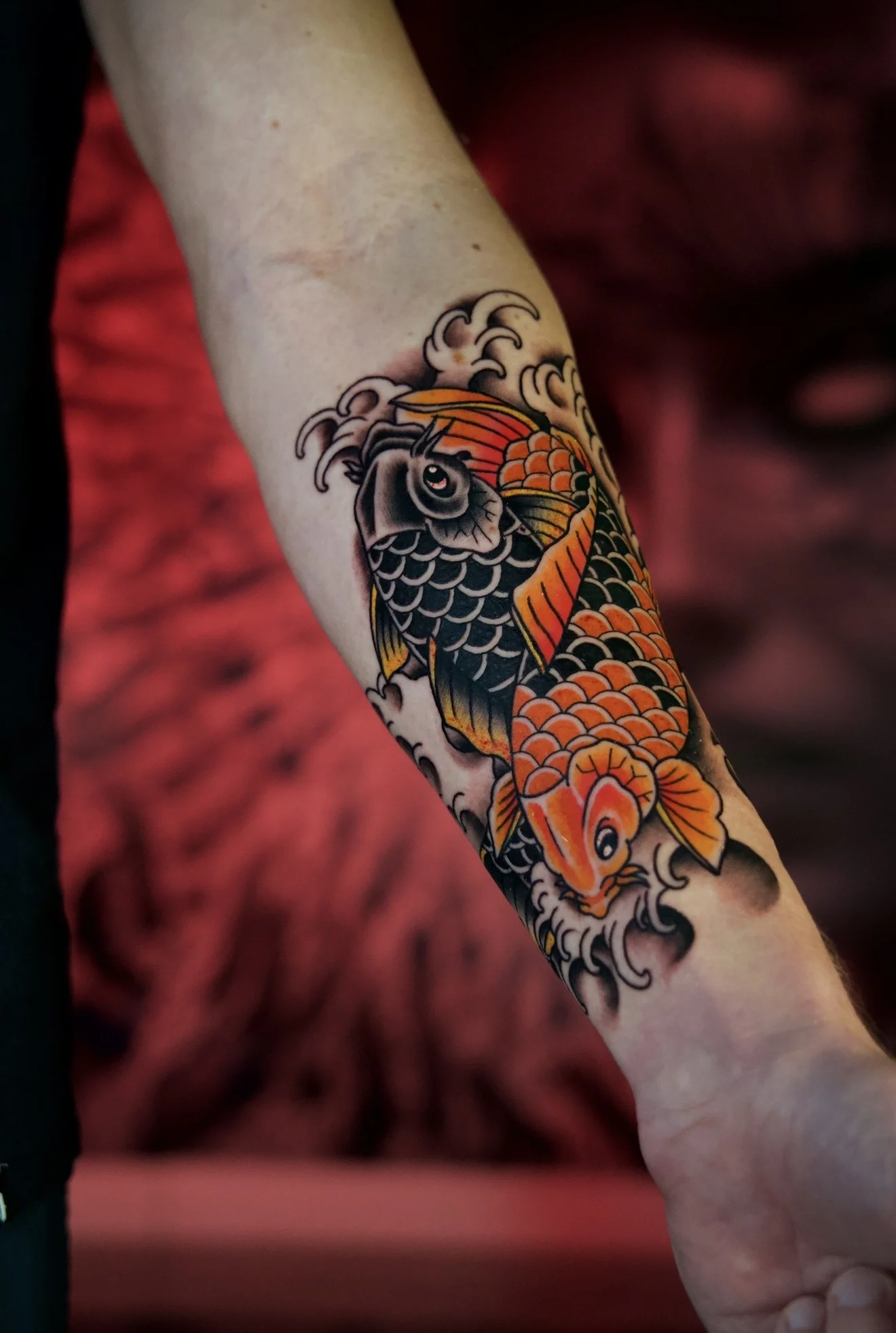 Bobby Hulsey
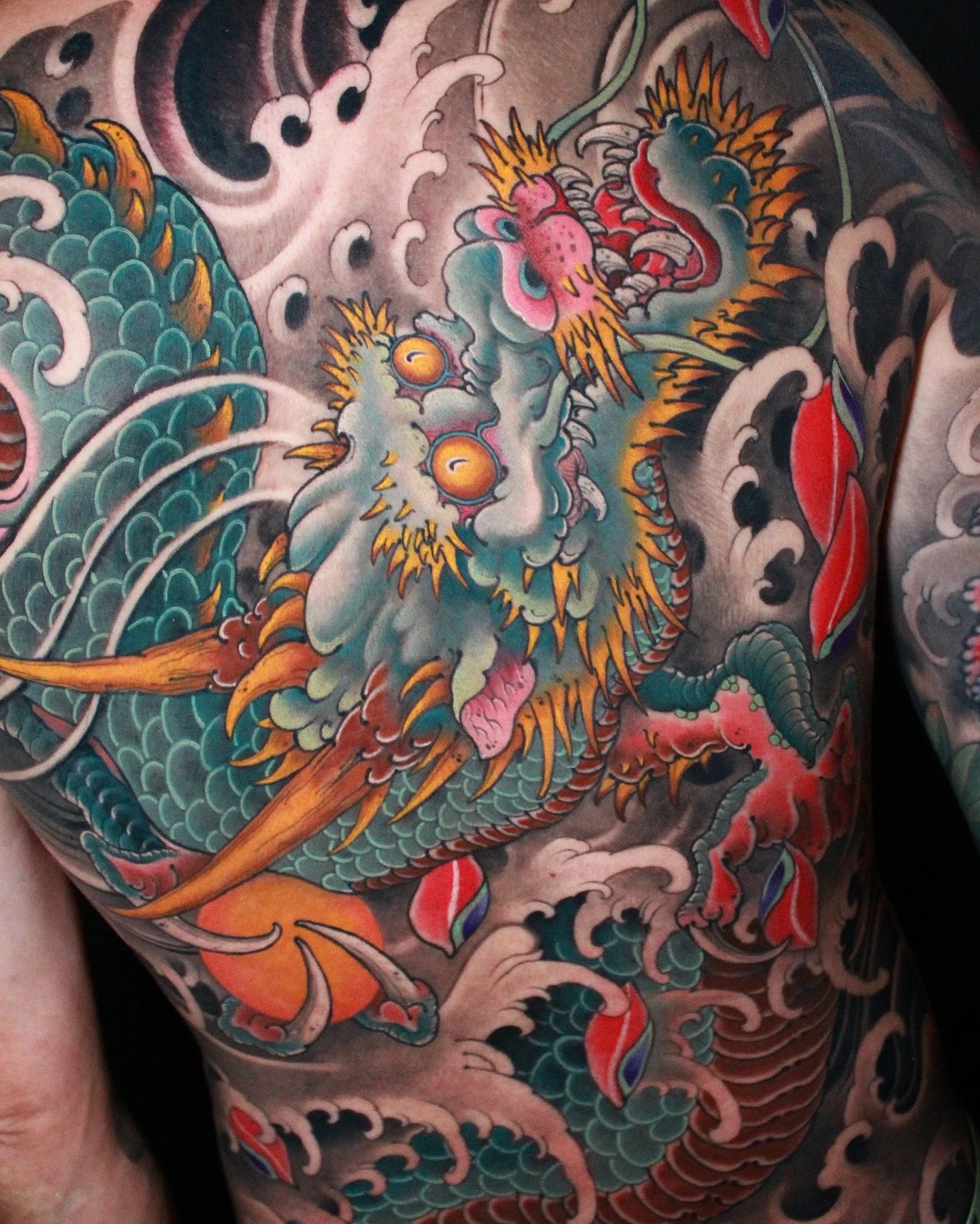 Hocheon ART
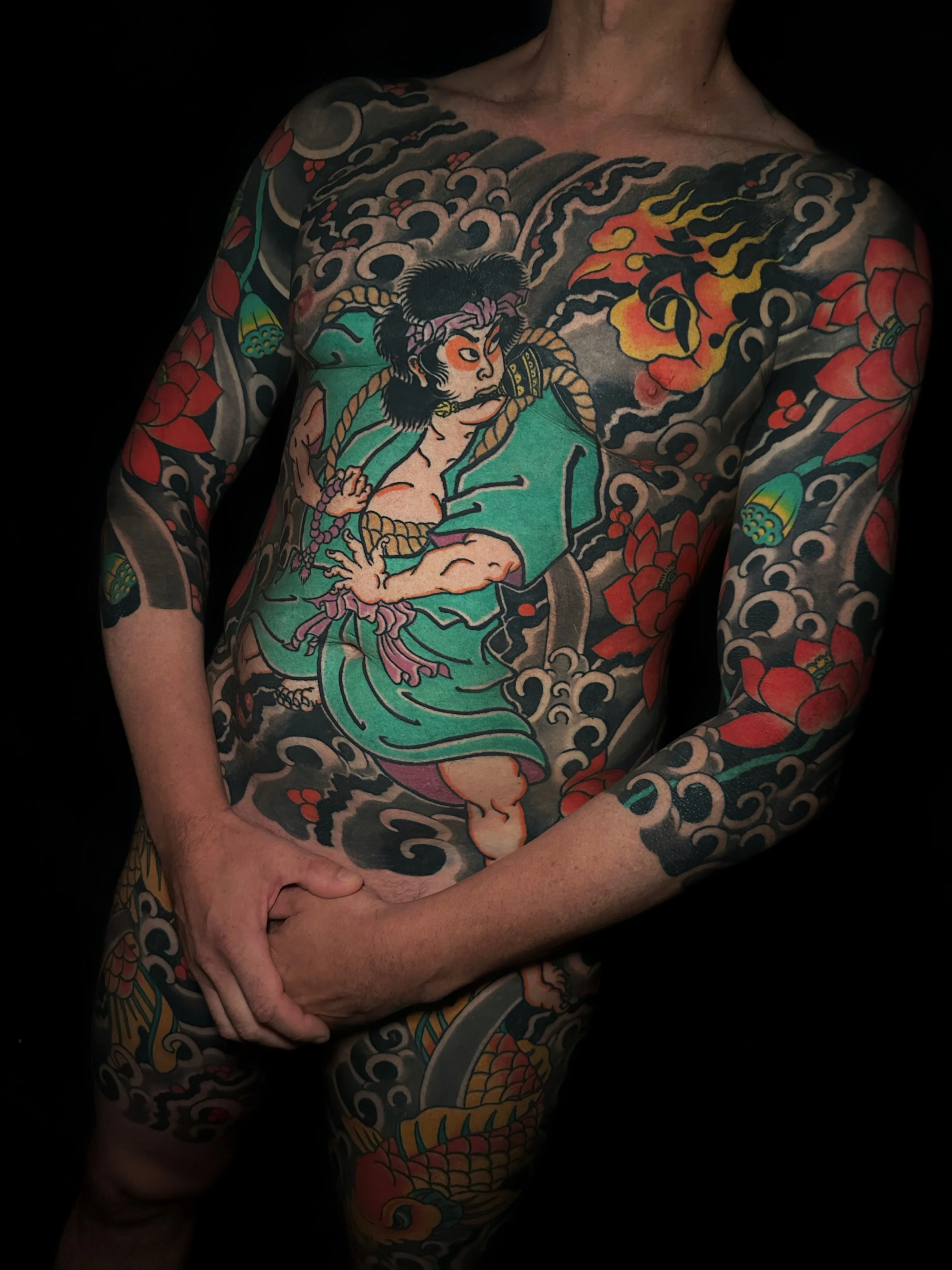 Alessio Ventimiglia
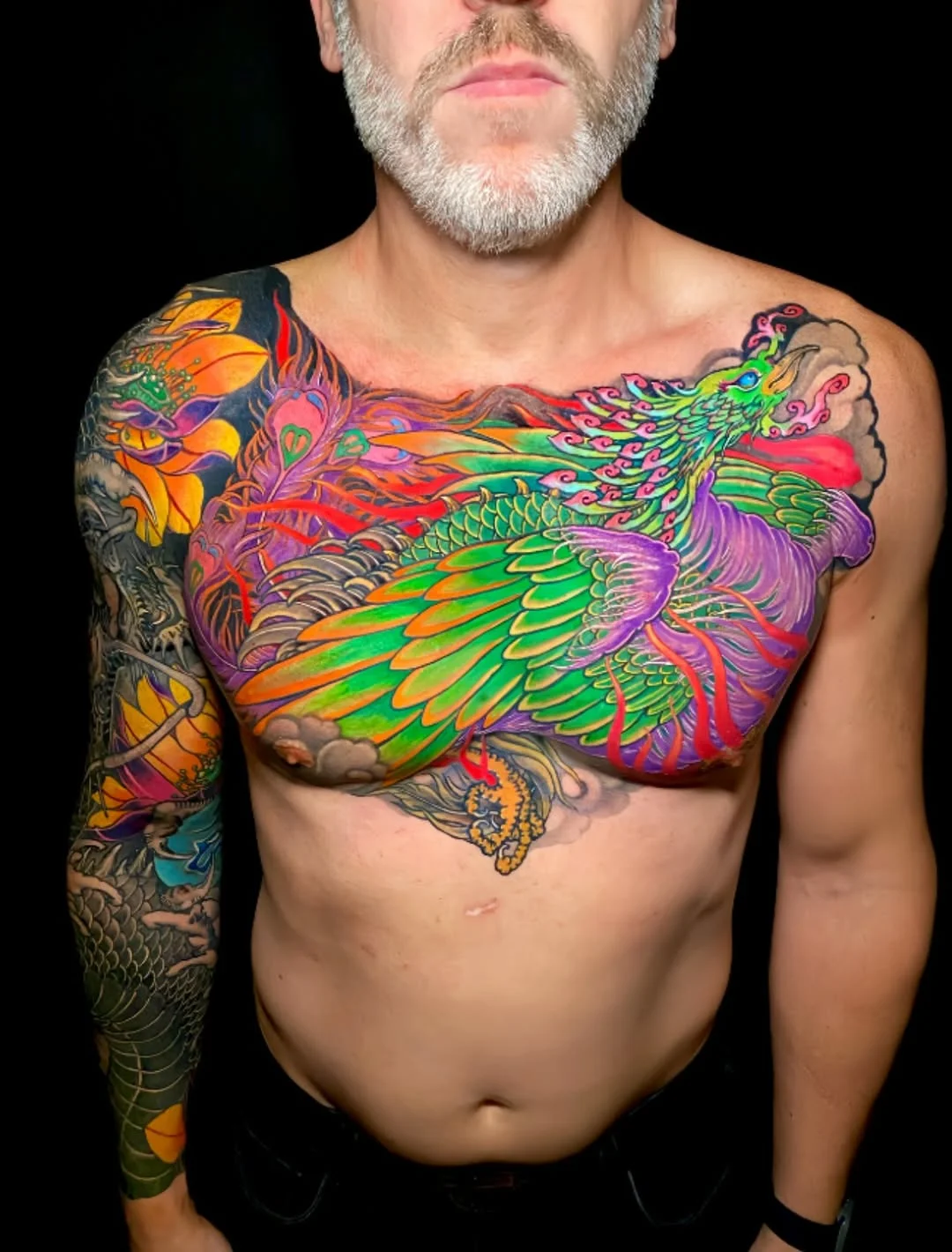 Jess Yen
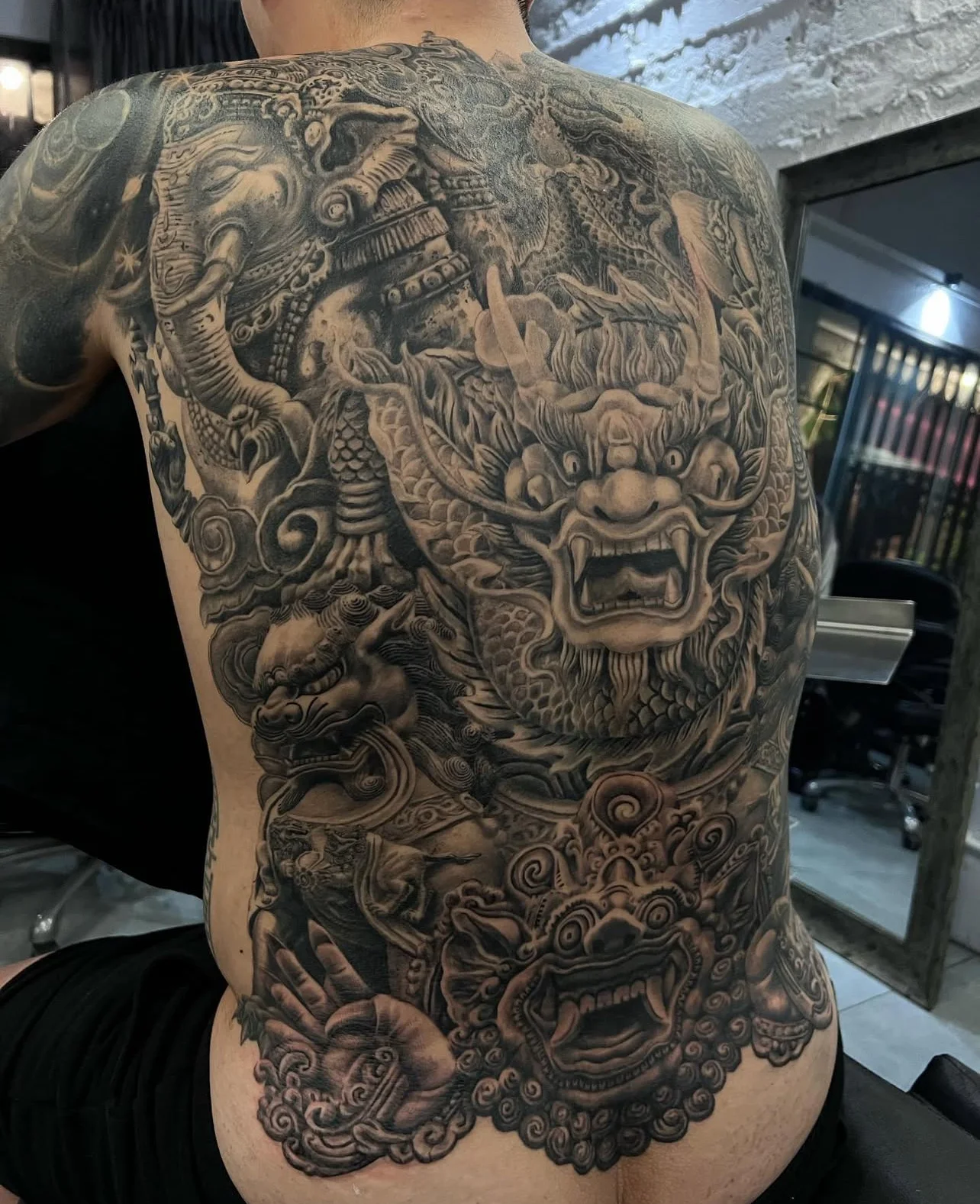 LongBor
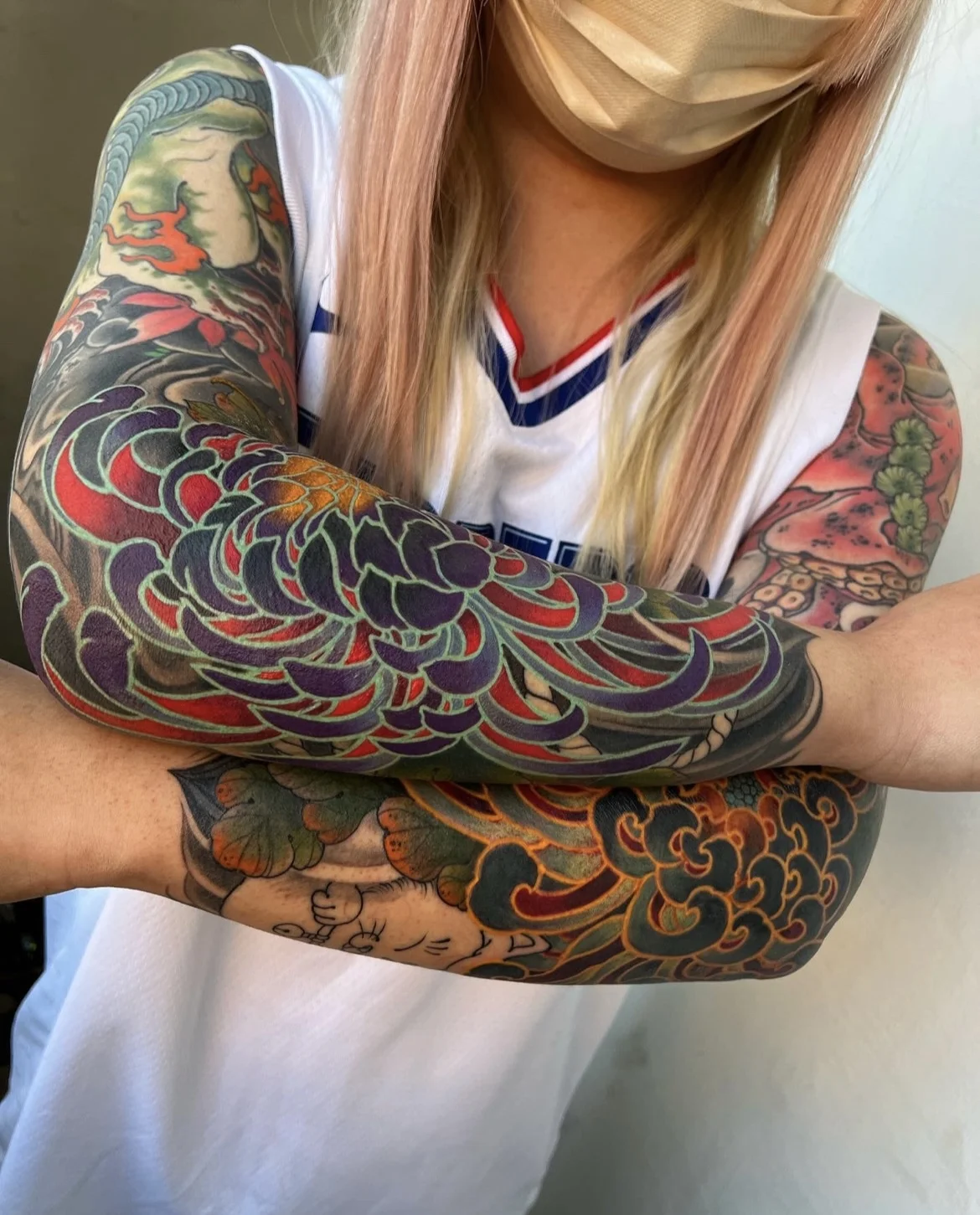 Hocheon ART
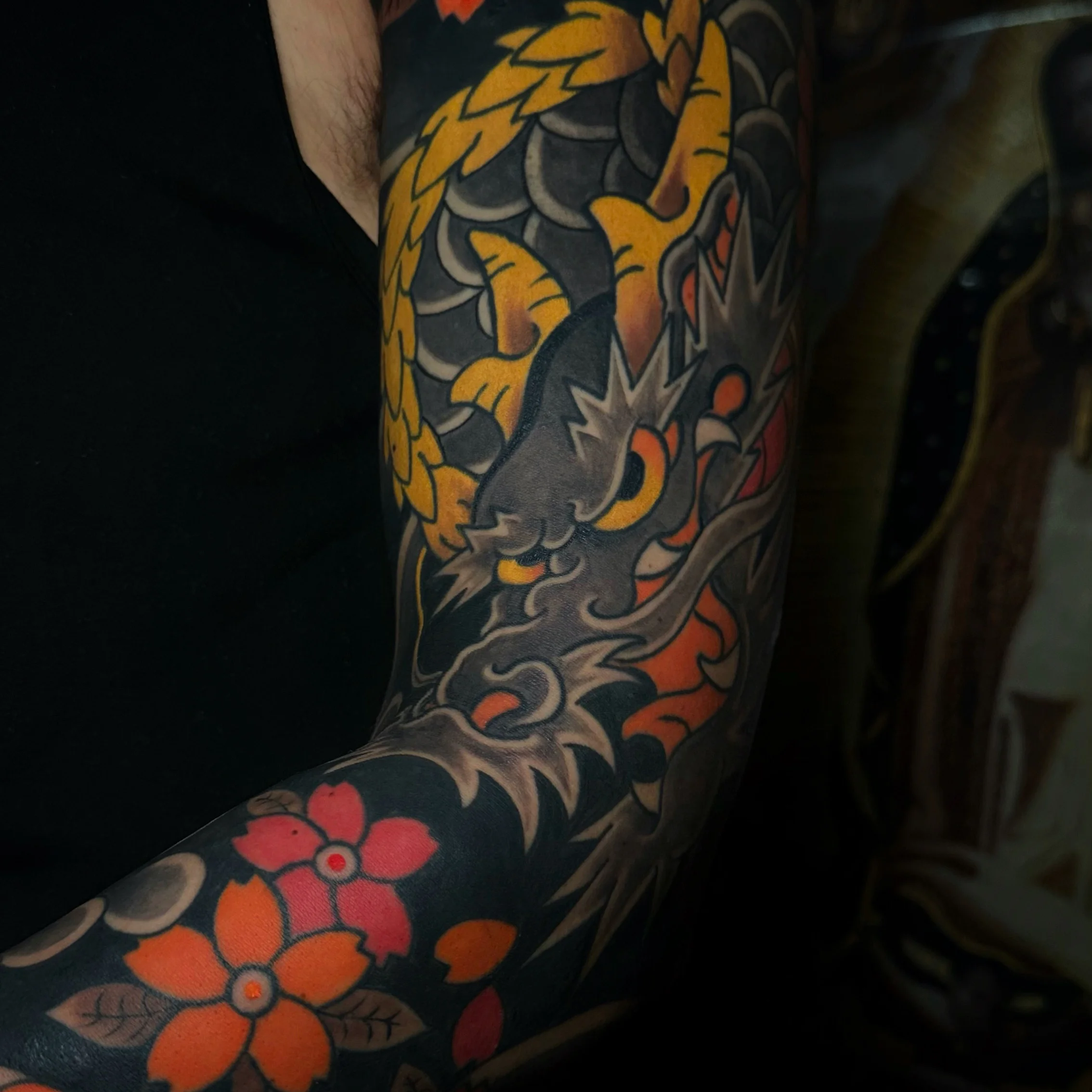 Alessio Ventimiglia
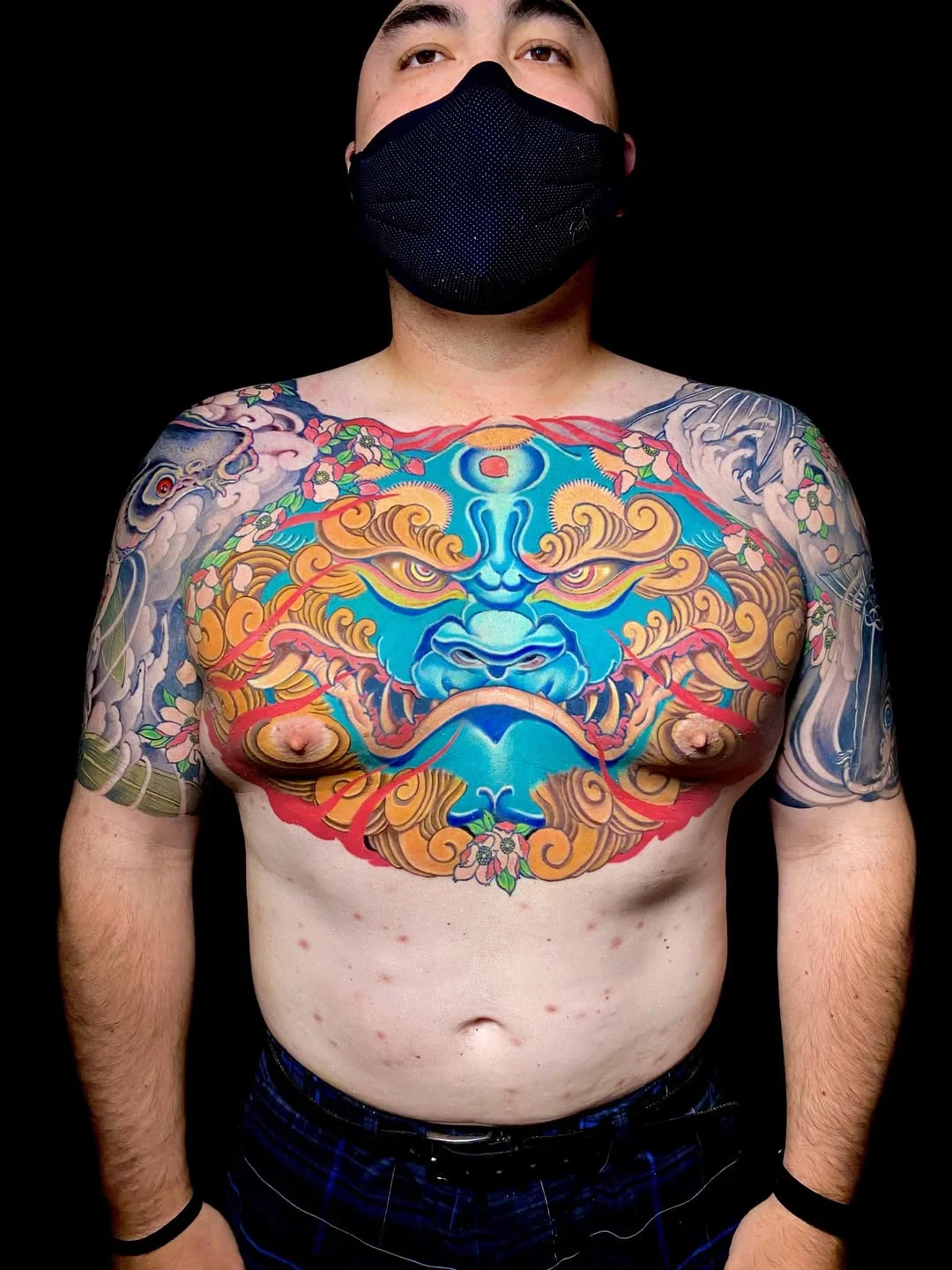 Jess Yen
Common Questions
What is a Japanese traditional tattoo?
It's a style rooted in irezumi, the long tradition of Japanese tattooing. It uses specific imagery like koi, dragons, peonies, and hannya masks, connected by waves, clouds, and wind bars into one flowing composition.
How do I find a good Japanese tattoo artist?
Look for mastery of the traditional imagery, backgrounds that feel as intentional as the main subject, and work that flows with the body. On Freshly Inked you can browse Japanese traditional work and open each artist's full portfolio.
What is irezumi?
Irezumi is the Japanese word for traditional Japanese tattooing. Many artists today describe their work as irezumi-influenced or Japanese traditional.
How long does a Japanese sleeve take?
A full Japanese sleeve is usually done over many sessions, often spread across months or longer, so the artist can build the composition and your skin can heal between sessions.
What do Japanese tattoo symbols mean?
Common symbols carry traditional meanings, like koi for perseverance, dragons for strength and wisdom, and peonies for prosperity. A strong artist can talk you through the meaning behind the imagery you're considering.
Can a Japanese tattoo be small?
Yes, a single koi, flower, or mask can work well on its own, but the style shines at large scale. If you might add more later, plan the first piece so it can grow into a bigger composition.