Biomechanical Tattoos & Artists
Tattoos that look like the skin has been peeled back to reveal machinery and alien anatomy underneath. Browse real biomechanical tattoos and the artists making them, then request to book the one whose work fits the direction you're picturing.
What is a biomechanical tattoo?
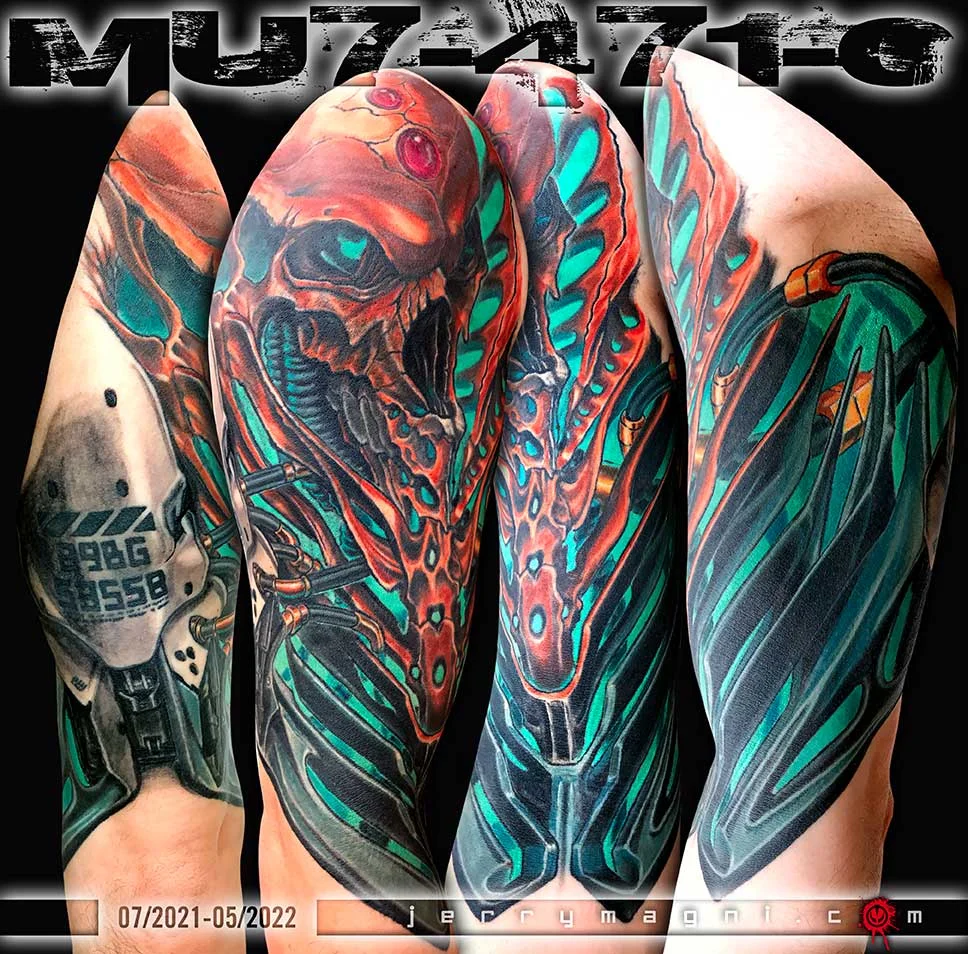
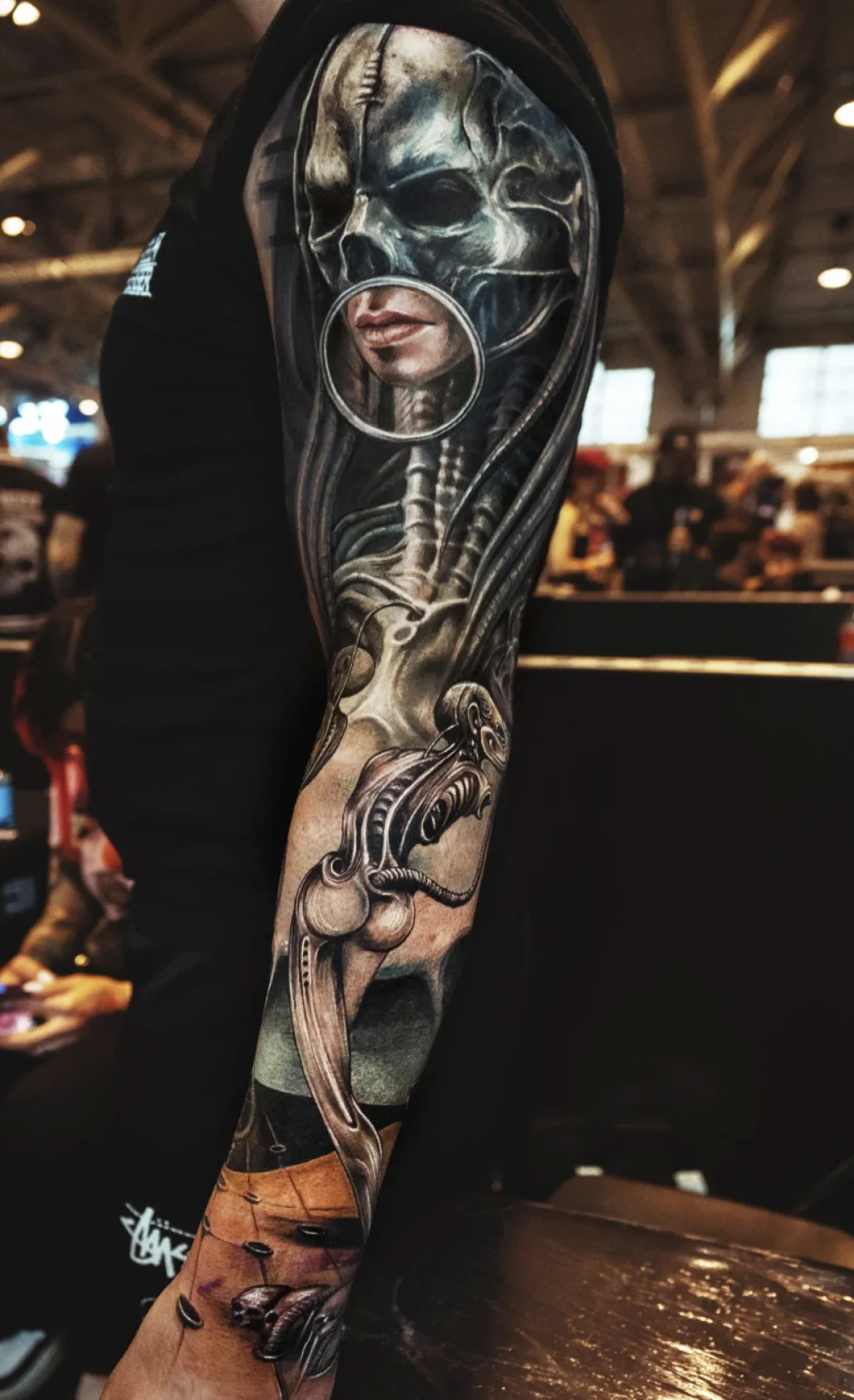
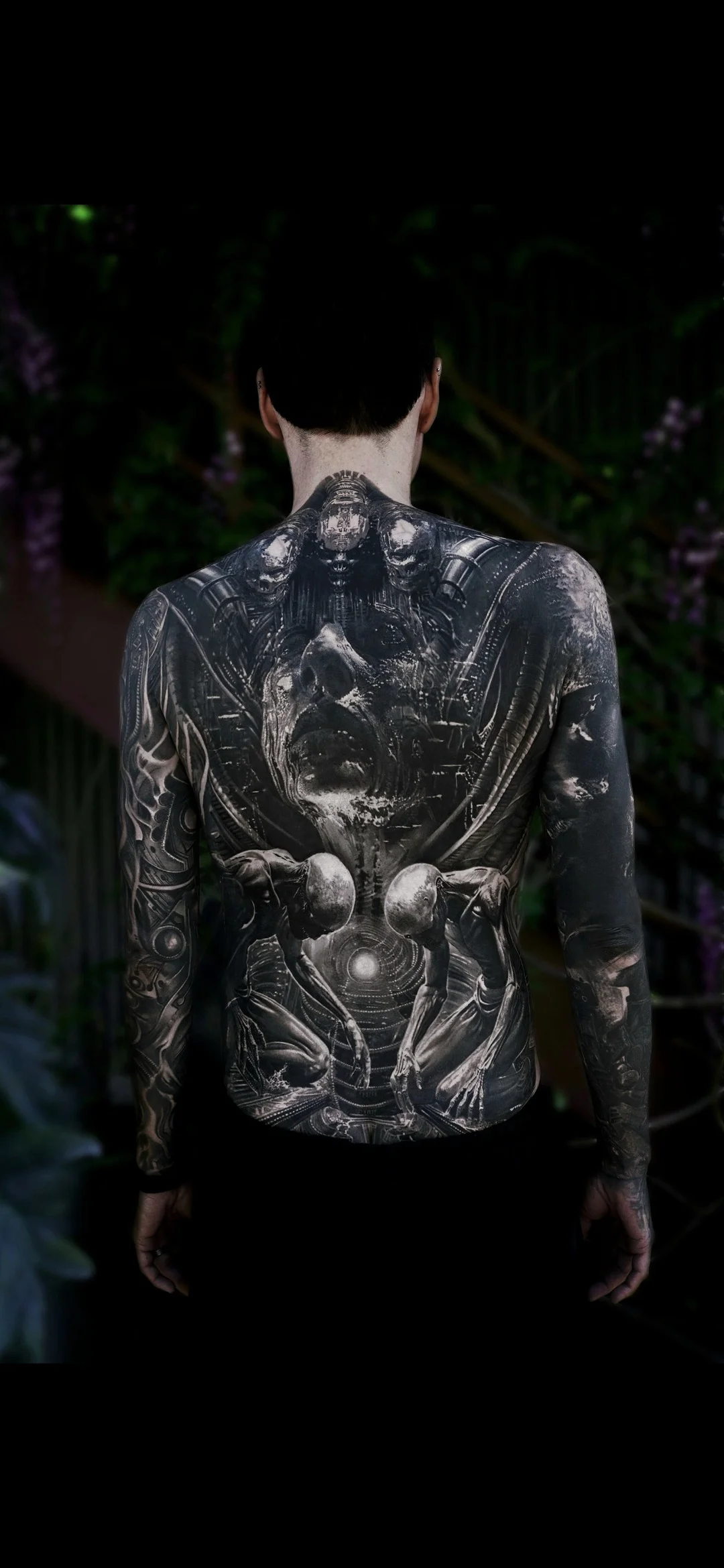
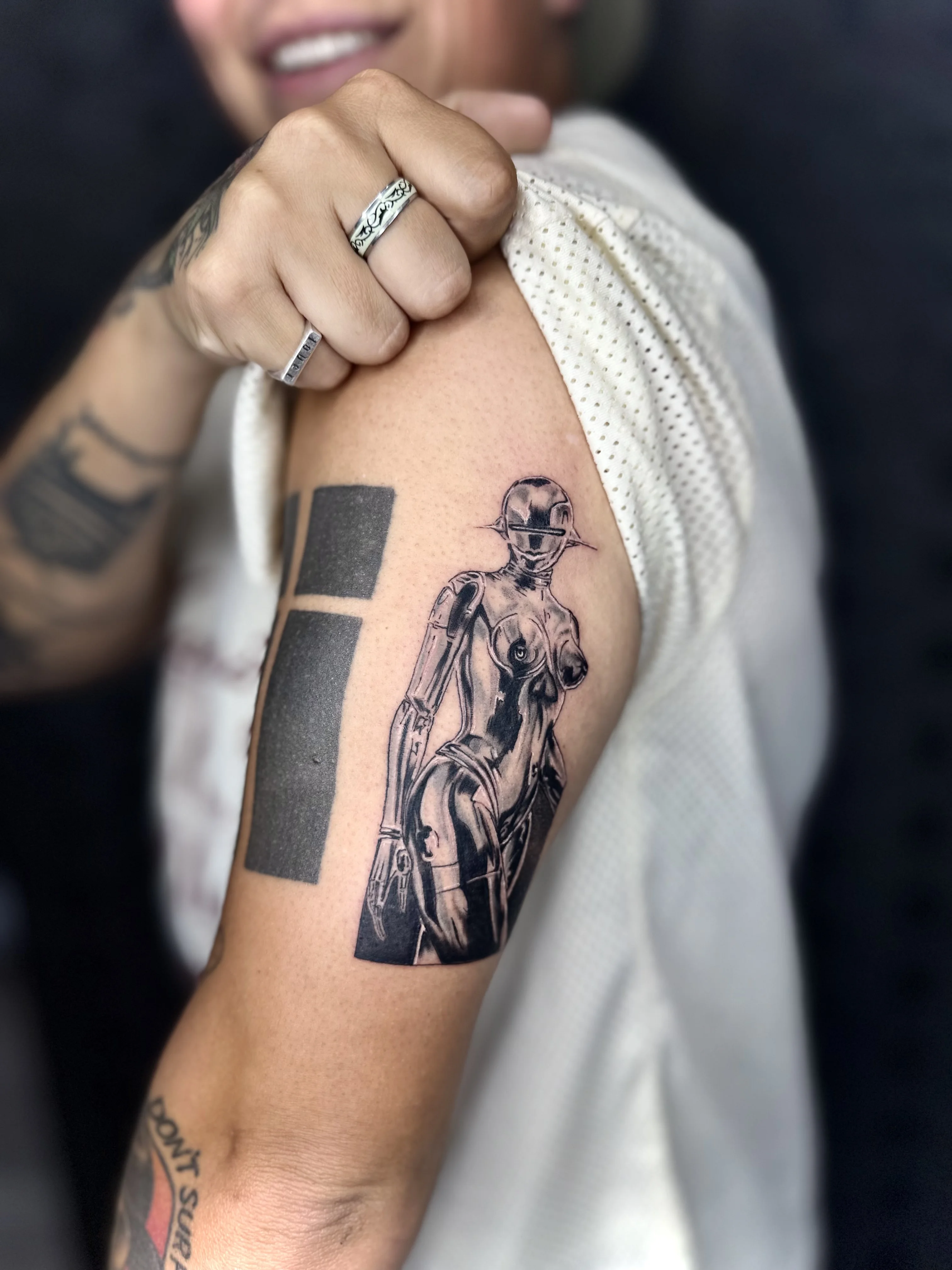
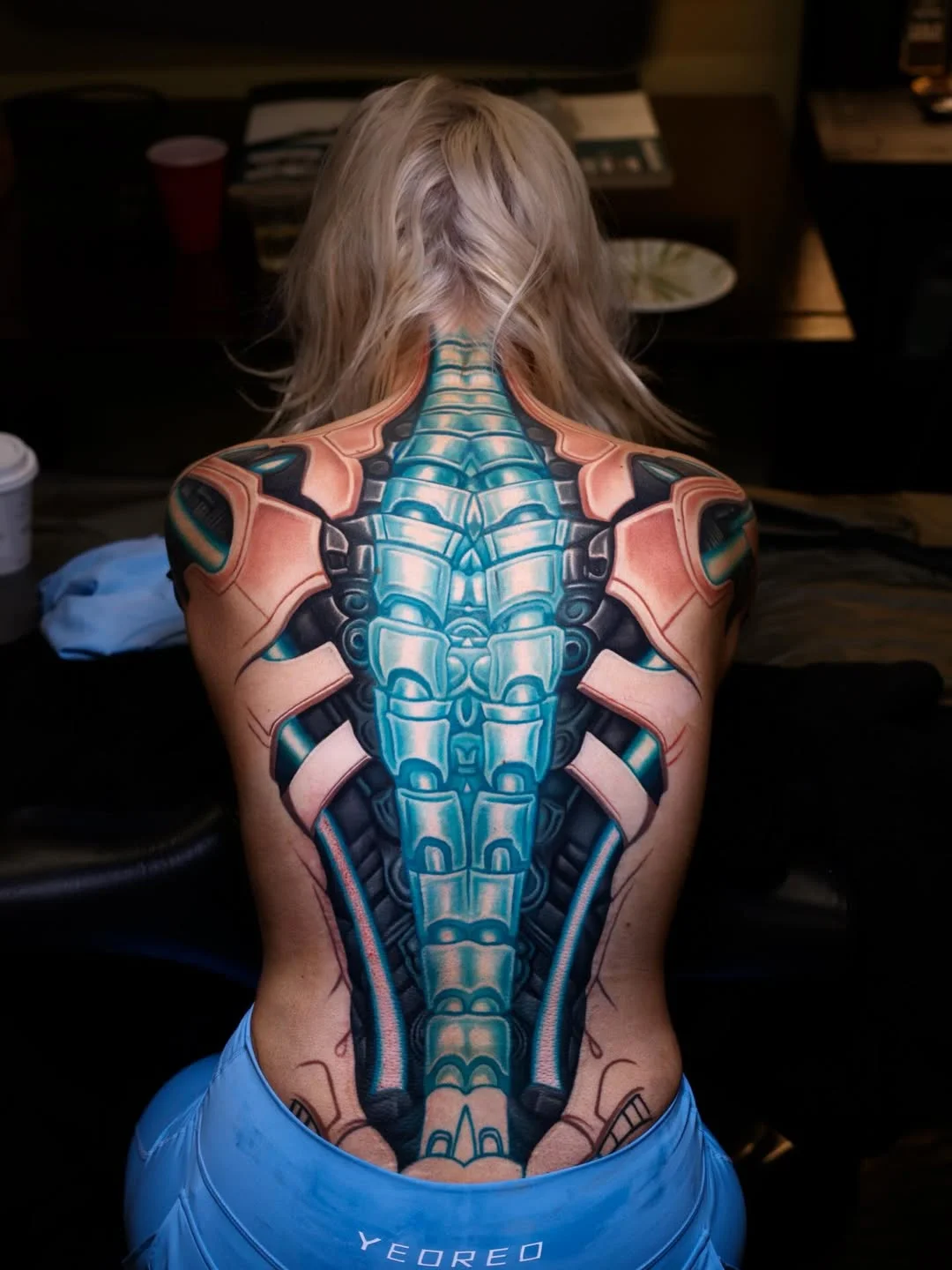
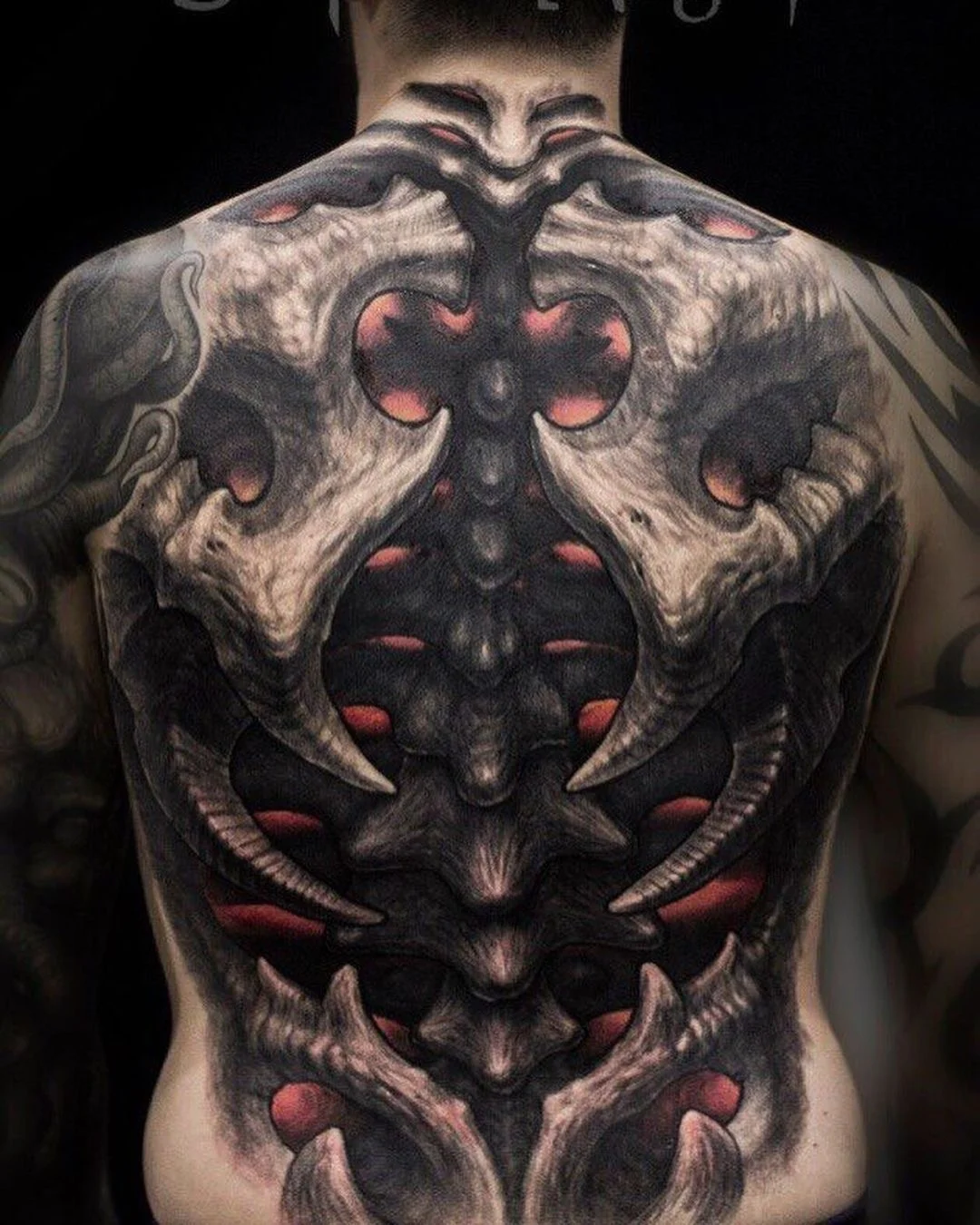
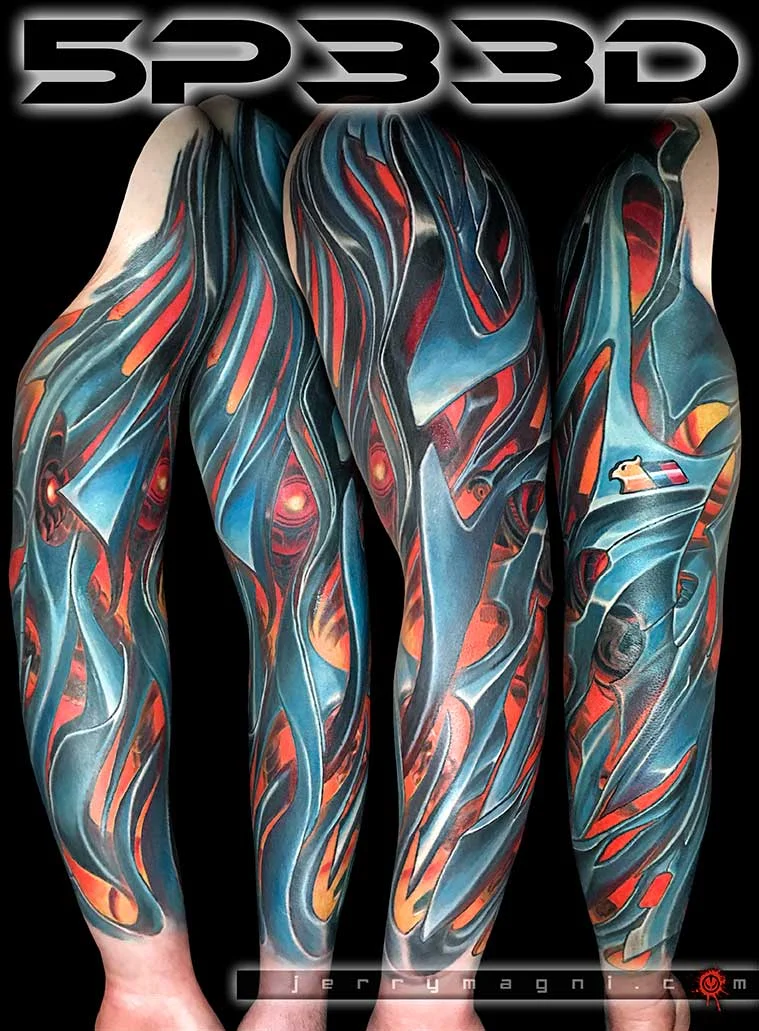
Biomechanical tattooing renders the body as if the skin had been peeled back to reveal what's underneath, and what's underneath is part machine, part anatomy, and often part alien. Pistons, cables, gears, ribbed tubing, and organic tissue fused with mechanical parts are the building blocks of the style. The effect is meant to be convincing, as if the tattoo were a window into the body rather than an image sitting on top of it.
The style grew out of art influenced by H.R. Giger in the late 1980s and developed into a distinct tattoo subgenre through the 1990s. Today it ranges from hard-edged mechanical designs to more organic biomech that looks like bone, muscle, and alien structure woven together, and many artists blend both approaches in a single piece.
What makes the style recognizable
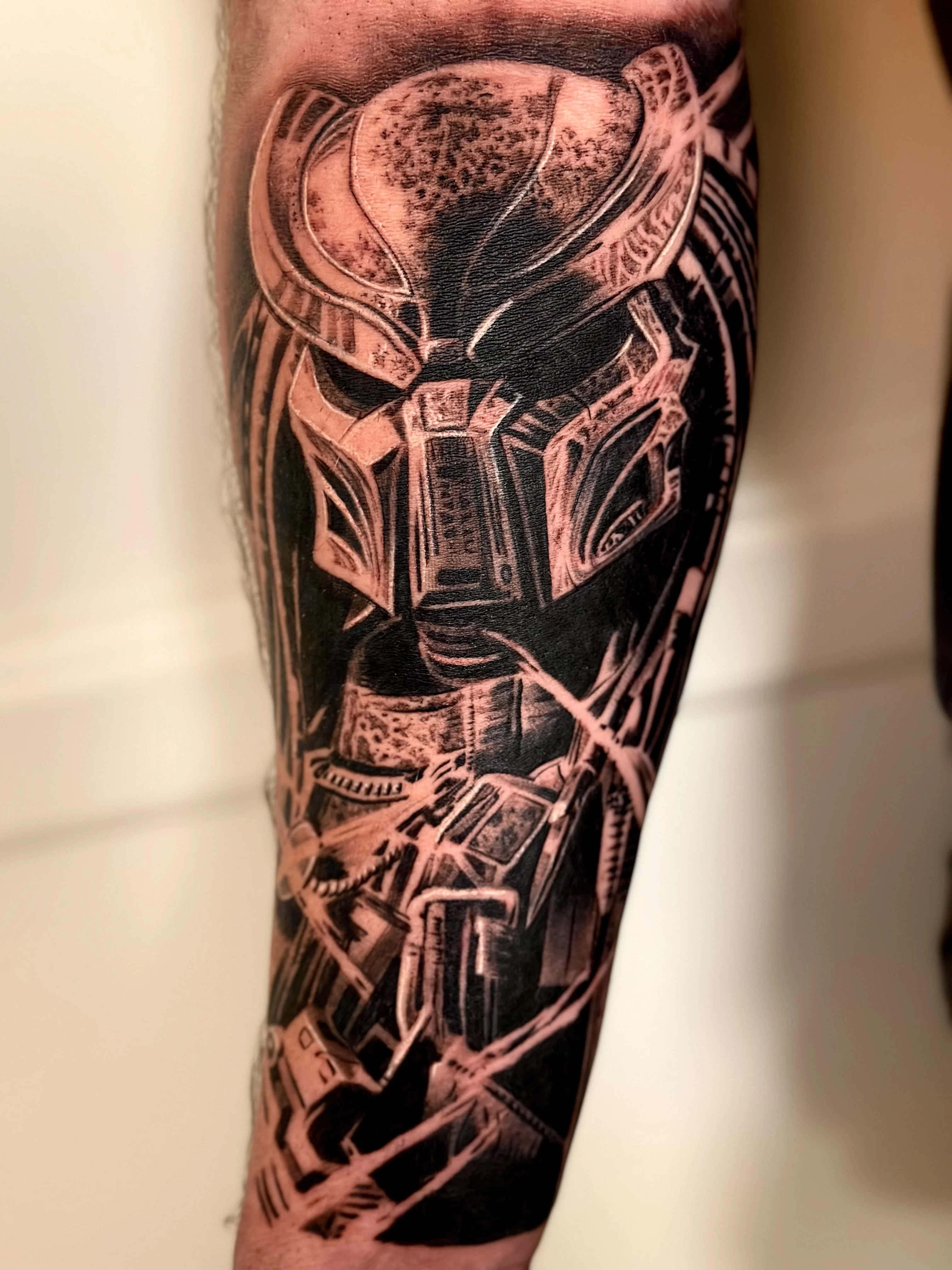
Biomechanical tattoos are defined by depth. Strong contrast between deep shadows and bright highlights creates the illusion of space behind the skin, and torn-skin edges or openings often frame the effect. Shapes tend to flow with the muscles underneath, so the machinery seems to follow the anatomy instead of fighting it. The palette is often black and grey, though some artists add vibrant blues, reds, or oranges to make metal and tissue glow.
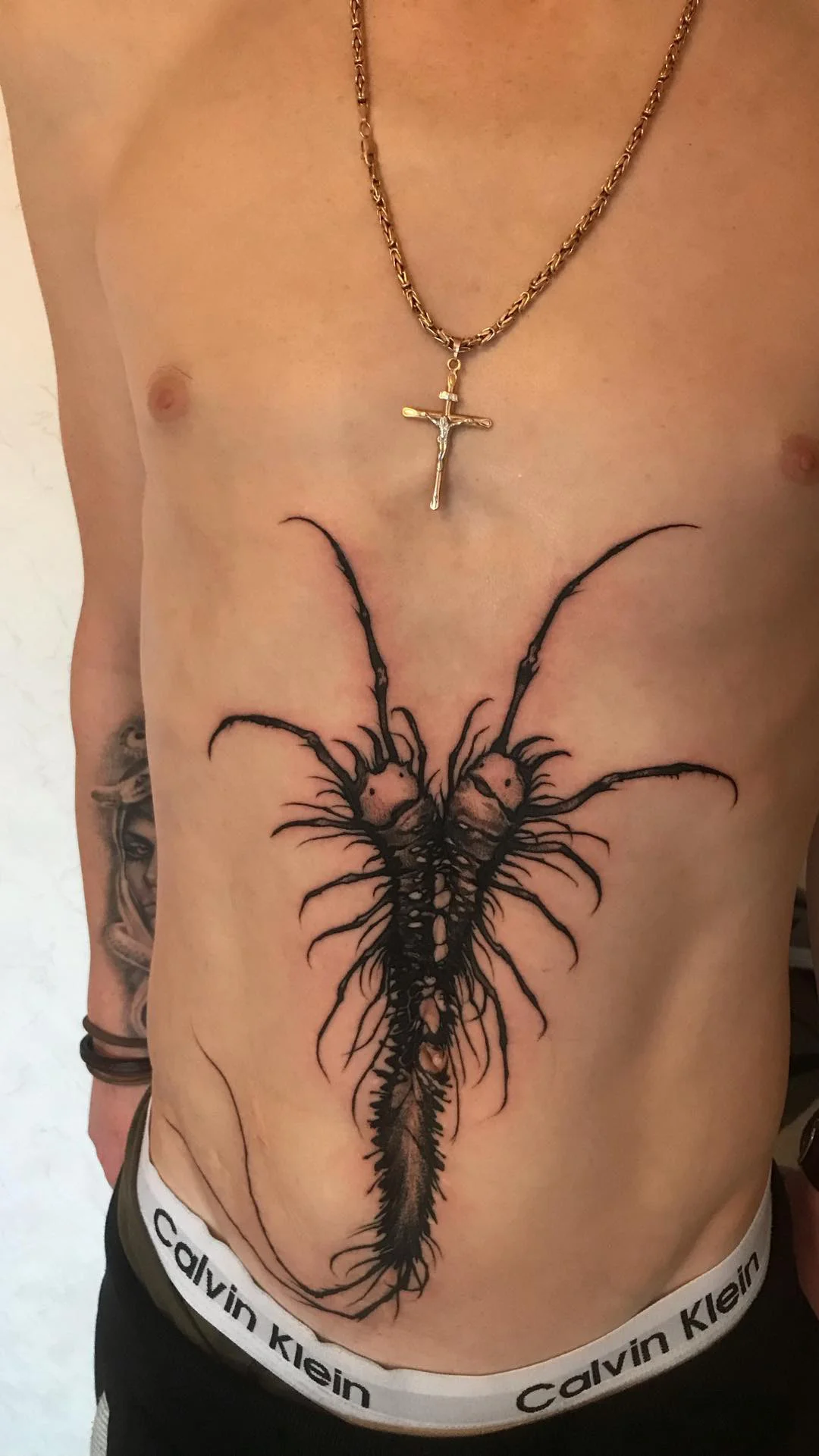
Common subjects on Freshly Inked's biomechanical work include full sleeves and full arm pieces, mechanical parts, skulls, and futuristic, technology-inspired designs, most of them in dark black and grey with strong detail.
How to spot a strong biomechanical tattoo artist
The technical demands of biomech are heavy. Convincing work has to read as truly three-dimensional, which takes advanced shading, careful highlight placement, and a precise understanding of how light would fall on an imagined interior. Done well, biomechanical tattoos are some of the most striking work being made. Done poorly, they read as flat and overworked, and the gap between the two comes down to how well the artist controls values across the whole piece.
When you look through a portfolio, check whether the depth effect holds both close up and from across a room. If the interior reads as flat shading rather than dimensional space, the technique isn't there yet. Look for smooth transitions, highlights that follow a consistent light source, and designs that flow with the body. Healed photos are especially telling, since they show whether the contrast that creates the illusion survived the healing process.
Best placements for a biomechanical tattoo
Biomechanical work benefits from large canvases. Sleeves, back panels, thigh wraps, and calf pieces let the artist build a continuous mechanical or anatomical environment that follows the muscles. Full sleeves are especially popular, because the arm's structure gives the design natural lines to follow. Smaller biomech pieces exist, but they tend to lose impact, since the depth effect needs room to develop.
How biomechanical tattoos age
Aging depends on how the piece is built. Biomechanical work with solid foundational shading and strong contrast holds up over decades, because the illusion of depth comes from big value shifts that stay readable. Work that relies heavily on hair-thin internal detail ages more like microrealism, where the overall structure holds but the finest details can soften. Enough size, bold contrast, and sun protection on healed work all help biomech stay convincing.
What affects the price and time
Biomechanical tattoos are usually designed specifically for the placement, often drawn directly to fit the client's muscles, so design time is a meaningful part of the work. Size, the amount of detail and shading, color versus black and grey, and the artist's experience all affect the price. Sleeves and back pieces are typically completed over multiple sessions. Most artists quote after a consultation, and many ask for a deposit to hold your spot.
It also helps to talk through flow with your artist before the first session. Many biomechanical artists prefer to sketch directly on the skin or design around photos of your actual arm or leg, so the machinery lines up with your muscles when you move. That kind of custom fit is a big part of what makes a biomech piece look like it belongs to your body.
Biomechanical vs. similar styles
Biomech overlaps with a few related styles. Surrealism shares its love of impossible imagery but covers a much wider range of dreamlike subjects. Black and gray realism uses the same shading skills to render real subjects as they actually look. Blackwork can create bold, dark full-arm pieces too, though it relies on solid black and pattern rather than three-dimensional depth. If you're drawn to the dark, otherworldly feel but want a wider range of subjects, a surrealism artist may be a good fit.
How to find and book a biomechanical tattoo artist
Browse the biomechanical work below and save the pieces that feel closest to the direction you're picturing. Open the artist whose depth and detail fit what you have in mind, look through their full portfolio, and send a booking inquiry with your idea and a few references. Your request goes straight to the artist, and they take it from there.
Artists








The Work
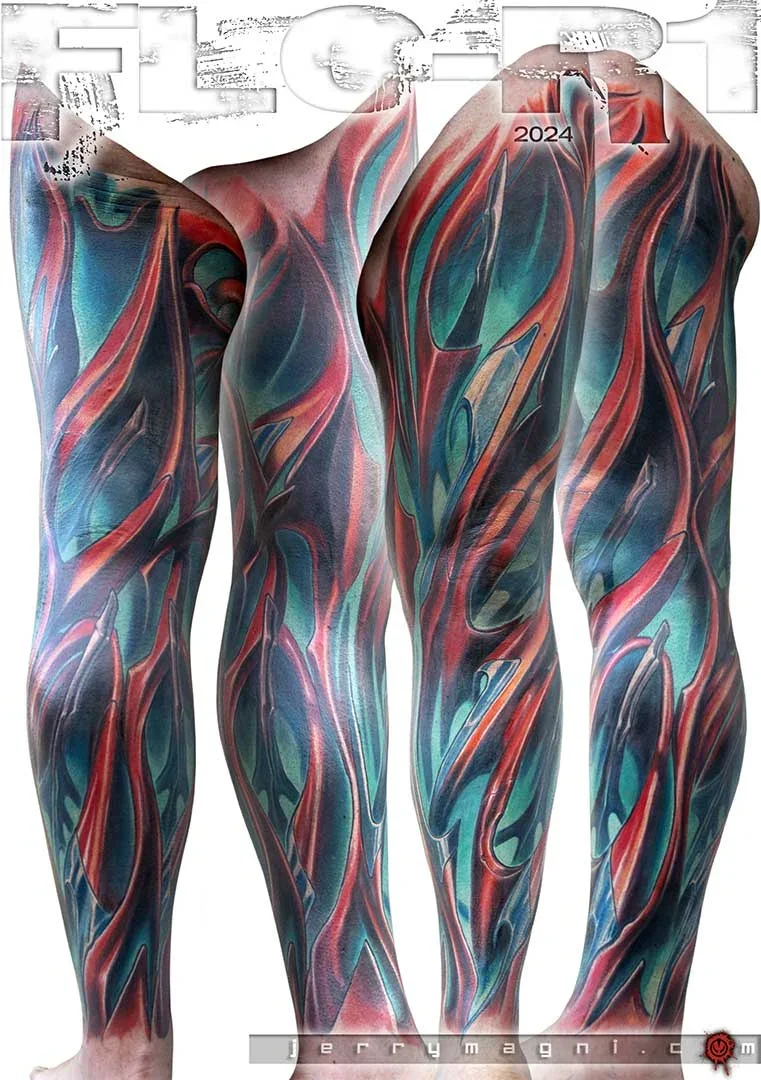 Jerry Magni
 Strokin_dark
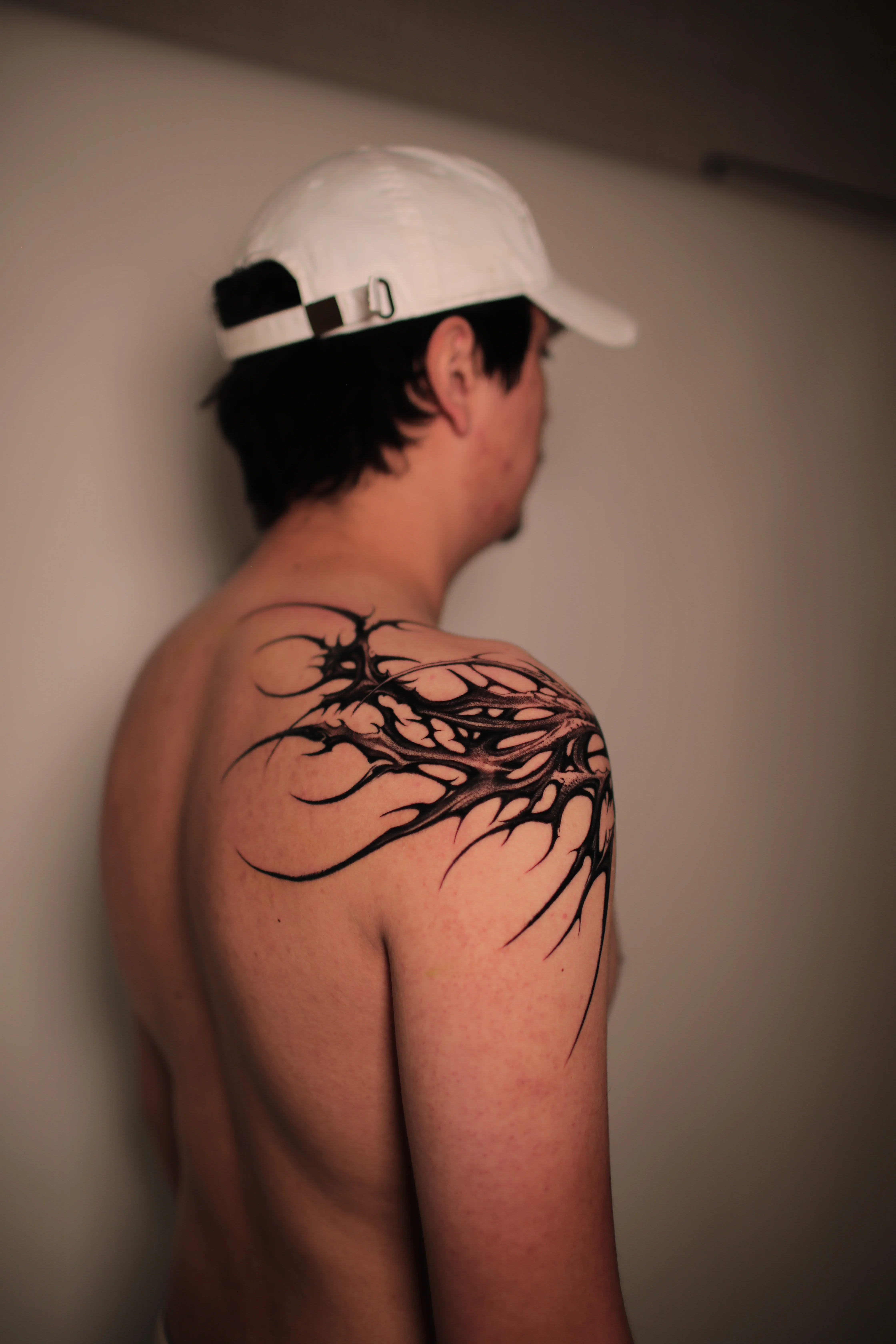 Konstantin Strokin
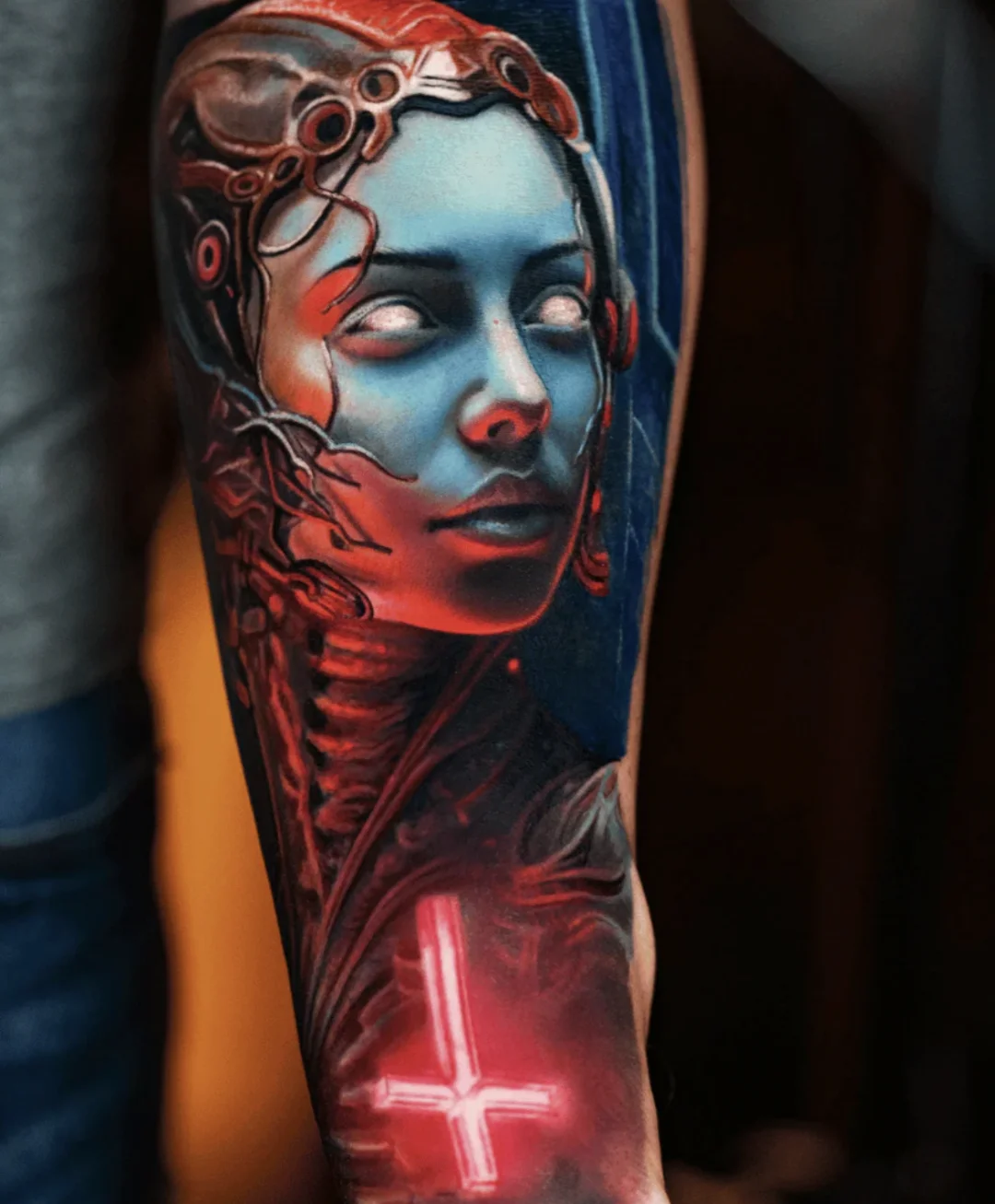 Yomico Moreno
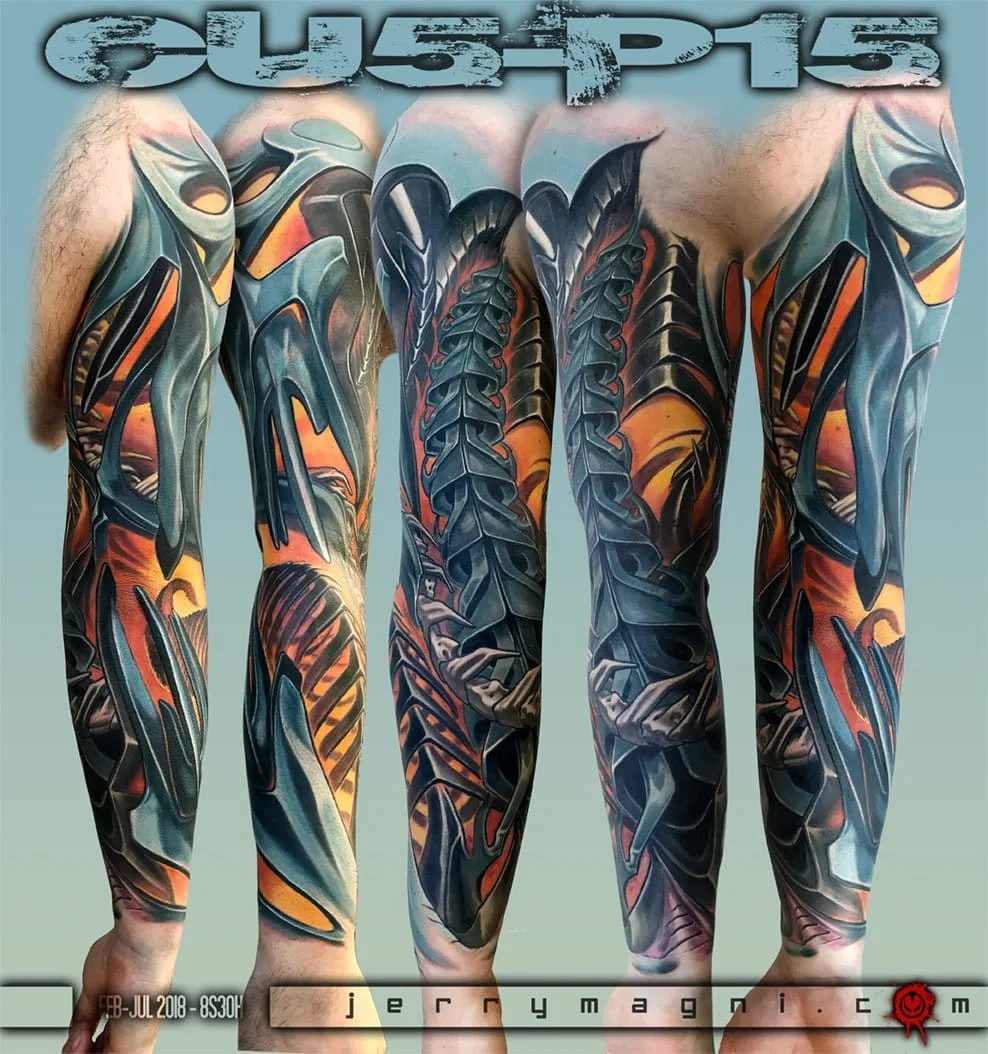 Jerry Magni
 Strokin_dark
 Jerry Magni
Strokin_dark
Konstantin Strokin
Yomico Moreno
Sailor_tatts
Danny Romeo Orellana Tat2one
Owen Paulls
Churry Tattoos
Nikko Hurtado
Arte de José Manrique
Jerry Magni
Jerry Magni
Strokin_dark
Konstantin Strokin
Yomico Moreno
Sailor_tatts
Danny Romeo Orellana Tat2one
Owen Paulls
Churry Tattoos
Nikko Hurtado
Arte de José Manrique
Common Questions
What is a biomechanical tattoo?
A biomechanical tattoo makes it look like the skin has been opened to reveal machinery, anatomy, or alien structure underneath. It uses strong contrast and shading to create the illusion of three-dimensional depth.
Where did the biomechanical tattoo style come from?
The style grew out of art influenced by H.R. Giger in the late 1980s and developed into its own tattoo subgenre through the 1990s.
What's the best placement for a biomechanical tattoo?
Large areas like full sleeves, back panels, thighs, and calves work best, because the depth effect needs room and the design can follow the muscles underneath.
Do biomechanical tattoos age well?
Biomech built on strong contrast and solid shading ages well, since the depth comes from big value shifts. Very fine internal detail can soften over time, so size and sun protection matter.
How much does a biomechanical tattoo cost?
Price depends on size, detail, color versus black and grey, and the artist's experience. Most biomech is custom-fit to the body, so expect a consultation and, for sleeves or back pieces, several sessions.
How do I find a biomechanical tattoo artist near me?
Browse the biomechanical work on this page, open the artists whose style fits, and filter by location. On Freshly Inked, biomechanical artists are working in cities including Los Angeles, New York City, and Lakewood.